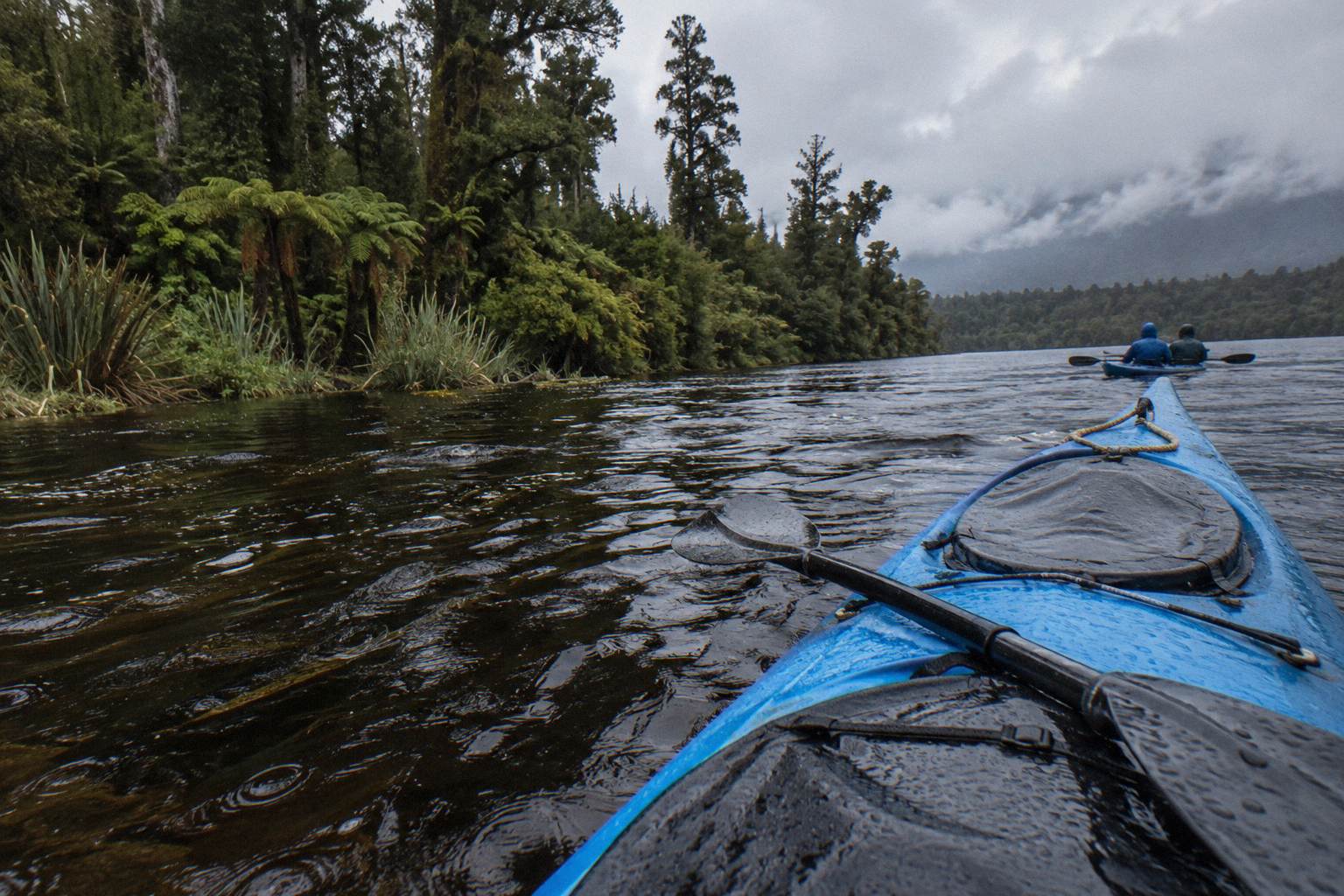
When Are Mirror Reflections Best On A Lake Mapourika Kayak Tour?
Mirror reflections on Lake Mapourika depend on wind, season and departure time. Here is what the operator's session pattern and DOC's advice actually say about picking the calmest slot.
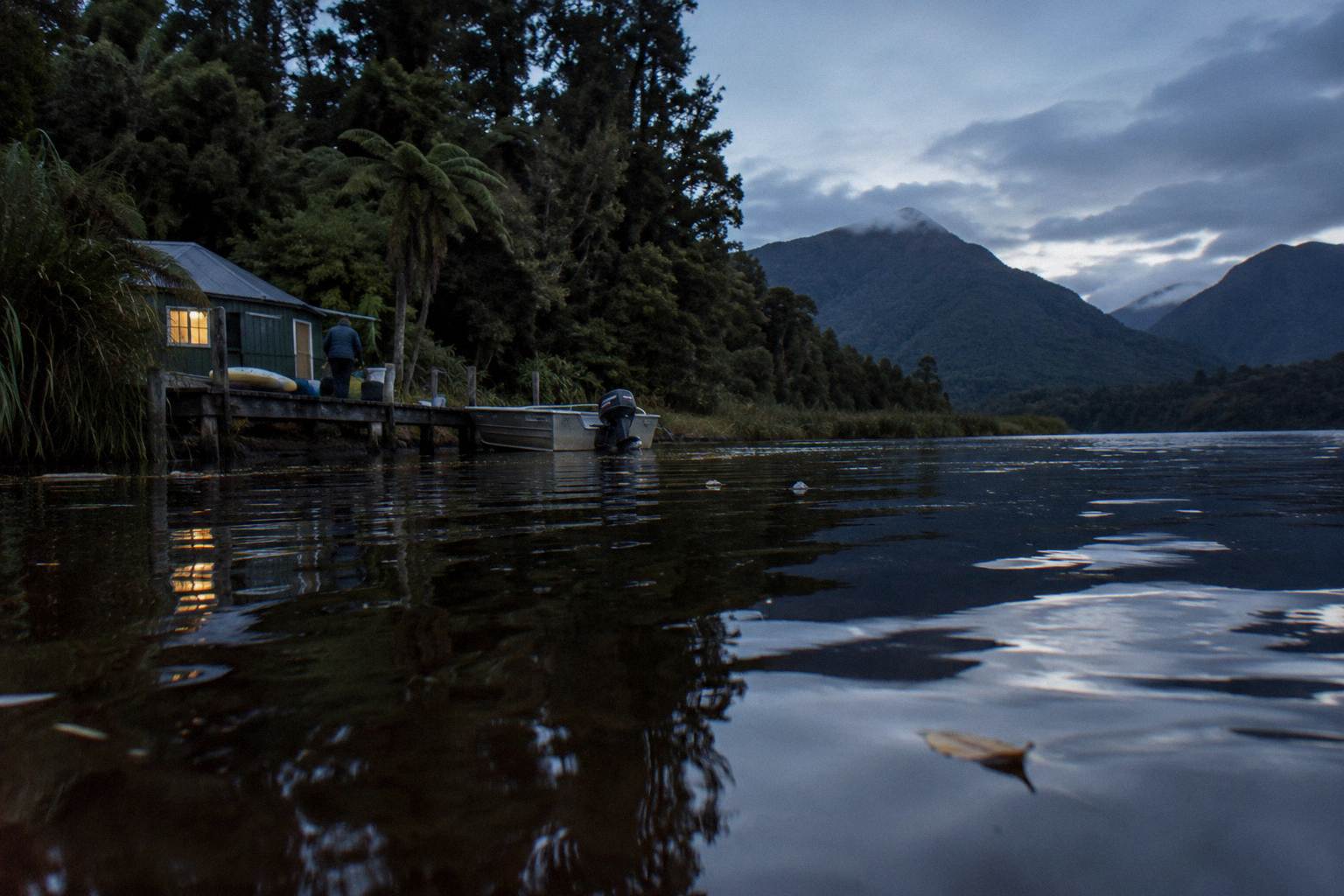
Mirror reflections on Lake Mapourika are most often at their best early and late in the day, when wind is lightest, and on summer evenings the operator's own 5pm departure is built around exactly that window. DOC's advice on calm-water reflections is blunt: dawn and dusk, on a sunny, windless day. No operator can promise the surface, because wind decides it.
That is the headline, and it is worth unpacking, because a lot of confident-sounding advice about this lake is either too vague or too optimistic. Reflections are never guaranteed on any West Coast water. What a visitor can actually do is stack the odds: choose a season, choose a session, and understand what the lake itself does at each hour. The operator's own seasonal pattern is the only reliable time information that exists for this water, and it is worth reading carefully before booking anything.
The lake itself helps. Franz Josef Wilderness Tours, the operator on Lake Mapourika, describes it as the largest kettle lake in South Westland, tannin-stained and formed by retreating glaciers, covering about 9 square kilometres. Those are the operator's claims rather than independently verified figures, but the tannin staining is the part that matters for photographers: dark water absorbs light instead of scattering it, which is why the reflections here read so solidly, almost ink-like, when the surface settles. A kettle lake also sits in a basin, which shelters it somewhat from coastal wind, though by no means completely.
The trip that crosses the lake into the hidden "mirror" creek is the Lake Mapourika 3-Hour Kayak Tour, from NZ$159 per person, rated 4.9 from 400+ reviews, and the trip with the most reviews on this water. It is the natural first pick for anyone whose whole reason for paddling is the reflection, and there are two other ways to get onto this water if a kayak is not the right fit for your group.
If the reflection photographs are the point of the trip, it also pays to think about what you will do with the pictures once you are home. The composing and exposure side of the craft, how to shoot a symmetrical reflection from a moving double kayak without the horizon slipping, is covered in our guide to photographing mirror reflections from a kayak, and the camera-choice advice there applies to phones as much as to anything with a real lens.
What Actually Creates A Mirror Surface On The Lake
A mirror surface needs three things at once: little or no wind, water that is not being disturbed by your own paddle strokes, and light coming from the sky rather than from a low sun angle washing out the water. On Lake Mapourika the first factor, wind, dominates everything else. A breeze of even a few knots shatters the reflection long before it becomes uncomfortable to paddle in, which is why timing matters more than weather.
Think of the surface as a tension between two forces. Wind roughens it from above; the lake's basin setting and the surrounding rainforest blunt the wind. On still mornings the forest also contributes, because the cold air draining off the bush can hold the surface flat while the wider valley is already stirring. This is not unique to Mapourika, but the tannin-dark water makes the payoff unusually graphic: when the surface goes flat, the reflection reads almost black in shadow and catches full colour where the sky is bright.
The second factor is you. A double kayak moving at a steady, gentle pace leaves a small wake, and the moment someone sprint-paddles, the mirror within a boat length of the hull is gone. The operator's stable double kayaks help here, because stability means nobody is bracing and correcting constantly. The guides also know the sheltered line: the route crosses the lake toward a hidden creek that the operator calls the "mirror" creek precisely because it is enclosed, narrow and wind-protected even when the open lake is rippled.
The third factor is light direction. A high overcast can be superb, because the whole sky becomes a soft source and the dark water reflects it evenly. Direct low sun is more dramatic but riskier: it lights one side of the scene and can blow out the water on the other. The operator's own observation is that "mirror lake reflections are often really dramatic when it's cloudy", which surprises visitors who assume reflections need blue sky. They do not. They need calm.
One safety note belongs here because it affects photographers who lean out for the shot. Since 9 October 2026, Maritime NZ requires everyone on a recreational craft 6 metres or under, kayaks and paddleboards included, to wear a lifejacket while underway, as set out at maritimenz.govt.nz. On these tours the operator fits and checks the buoyancy aid before launch anyway, and its FAQ is explicit that you do not need to know how to swim because a correctly fitted life jacket is worn throughout. The new rule simply makes that nationwide practice.
Summer Or Winter: Which Season Gives Better Reflections
Neither season owns the mirror. Summer, 1 November to 31 March, offers the 5pm evening session that pairs the calmest part of the day with warm light; winter, 1 April to 31 October, offers fewer boats on the water, a later sunrise that makes a dawn-adjacent departure easier, and the operator's note that the 2pm tour often coincides with sunset. Statistically, both can deliver.
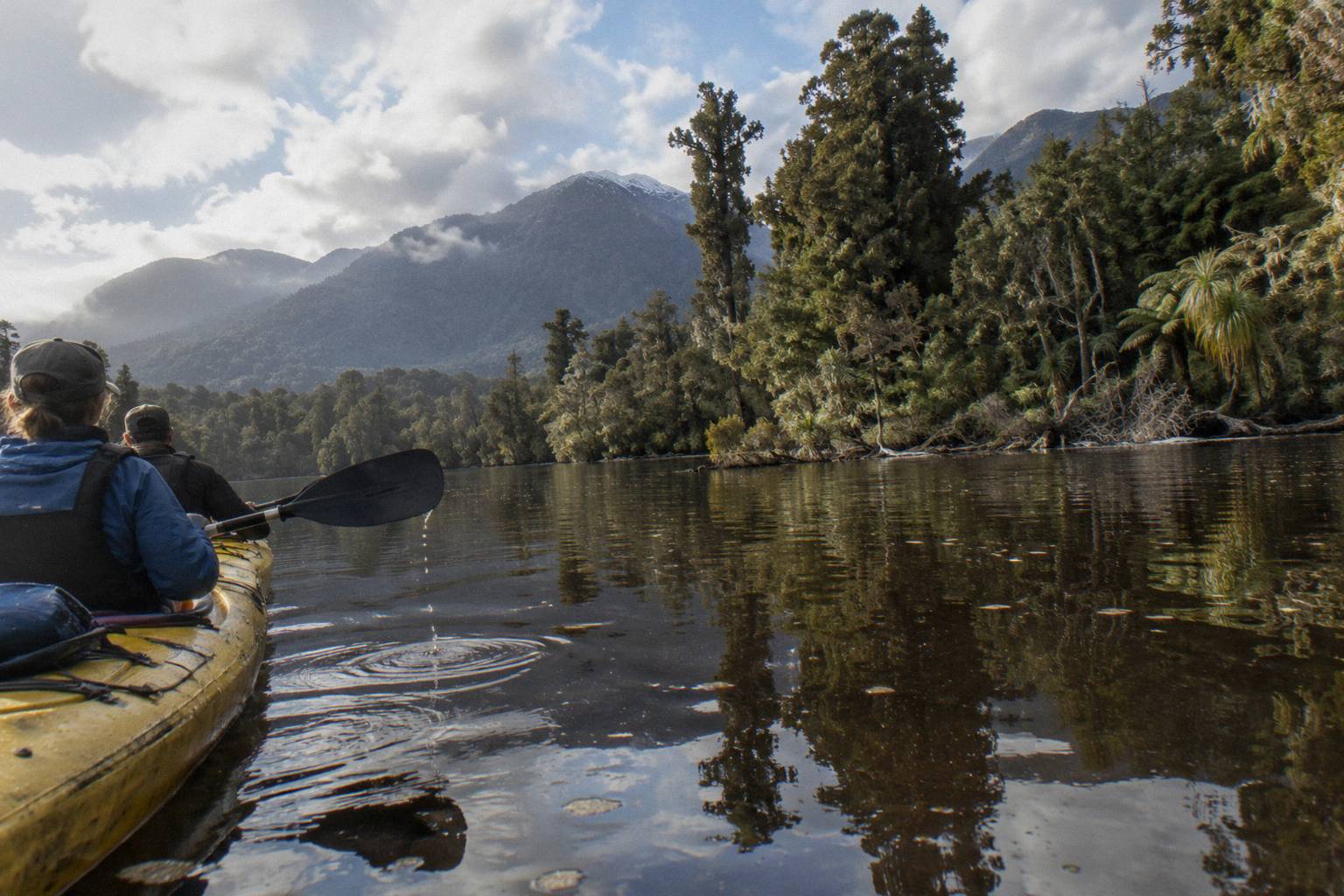
The summer case rests on the evening. The operator's own summer product built around this is the Sunset Classic, which runs only from 1 November to 31 March at 5pm, an operator-direct trip rather than one of the five standard tours. It exists because late-day wind on the coast frequently dies, and because a 5pm start puts paddlers on the water as the light turns gold. The standard 3-hour tour in summer runs at 9am, 1pm and 5pm, so the same evening window is available through the regular booking; the operator says times may vary, so treat that as the seasonal pattern rather than a fixed promise and check the booking page for your date.
Winter makes a different argument. Sunrise is late, the 9am or 10am winter departure goes out closer to the calm dawn hours than a summer 9am does, and there are simply fewer people and craft around. The operator also points out that in winter the 2pm tour often coincides with sunset, meaning a mid-afternoon start in June or July can finish in the kind of light that photographers normally associate with a dedicated sunset trip. The trade-off is colder air and a shorter day, and the operator's own risk disclosure notes hypothermia risk is higher in winter, which is why it supplies full wet-weather gear and paddling jackets on every departure.
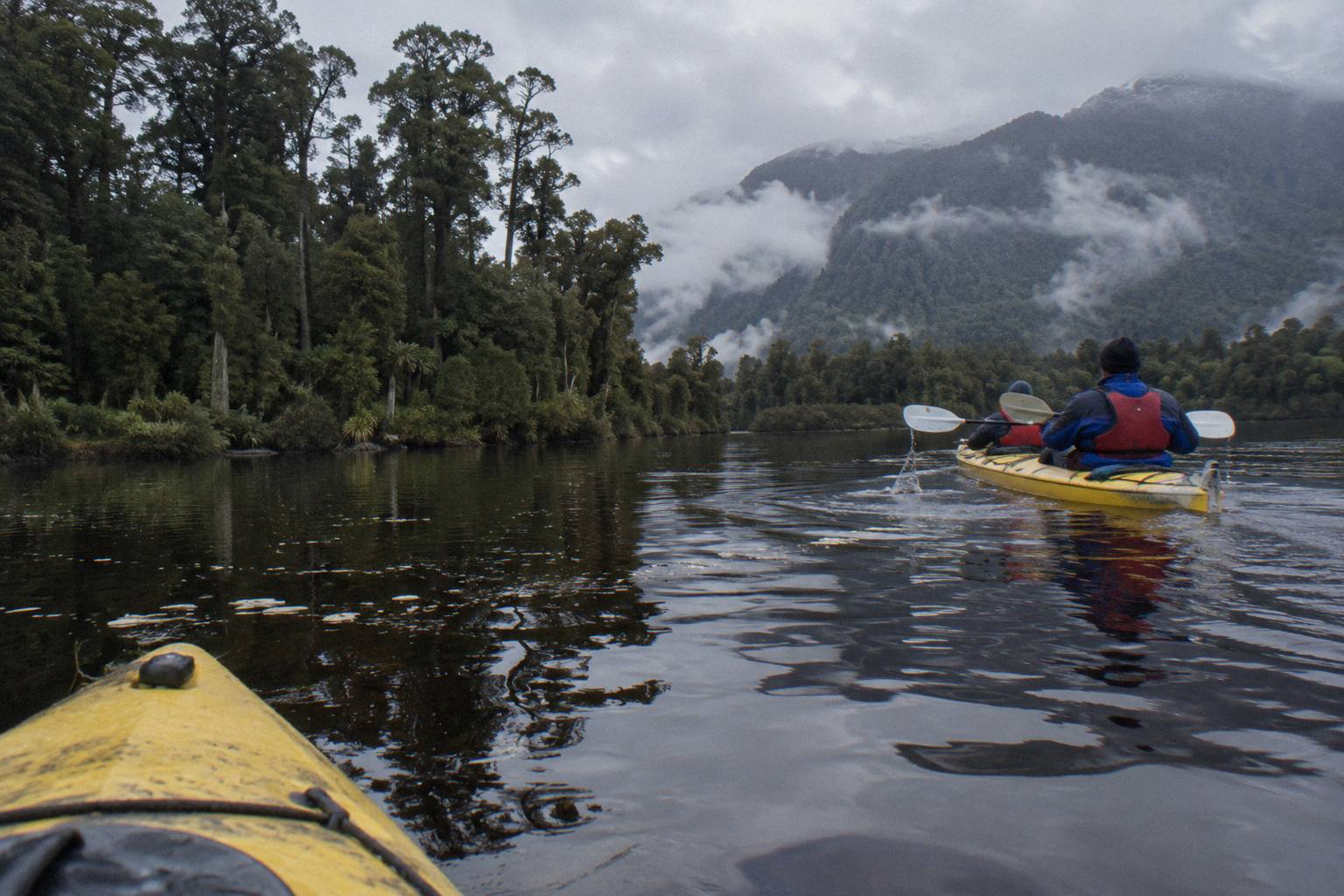
Rainfall is the wildcard people worry about most, and the numbers say worry less than you'd think. NIWA's 1991 to 2020 records put Franz Josef's mean annual rainfall at 5,555.2 mm, with every single month above 300 mm: the wettest, October, averages 594.1 mm and the driest, July, 317.8 mm. In other words, there is no dry season to aim for. If reflections required dry weather, nobody would ever photograph them here. What matters is wind and the hour, and the operator notes it is often dry at the lake while it is raining in the township, since the lake sits about ten minutes' drive north on SH6. Our guide to Franz Josef weather for kayaking goes deeper on how to read a wet forecast.
Choosing between seasons, then, is mostly choosing your own comfort and your light preference rather than gambling on odds. If golden evening colour is the goal, summer's 5pm pattern is the reason to come between November and March. If cold, clear, near-empty water appeals and you want the sun low at a civilised hour, winter's shifted clock does that for you.
Dawn, Midday Or The 5 PM Departure: Which Session To Pick
For reflections, the two strongest sessions in the operator's pattern are the first departure of the day and, in summer, the 5pm departure. Midday is the weakest slot: it is the most common time for thermal breeze to build, and the high sun gives the flattest, least atmospheric reflection light. Dawn itself is not a bookable kayak session; the earliest listed departure is the closest thing to it.
Here is the operator's session pattern for the 3-hour Lake Mapourika tour laid out plainly, summer first, then winter. In summer, 1 November to 31 March, departures run at 9am, 1pm and 5pm. In winter, 1 April to 31 October, they run at 9am, sometimes 10am, and 2pm. The operator is explicit that times may vary, so the pattern is a guide to structure, not a schedule to plan a flight around. Everything else covered here is indexed on Franz Josef Kayak Tours.
| Season | Operator departures | Reflection logic |
|---|---|---|
| Summer (1 Nov to 31 Mar) | 9am, 1pm, 5pm | 9am catches the morning calm before breeze builds; 5pm is the evening wind-down and warm-light window the Sunset Classic is built on |
| Winter (1 Apr to 31 Oct) | 9am or 10am, 2pm | The morning slot sits closer to true dawn calm; the 2pm finish often coincides with sunset, per the operator |
The photographer's ranking follows from that table. First, the summer 5pm: the day's wind has usually had its say and died, the light is warm, and you finish paddling in the last colour of the day. Second, any season's first departure: overnight air has settled the lake, the water is at its coldest and densest, and the reflection is often at its most complete before ten in the morning. Third, midday, which is not a bad session, the hidden creek is still sheltered, but it is the one most exposed to building breeze on the open lake.
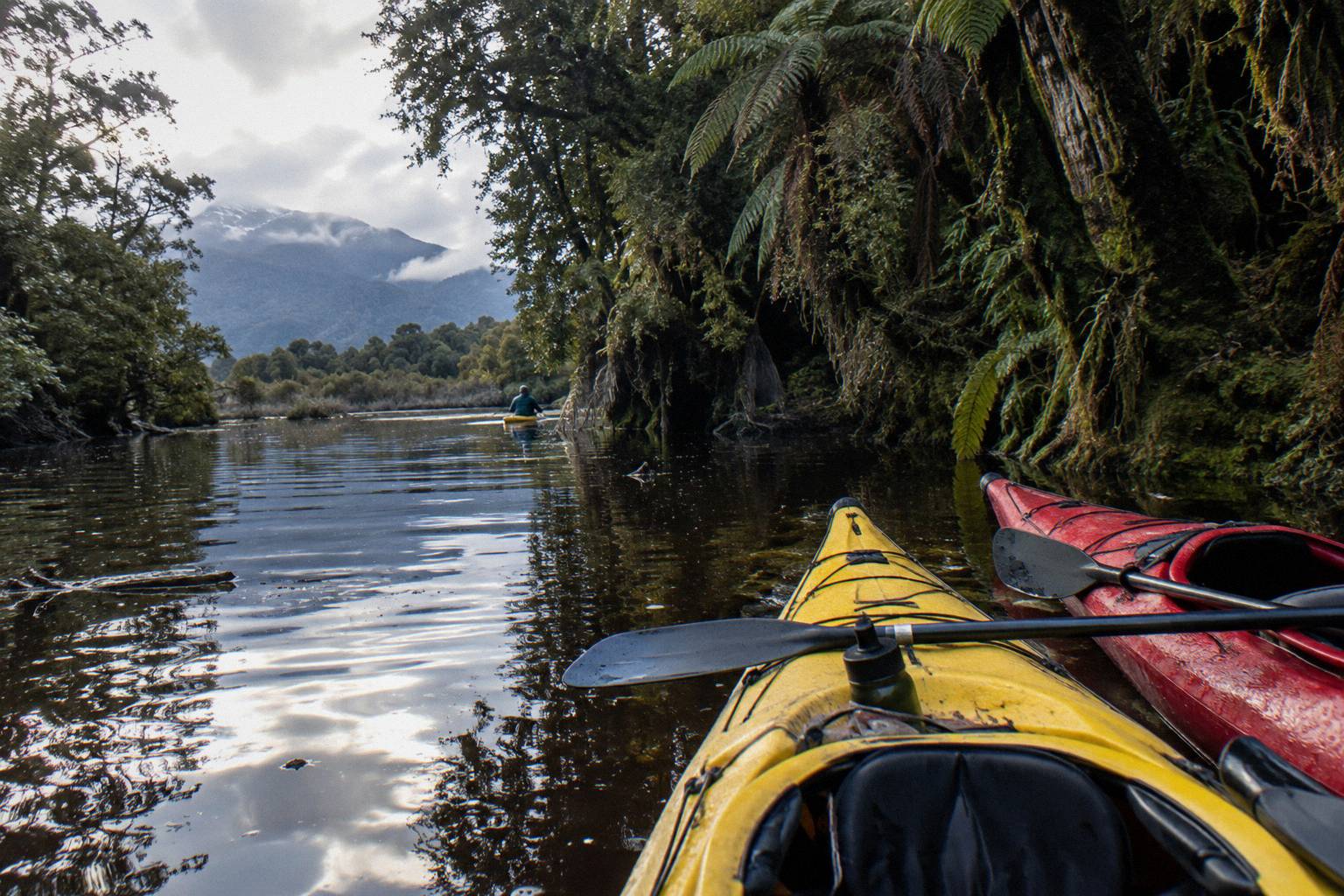
Booking tactics matter as much as the choice itself. Because the surface is never promised, the smart move is to book the slot with the best reflection odds and hold flexibility: every one of the five trips covered here carries free cancellation up to 24 hours on the booking page. If the forecast turns, you can move a day without penalty. Our advice on booking a kayak tour in advance covers how far ahead each season realistically needs.
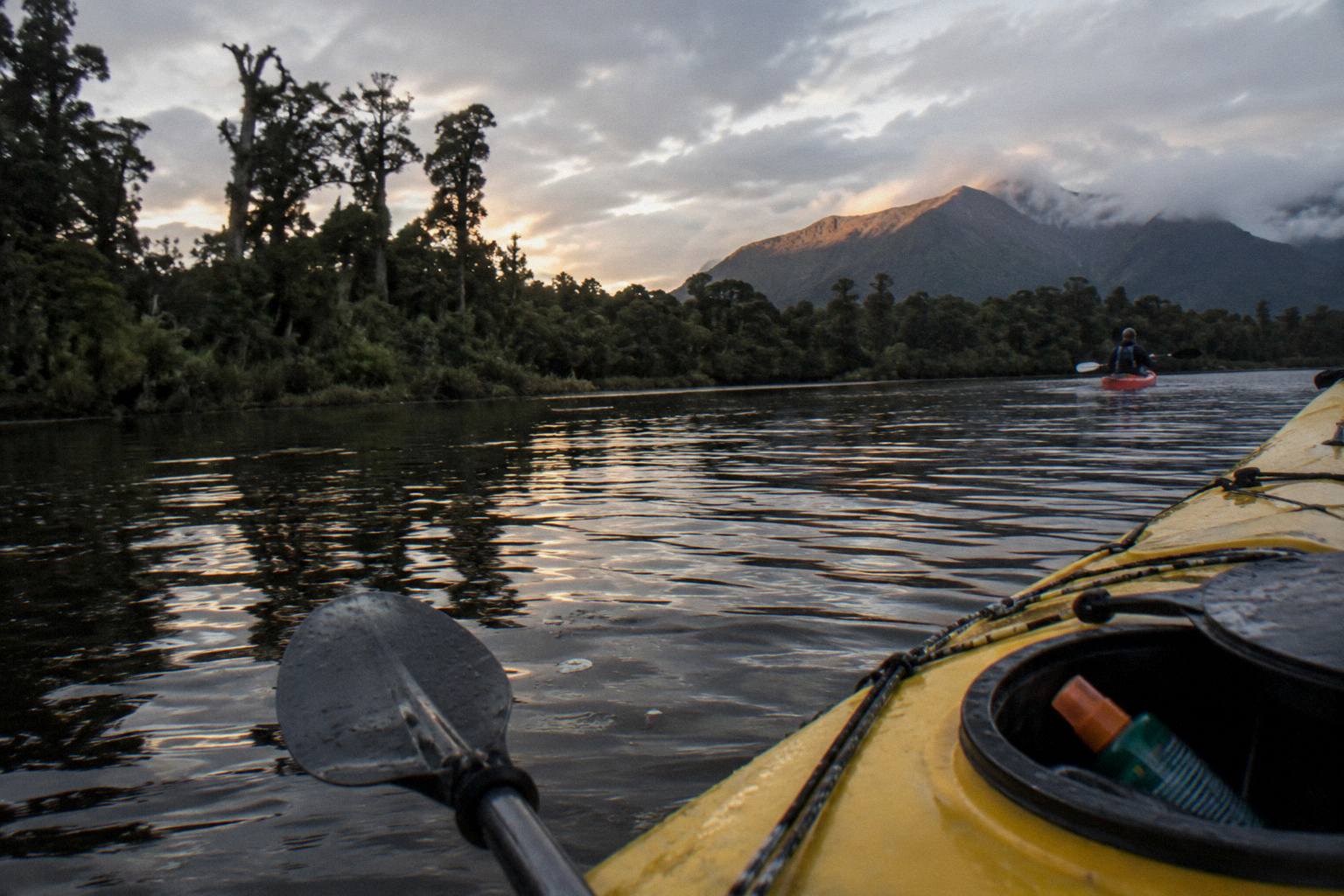
What The Sources Actually Say About Reflections
Two sources are worth quoting side by side. DOC, writing about reflections generally in its Lake Matheson walk notes, says the best are on a sunny, windless day and at dawn and dusk. The operator on Lake Mapourika says reflections are often really dramatic when it's cloudy. Both are true, and the difference between them, clear-sky symmetry versus brooding cloud drama, is a matter of taste rather than correctness.
Neither source promises anything, and that is deliberate. Reflections on West Coast water are an "often" phenomenon, not a schedule. What the two statements give you is a choice of mood: the classic postcard, forest and sky mirrored in black water under clear evening light, or the moodier version where a low cloud ceiling doubles itself in the lake and the tannin-dark water turns the whole scene several shades deeper. Photographers who shoot regularly on this coast tend to value the cloud version more, precisely because it is rarer in imagery and harder to plan.
| Source | What it says | Applies to |
|---|---|---|
| DOC, Lake Matheson walk page | Best reflections on a sunny, windless day, and at dawn and dusk | General calm-water reflection advice for the area |
| Franz Josef Wilderness Tours | "Mirror lake reflections are often really dramatic when it's cloudy" | Lake Mapourika specifically, from the operator's own FAQ |
| Franz Josef Wilderness Tours | Runs in light rain; tours cancel only if conditions are unsafe, with a full refund | Booking and weather policy |
| Franz Josef Wilderness Tours | Summer 5pm departure exists as the Sunset Classic; in winter the 2pm tour often coincides with sunset | Seasonal light windows |
The third row of that table deserves a sentence of its own, because visitors from drier climates assume rain cancels everything here. It does not. The operator runs in wet weather, supplies jackets and full wet-weather gear, and cancels with a full refund only when conditions are genuinely unsafe. Light rain on a windless lake can be the most atmospheric paddling of a whole trip, and the kayaking in the rain near Franz Josef guide covers what that actually feels like in practice.
A small natural-history bonus sits alongside the optics. The hidden creek the 3-hour tour paddles into runs through the predator-free Okarito Kiwi Sanctuary, and the wider area's most famous bird, the kotuku or white heron, feeds in coastal lagoons in the breeding season, particularly nearby Okarito Lagoon, according to DOC's white heron page. A reflection photograph with a kotuku standing in it is a genuine possibility in this region, though the nesting colony itself is a separate licensed tour from Whataroa, not reachable by kayak.
Why The Lagoon Runs On A Different Clock
Okarito Lagoon, about 25 minutes north of Franz Josef and run by a different operator, Okarito Kayaks, does not follow a session pattern at all: its guided trips are scheduled around the best tidal conditions for the day. For reflections on that shallow, tidal water, the tide table matters more than the clock, and the operator's departures already account for it.
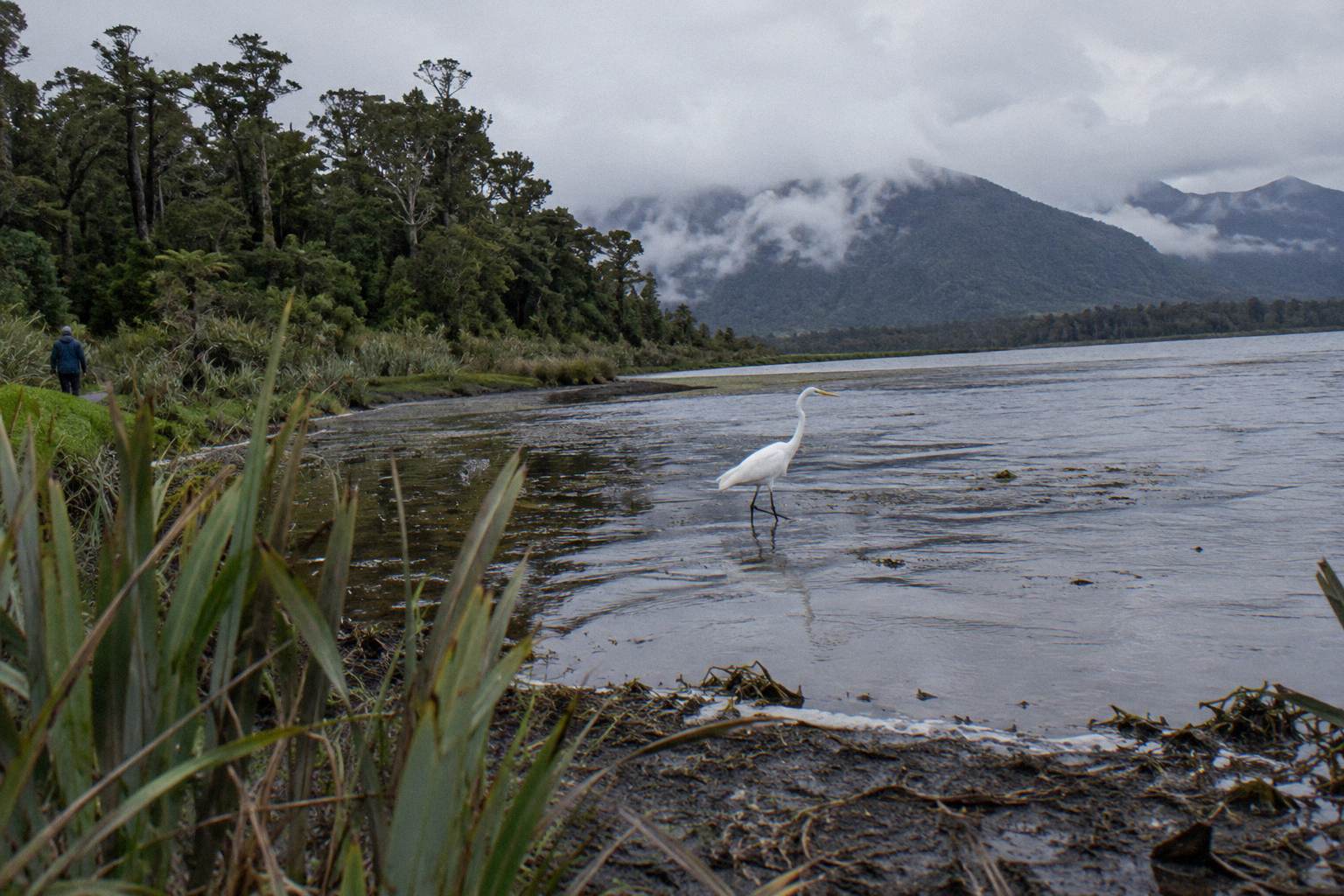
This matters to a reflection-hunter because it means the two waters answer the same question differently. On Lake Mapourika you pick a session and hope the wind cooperates. On the lagoon the operator has already done tide-based selection before the departure time is even set, which is why the Explorer and Adventurer trips move around the day. The Lagoon Kayak Explorer runs from NZ$165 per person for 3 hours, and the Lagoon Kayak Adventurer from NZ$210 per person for 4 hours. Both need self-arrival at the Okarito Kayaks base on The Strand, and both carry free cancellation up to 24 hours on the booking page.
The lagoon's shallow, tidal character cuts both ways for reflections. At high water over the flats, the surface can mirror the forest wall and the Southern Alps skyline on a calm day, and the tannin-dark tone is similar to the lake's. At lower tide, mudbanks emerge and the birdlife takes over, which is a different photographic reward entirely. The operator provides a bird guide and environmentally friendly insect repellent on every trip, and mentions sandflies on occasional cloudy, still days, which is exactly the flat-calm weather a reflection hunter prays for. Our piece on Okarito lagoon tides and kayaking explains the tidal logic in full.
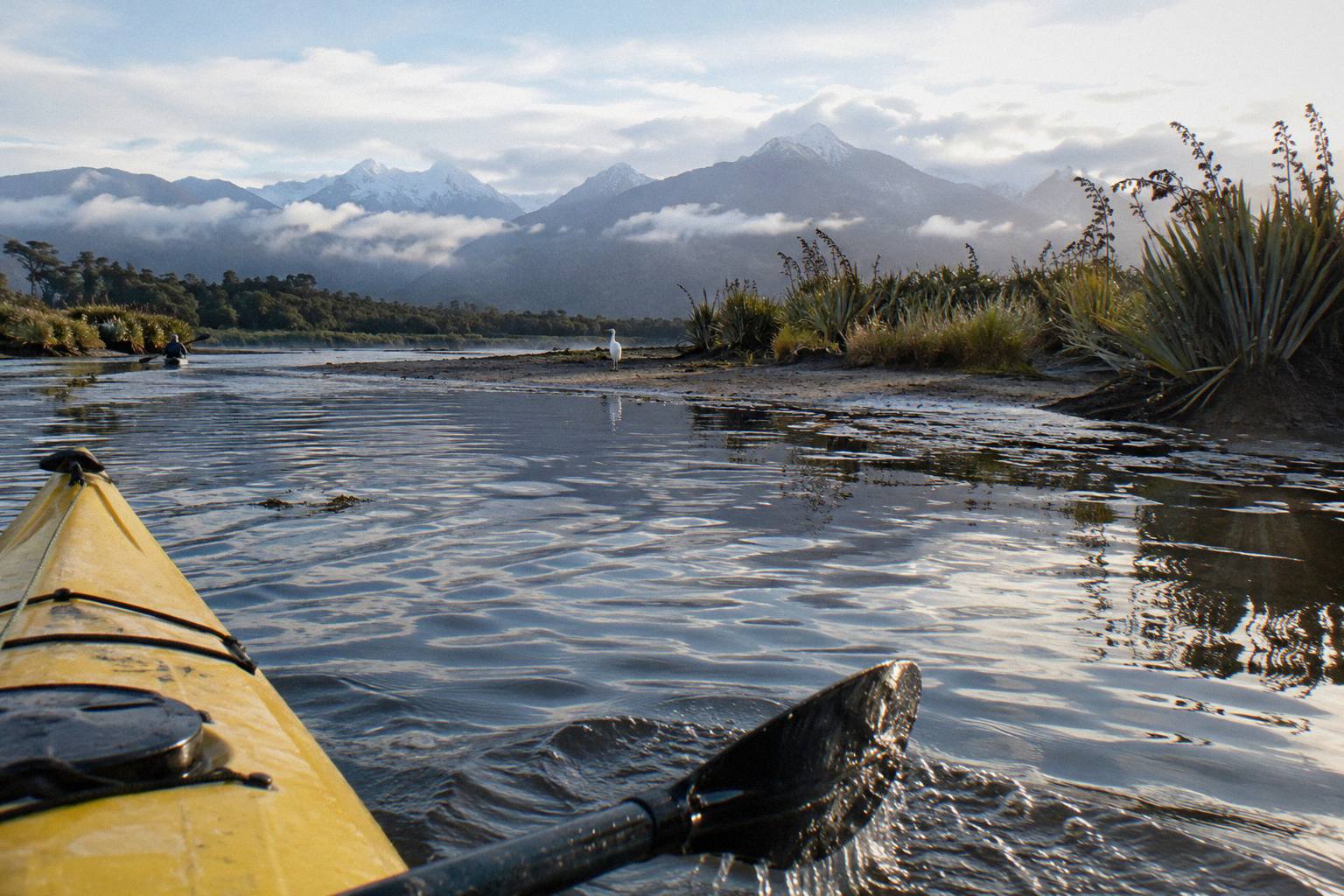
Picking Your Slot As A Photographer: A Practical Shortlist
Book the summer 5pm departure if you are here between November and March, book the first morning departure if you are here in winter, keep your date movable using the 24-hour free cancellation, and pack so you can shoot the moment the water goes flat rather than fussing with gear. Those four decisions do more for your reflection odds than any amount of forecast-watching.
The packing part is not trivial. The operator's kit list for the 3-hour tour includes everything waterproofing-related, dry bag, paddling jacket, PFD, wet-weather gear, kayak skirt, pogies and paddle, plus free photos emailed afterward. What you bring is the camera side: cap or sunglasses, camera or phone, comfy sneakers or sandals because feet stay dry, a warm top layer, and bottoms that are anything but jeans. That last item is operator wording, and there is a whole post on why jeans on a kayak tour are a bad idea if you want the reasoning.
| If you want... | Book this | Why |
|---|---|---|
| Golden evening mirror | Lake Mapourika 3-Hour Kayak Tour, summer 5pm | Evening wind-down plus warm low light; the window the Sunset Classic is built on |
| Maximum morning calm | Lake Mapourika 3-Hour Kayak Tour, first departure, any season | Overnight settling of the surface; the closest bookable slot to dawn |
| A sheltered mirror even in breeze | Any Mapourika tour that enters the hidden creek | The enclosed creek stays flat when the open lake ripples |
| Reflections without paddling | Lake Mapourika Scenic Cruise, from NZ$125 per person | A covered 2-hour boat with toilet; higher camera platform, no paddle wake |
| Tide-shaped calm | Okarito Lagoon Kayak Explorer, from NZ$165 per person | Departures are scheduled around the day's best tidal conditions |
The cruise row is worth a moment, because photographers travelling with non-paddlers often overlook it. The Lake Mapourika Scenic Cruise, from NZ$125 per person for 2 hours, shares the courtesy transfer from the Franz Josef office, and a boat gives you a steadier, higher vantage with no paddle stroke interrupting the surface right where you are shooting. It is not a kayak trip and does not pretend to be, but for pure reflection capture it is a legitimate tool.
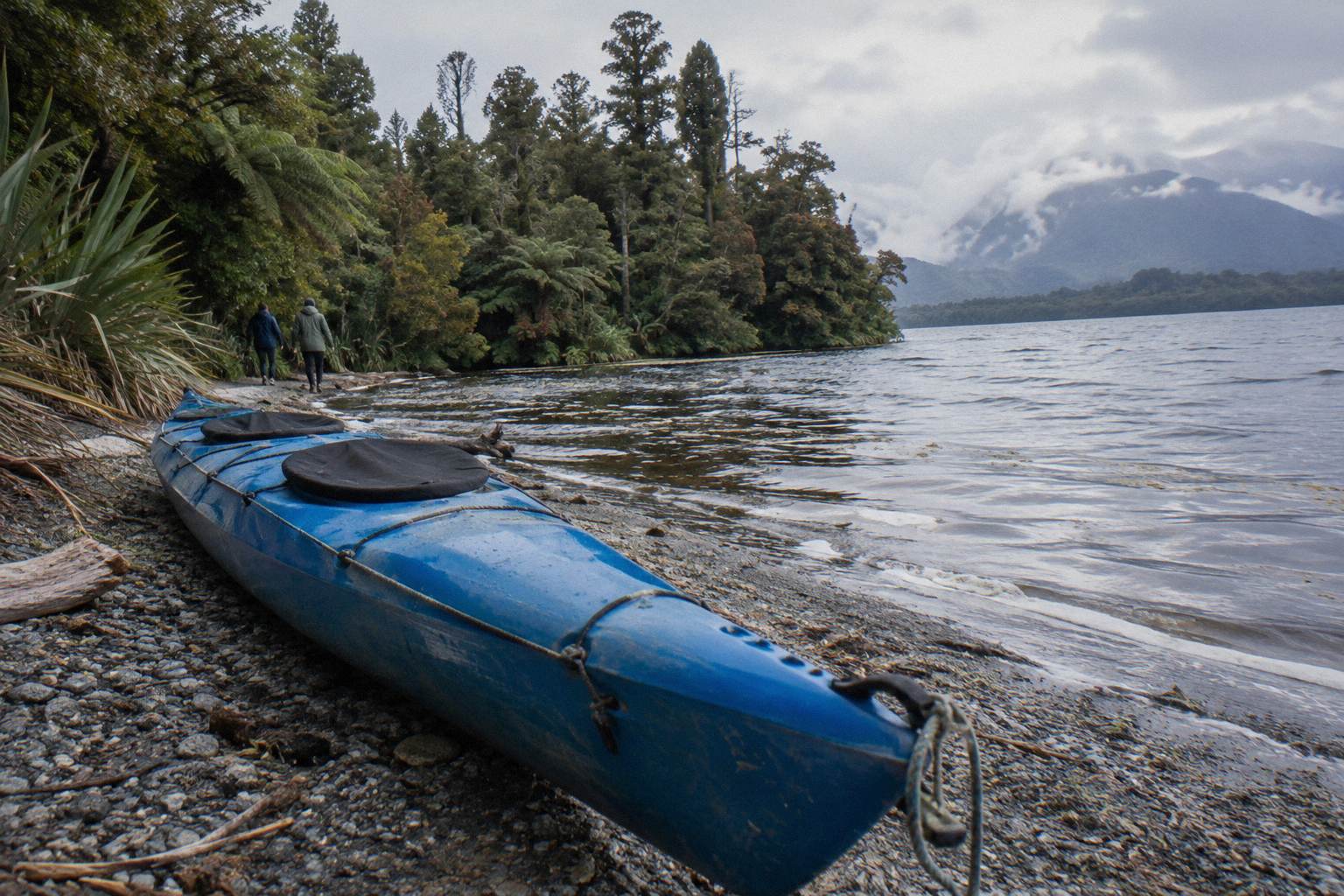
For paddlers who want more water time rather than less, the 4-hour Lake Mapourika Kayak And Okarito Kiwi Sanctuary Walk, from NZ$179 per person and rated 4.9 from 120+ reviews, adds about an hour on a private rainforest track reachable only by water. More hours on the lake means more chances that the wind drops mid-tour, which is genuinely how some of the best mirror sessions happen: you paddle out in ripple and the surface closes behind you.
Whichever slot you land, the framing is this: calm finds you more often than you chase it. The 3-hour tour spends about 2 hours 25 minutes on the water, per the operator, in stable doubles, with groups usually 2 to 6 on the operator's own departures and the booking page showing up to 16. In nearly three hours of drifting, the odds that the lake goes flat at least once, over the open water, in the creek mouth, or in the sanctuary channel, are far better than any single forecast suggests. That is the real answer behind the question: the reflections are frequent enough to plan around and never certain enough to promise, which is exactly what makes the photographs worth taking.
Common Questions About Mirror Reflections On Lake Mapourika
When Are Mirror Reflections Best On A Lake Mapourika Kayak Tour?
Most often at first light and in the evening, when wind is lightest. In summer, 1 November to 31 March, the operator's 5pm departure targets that window directly; in winter, the 2pm tour often coincides with sunset. Reflections are never guaranteed, only frequent, because wind decides the surface.
Are Reflections Better In Summer Or Winter On Lake Mapourika?
Neither season owns them. Summer offers the 5pm evening session and warmer air; winter offers emptier water and a low sun at civilised hours, with the 2pm tour often finishing at sunset. Rainfall is high in every month of the year here, so there is no dry season to target.
Do You Need A Sunny Day For Mirror Reflections?
No. DOC says the best reflections come on sunny, windless days at dawn and dusk, but the operator on Lake Mapourika notes that reflections are often really dramatic when it is cloudy. A high overcast over calm, tannin-dark water can be superb.
Can I Book A Dawn Kayak Session On The Lake?
Not as such. The operator's earliest listed departure is the closest bookable option: 9am in summer and 9am or 10am in winter, with times varying. In winter, the 9am slot starts close to true dawn calm.
Does The Tour Get Cancelled If It Rains?
Not for light rain. The operator runs kayaking in wet weather and supplies jackets and wet-weather gear, and says tours cancel only if conditions are unsafe, with a full refund offered. All five trips covered here also carry free cancellation up to 24 hours on the booking page.
Which Tour Is Best For Reflection Photographs?
The Lake Mapourika 3-Hour Kayak Tour, from NZ$159 per person, is the natural pick: it crosses the lake into a hidden, sheltered mirror creek. Non-paddlers can take the Lake Mapourika Scenic Cruise from NZ$125 per person for a stable boat platform instead.