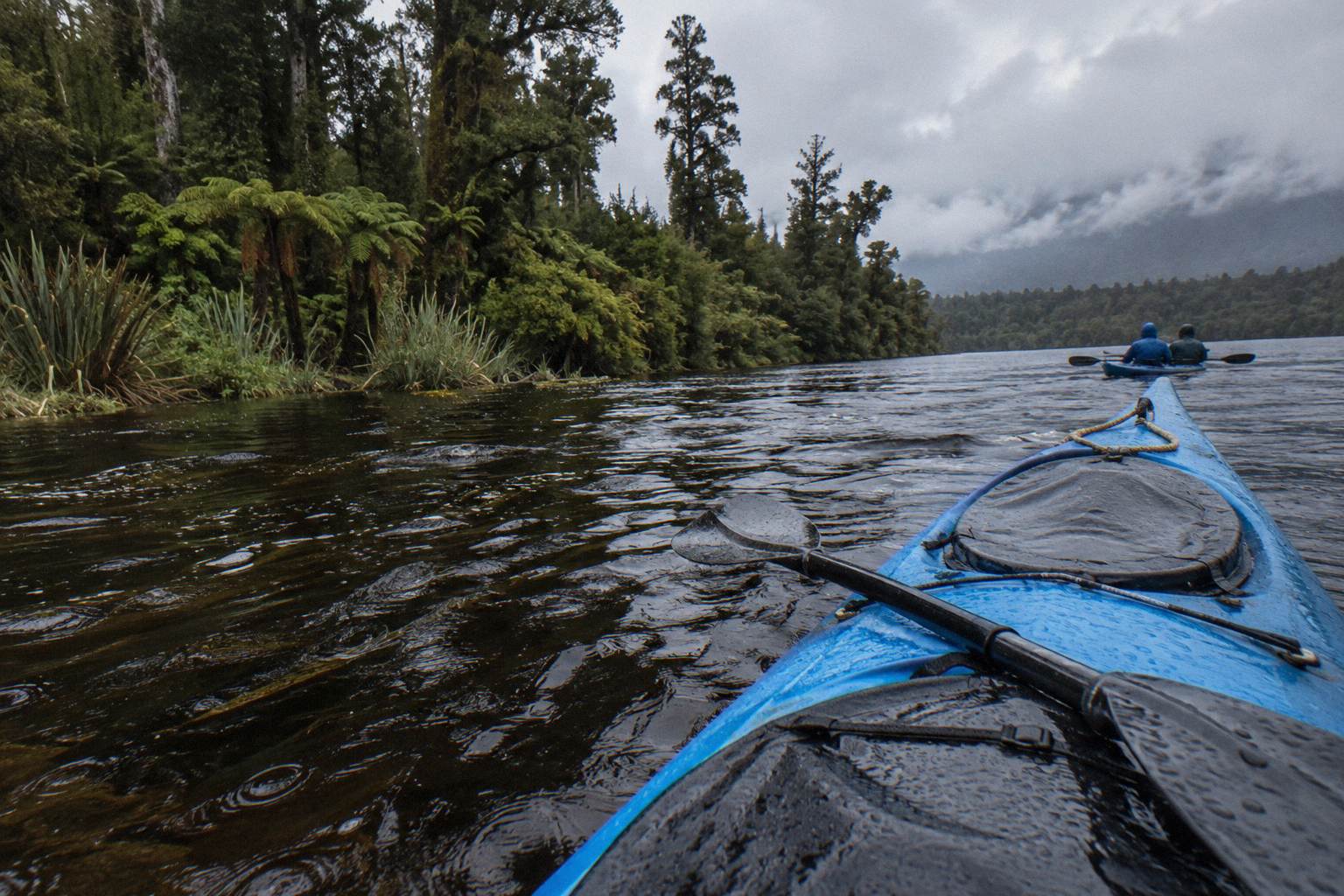
Do Kayak Tours Near Franz Josef Run In Winter?
Yes, kayak tours near Franz Josef run through winter. Here is what runs, when, what the weather is really like, and how to plan a cold-season paddle on Lake Mapourika or Okarito Lagoon.
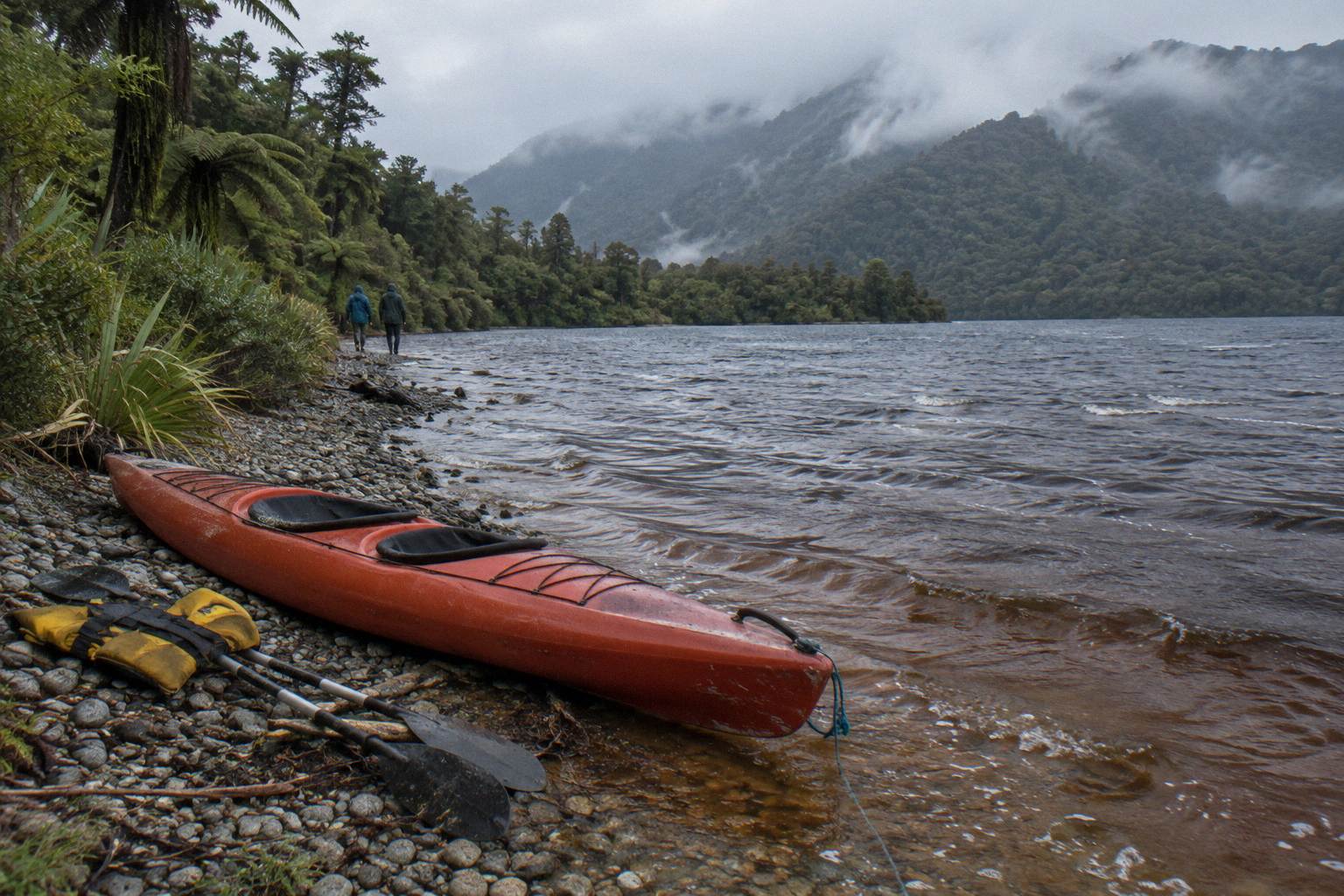
Yes, they do. Franz Josef Wilderness Tours runs its Lake Mapourika kayak trips year round, switching to winter sessions from 1 April to 31 October, typically a 9am (or 10am) and a 2pm departure, with times varying. Okarito Kayaks also trades year round on Okarito Lagoon, timing its guided trips around the tides rather than the clock.
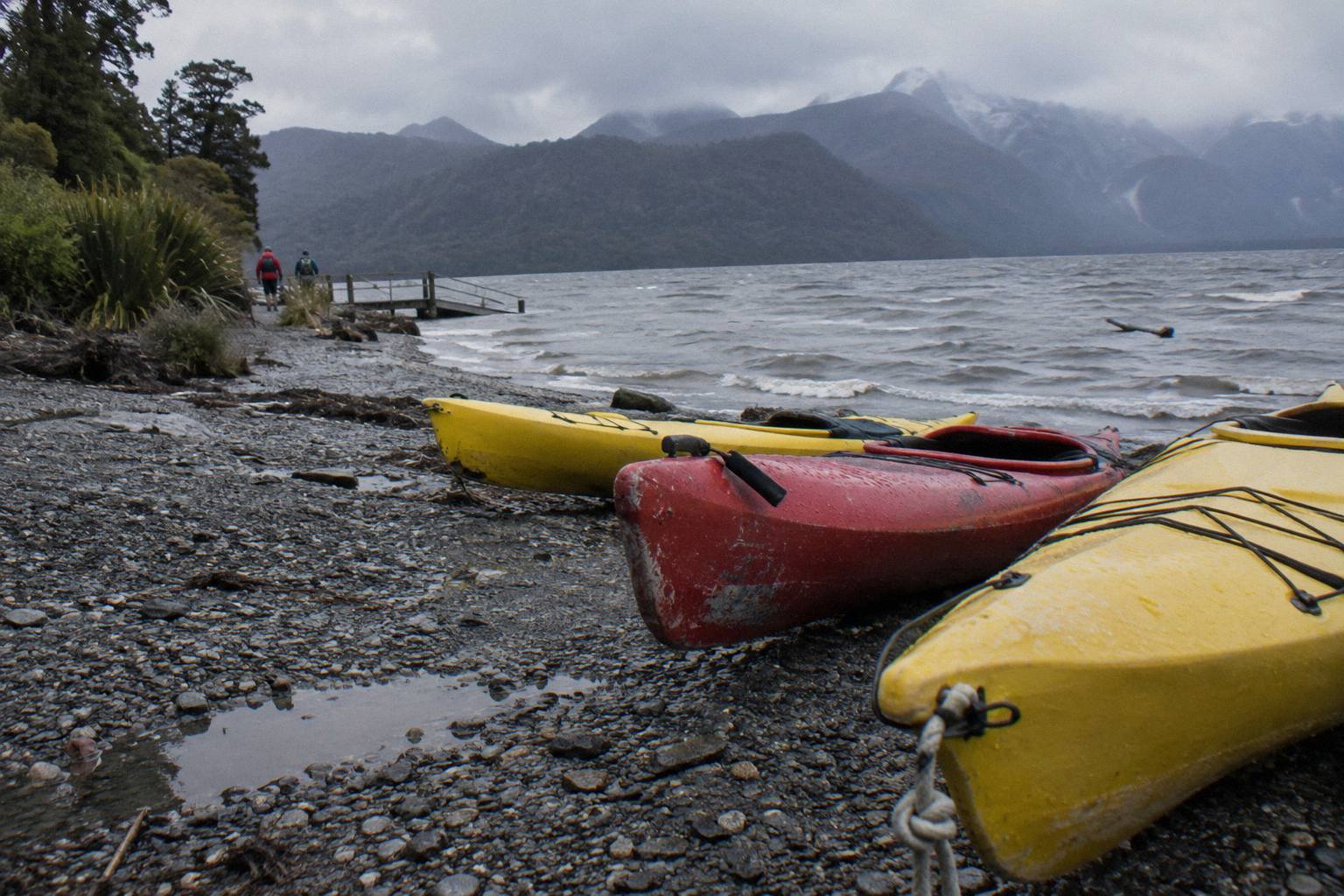
Winter catches a lot of West Coast travellers off guard in both directions. Some assume the whole region hibernates between April and October and cross paddling off the list. Others book a sunset trip without realising the summer-only schedule. Neither assumption holds up. The lake trips keep running through the cold months on a shifted timetable, the lagoon trips keep running around the tide, and the only product that genuinely stops is the operator's own summer 5pm departure, the Sunset Classic, which exists only from 1 November to 31 March.
The trip with the most reviews, the Lake Mapourika 3-Hour Kayak Tour, is from NZ$159 per person, rated 4.9 from 400+ reviews, and takes 3 hours (all prices here are in New Zealand dollars). It departs from the Franz Josef Wilderness Tours office at 30 Main Road in the township, with a courtesy transfer to the lake, and free cancellation up to 24 hours. In winter its session pattern is the operator's morning and early afternoon one, and the operator says plainly that times may vary, so treat the pattern as a guide and check the booking page for your date.
One thing worth knowing before anything else: winter here is not the dead season people picture. NIWA records put Franz Josef's mean annual rainfall at 5,555.2 mm, spread across every month, and the driest month in the whole record, July at 317.8 mm, is wetter than many places' wettest. The season changes the light, the session times and the clothing list far more than it changes whether the boats go out. Operators on this coast paddle all year, and the region's tourism calendar, thin as it gets midwinter, still assumes the water is open.
What Winter Actually Feels Like On The Water
NIWA's 1991 to 2020 records give Franz Josef a mean daily maximum of 11.9 °C in July against 20.0 °C in January, with mean daily minimums of 3.3 °C and 10.5 °C respectively. July is also the driest month in the record at 317.8 mm, while October is the wettest at 594.1 mm. Every month of the year averages above 300 mm of rain.
That last figure is the one that reshapes expectations. There is no dry season on this coast, so a winter trip is not a bet against rain, it is a plan for a place where rain is normal in every season. The practical difference in winter is temperature. A January day averages a 20.0 °C maximum; a July day averages 11.9 °C, with nights near 3.3 °C. Sunshine averages about 1,169 hours a year across all months, with December at 83 hours and January at 118 hours, so winter days are shorter and the light is lower, which is exactly why the session times shift earlier.
| Measure | January | July | Notes from the NIWA 1991-2020 record |
|---|---|---|---|
| Mean daily maximum | 20.0 °C | 11.9 °C | February is slightly warmer than January at 20.5 °C |
| Mean daily minimum | 10.5 °C | 3.3 °C | Only these months are stated; other months are not |
| Rainfall | 552.0 mm | 317.8 mm | July is the driest month, October the wettest at 594.1 mm |
| Sunshine | 118 hours | Check when booking | Annual total about 1,169 hours |
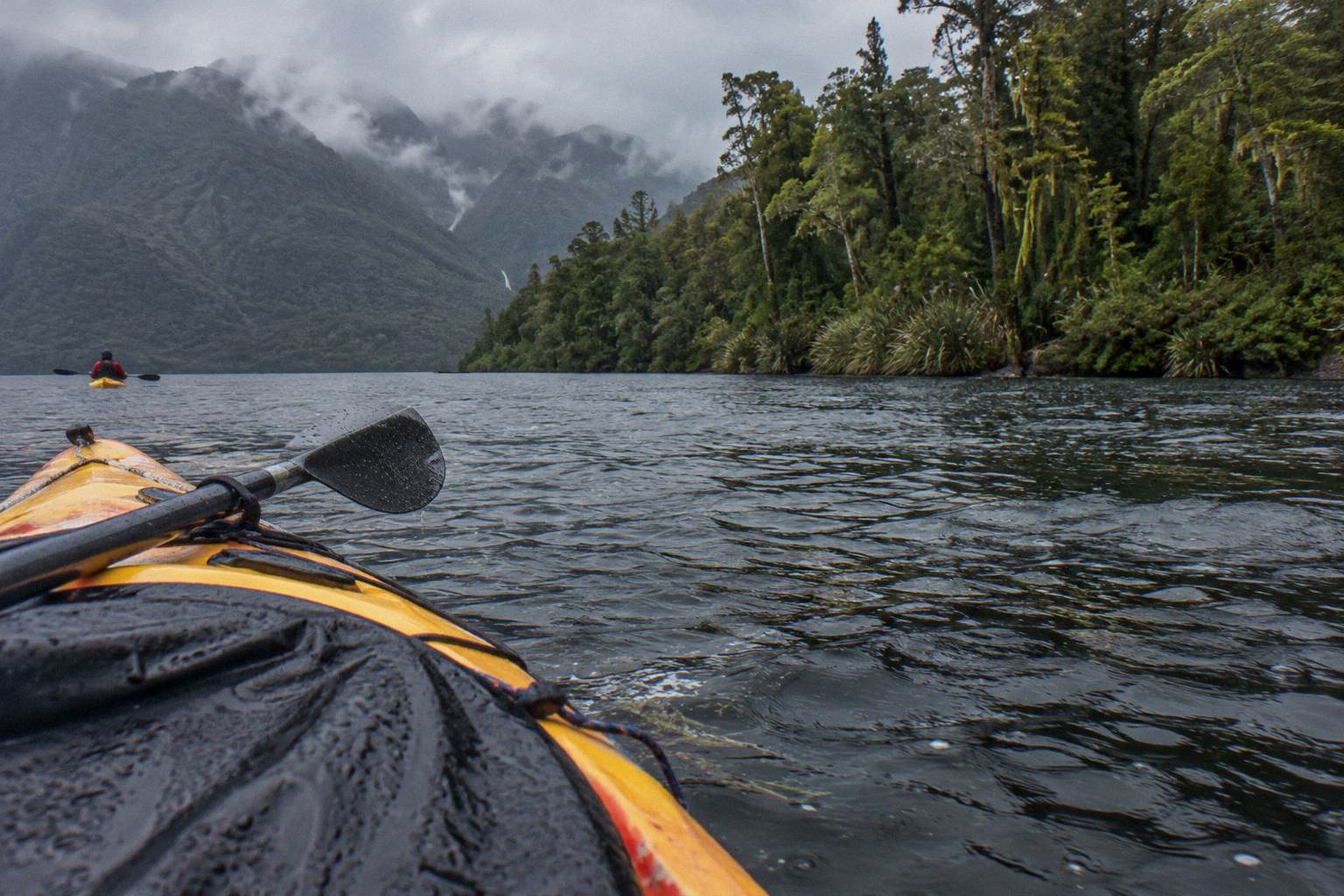
The operator's own commentary on this is useful, because it comes from running the lake in every condition. Franz Josef Wilderness Tours says kayaking can be especially atmospheric in light rain, supplies paddling jackets, wet-weather gear, PFDs, kayak skirts and pogies on its lake trips, and notes that it often is dry at Lake Mapourika while it is raining in the township. Local weather is checked by the operator itself, and its recommended forecast tool is the Windy app. None of that guarantees a dry day; all of it means a drizzly morning is a normal departure, not a cancellation.
The reflections question comes up more in winter, and the answer is "often, not always". The Department of Conservation's guidance on the nearby Lake Matheson walk says the best reflections come on a sunny, windless day and at dawn and dusk, while the lake operator adds that mirror reflections on the water are often really dramatic when it is cloudy. Winter's low cloud and calm mornings can produce some of the strongest mirror conditions of the year, but nobody can promise them.
Should You Take The Winter 2Pm Slot?
The 2pm winter departure has a quiet advantage the operator points out itself: in winter it often coincides with sunset. The Sunset Classic, the operator's dedicated summer evening trip, stops after 31 March, so the mid-afternoon departure quietly becomes the closest thing to it. For a photographer, that makes the winter pattern less of a downgrade and more of a different product with the same reward, a paddle that finishes as the light goes gold.
Which Trips Run, And On What Winter Times
All five bookable trips in the area run year round. The three Franz Josef Wilderness Tours products switch to winter sessions from 1 April to 31 October, morning and early afternoon, with times varying. The two Okarito Kayaks lagoon trips run to the tide, so their start times shift day to day in every season. The only seasonal stop is the Sunset Classic, a summer-only product.
The distinction that matters most when reading a winter timetable is the one between the two waters. The lake trips run to a clock, roughly, because a lake has no tide. The lagoon trips run to the tide, because Okarito Lagoon is shallow and tidal and the operator schedules every guided departure around the best tidal conditions for the day. In winter you may be offered a 10am start one day and something quite different the next, and that is the tide, not the season.
| Trip | Operator | Length | From price | Winter availability |
|---|---|---|---|---|
| Lake Mapourika 3-Hour Kayak Tour | Franz Josef Wilderness Tours | 3 hours | NZ$159 | Year round, winter sessions 1 Apr to 31 Oct |
| Lake Mapourika Kayak And Okarito Kiwi Sanctuary Walk | Franz Josef Wilderness Tours | 4 hours | NZ$179 | Year round, winter sessions 1 Apr to 31 Oct |
| Lake Mapourika Scenic Cruise | Franz Josef Wilderness Tours | 2 hours | NZ$125 | Year round, runs rain or shine per the booking page |
| Okarito Lagoon Kayak Explorer | Okarito Kayaks | 3 hours | NZ$165 | Year round, tide-timed |
| Okarito Lagoon Kayak Adventurer | Okarito Kayaks | 4 hours | NZ$210 | Year round, tide-timed |
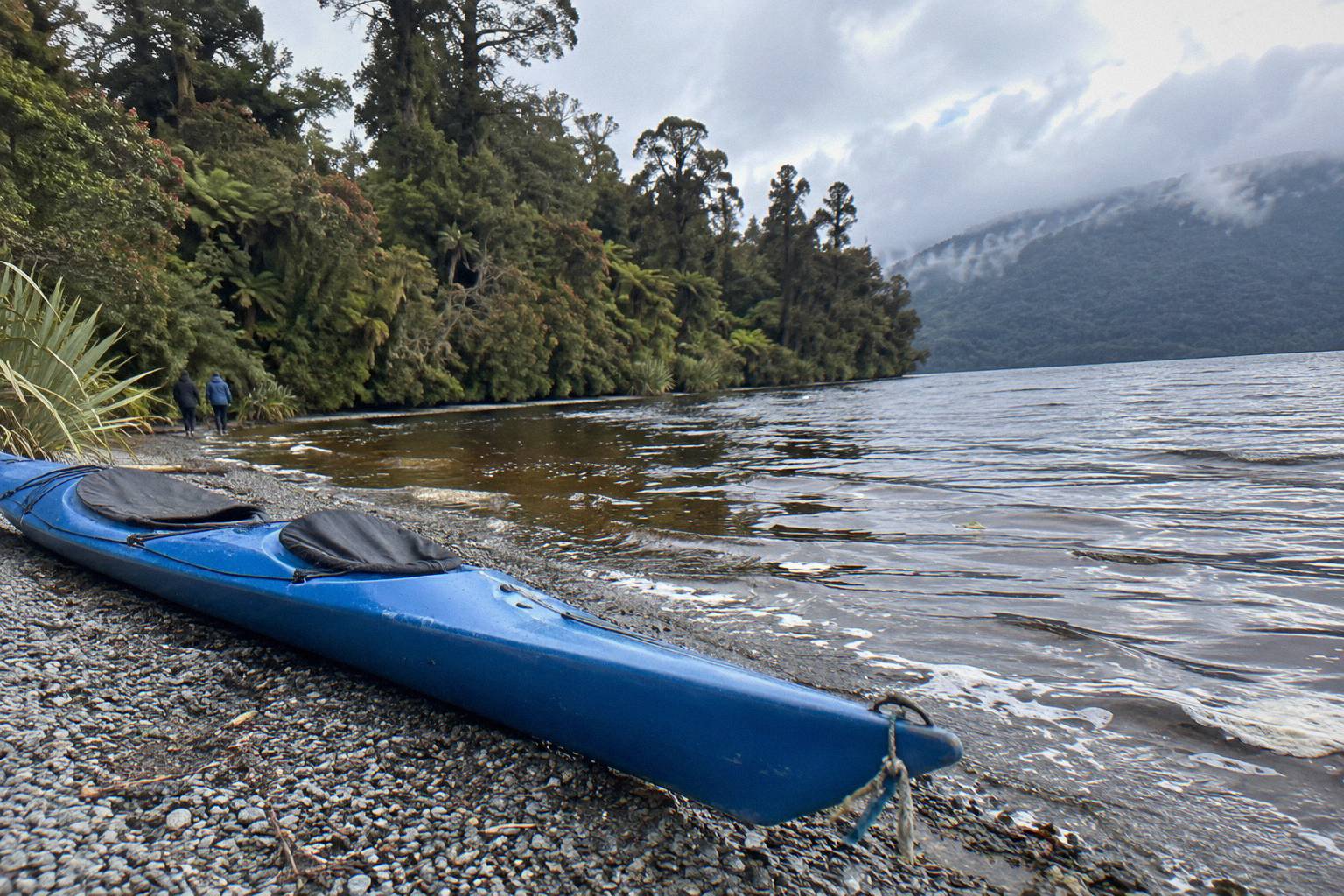
Two fine points on that table. The 3-hour Mapourika trip is rated 4.9 from 400+ reviews, and the 4-hour Kayak And Walk combination carries 4.9 from 120+ reviews. And the scenic cruise is a boat trip, not a paddle, a covered vessel with a toilet that the booking page says runs rain or shine. On a truly grim winter afternoon it is the option that keeps the group dry without giving up the lake.
The 4-Hour Option On A Short Day
The Kayak And Okarito Kiwi Sanctuary Walk, from NZ$179 per person, spends about 2 hours 15 minutes paddling and about an hour on a private rainforest track reachable only by water, inside the predator-free sanctuary that shelters the rowi kiwi. It runs year round, though in winter the shorter daylight makes the timing tighter, so an early check-in at the Main Road office matters more than in summer. Children 4 and over can join, and the courtesy transfer from the office to the lake is included.
Does Winter Rain Cancel Tours?
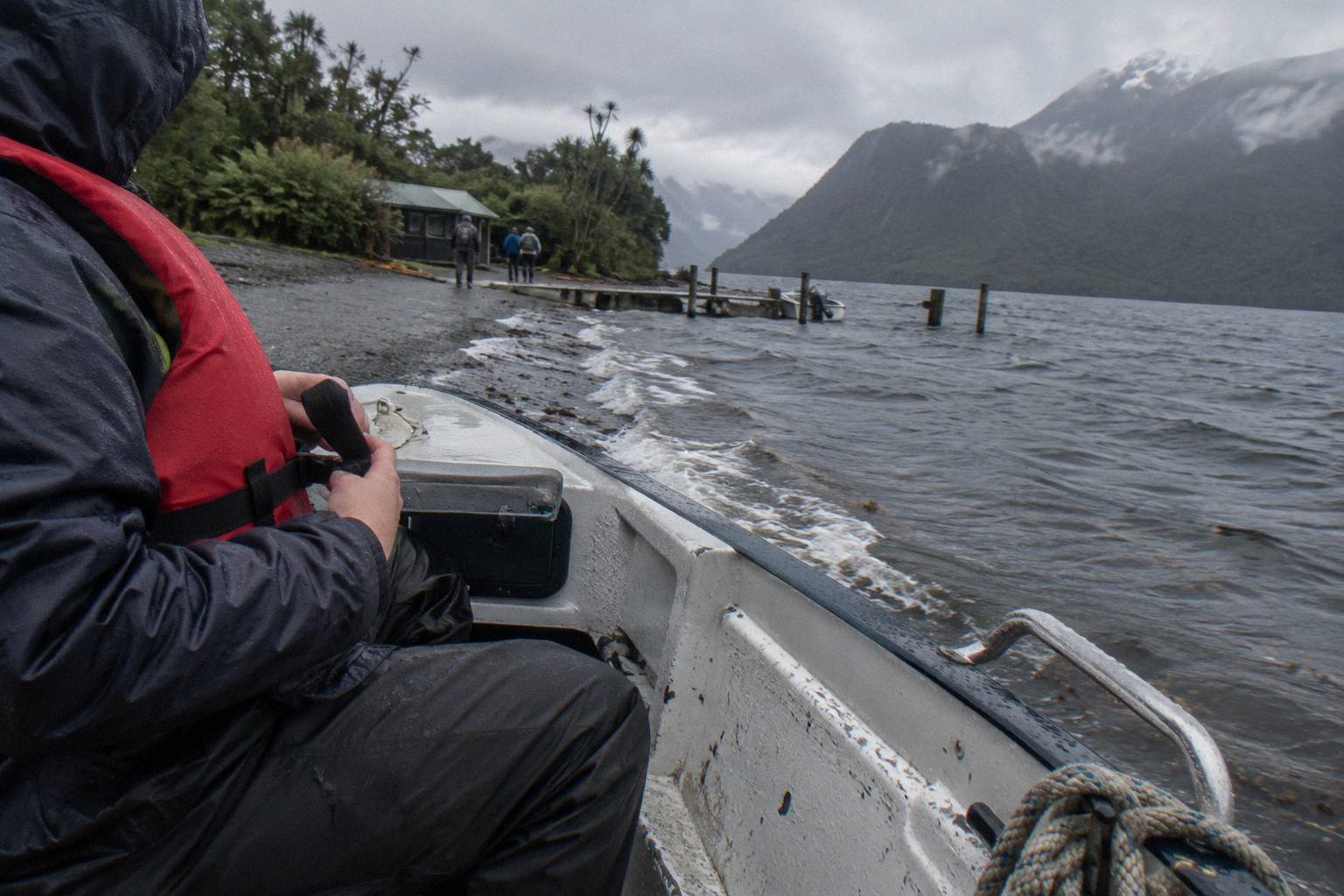
Usually not. The lake operator runs in wet weather, supplies full wet-weather gear, and states it will cancel only if conditions are considered unsafe, then offer an alternative or a full refund. Cancellation by you is free up to 24 hours before, not refundable inside that window.
This is the part of winter planning where the terms actually matter, so they are worth reading closely. A full refund with no penalty applies if you change or cancel at least 24 hours ahead on the Wilderness Tours trips; inside 24 hours it is not refundable for any reason, and private or group bookings need 48 hours. The operator can also cancel for minimum numbers or unsafe conditions, with a full refund either way. Every one of the five trips listed above carries free cancellation up to 24 hours on the booking page, which in practice is the safety valve for a traveller watching a forecast.
The forecast itself deserves a note of caution from the operator's own FAQ. It says it is often dry at Lake Mapourika while it is raining in the township, because the lake sits north of the glacier valley in its own microclimate. A wet morning in Franz Josef village is therefore a weak reason to cancel a lake trip; the operator checks the conditions at the lake itself. Our companion piece on rain and kayaking near Franz Josef goes deeper on what a wet departure actually feels like and what the operator hands you at check-in.
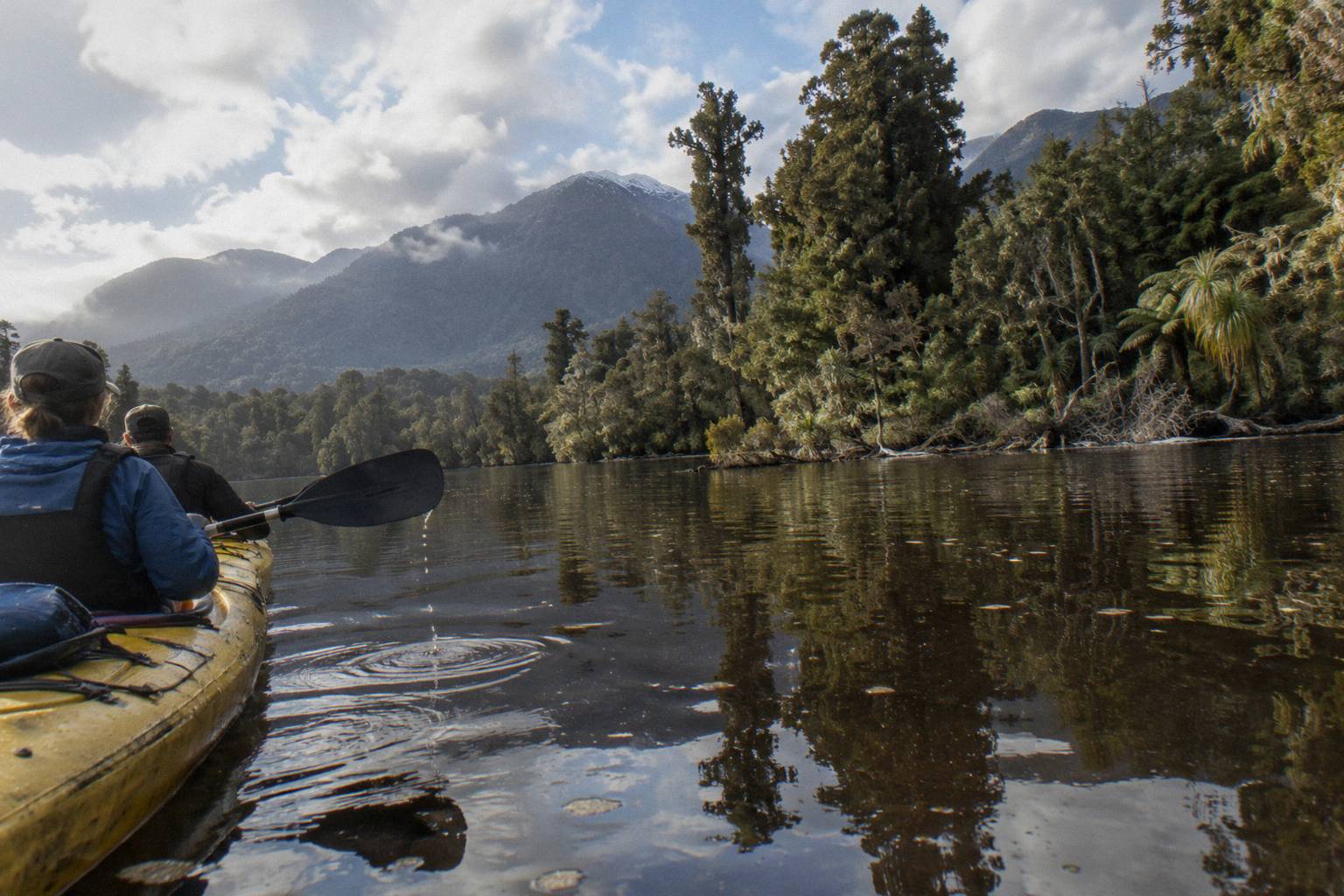
What is supplied removes most of the gear anxiety. On the Mapourika trips the kit list includes a dry bag, paddling jacket, PFD, wet-weather gear, kayak skirt, pogies for your hands, the paddle and free photos emailed afterwards. Feet stay dry in stable double kayaks, so comfortable sneakers or sandals work. You bring a warm top layer, a cap or sunglasses, a camera, and bottoms that are anything but jeans, a point our post on why jeans belong nowhere near a kayak tour explains in detail.
Cold Water Safety, Lifejackets And Hypothermia
From 9 October 2026, everyone on a recreational craft 6 m and under, kayaks included, must wear a lifejacket while underway, under a nationwide Maritime NZ rule. The lake operator's risk disclosure names hypothermia as a risk, higher in winter, alongside capsize and drowning, and notes you can at times be 1 to 2 hours from medical assistance.
The lifejacket rule is current law, not advice, and it sits on top of the buoyancy aids operators were already supplying on every trip listed here. Maritime NZ also advises carrying two waterproof ways to call for help and checking the marine forecast before heading out, both of which a guided tour handles for you: the guide carries the communications, checks the conditions and, on the lagoon trips, keeps a rescue boat on standby.
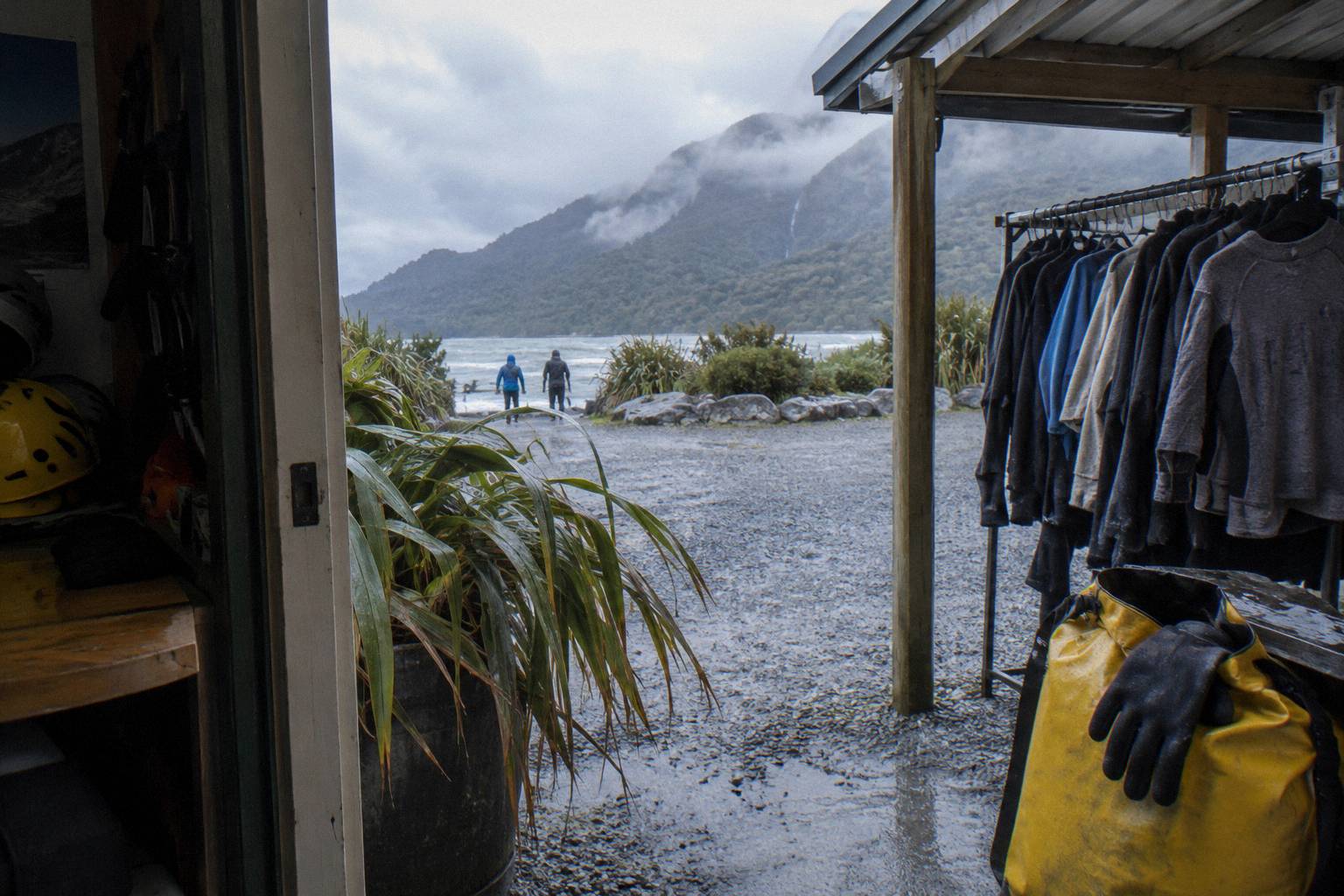
The operator's risk disclosure is unusually candid and worth reading before a winter booking. The lake is deep and exposed; the listed risks include capsize, hypothermia, drowning, loss of items and serious injury; buoyancy aids must always be worn; no drugs or alcohol before a tour; medical conditions should be declared. The company states its activities fall under Maritime NZ or the Adventure Activities Regulations and that it is safety audited through both AdventureMark and Maritime NZ. For suitability questions, cold-water anxiety among them, the right move is to ask the operator directly and your doctor; no statistics are printed here and none should be invented.
None of this makes winter kayaking reckless. It makes it a guided activity with a real risk disclosure, run by operators who supply the thermal and waterproof layer between you and the water. The nervous-paddler question comes up in every season, and our piece on nervous paddlers and safety on the lake walks through the same disclosure from a first-timer's angle: you do not need to know how to swim on the lake trips, because a correctly fitted life jacket is worn throughout.
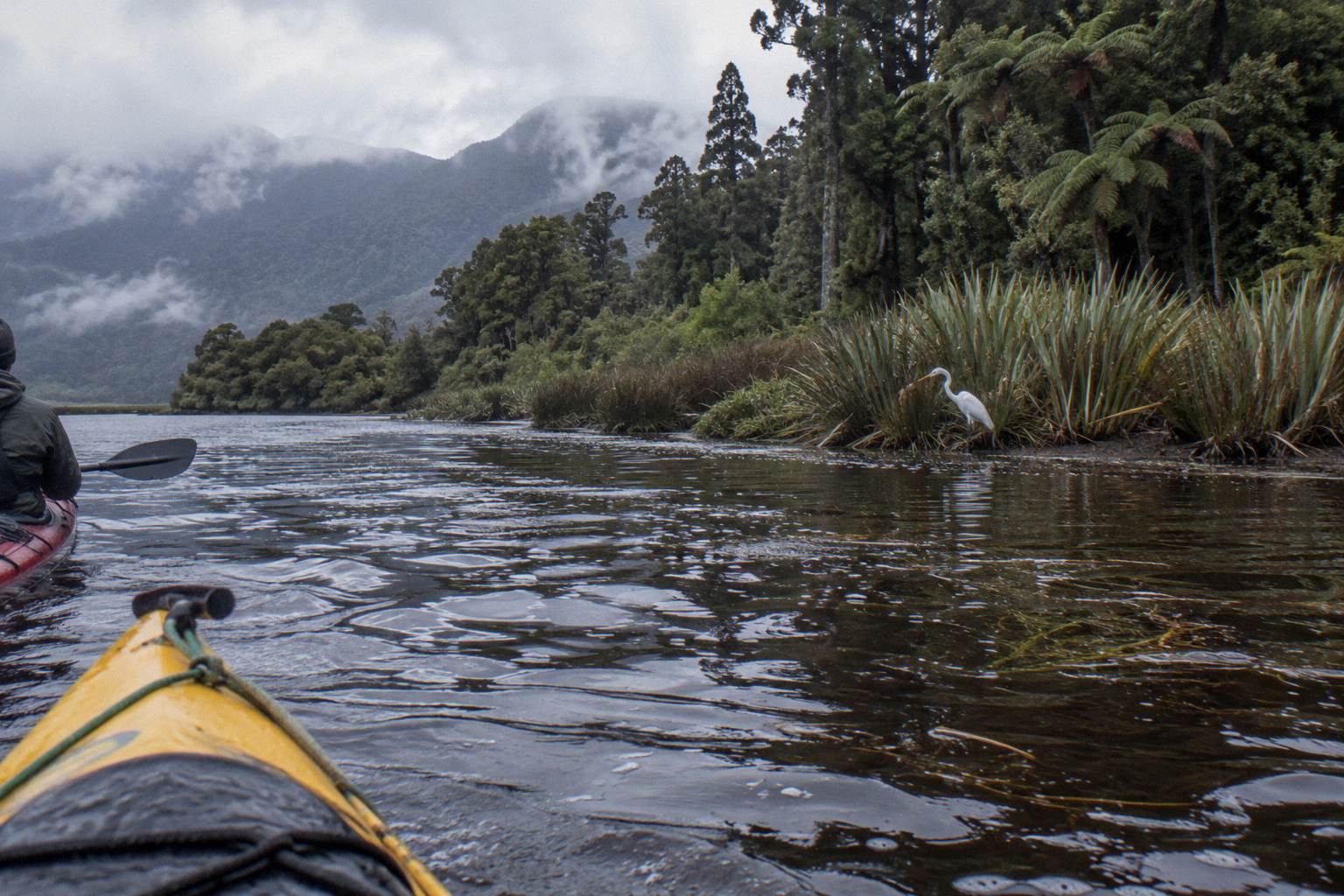
What Okarito Lagoon Looks Like In Winter
Okarito Kayaks trades year round from its base at 1 The Strand in Okarito, a village of roughly 40 residents about 25 minutes north of Franz Josef. Its guided Explorer and Adventurer trips are small-group and tide-timed, need a minimum of two adults booked to confirm a departure, and the operator holds a NZ Tourism Environment Award for 2026.
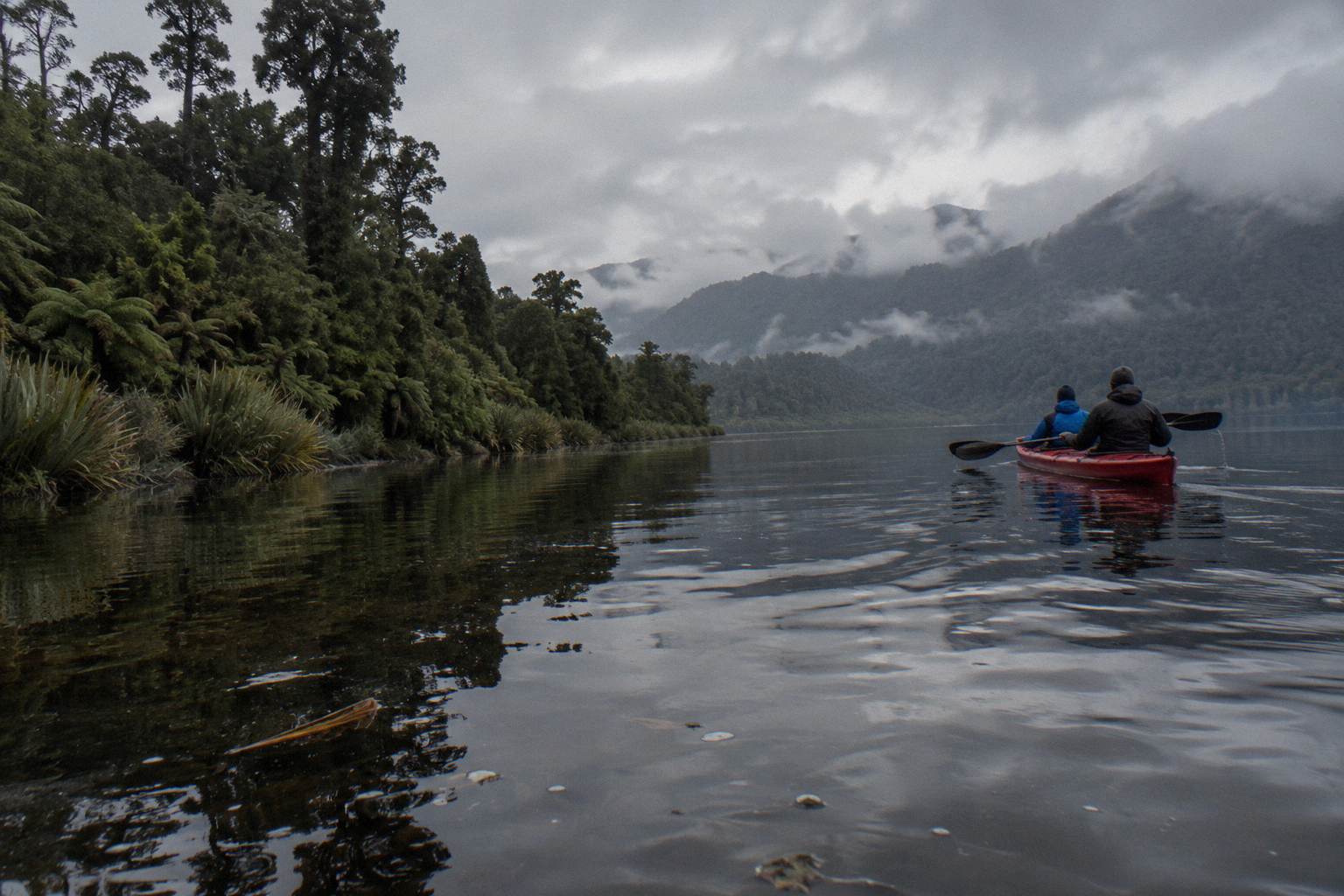
Winter on the lagoon has a specific draw: the kotuku, the white heron. The Department of Conservation notes the only New Zealand breeding colony sits at Waitangiroto near Whataroa, breeding September to February, and that in the breeding season the birds feed in coastal lagoons, particularly Okarito Lagoon. Early winter sits at the edge of that window, and the operator says that while kayakers cannot access the nesting site, it is common to see the birds feeding throughout the lagoon year round. The colony itself is a separate licensed tour from Whataroa, not a kayak trip.
The two lagoon trips suit different winter energies. The Okarito Lagoon Kayak Explorer is 3 hours in total with up to 2 hours on the water, from NZ$165 per person. It is the steadier introduction to the lagoon's channels and birdlife.
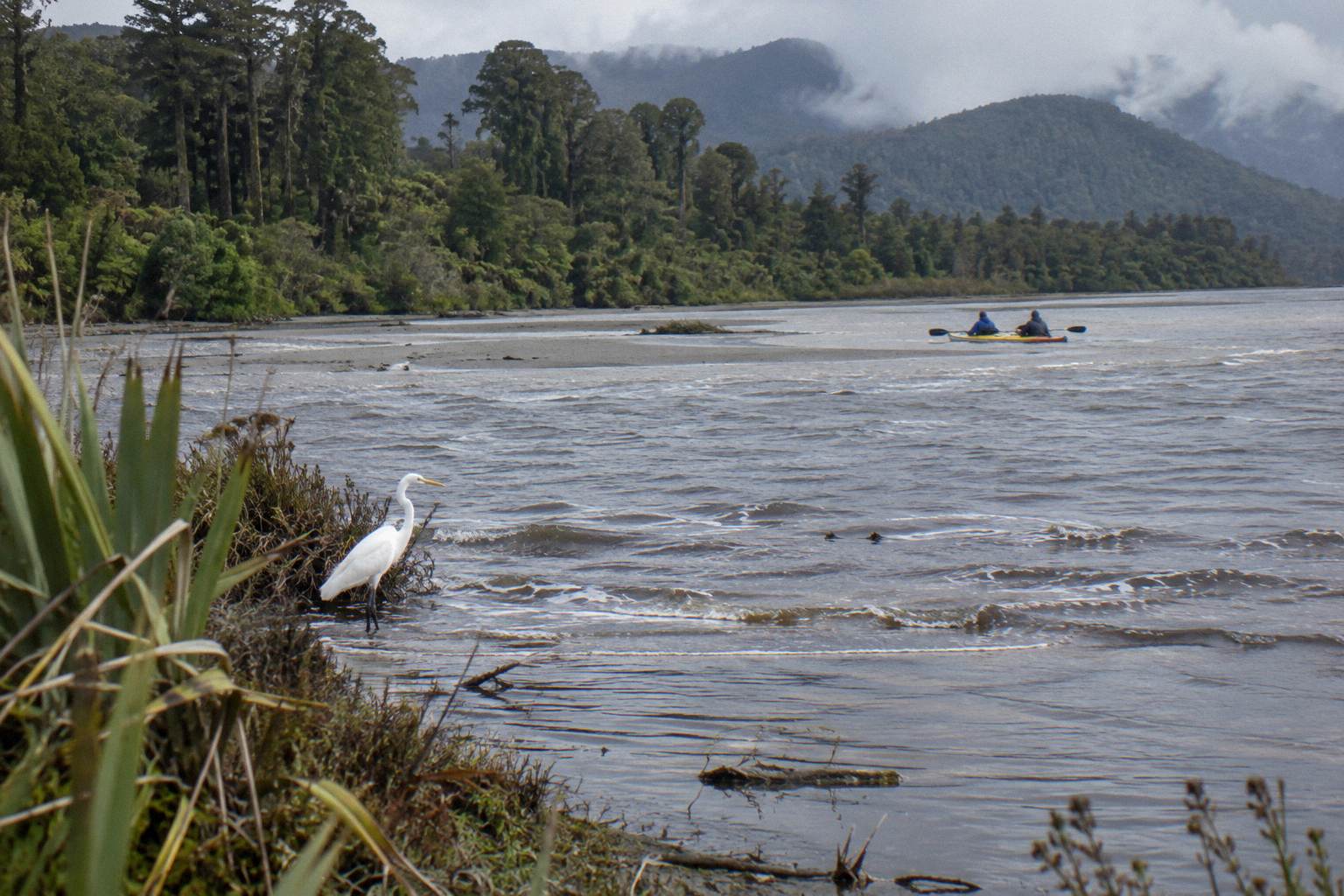
The Adventurer, from NZ$210 per person, runs 4 hours in total with up to 3 hours on the water and the operator flags some fitness and flexibility, which matters more when the air is 12 °C than when it is 20 °C. The booking pages exclude people over 200 cm or over 125 kg. There is no transfer: you drive yourself the 10 km side road off SH6 to the village, and the operator asks you to arrive 10 to 15 minutes early. The base has parking, toilets and hot drinks, and the operator provides a lagoon map, bird guide, buoyancy aid, spray skirt, dry bags, environmentally friendly insect repellent and a rescue boat on standby. Sandflies appear on occasional cloudy, still days, it says, which describes a fair share of winter mornings; the repellent is on hand.
Planning A Winter Booking: Timing, Gear And The Decision
Book with the session pattern, not against it: winter lake departures are morning and early afternoon, lagoon departures follow the tide, and the Sunset Classic does not exist until 1 November. Dress in warm quick-drying layers, skip jeans, arrive 15 minutes early, and rely on the operator's supplied wet-weather gear rather than your own. Free cancellation up to 24 hours applies across all five trips.
A winter day here has a natural shape. Paddle in the morning or early afternoon, then use the long evening indoors, and if your legs want the warmth afterward, the Franz Josef hot pools after a paddle are the local ritual. Deciding how many days to stay is its own question in winter, since fewer daylight hours compress the itinerary; our guide on how many days to spend in Franz Josef builds the calendar around a single paddle.
Should you actually do it? If a winter trip means you want warm, dry, passive sightseeing, take the scenic cruise from NZ$125 per person, a covered boat that runs rain or shine. If you want the mirror-creek paddle and the sanctuary walk, winter is a fine time to do it: crowds are thinner, the reflections are often dramatic under low cloud, and the trip with the most reviews, the 3-hour Mapourika tour at 4.9 from 400+ reviews, is on the water through the whole season. Franz Josef Kayak Tours keeps the full set of trips with live prices so you can compare before committing either way. Booking ahead still matters in winter for the lake trips, because minimum numbers and the small group sizes mean a departure is not confirmed until it fills, and our post on whether to book a kayak tour in advance covers exactly that trade-off.
Common Questions About Winter Kayaking Near Franz Josef
Do Kayak Tours Near Franz Josef Run In Winter?
Yes. Franz Josef Wilderness Tours runs its Lake Mapourika trips year round on winter sessions from 1 April to 31 October, typically a 9am (or 10am) and a 2pm departure, with times varying. Okarito Kayaks trades year round too, timing its lagoon trips around the tides.
What Time Do Winter Kayak Tours Start On Lake Mapourika?
The operator's winter pattern, 1 April to 31 October, is a 9am (or 10am) and a 2pm departure, and the operator states times may vary. Check the booking page for your date rather than planning around a fixed start.
Is There A Sunset Kayak Tour In Winter?
No dedicated one. The Sunset Classic runs only from 1 November to 31 March at 5pm. In winter, the operator says the 2pm departure often coincides with sunset, which is the closest equivalent.
Do The Trips Cancel When It Rains?
Generally not. The lake operator runs in wet weather, supplies jackets and wet-weather gear, and cancels only if conditions are considered unsafe, offering an alternative or a full refund.
What Should I Wear Kayaking In Winter Near Franz Josef?
Warm, quick-drying layers and a top you can add to, comfortable sneakers or sandals since feet stay dry in the double kayaks, and anything but jeans. The operator supplies the paddling jacket, wet-weather gear, PFD, skirt and pogies.
Can I Cancel A Winter Kayak Tour If The Weather Turns?
Yes, up to a point: all five trips carry free cancellation up to 24 hours before on the booking page. Inside 24 hours the lake operator's policy is not refundable for any reason, so watch the forecast and decide early.