White Heron Sanctuary Tour Or Kayak Trip: Which To Book
The kotuku, New Zealand's white heron, breeds at one protected colony near Whataroa and feeds across the shallow waters of Okarito Lagoon. One experience shows you the nest site from a hide, the other paddles you through the feeding ground, and they are genuinely different days out.
Short answer
The sanctuary tour at Whataroa is the only way to see the nesting colony, viewed from a hide on a licensed tour running while breeding lasts, roughly mid September to early March. Kayaking on Okarito Lagoon, from NZ$165 per person, is the way to see kotuku feeding, year round.
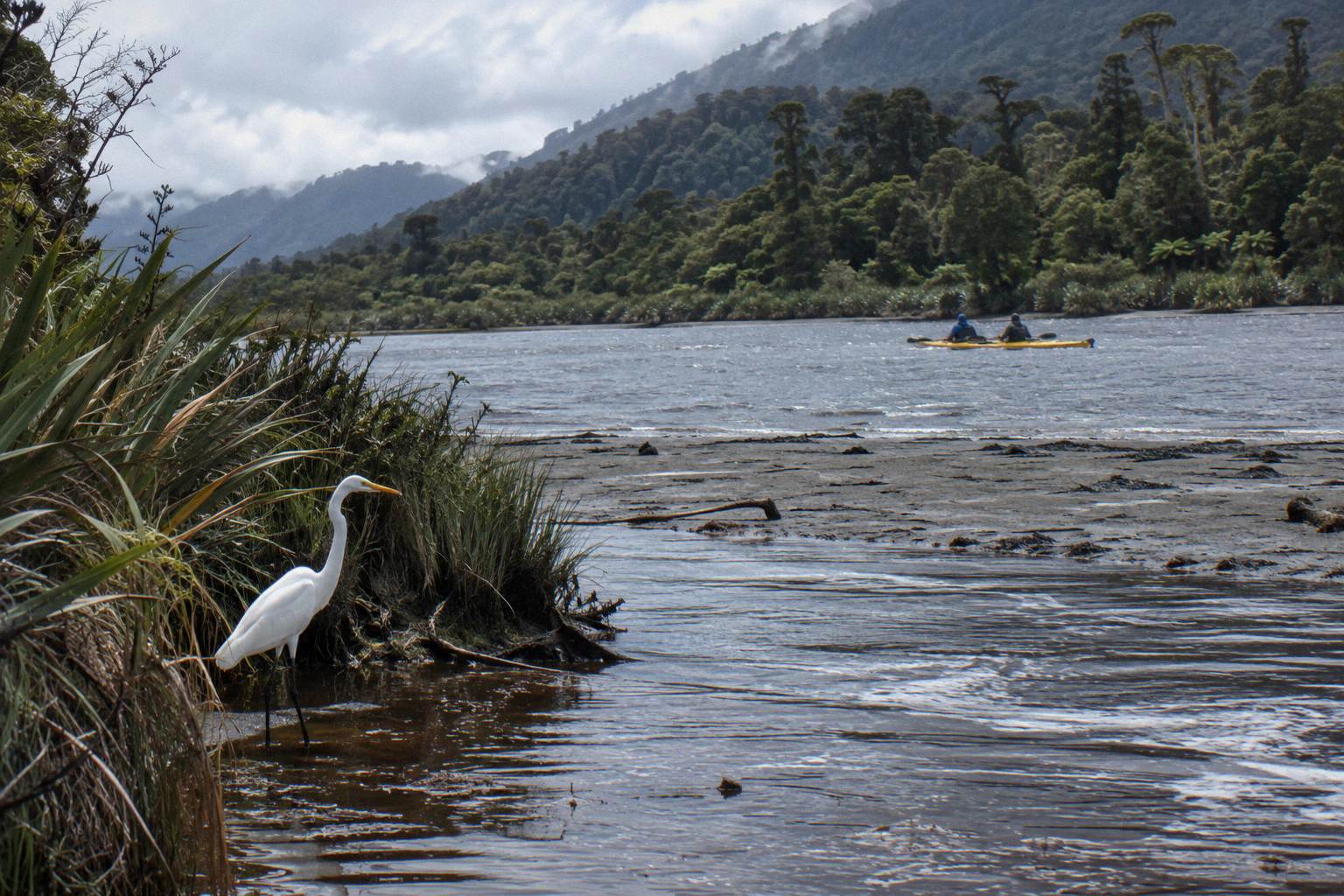
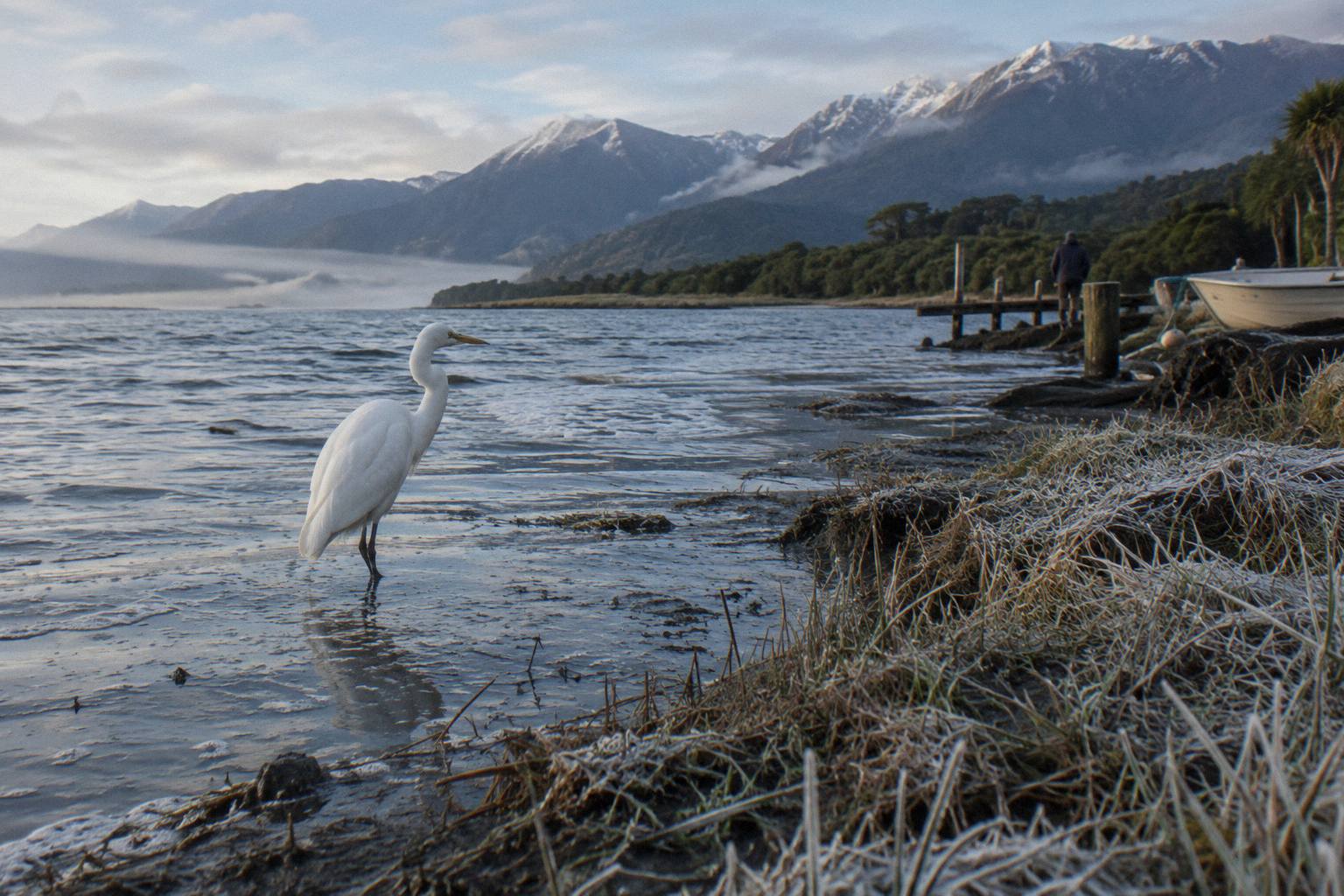
The kotuku occupies a strange place in New Zealand birding. Nationally there are only 150 to 200 birds, according to White Heron Sanctuary Tours, the operator licensed to run the colony tour, yet on a calm day on Okarito Lagoon you can watch one stalking the shallows a paddle-length from your kayak. Both facts are true, and they point to two entirely different experiences that travellers routinely confuse when planning a West Coast stop.
Here is the difference. The colony tour at Whataroa is a walk-and-hide wildlife viewing trip on a nature reserve. The kayak trips are guided paddles on the shallow tidal lagoon at Okarito, run by Okarito Kayaks, a family business guiding on that water for over thirty years. Neither is a version of the other, and the choice between them is really a choice about what you want from an encounter with the same bird.
What Is The White Heron Sanctuary Tour At Whataroa?
The Department of Conservation is explicit about the arrangement: the colony sits in Waitangiroto Nature Reserve near Whataroa, breeding occupies September to February, and guided tours take visitors to view the birds from an observation hide. The licensed operator, White Heron Sanctuary Tours, works from 64 Main Road in Whataroa and has run the tour since 1987. Its own figures put nesting typically from mid September until early March, with up to 50 nesting pairs among the 150 to 200 birds alive nationally. Those are operator numbers, but they frame why access is controlled at all: a single colony carrying an entire national population deserves a fence of rules around it.
Whataroa is north of Franz Josef, a separate base entirely, and the colony tour is not a kayak trip and not on Lake Mapourika. Nothing about it involves paddling. You travel to the site with the licensed operator, walk in, and watch from the hide. If seeing nests, chicks and breeding plumage is the goal, this is the trip that delivers it, and nothing else does. Details like pricing, departure times and booking sit on that operator's own page rather than here.
One seasonal point matters when you plan. Because breeding runs September to February, the colony experience is tied to that window, with the operator's nesting season running to early March. Outside it, there is no nest to watch. The kayak alternative has no such constraint: Okarito Kayaks trades year round, and its guided lagoon trips run in every month, with start times scheduled around the tide. A traveller visiting in, say, June has effectively made this decision already, and the rest of this article is about the months when both doors are open.
Where Do Kayaks Actually See Kotuku?
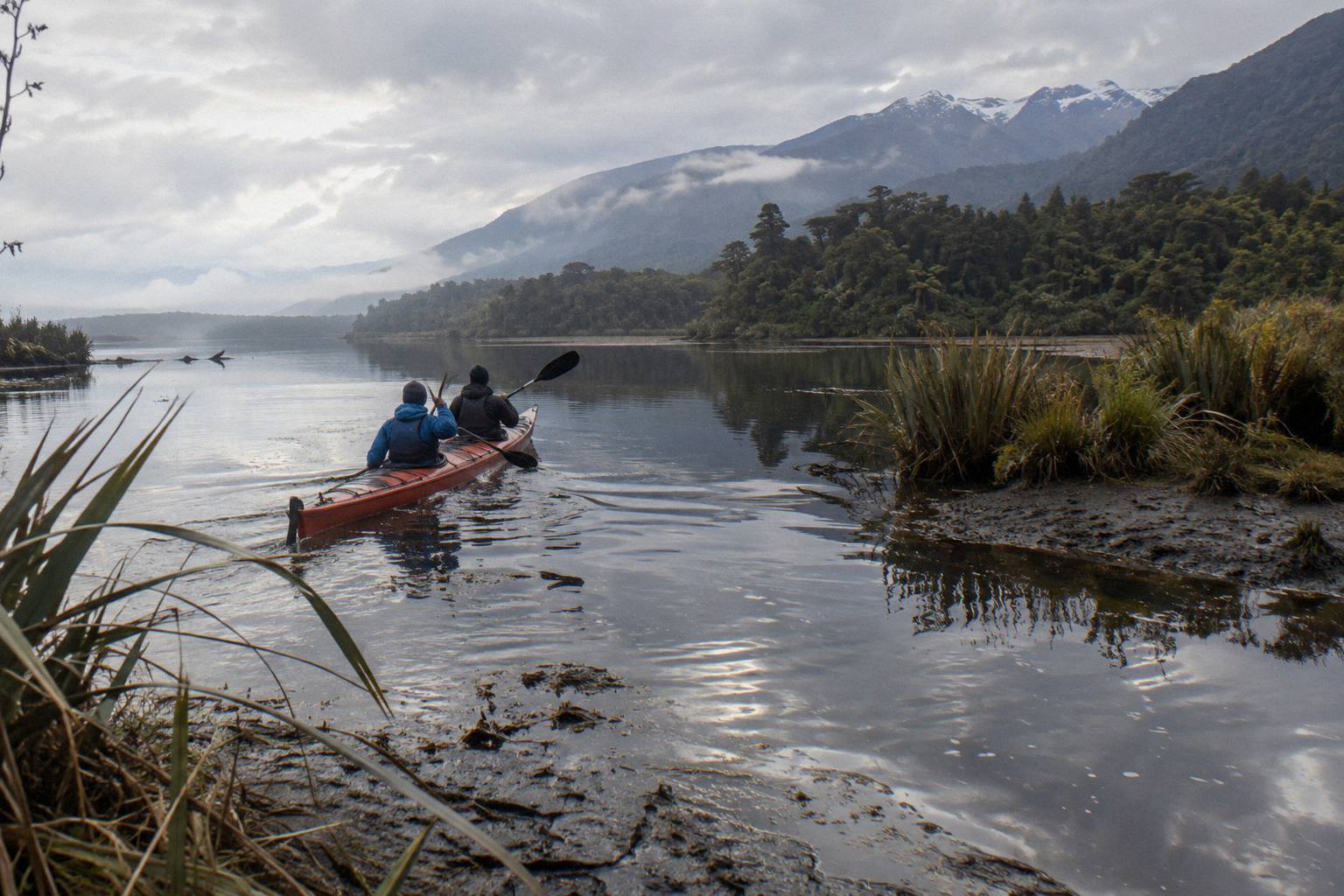
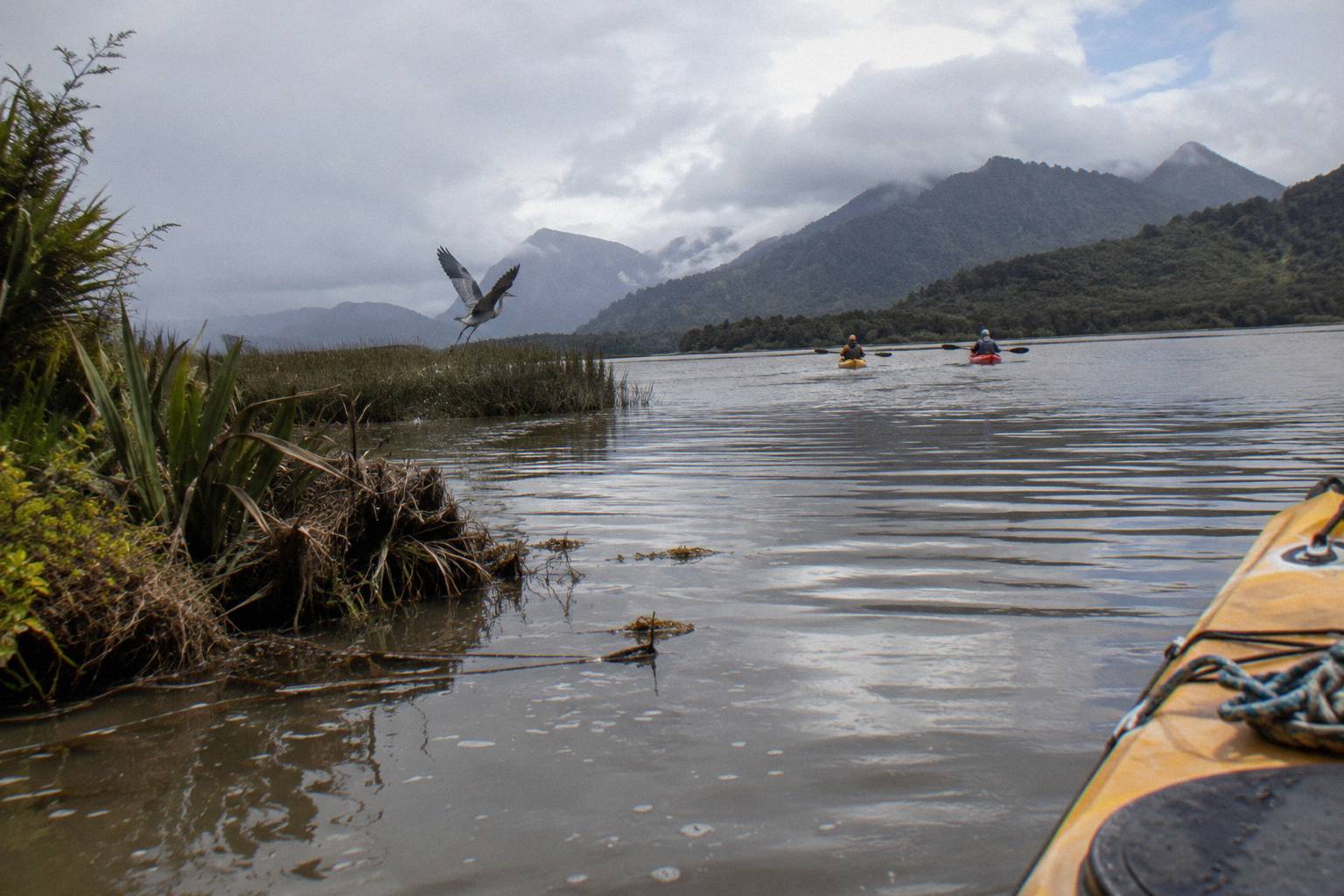
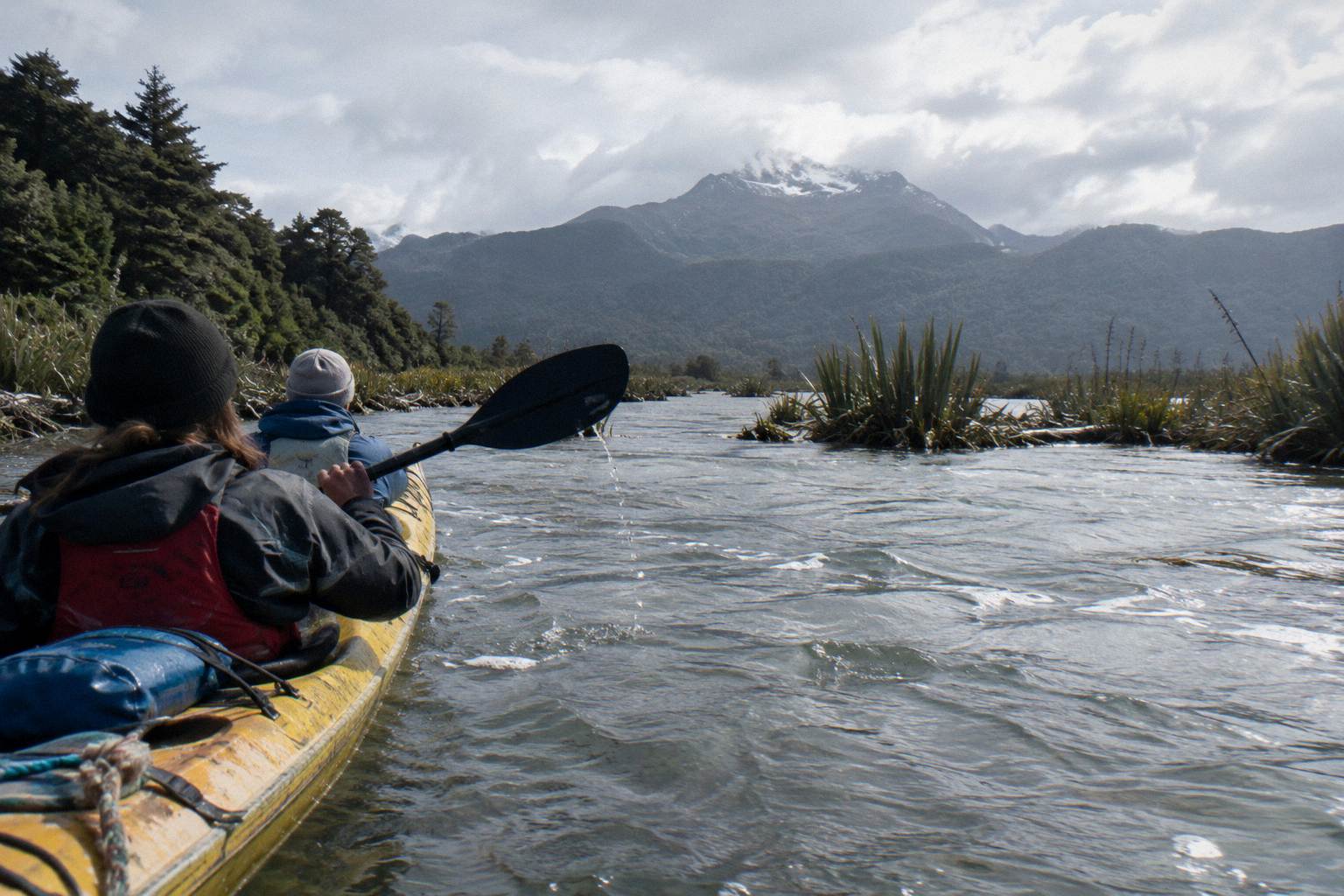
Kayakers see kotuku feeding, not nesting. Okarito Kayaks puts it plainly: while you cannot access the nesting site by kayak, it is common to see these birds feeding throughout the lagoon year round. The lagoon is the birds' kitchen, not their nursery, and a quiet double kayak drifting the shallows is a good way to be in it.
The feeding link is the detail most first pages of search results miss. DOC notes that in the breeding season the colony's birds feed in coastal lagoons, particularly the nearby Okarito Lagoon. The lagoon is shallow, tidal and tannin-stained, and the birds work its edges for small fish. A sighting is never promised, on any trip, by anyone; what the operator offers is a year-round presence in the place where the birds eat, which the colony tour cannot do. In practice, guides who read the water daily know which channels the birds favour.
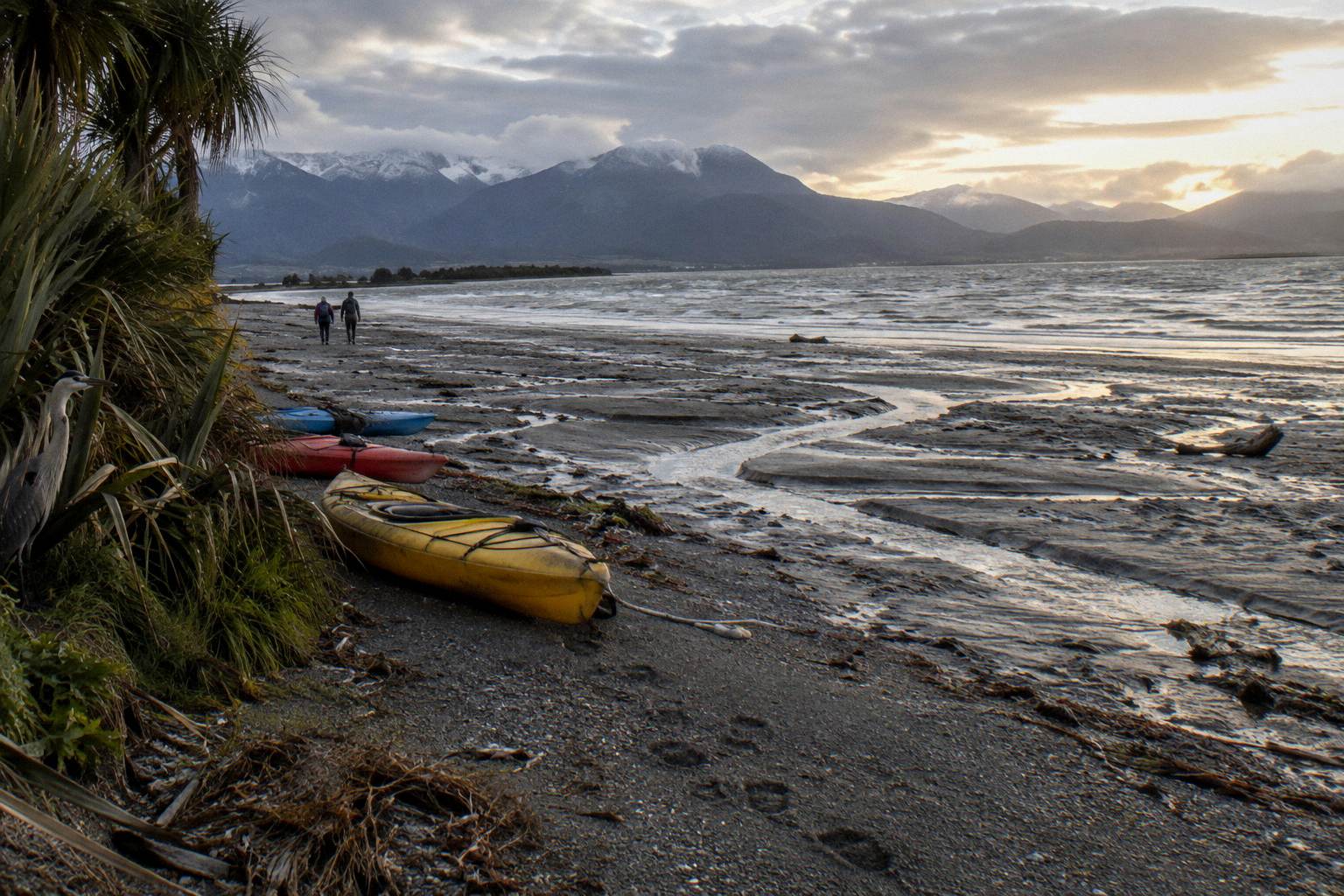
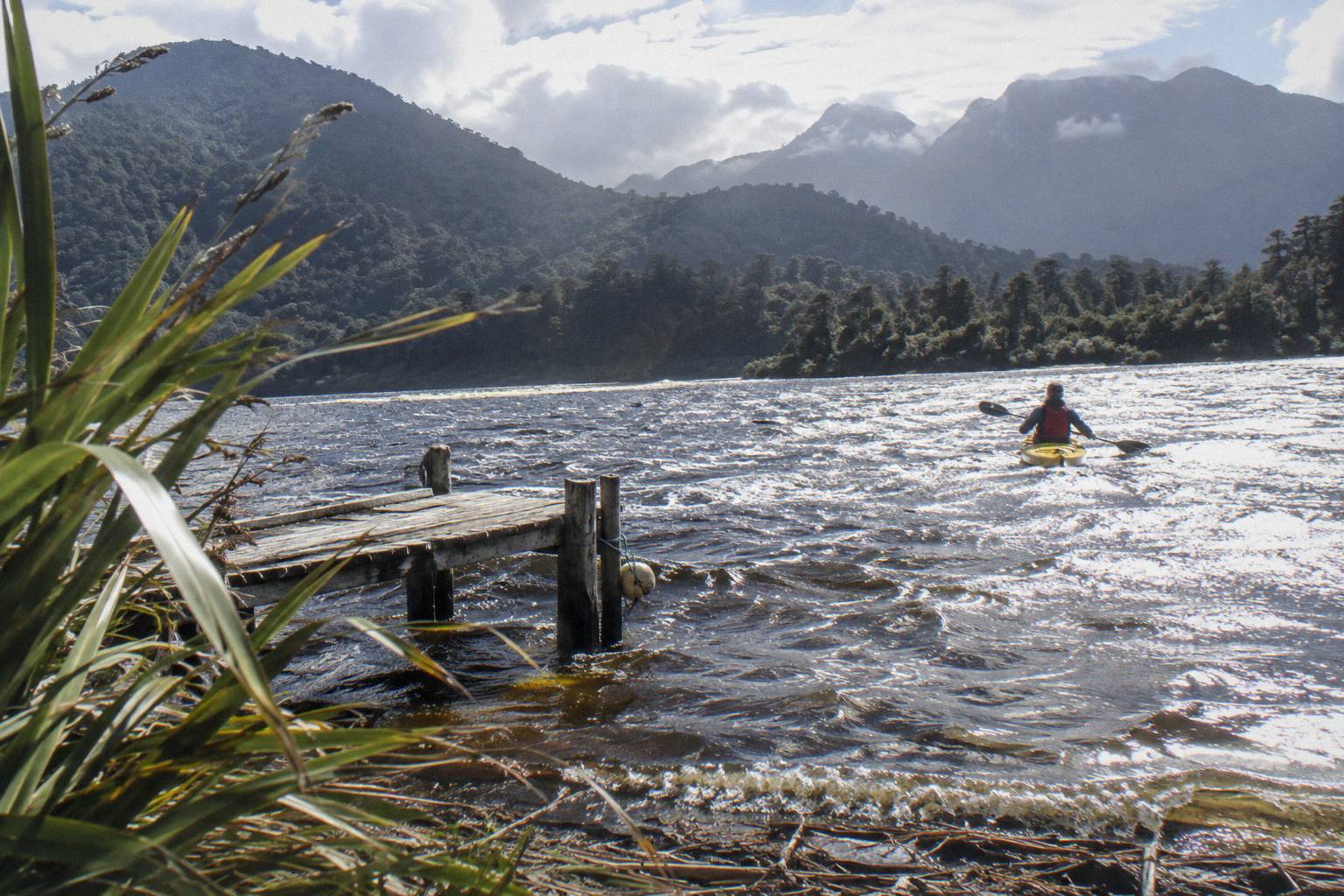
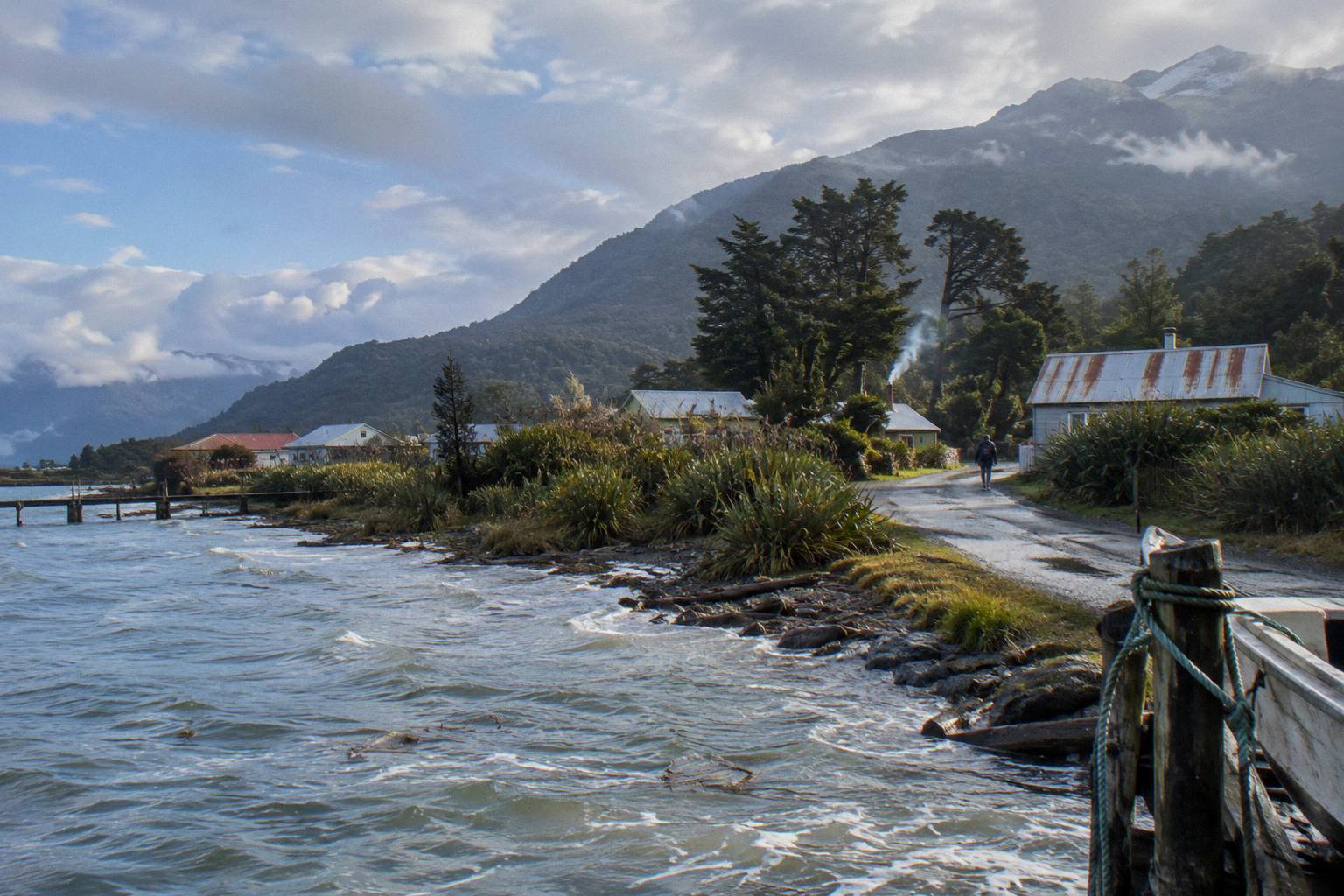
The kayak trips are run by Okarito Kayaks from its base at 1 The Strand in Okarito, a village of about 40 permanent residents by the operator's count, around 30 by DOC's, 10 km off State Highway 6 on a sealed road about 25 minutes north of Franz Josef. There is no shop or restaurant in the village, so arrive supplied. The operator is family run, took over the business in 2014, describes itself as a NZ Tourism Environment Award winner 2026, and can point to over thirty years of renting kayaks and guiding travellers on the lagoon.
Guided trips are small-group and tide-timed, with departures scheduled around the best tidal conditions for any given day, so your start time is set by the booking page for your date rather than by a fixed clock. Arrive 10 to 15 minutes before your trip. A minimum of two adults must be booked to confirm a departure, so a solo traveller may be matched with others rather than getting a private launch. Two guided options exist, and both can put you on the water where the kotuku feed.
If your interest is specifically the bird, the pairing of facts is worth sitting with. Nesting, the rare and tightly controlled spectacle, exists at one site for part of the year. Feeding, the everyday behaviour of the same birds, happens across a lagoon you can paddle in any month, and the two experiences overlap perfectly in spring and summer, which is also when the weather is kindest. Some readers will book both in one day; more on that later.
Which Trip Suits Which Goal?
Book the sanctuary tour if seeing the nesting colony itself is the point of your trip, and book a kayak if you want a longer, quieter, year-round encounter with the lagoon where kotuku feed, with the bird as one highlight among many. The two are complements, not substitutes, and which suits you best depends on whether nest or feeding ground matters more to you.
A reader deciding between them usually has one of three goals. If the goal is a tick against a rare bird, the colony hide is definitive: nesting behaviour, breeding plumage, possibly chicks, unavailable anywhere else. If the goal is a half day immersed in a wild West Coast waterway, with herons as a strong possibility rather than a certainty, the kayak wins on duration, immersion and season. If the goal is photography, the answer splits: the hide offers a stable, predictable angle on the nest site, while the kayak offers ever-changing light and angles on feeding birds, at the cost of a moving platform.
| Your goal | Better fit | Why |
|---|---|---|
| See the nesting colony | Sanctuary tour at Whataroa | The only licensed access, from an observation hide |
| Year-round birdwatching | Okarito Lagoon kayak | Guides report kotuku feeding on the lagoon year round |
| A half-day immersion in the landscape | Okarito Lagoon kayak | 3 to 4 hours in a shallow tidal lagoon |
| Photography of feeding birds | Okarito Lagoon kayak | Drift close to feeding channels, changing light |
| Photography of the nest site | Sanctuary tour | Stable hide, predictable subject |
Each option has its limits, so here are the caveats. The colony tour is a viewing trip tied to one site and one season. The kayak trips carry no sighting promise at all; the operator's careful wording is that seeing feeding birds is common, and the lagoon's birdlife, which includes much more than herons, is the real draw. Weather also plays differently: the hide shelters you, while a kayak trip on a shallow exposed lagoon bends to wind and tide, with start times set around the best tidal conditions for the day.
For most bird-focused visitors with two spare half-days, the sequence that works is the kayak first. A few hours on the lagoon calibrate your eye to the water, the light and the scale of the place, and the herons you see feeding there look different the next day at the hide, when you understand where those same birds spend their working hours. For visitors with one half-day, the choice below comes down to season and temperament.
Okarito Lagoon Kayak Explorer Or Adventurer?
The Explorer is a 3-hour trip with up to 2 hours on the water, from NZ$165 per person, and suits most first-time visitors. The Adventurer is a 4-hour trip with up to 3 hours on the water, from NZ$210 per person, needs some fitness and flexibility, and suits paddlers who want more distance and more of the lagoon's remoter channels. Both are tide-timed small-group trips from the Okarito Kayaks base.
The Explorer is the natural entry point. Three hours in total, with up to two of them on the water. No review score is shown for the Okarito Lagoon Kayak Explorer, so there is no rating figure to lean on; what you are choosing is format and duration.
The Adventurer stretches the same water into four hours total and up to three on the water, and the operator is candid that it needs some fitness and flexibility. One booking-page rule applies to both guided trips: people over 200 cm or over 125 kg are excluded, so check that against your own situation before booking. No review score is shown for either trip, so the practical move is to pick based on the trip description.
| Trip | Total time | On the water | From price | Notes |
|---|---|---|---|---|
| Okarito Lagoon Kayak Explorer | 3 hours | Up to 2 hours | NZ$165 per person | Suited to most visitors and first paddlers |
| Okarito Lagoon Kayak Adventurer | 4 hours | Up to 3 hours | NZ$210 per person | Some fitness and flexibility needed; new listing, no rating |
What the operator supplies on guided trips is consistent across both: a lagoon map and bird guide, buoyancy aid, spray skirt, dry bags, environmentally friendly insect repellent, and a rescue boat on standby. The base has parking, toilets and hot drinks. You bring warm quick-drying clothing, a rain jacket, footwear, water, snacks, sunscreen, a camera and, if you own them, binoculars, which earn their carry weight on a lagoon full of feeding birds. Both trips are self-arrival at The Strand, with no transfer from Franz Josef, so budget the 25-minute drive each way.
A rule now in force matters here as everywhere: since 9 October 2026 everyone on a recreational craft 6 m and under, kayaks included, must wear a lifejacket while underway, per Maritime NZ. On these guided trips that is simply how the trip runs, with buoyancy aids provided and worn. If you are weighing guided versus independent paddling generally, the guide to renting kayaks without a guide on the lake covers the trade-offs in more depth.
What About The Lake Mapourika Trips?
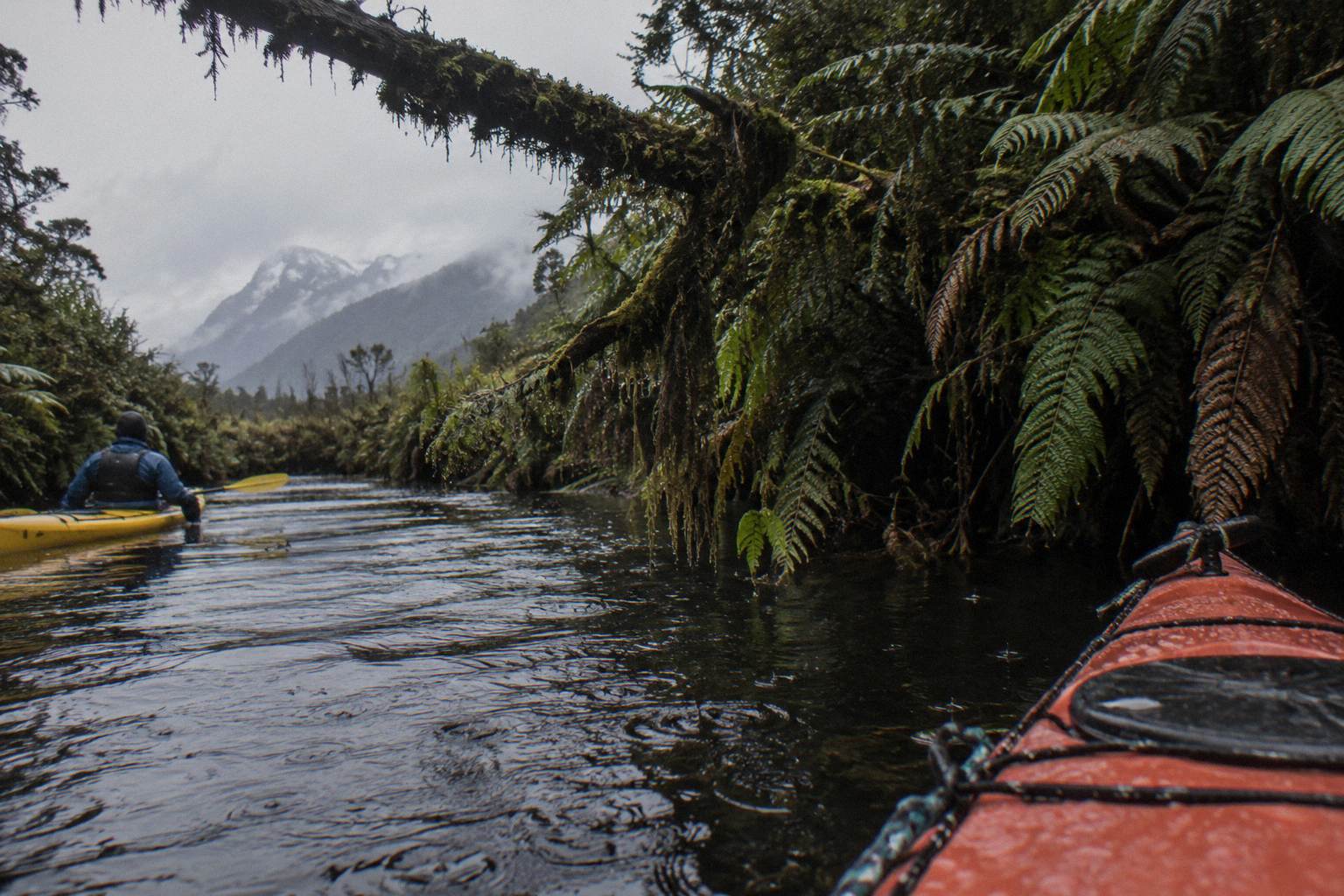
The confusion is understandable, because the word "sanctuary" appears in both. The Okarito Kiwi Sanctuary is an around 11,000 hectare predator-fenced forest on the lake's shores, home to rowi kiwi, and Franz Josef Wilderness Tours' flagship paddle crosses the lake into a hidden creek inside it. The Waitangiroto Nature Reserve near Whataroa is where the kotuku nest, and no kayak goes there. A traveller who books a Mapourika trip expecting the heron hide will have a lovely morning and see no colony, so it is worth being blunt about the distinction, exactly as the guide to choosing between Lake Mapourika and Okarito Lagoon lays out.
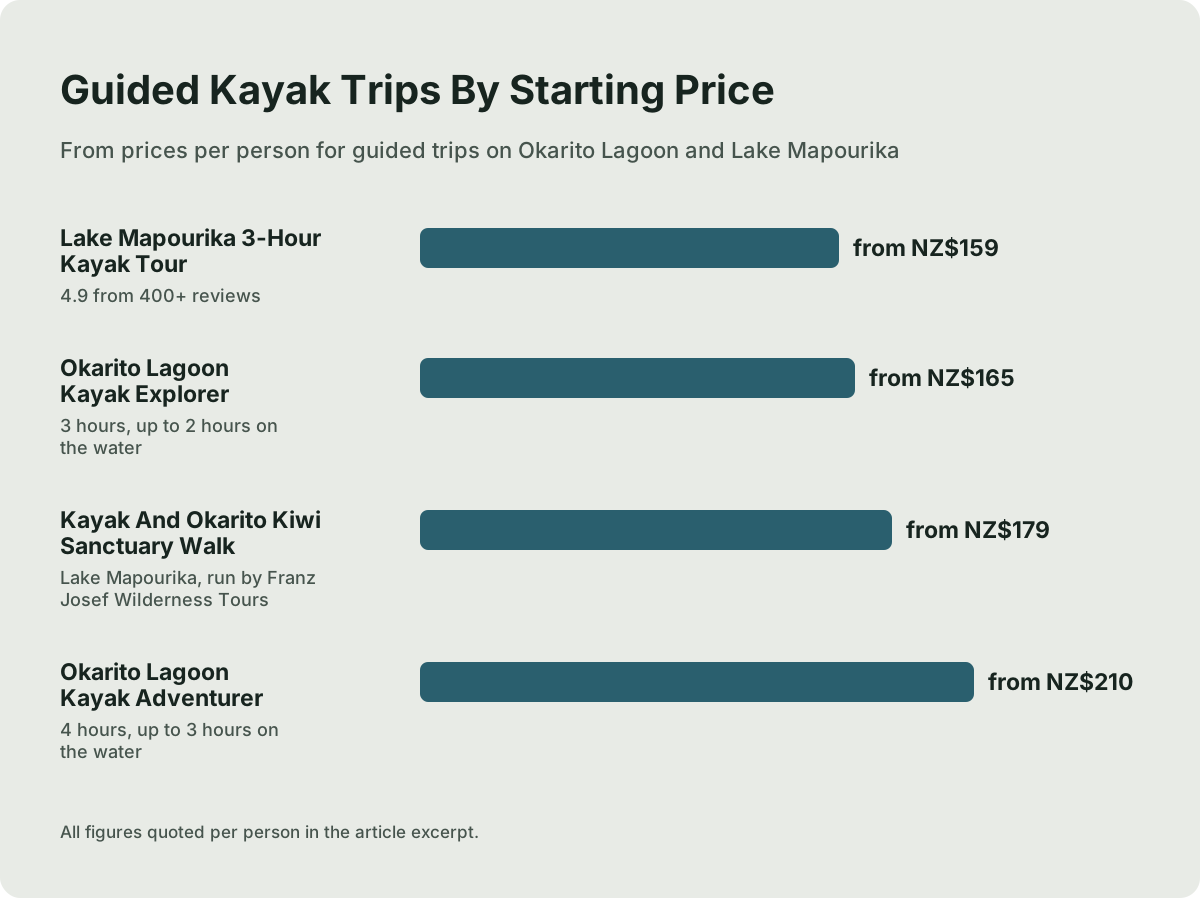
That said, the Mapourika trips belong in this comparison because many heron-curious visitors end up happiest combining waters. The 3-Hour Kayak Tour is the most-reviewed trip of the five, 4.9 from 400+ reviews, from NZ$159 per person, with check-in at the operator's Main Road office in Franz Josef township and a courtesy transfer to the lake. The Kayak And Okarito Kiwi Sanctuary Walk, from NZ$179 per person at 4.9 from 120+ reviews, adds about an hour on a private rainforest track reachable only by water. Neither is a heron trip, and both are genuinely good mornings out.
Wildlife-wise, the Mapourika trips are about the forest and its kiwi sanctuary, with birdlife along the creek margins. Birdlife on Okarito Lagoon is the lagoon's own: herons feeding, and a shifting population of waders and waterfowl across the shallows. Readers who want the fuller picture of what paddles past a kayak on this coast can browse the wildlife round-up in what you might see on a West Coast paddle, which treats both waters.
Can You Do Both The Colony Tour And A Paddle?
Yes, and it is the strongest itinerary for a serious birding visit. The colony tour runs from Whataroa during the breeding season, roughly mid September to early March, Okarito is about 25 minutes north of Franz Josef by road, and Whataroa sits further north still on State Highway 6, so the two can be sequenced across one full day or, more comfortably, two half-days.
Geography does the work. Travelling south to north on State Highway 6 you pass Franz Josef, then the turn-off to Lake Mapourika about 10 minutes along, then Whataroa, and the Okarito road branches west roughly 10 km past Whataroa. A morning colony tour followed by an afternoon tide-timed paddle is physically possible in peak season, but the kayak departure time is fixed by the tide, not your schedule, so a same-day double only works when the two clocks align. Checking both departures for your date first, then building the day around whichever is less movable, is the practical order of operations.
Two half-days is the relaxed version, and it lets you base in Franz Josef, where most accommodation sits, rather than committing to tiny Okarito with its handful of residents and no shop or restaurant. If you have a spare evening at Okarito, DOC lists several short walks around the village, including the trig walk at 1 hour 30 minutes and the 20-minute wetland walk, which is a pleasant way to fill the gap after a morning paddle. The Department of Conservation's Okarito area page covers those walks and the historic Donovan's Store and wharf.
The season decides the question outside summer. Visit between roughly early March and mid September and the colony is off the table, so the paddle inherits the day by default, and a worthwhile one it is. Visitors torn over how to split limited time might also read the site's broader take on how many days to spend around Franz Josef, which budgets paddles against glacier walks and drives.
What Should You Know Before Booking Either?
Three practical facts carry most of the weight: kayak departures at Okarito are tide-timed with times set per day on the booking page, a minimum of two adults must be booked to confirm a lagoon departure, and every trip we cover offers free cancellation up to 24 hours on the booking page. Weather on the West Coast is the wild card in every plan.
Start with the tide, because it is the one variable you cannot negotiate. The lagoon is shallow and tidal, and Okarito Kayaks schedules tour and rental start times around the best tidal conditions for any day, so there is no fixed timetable to plan around until you have a date. Print no assumptions about which tide is better; the departure time for your date is on the booking page, and nothing else is knowable in advance. This is also why the site's primer on Okarito Lagoon tides and kayaking is worth a read before you commit to a same-day double itinerary.
Then the group rules. A minimum of two adults is needed to confirm a guided Okarito departure, and the booking pages exclude people over 200 cm or over 125 kg. On the Okarito side there is no stated minimum or maximum age, and under-18s pay half price on guided trips, so families with children are not excluded by the birdwatching framing, though very young children and a 3-hour tide-timed trip are worth thinking through carefully. On the Mapourika side, the Kayak And Walk trip states a minimum age of 4.
| Practical point | Okarito lagoon kayaks | Lake Mapourika kayaks | Colony tour |
|---|---|---|---|
| Meeting point | Okarito Kayaks base, 1 The Strand | Main Road office, Franz Josef | 64 Main Road, Whataroa |
| Transfer | Self-arrival, none listed | Courtesy transfer to the lake | Operator-arranged |
| Season | Year round | Year round | Nesting season, roughly mid Sep to early Mar |
| Cancellation | Free up to 24 hours, booking page | Free up to 24 hours, booking page | Check with the operator |
| Rating printed | None on the listing | 4.9 from 400+ reviews (3-hour trip) | Not applicable here |
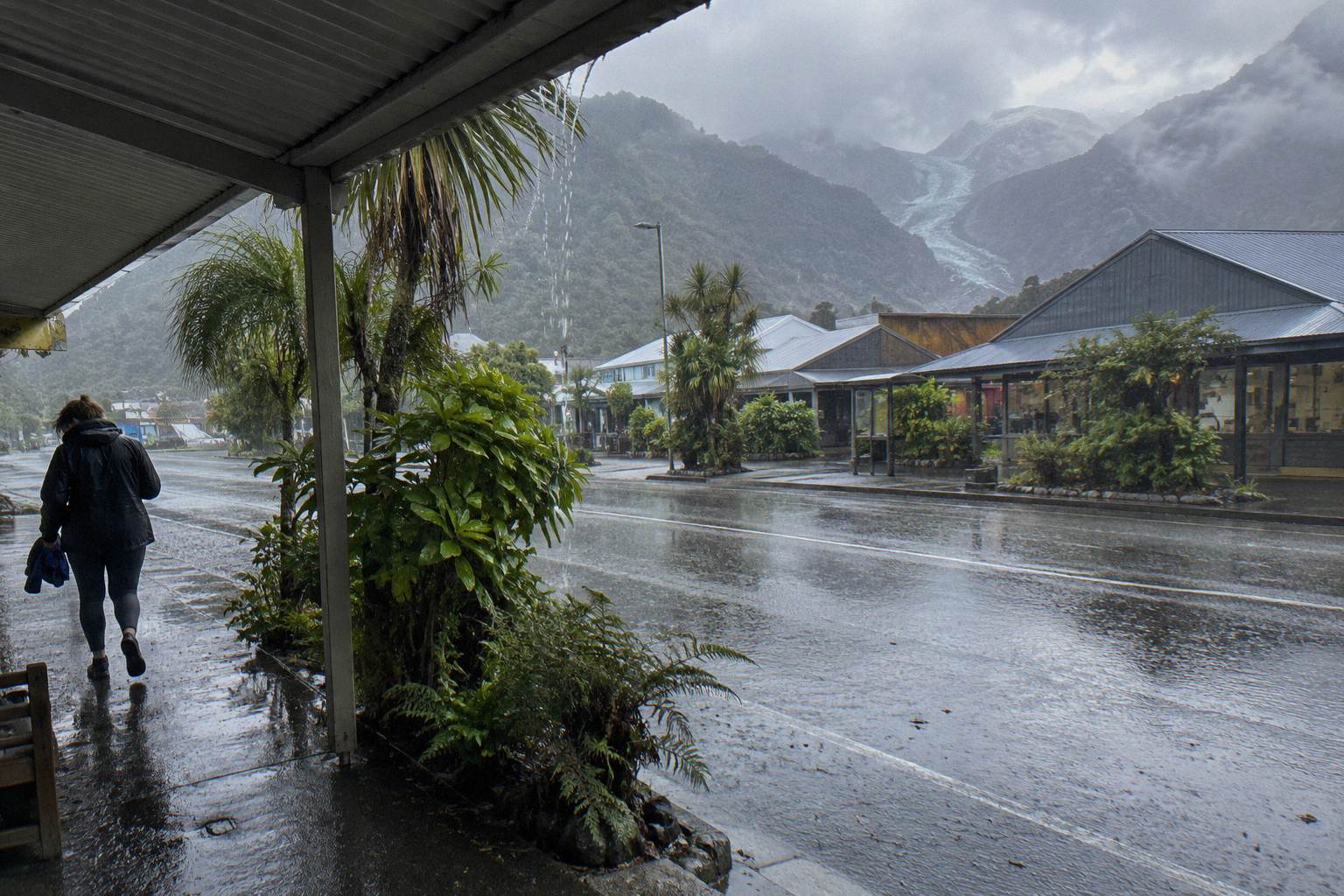
Weather deserves respect rather than fear. Franz Josef records a mean annual rainfall of 5,555.2 mm in NIWA's 1991 to 2020 series, and every month averages above 300 mm, with October the wettest at 594.1 mm and July the driest at 317.8 mm. Light rain does not stop a lagoon paddle, and operators supply the gear, but wind on a shallow lagoon can, and guides will cancel or reschedule when conditions are unsafe. Dress warm, keep a spare half-day in your itinerary if the bird matters to you, and read the site's guide to Franz Josef weather for kayaking for the full picture. For official background on the bird itself, DOC's white heron page is the primary source, and Maritime NZ's lifejacket rule page covers the safety rule now in force for every paddler.
Booking ahead matters most in the November to April stretch, when West Coast traffic peaks and the small-group lagoon trips fill around the best tides. The site's advice on when to book a kayak tour in advance applies doubly to tide-timed departures, since there is often only one good start time per day.
The Short Version
Choose the sanctuary tour for the nest and the breeding season, choose the lagoon paddle for year-round immersion where kotuku feed, and book both if you have two half-days in spring or summer. The Explorer, from NZ$165 per person, is the kayak to pick for heron-focused travellers, and the colony tour's own details sit with its operator at Whataroa.
The comparison is not a ranking, because the two trips do different jobs for different travellers. What is true for everyone is that the kotuku is rare enough, and the setting beautiful enough, that either choice rewards the effort of getting to this quiet corner of the West Coast. All kayak prices quoted are per-person from-prices in New Zealand dollars. The team behind Franz Josef Kayak Tours keeps every option, from the heron hide at Whataroa to a drifting double kayak on the lagoon, covered across the rest of the site's guides.
Common Questions About White Heron Sanctuary Tours And Kayak Trips
Can You Kayak To The White Heron Colony?
No. The nesting colony at Waitangiroto near Whataroa can only be viewed from an observation hide on the licensed sanctuary tour, and kayaks cannot access the site. What kayaks offer is sightings of kotuku feeding on Okarito Lagoon, where the operator reports seeing them year round.
Where Can I See White Herons From A Kayak?
Okarito Lagoon. In the breeding season the colony's birds feed in coastal lagoons, particularly Okarito Lagoon, and guided trips by Okarito Kayaks commonly encounter feeding birds there in every month of the year.
White Heron Sanctuary Tour Or Kayak Trip: Which Is Better?
They suit different goals rather than competing. The sanctuary tour is the only way to see nesting, roughly mid September to early March. The kayak is a year-round half-day immersion where herons are a strong possibility alongside everything else the lagoon offers.
When Is The White Heron Breeding Season?
DOC gives September to February, and the licensed tour operator puts nesting typically from mid September until early March. Outside that window the colony tour has no nest to show, while the lagoon kayak trips run year round.
How Much Does An Okarito Lagoon Kayak Trip Cost?
The Explorer is from NZ$165 per person for 3 hours, and the Adventurer is from NZ$210 per person for 4 hours. Both include gear such as buoyancy aids, spray skirts, dry bags and a bird guide, with free cancellation up to 24 hours on the booking page.
Do I Need To Be Able To Swim Or Paddle To See Kotuku From A Kayak?
No previous experience is needed on the guided lagoon trips, which are small-group and led, and a correctly fitted buoyancy aid is worn throughout, which Maritime NZ rules now require underway on any craft 6 m and under. The Adventurer does ask for some fitness and flexibility.