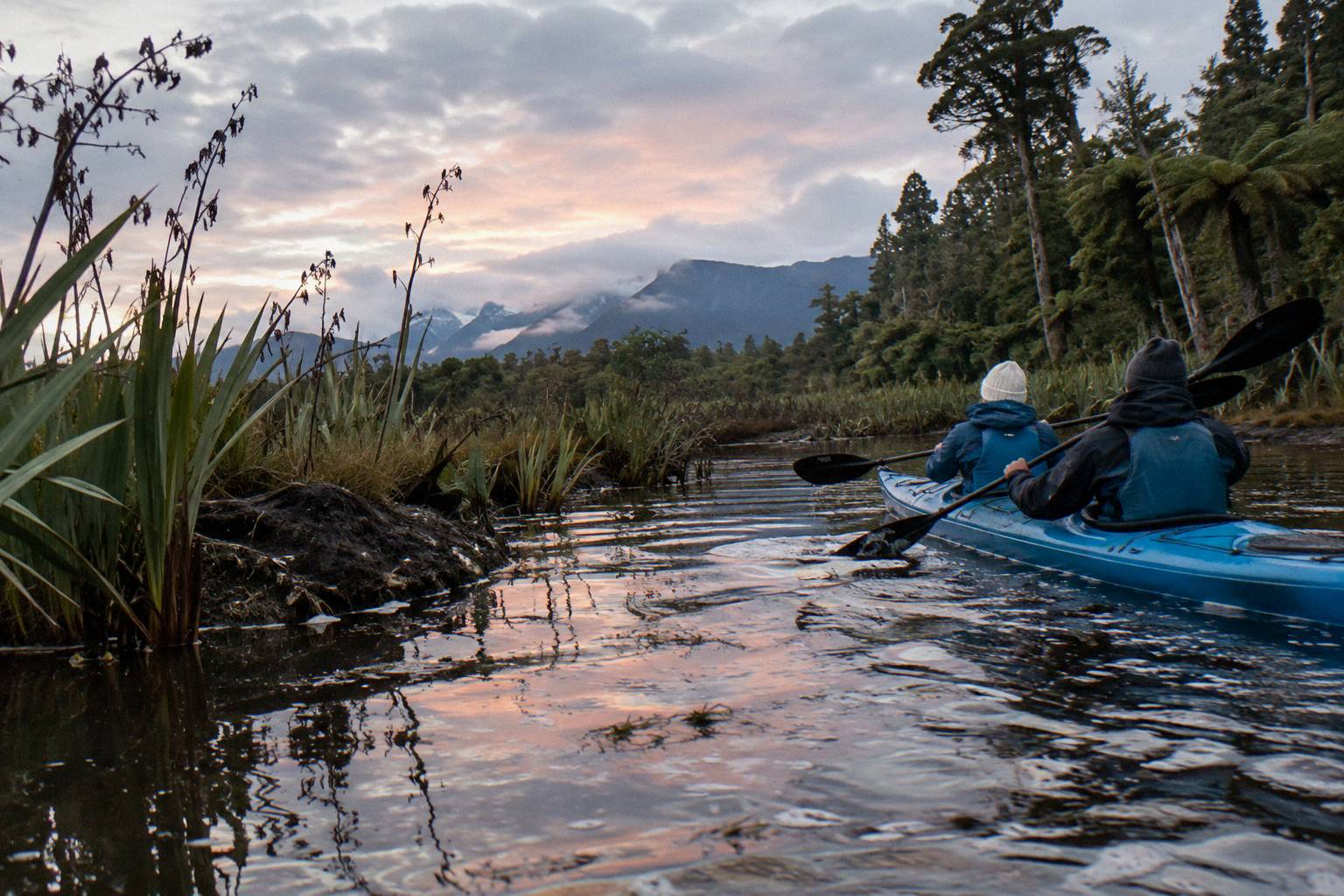
What Wildlife Do You See On A West Coast Kayak Tour?
Kotuku feeding on Okarito Lagoon, rowi kiwi habitat around Lake Mapourika, and what a paddle actually offers a nature-minded traveller near Franz Josef.
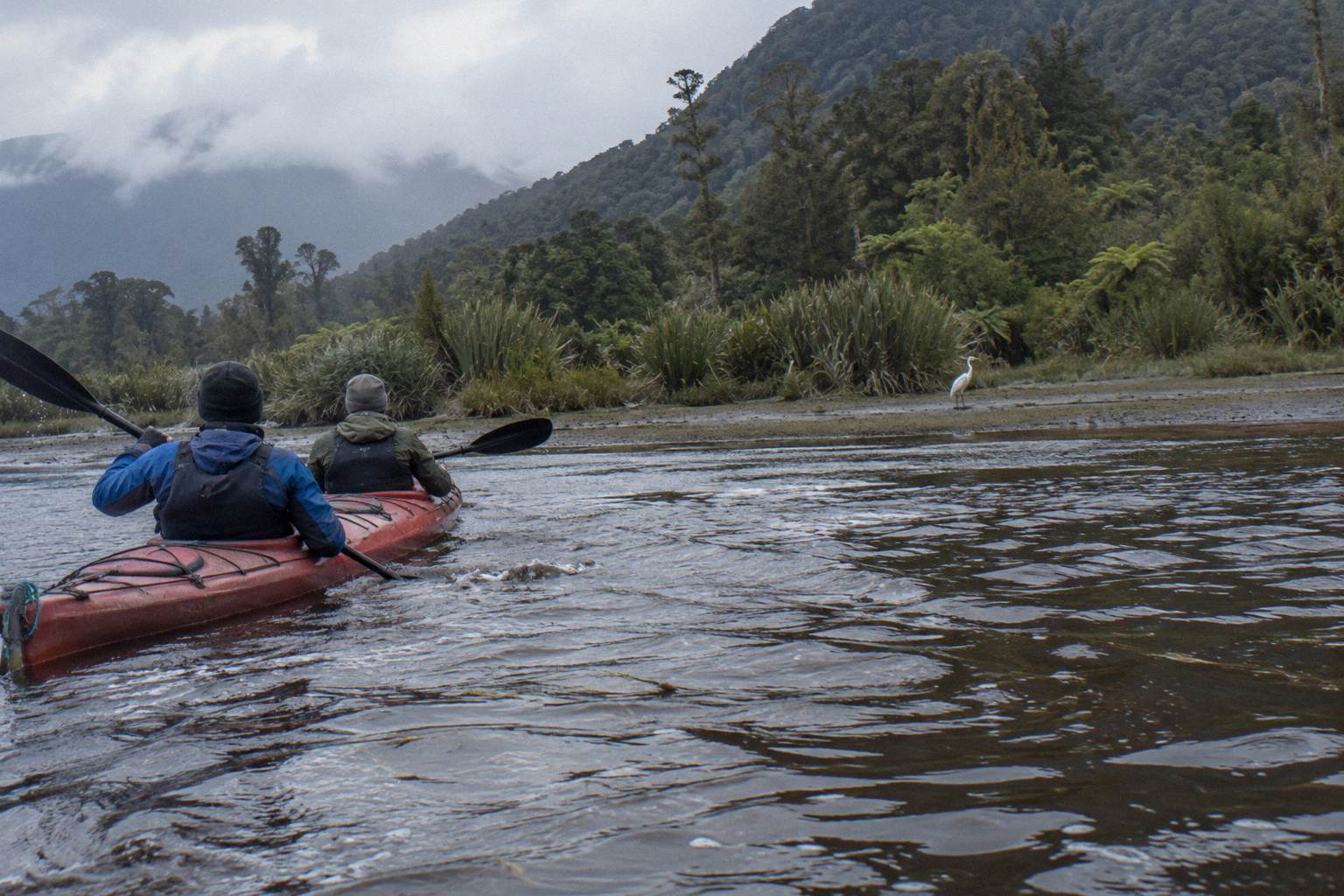
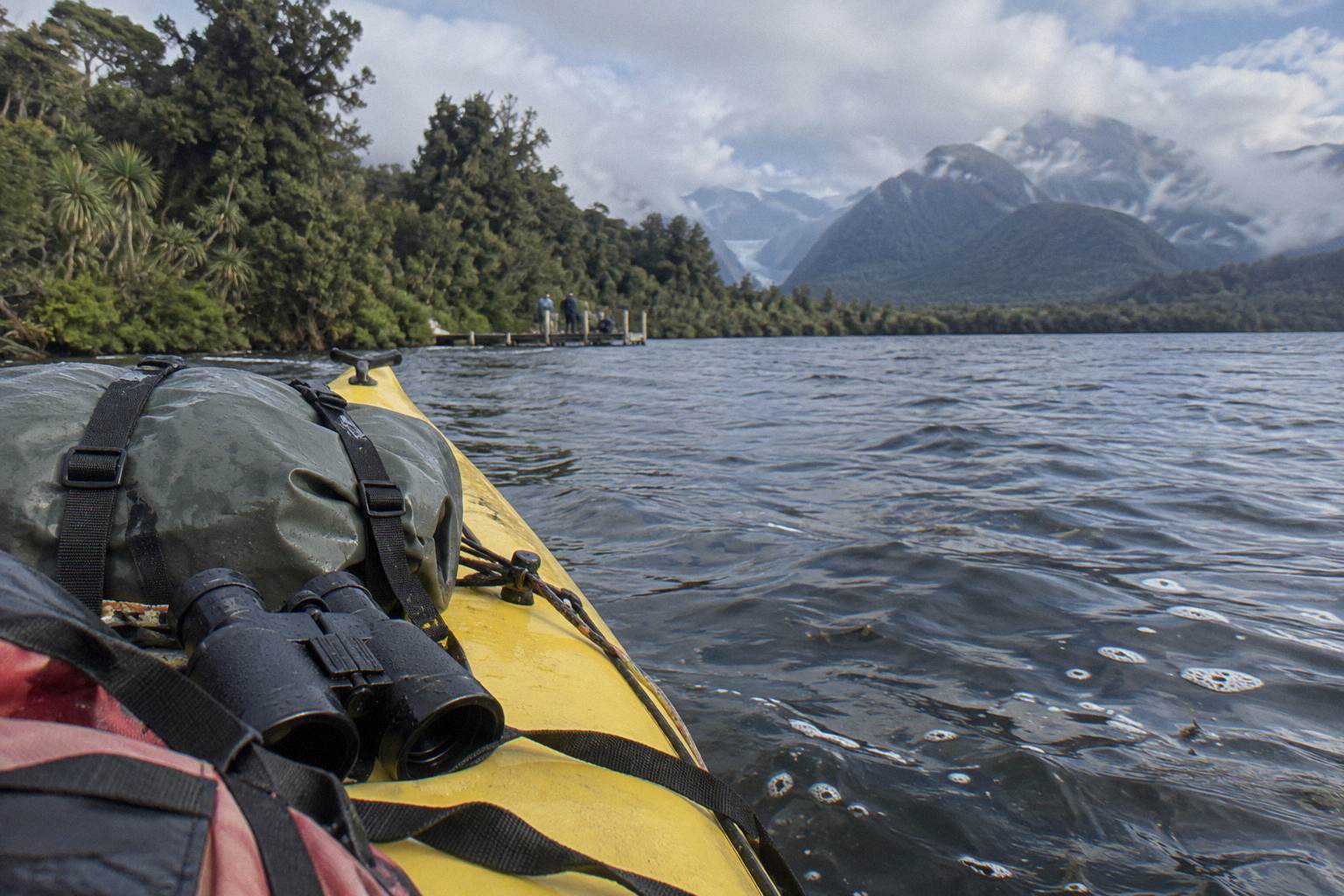
The answer is two wildlife encounters, not a safari. On Okarito Lagoon it is common to see kotuku, the white heron, feeding across the shallows year round. On Lake Mapourika you paddle the shoreline of a predator-free sanctuary that protects rowi, the rarest kiwi, though a daytime tour promises the habitat, never the bird. Everything else is atmosphere: tannin-dark water, rainforest and, on clear days, glacier views.
That split matters because the two waters are run by different operators and offer genuinely different nature experiences. Okarito Kayaks, a family business based at 1 The Strand in the village of Okarito, has been renting kayaks and guiding travellers on the lagoon for over thirty years and won the NZ Tourism Environment Award in 2026. The current family, Gemma and Baz, took the business over in 2014 from its previous owners, and the guiding tradition on the lagoon goes back further still. Its trips are tide-timed small-group paddles across a shallow tidal lagoon where birds feed. Franz Josef Wilderness Tours, based at 30 Main Road in Franz Josef township, paddles Lake Mapourika, a large kettle lake whose far shore borders the Okarito Kiwi Sanctuary, around 11,000 hectares of predator-free forest established in 2000. The operator describes the lake as the largest kettle lake in South Westland, a basin formed by retreating glaciers and stained dark by tannin from the surrounding forest.
Neither operator will promise you an animal. What they can promise is access: the lagoon is the place kotuku actually feed, and the lake's sanctuary shoreline is closed to everyone except a few licensed trips. A paddle puts you inside both stories in a way a roadside stop never could. It also puts you on water that most visitors to the West Coast never touch at all, because the majority pass through Franz Josef on a glacier itinerary and never turn off the highway toward either the lagoon or the northern lake shore.
There is a planning bonus here that rewards combining trips. The lake operator offers a bundle for direct bookings, saving 10 percent when you book two different guided tours and 15 percent for three, so a wildlife-minded itinerary that pairs a lake paddle with the kayak-and-walk combo costs less than booking each separately. If seeing birds feed from the water appeals, these are the current options, all prices in New Zealand dollars:
- 3-Hour Lake Mapourika Kayak
- Kayak Plus Kiwi Sanctuary Walk
- 4-Hour Lagoon Kayak, Alpine Views
- 3-Hour Lagoon Kayak
- 2-Hour Lake Cruise
Where Kotuku Feed On Okarito Lagoon
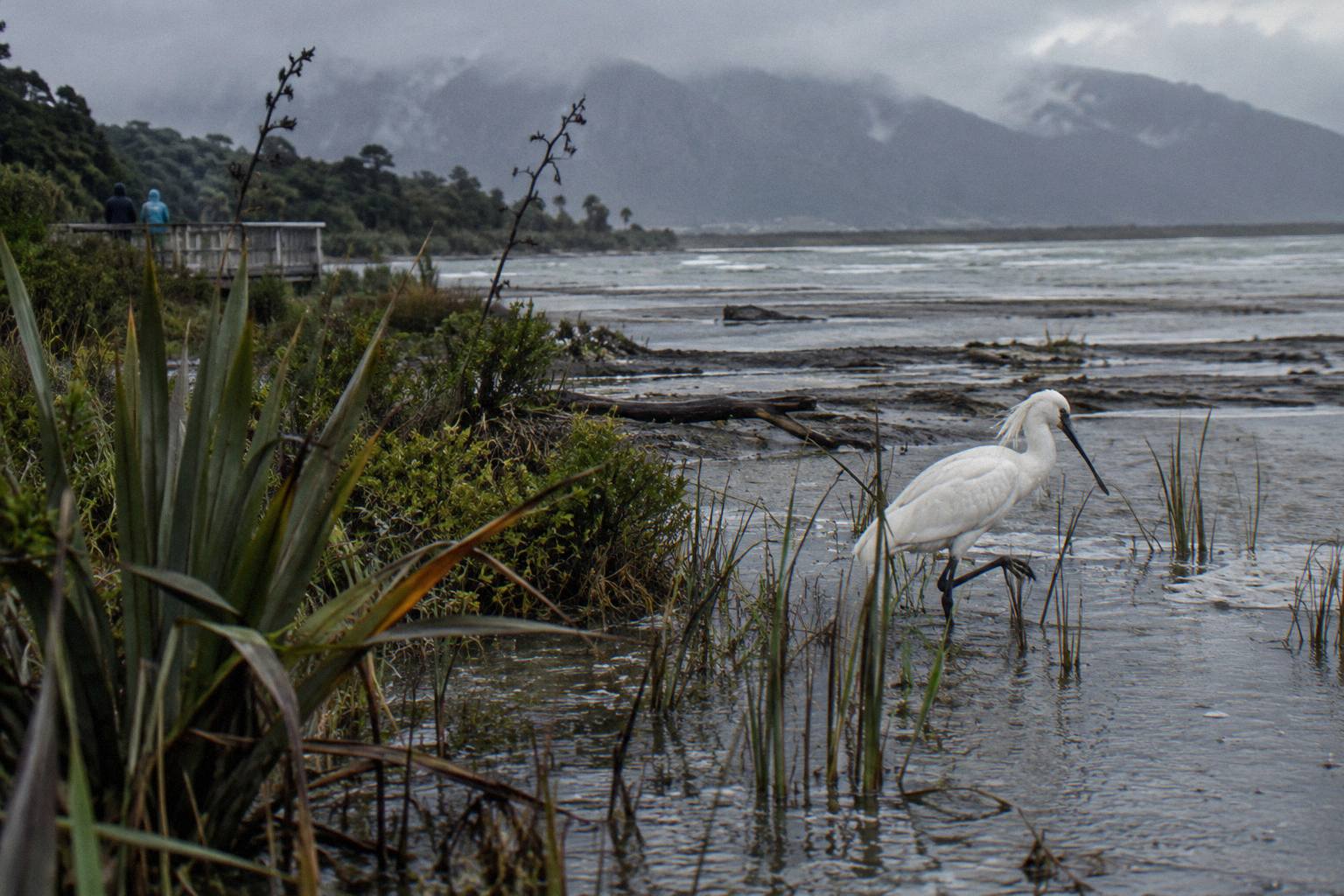
The kotuku, New Zealand's white heron, feeds across Okarito Lagoon, and the operator's own wording is that it is common to see these birds feeding throughout the lagoon year round. The nesting colony itself is off limits to kayaks: DOC places the country's only breeding colony at Waitangiroto Nature Reserve near Whataroa, and viewing there happens from a hide on a separate licensed tour.
That distinction, feeding versus nesting, is the single most useful thing a nature-minded reader can know before booking. The Department of Conservation explains that the colony breeds from September to February, and that in the breeding season the birds feed in coastal lagoons, particularly the nearby Okarito Lagoon. So the lagoon is not a consolation prize viewed from afar. It is the birds' dining room, and a quiet kayak is one of the least intrusive ways to sit in it.
The lagoon itself shapes what you see. It is shallow and tidal, which is why every guided departure is scheduled around the best tidal conditions for the day rather than a fixed clock time. Shallow water concentrates feeding birds; channels and mudflats concentrate fish; and a slow-moving kayak drifts through all of it without an engine. Okarito Kayaks supplies a lagoon map and a bird guide with every trip, hands you binoculars-worthy viewing positions, and keeps a rescue boat on standby, so the wildlife watching is unhurried rather than rushed. The bird guide deserves a mention of its own: a tidal lagoon rewards visitors who can put names to what they are watching, and the operator hands you the reference at the briefing rather than leaving you to guess.
The 4-hour Okarito Lagoon Kayak Adventurer, from NZ$210 per person, gives you up to 3 hours on the water, the longest guided window the operator offers, and it asks for some fitness and flexibility. Check availability if that window suits your wildlife priorities. Remember two practical rules: guided departures need a minimum of two adults booked to confirm, and you make your own way to the Okarito base, about 25 minutes north of Franz Josef. The booking pages also exclude anyone over 200 cm or over 125 kg.
What The Kotuku Facts Actually Say
| Question | The documented answer |
|---|---|
| Where is the only NZ breeding colony? | Waitangiroto Nature Reserve, near Whataroa (DOC) |
| When do they breed? | September to February (DOC) |
| Where do they feed in the breeding season? | Coastal lagoons, particularly Okarito Lagoon (DOC) |
| Can kayaks reach the colony? | No; the operator states the nesting site is not accessible by kayak |
| How common are sightings on the lagoon? | The operator calls feeding birds common year round; never guaranteed |
For readers weighing the alternatives, our kotuku white heron viewing guide breaks the kayak-versus-hide decision down further. The licensed colony tour from Whataroa, run by White Heron Sanctuary Tours since 1987, uses an observation hide, with nesting typically from mid September until early March and, by the operator's figures, 150 to 200 birds nationally and up to 50 nesting pairs. It is a separate tour, not a kayak trip and not on Lake Mapourika, but pairing a hide visit with a lagoon paddle covers both halves of the kotuku story. Whataroa itself sits north of Okarito, so a two-stop day is geographically straightforward if you have a car and a full day to spend on it.
Should you book the longest paddle or just take the view?
Rowi Kiwi And The Predator-Free Sanctuary
Rowi, the rarest kiwi, live in the Okarito Kiwi Sanctuary, around 11,000 hectares of predator-free forest established in 2000 that wraps around Lake Mapourika's shoreline. Daytime kayak tours paddle that shoreline, and one trip adds a guided rainforest walk inside it. No tour promises you will see or hear a kiwi: the sanctuary is habitat, and the real pitch is access to a place most people cannot enter.
The numbers behind that habitat are striking even when you never glimpse the bird. The operator reports that the rowi population climbed from around 150 birds in the 1990s to more than 600 today, operator figures, thanks to the sanctuary's predator control. That recovery happened in the exact forest you drift past. The Franz Josef Wilderness Tours trips cross the lake and enter a hidden creek through the sanctuary's margin, water few other people travel. The creek is the trip's signature moment even for visitors who never think about birds: the operator describes it as a mirror creek, and on calm days the still, dark water doubles the forest around you.
The trip built for this story is the Kayak And Okarito Kiwi Sanctuary Walk, a 4-hour combo, from NZ$179 per person, rated 4.9 from 120+ reviews. The operator describes about 2 hours 15 minutes of kayaking plus about 1 hour on a private rainforest track reachable only by water. Tea and coffee, equipment, national park fees and complimentary photos are in the inclusions, and hot drinks and a light snack are mentioned. Summer departures run at 8:30am and 2pm, the rest of the year at 9am and 1pm, though times may vary. Groups on the lake trips are usually small, typically 2 to 6 people per the operator's page, which keeps the walk quiet and the guide's commentary audible.
One detail worth flagging: the booking page lists a minimum age of 4 for this trip, while the operator's own site says children 3 and over for its kayak tours. The pages differ, so ask the operator before booking toddlers. The booking pages also state the trip is not wheelchair accessible and not suitable for people with mobility impairments, which matters on a track reached only from the water. There is no night or evening kiwi tour on offer here, so if hearing a kiwi call is your goal, that is a different kind of booking entirely and not something these daytime paddles can deliver.
What Each Water Gives The Wildlife Watcher
Choosing between the lake and the lagoon is choosing between two habitats. The lagoon is open, tidal and bird-rich, best for watching kotuku feed. The lake is dark, still and forest-walled, best for the sanctuary shoreline, mirror reflections and, on clear days, distant glacier views. The trips differ in length, price and logistics too, and the right pick follows the wildlife you most want.
Here is the practical comparison across the five bookable trips. All are guided, all carry free cancellation up to 24 hours on the booking page, and the two operators should never be read as rivals; they simply paddle different water.
| Trip | Water | Duration | From price | Wildlife angle |
|---|---|---|---|---|
| Okarito Lagoon Kayak Adventurer | Okarito Lagoon | 4 hours | NZ$210 | Longest lagoon window; kotuku feeding ground |
| Okarito Lagoon Kayak Explorer | Okarito Lagoon | 3 hours | NZ$165 | Up to 2 h on water; tide-timed bird viewing |
| Lake Mapourika 3-Hour Kayak Tour | Lake Mapourika | 3 hours | NZ$159 | Sanctuary shoreline and mirror creek |
| Kayak And Okarito Kiwi Sanctuary Walk | Lake Mapourika | 4 hours | NZ$179 | Paddle plus private rainforest walk |
| Lake Mapourika Scenic Cruise | Lake Mapourika | 2 hours | NZ$125 | Covered boat, not a paddle; infants 0-3 free |
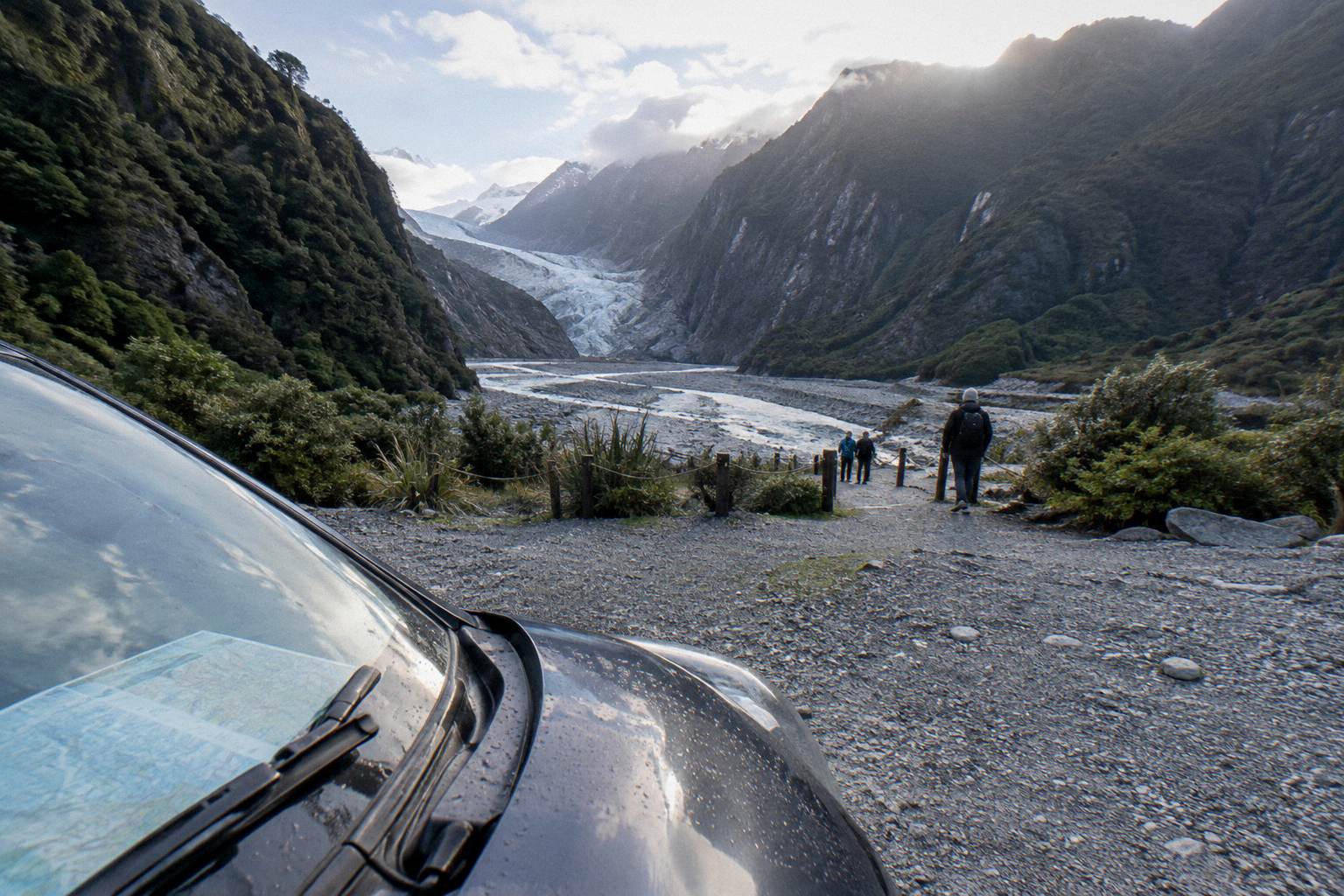
Two cautions from the facts file. Reflections are never guaranteed: DOC's guidance at nearby Lake Matheson is that the best mirror conditions come on sunny, windless days and at dawn and dusk, and the lake operator adds that cloud can make the reflections dramatic rather than spoil them. Glacier views are equally conditional; the operator's own wording is that clear days show several glaciers while low cloud hides them entirely. The lake is not at the glacier, and no one should book a Mapourika paddle expecting an ice face.
If the lake side of the table appeals, the 3-hour Lake Mapourika Kayak Tour is the trip with the most reviews, rated 4.9 from 400+ reviews, from NZ$159 per person. It crosses the lake into the hidden creek with a courtesy transfer from the Franz Josef office, stable double kayaks and photos emailed free. The group size on the lake trips is capped at 16 on the booking pages, and the operator takes children 3 and over on its three-hour trip, which makes it a realistic family option as well as a wildlife one.
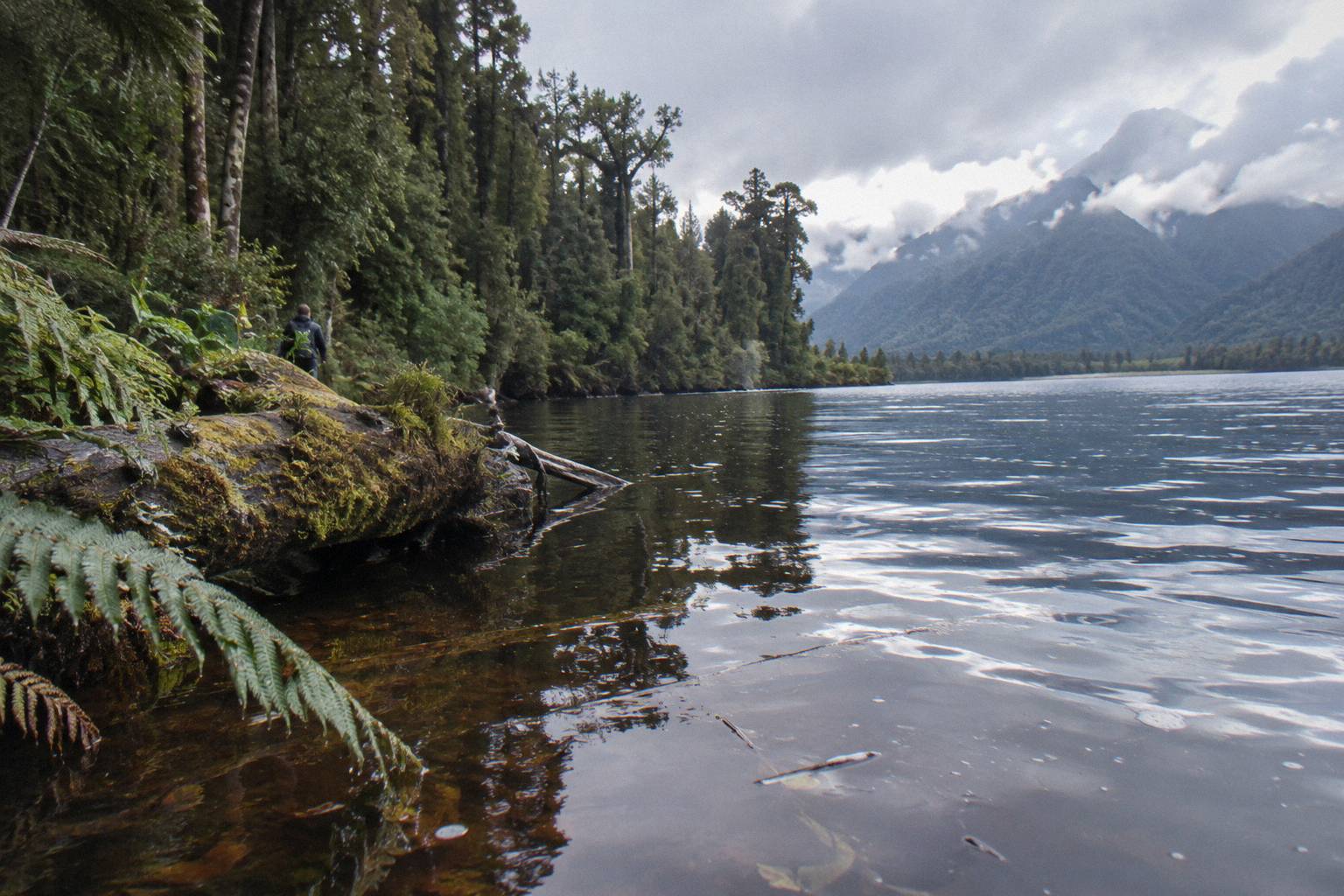
How Tide And Season Shape What You See
Okarito Lagoon trips are tide-timed, so your start time moves with the water, while Lake Mapourika runs set daily sessions that shift between summer and winter. Kotuku feed on the lagoon year round, but September to February is the breeding season, when DOC notes the birds feed in coastal lagoons particularly Okarito. Neither operator lets you pick a wildlife-optimised departure by clock: you book the trip and trust the scheduling.
On the lagoon, the operator states plainly that tour start times are scheduled around the best tidal conditions for any given day. Shallow tidal water is exactly why the lagoon feeds birds so well, so the inconvenience of a shifting start time is the mechanism that produces the wildlife. Arrive 10 to 15 minutes before your confirmed start at the Okarito base, which has parking, toilets and hot drinks. Because the village has no shop or restaurant, whatever you want to eat or drink after the paddle comes with you.
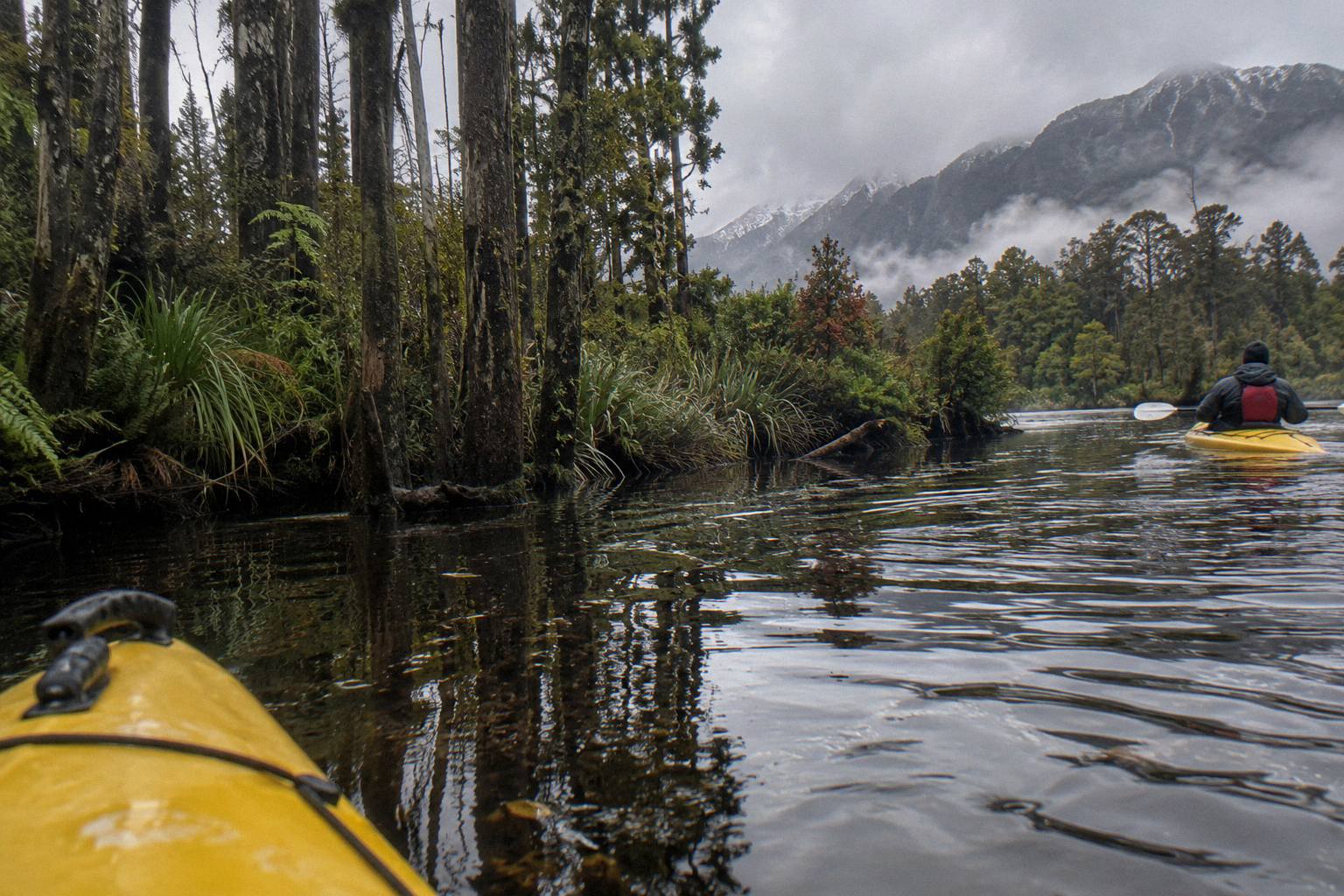
On the lake, the summer season from 1 November to 31 March includes a 5pm departure on the operator's Sunset Classic, which quietly overlaps with DOC's dawn-and-dusk guidance for the best reflections, while winter from 1 April to 31 October runs morning and early afternoon sessions. The operator notes that in winter the 2pm session often coincides with sunset, so late-light photography is not strictly a summer-only prospect on the lake. For a deeper look at the seasonal question, our best time for West Coast kayaking guide covers the year month by month.
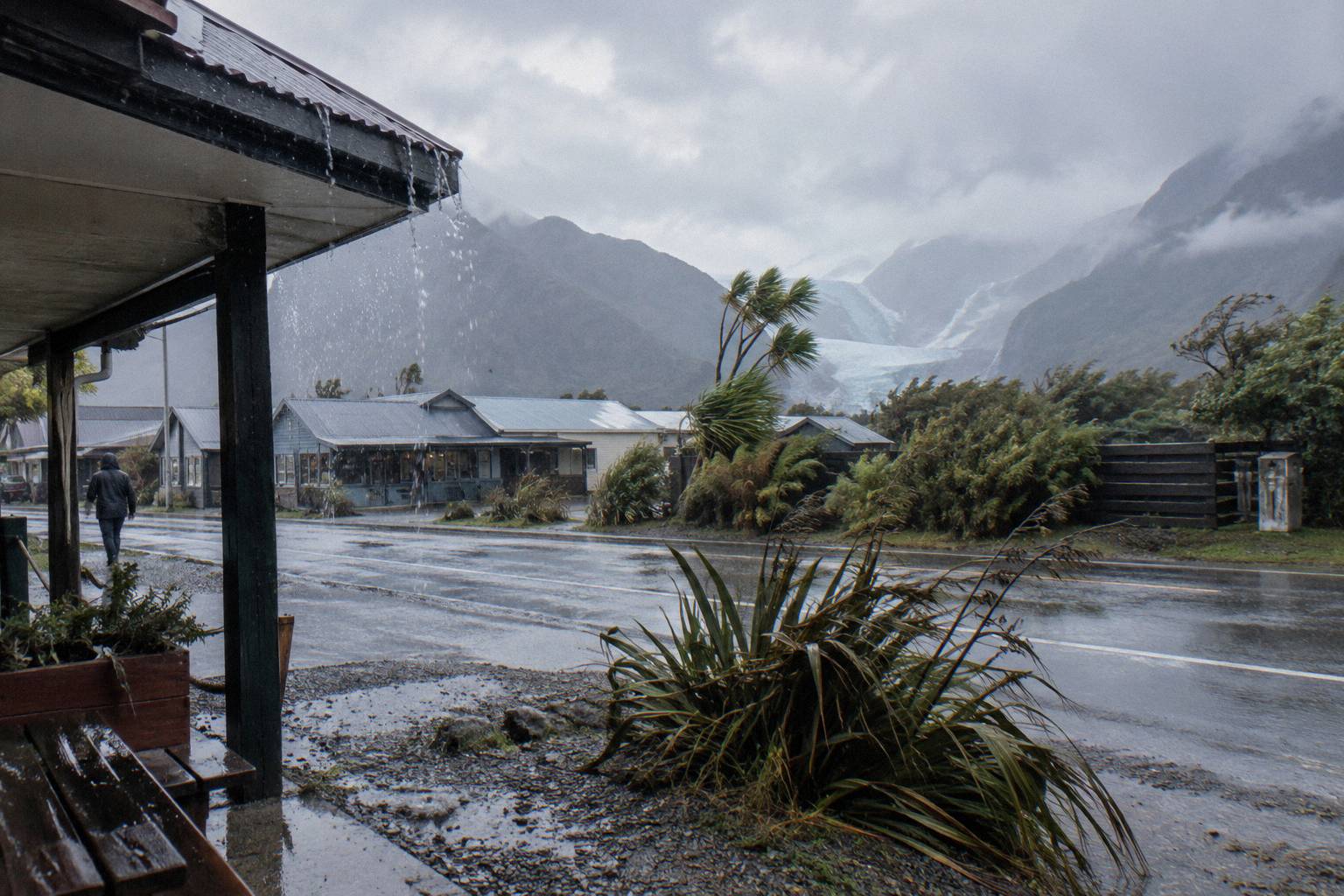
Rain shapes the region in ways worth understanding before you commit a day. NIWA's 1991 to 2020 records put Franz Josef's mean annual rainfall at 5,555.2 mm, with October the wettest month at 594.1 mm and July the driest at 317.8 mm. Every month of the year averages above 300 mm, so waiting for a guaranteed dry week is not a strategy on this coast. The lake operator checks local conditions itself and points out that it is often dry at the lake while rain falls in the township, a quirk of the valley's microclimates that has saved many a booking. Kayaking in light rain is part of the experience, and the supplied wet weather gear exists precisely for that.
What You Get, What You Bring
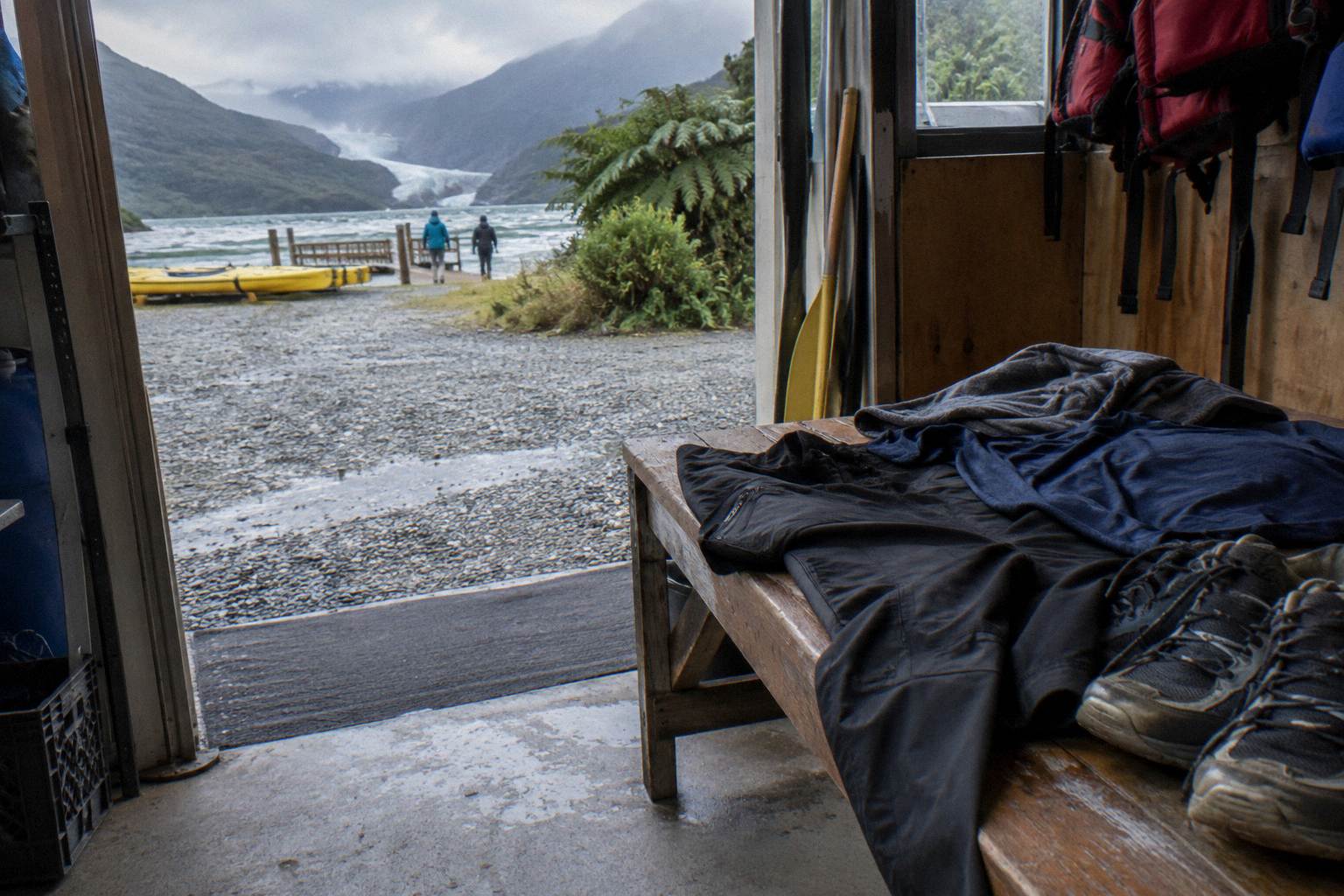
Okarito Kayaks supplies the wildlife kit: a lagoon map, a bird guide, buoyancy aid, spray skirt, dry bags, environmentally friendly insect repellent and a rescue boat on standby. Franz Josef Wilderness Tours supplies dry bags, paddling jackets, PFDs, wet weather gear, kayak skirts, pogies, paddles and free photos. You bring the warm layers, the camera and, on the lagoon, binoculars.
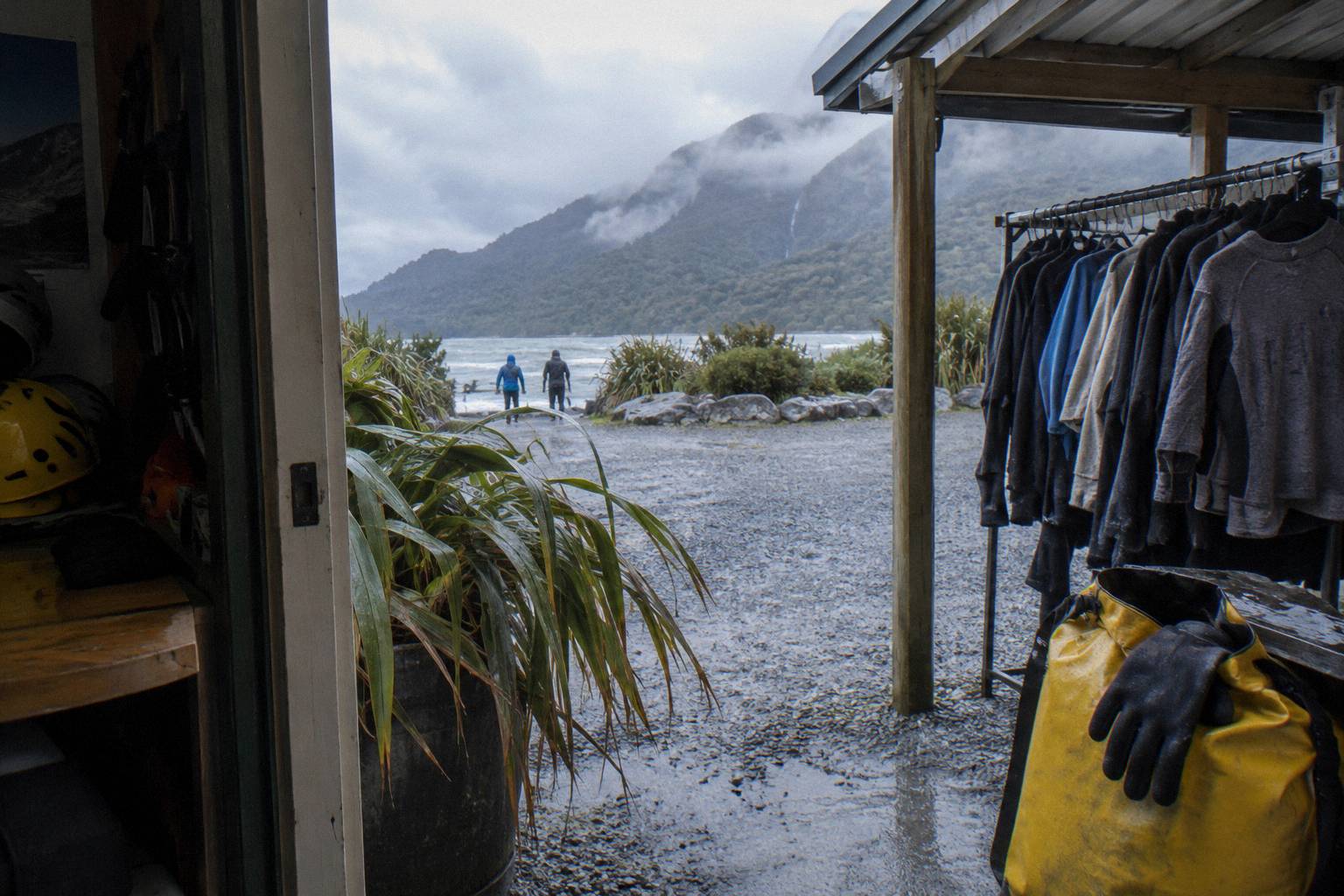
The bird guide is the quietly valuable item. A tidal lagoon rewards visitors who can put names to what they are watching, and the operator hands you the reference on arrival. Binoculars appear on the Okarito bring list rather than the provided list, so pack a pair if birding is your reason for going. Sandflies earn a mention from both DOC, which warns they are prevalent across Westland Tai Poutini National Park, and from Okarito Kayaks, which notes them on occasional cloudy, still days and supplies a repellent. The lake operator's pages make no sandfly mention at all, which is worth knowing when you read advice elsewhere on the coast.
| Item | Okarito Kayaks | Franz Josef Wilderness Tours |
|---|---|---|
| Identification aid | Lagoon map and bird guide | Free photos emailed |
| Flotation | Buoyancy aid | PFD |
| Weather protection | Spray skirt, dry bags | Paddling jacket, wet weather gear, kayak skirt, pogies |
| Extras | Insect repellent, rescue boat on standby | Dry bag, paddle |
| You bring | Warm layers, rain jacket, footwear, water, snacks, sunscreen, camera, binoculars | Cap or sunglasses, camera, sneakers or sandals, warm top, anything but jeans |
Footwear is a small decision with real consequences: on the lake trips feet stay dry, so comfy sneakers or sandals work. Neither operator asks for kayaking experience, and the Wilderness Tours FAQ states you do not need to know how to swim because a correctly fitted life jacket is worn throughout. That answer, plus the stable double kayaks used on the lake, is why nervous first-timers so often start on Mapourika; our beginners guide to West Coast kayak tours walks through that first booking in more detail. For more on clothing, our what to wear on a kayak tour guide is the detailed version.
Which Trip Suits A Nature-Minded Reader
If birds are the priority, pick a lagoon trip: the Adventurer for the longest window, from NZ$210, or the Explorer for 3 hours from NZ$165. If habitat and forest matter more, pick the lake: the Kayak And Walk combo from NZ$179 buys the sanctuary shoreline plus a rainforest track only reachable by water. A pure sightseeing option, the 2-hour Scenic Cruise from NZ$125, covers the lake without paddling.
The Explorer deserves a closer look for wildlife watchers on a tighter schedule. It runs 3 hours in total with up to 2 hours on the water, the same tide-timed small-group format, the same bird guide and repellent, from NZ$165 per person. Under-18s paddle at half price on the lagoon operator's guided trips, and there is no minimum or maximum age on its guided departures, which makes the lagoon the more flexible choice for families with very young children or mixed-age groups. Judge them on format, not scores, and remember the two-adult minimum that confirms any guided lagoon departure.
The lake trips carry a courtesy transfer from the Franz Josef office, which removes the self-drive question entirely; be at 30 Main Road at least 15 minutes before departure. Lagoon trips mean driving the sealed 10 km side road to Okarito yourself, a village of roughly 30 to 40 permanent residents with no shop or restaurant, so bring snacks. Every one of the five trips offers free cancellation up to 24 hours on the booking page, which matters on a coast where weather genuinely moves plans; the operator may also cancel for minimum numbers or unsafe conditions with a full refund. Inside the 24-hour window, changes are not refundable for any reason on the lake operator's terms, so hold your plans loosely until the day before.
Franz Josef Kayak Tours exists because these two waters reward different travellers differently, and the wildlife is only part of the choice. For the wider frame, our guide to kayaking the West Coast of New Zealand sets both trips in their regional context. Two primary sources back the wildlife claims above: DOC's white heron page for the colony and feeding facts, and Maritime NZ's lifejacket rule page for the wear-it-underway requirement now in force.
Common Questions About Wildlife On A West Coast Kayak Tour
What Wildlife Do You See On A West Coast Kayak Tour?
Kotuku, the white heron, feeding on Okarito Lagoon, commonly and year round by the operator's wording. On Lake Mapourika, the predator-free Okarito Kiwi Sanctuary shoreline that shelters rowi, though no tour promises a kiwi sighting. Reflections, rainforest and occasional clear-day glacier views complete the picture.
Can You See The Kotuku Nesting Colony From A Kayak?
No. The only New Zealand breeding colony sits in Waitangiroto Nature Reserve near Whataroa, and kayaks cannot access the nesting site. Kayakers see kotuku feeding across the lagoon; the nesting hide is a separate licensed tour run by White Heron Sanctuary Tours from Whataroa.
Will I See A Kiwi On A Lake Mapourika Kayak Tour?
No tour promises that. Rowi are nocturnal and the sanctuary is their daytime hiding place. What the tours offer is entry to the habitat: a paddle along the sanctuary shoreline and, on the Kayak And Walk trip, a private rainforest track reachable only by water.
Do The Lagoon Kayak Tours Run At A Set Time?
No. Okarito Lagoon is shallow and tidal, so the operator schedules every guided departure around the best tidal conditions for the day. You confirm a start time when booking and arrive 10 to 15 minutes early at the Okarito base.
Do I Need Experience Or The Ability To Swim?
No. The lake operator states no previous experience is needed and that you do not need to know how to swim, since a correctly fitted life jacket is worn throughout. Since 9 October 2026 a lifejacket must be worn underway on kayaks nationwide anyway.
What Happens If The Weather Turns?
Trips run in light rain, which the lake operator calls atmospheric, and wet weather gear is supplied. If conditions are unsafe the operator cancels with a full refund or an alternative. Your own cancellation is free up to 24 hours before, per the booking pages.