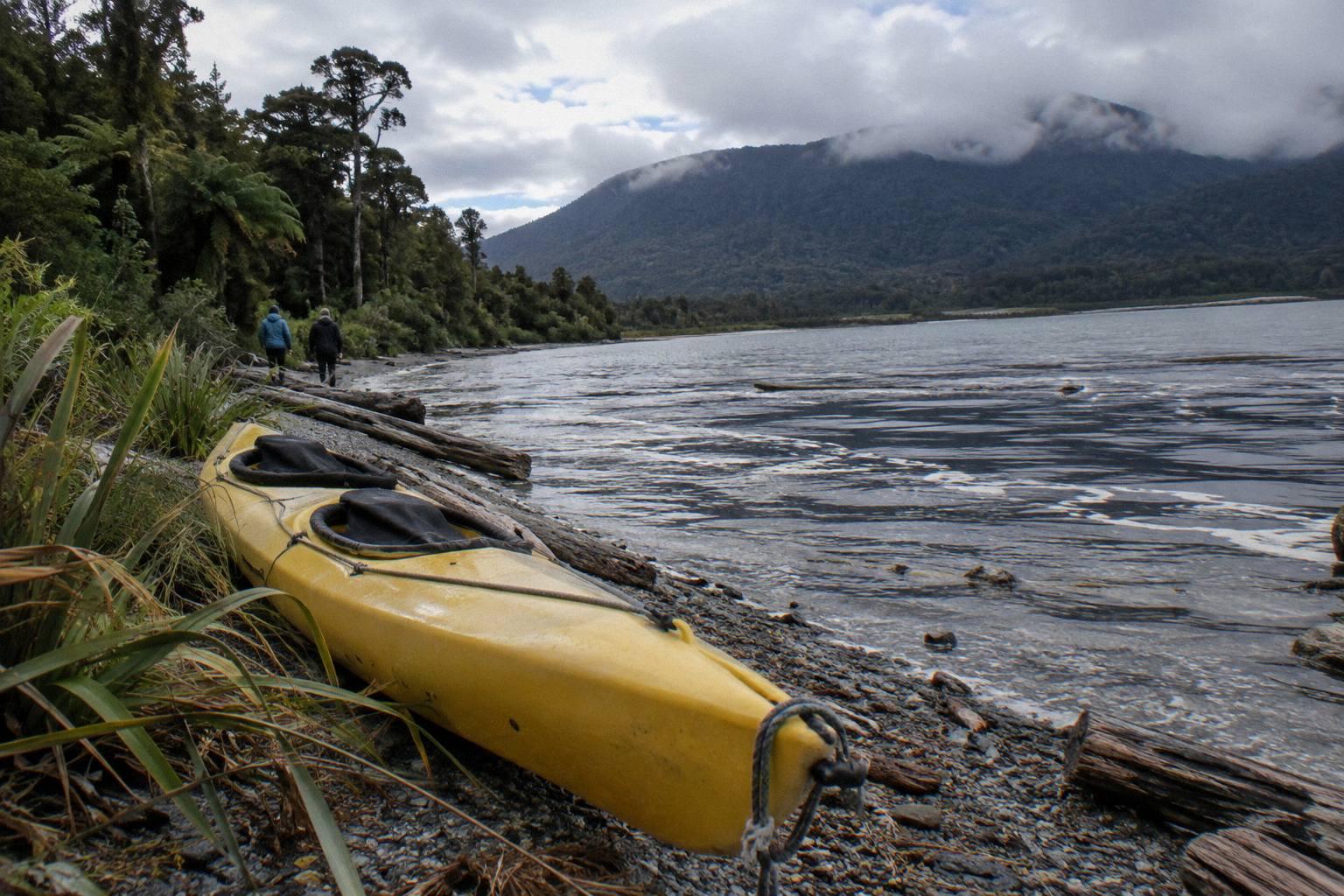
Is Okarito Worth Visiting For A Kayak Tour?
A plain answer to whether the detour to Okarito earns its place on a Franz Josef trip, with the two lagoon kayak trips, tide-timed starts, kotuku facts and village practicalities.
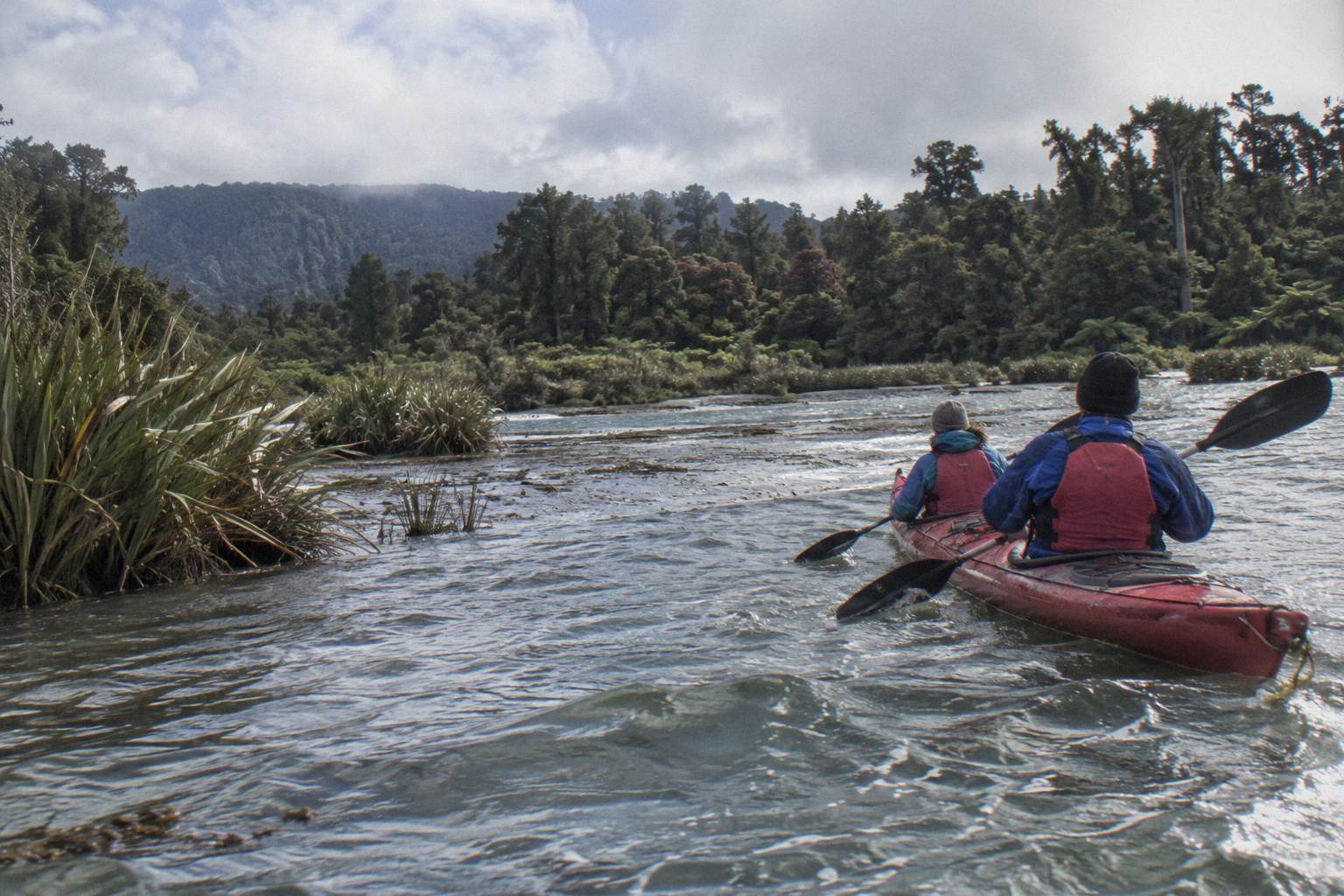
Yes, for most travellers who have the time and an interest in birds, quiet water and a village with about 40 permanent residents. Okarito Kayaks runs two guided lagoon trips, from NZ$165 per person, timed to the tide, with no minimum or maximum age. The trade-off is the detour: 10 km off SH6, self-arrival, no shop or restaurant in the village, and departures that need at least two adults booked to confirm.
Plainly put, this is a scheduling question. If your Franz Josef stay is one night built around a glacier hike, adding a lagoon paddle means a 25-minute drive each way on top of a 3 or 4 hour trip, and the departure time is set by the tide rather than by you. If you have two nights, or you are driving the coast anyway, Okarito stops being a detour and becomes one of the quieter stops on the West Coast, a place where the kayak is genuinely the best way to see the water rather than an add-on to it.
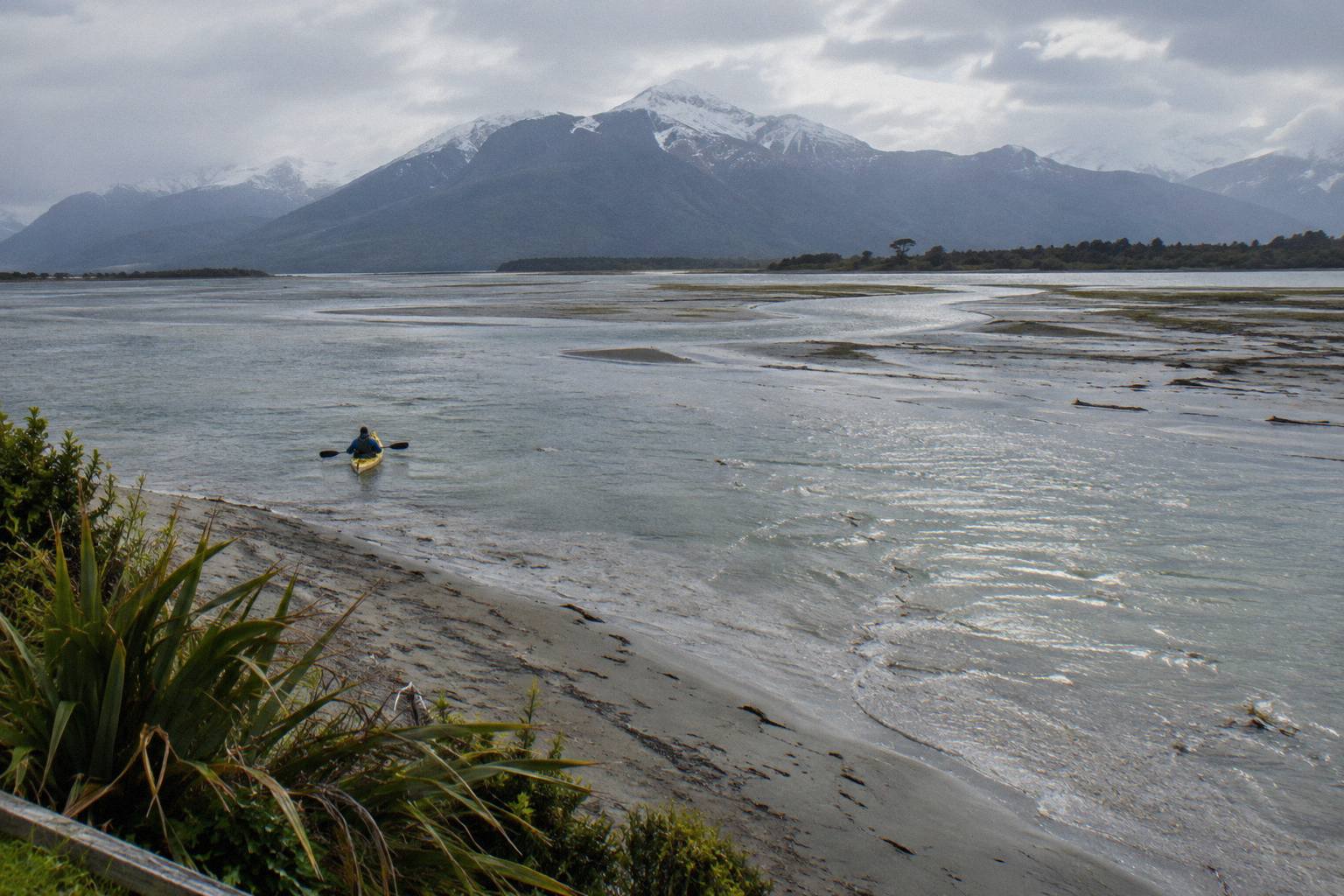
The operator context matters too. Okarito Kayaks is family run, took over the business in 2014 from the previous owners, and describes itself as renting kayaks and guiding travellers on the lagoon for over thirty years. It trades year round and holds the NZ Tourism Environment Award for 2026, which is worth knowing on a coast where the environment is the product. The base sits at 1 The Strand, with parking, toilets and hot drinks, and you arrive 10 to 15 minutes before your start time.
What you are weighing, then, is a small-group, tide-timed paddle on a shallow lagoon against the convenience of the lake trips that leave from Franz Josef township itself. Both are good options and they are different experiences on different water with different operators. This article lays out the facts on both sides so you can decide whether the detour fits your trip.
What The Okarito Lagoon Trips Actually Include
Two guided trips run on the lagoon: the Explorer, 3 hours total with up to 2 hours on the water, from NZ$165 per person, and the Adventurer, 4 hours total with up to 3 hours on the water, from NZ$210 per person. Both are small-group and tide-timed, both allow free cancellation up to 24 hours on the booking page.
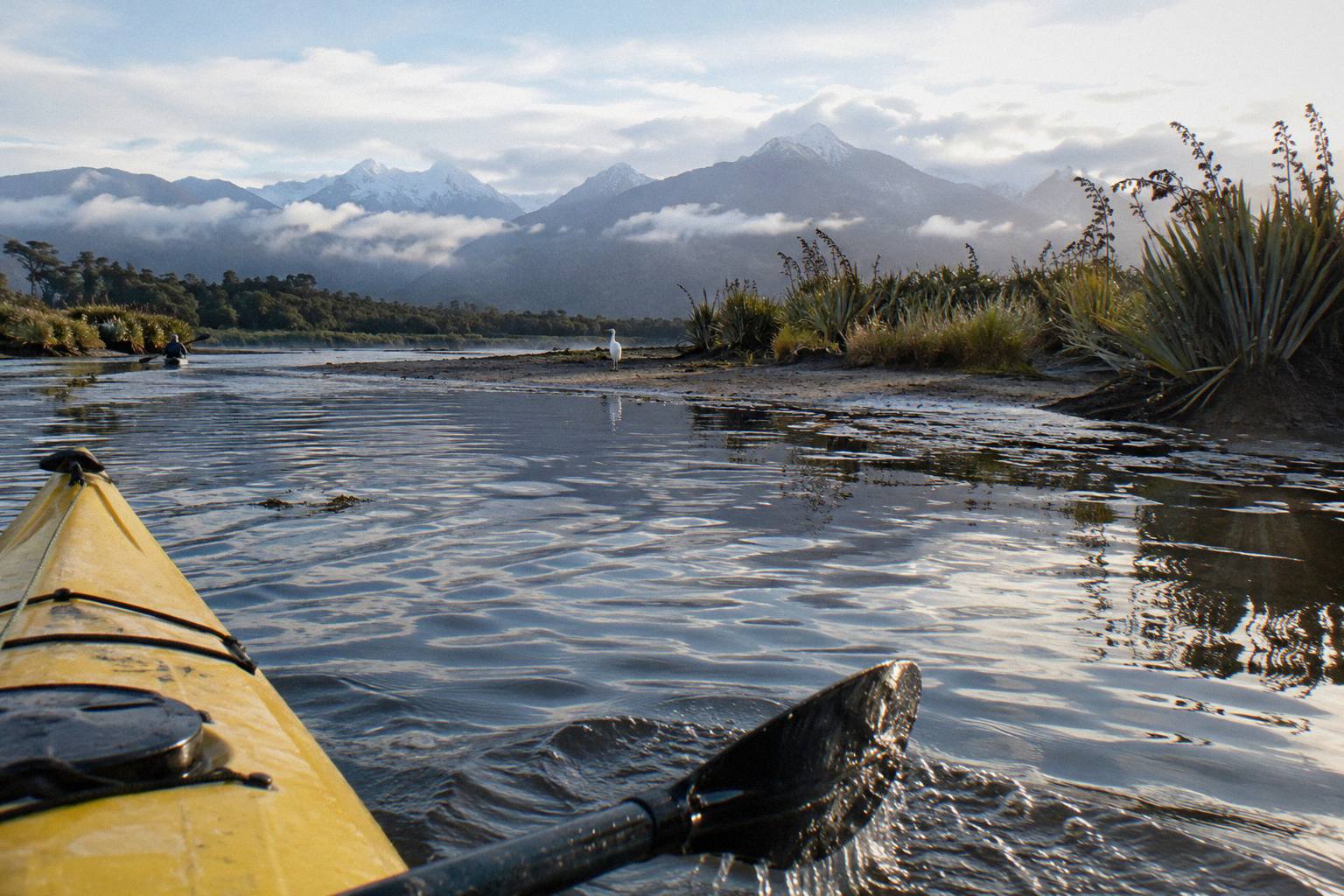
The Explorer is the shorter circuit, and its shape suits first-time paddlers and families. The Adventurer asks for some fitness and flexibility, and gives you the longer lagoon circuit in exchange, up to three hours of paddling. Both are priced in New Zealand dollars as booking-page from-prices per person, and the booking page carries the current figure for your date.
Guided trips come with a fair amount included. The operator provides a lagoon map and bird guide, a buoyancy aid, spray skirt, dry bags, environmentally friendly insect repellent and a rescue boat on standby. You bring warm quick-drying clothing, a rain jacket, footwear, water, snacks, sunscreen, a camera and, if you have them, binoculars, which earn their place on a lagoon built for watching birds at a distance.
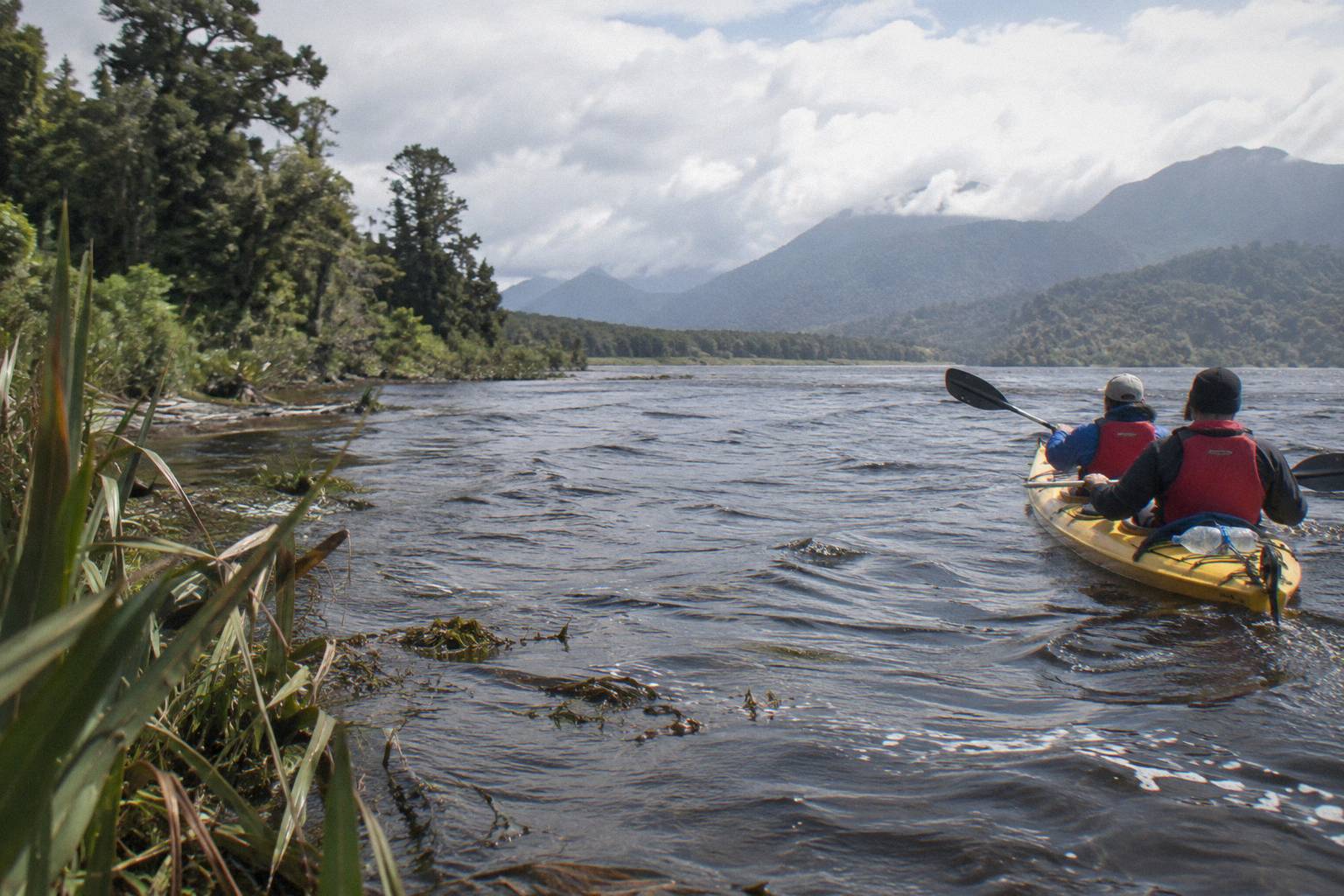
Two booking rules shape the decision more than the price does. First, a minimum of two adults must be booked for a departure to confirm, so a solo traveller waits for, or joins, an existing trip rather than counting on a private start. Second, the booking pages exclude people over 200 cm (6 ft 6 in) or over 125 kg (275 lb). Neither rule is hidden, but both are easy to miss when you are comparing prices rather than reading the fine print, and both are shown on the booking page before you pay.
If the longer circuit appeals, the Okarito Lagoon Kayak Adventurer tour page has the full trip detail, and you can check availability for your dates. If the shorter trip is the better fit for your group or your morning, the next section covers how the timing works.
When And How The Lagoon Trips Run
Departure times are scheduled around the best tidal conditions for each day, so there is no fixed daily time to plan around, and the lagoon is shallow and tidal. Start times, and the departure confirmed for your date, are on the booking page. Trips run year round, and a departure confirms once at least two adults are booked.
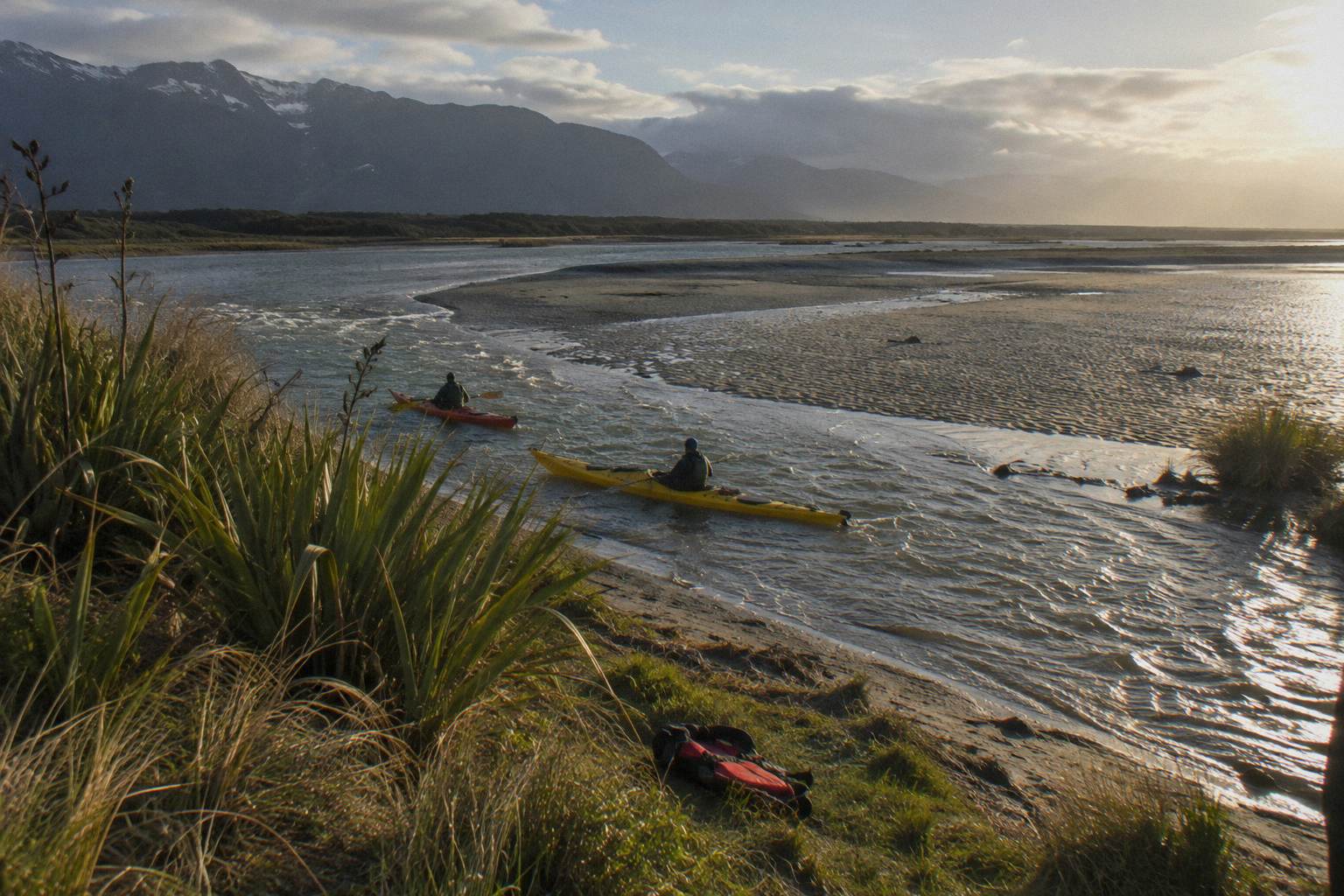
This is the part of Okarito planning that surprises people who are used to set departure schedules. The lagoon empties and fills with the tide, and the operator times its guided trips and rentals to the water that suits paddling on that particular day. Practically, that means you may be asked to start mid-morning one day and mid-afternoon the next, and the right move is to book first, then shape the rest of your day around the time the listing gives you. Our piece on Okarito lagoon tides and how they shape kayaking goes deeper on why the water behaves this way.
Seasonally, there is no closed window to avoid. The operator trades year round, and the West Coast climate is wet in every month, which matters more than the calendar. Franz Josef records a mean annual rainfall of 5,555.2 mm in the NIWA 1991 to 2020 series, with October the wettest month at 594.1 mm and July the driest at 317.8 mm. There is no dry season here, only days, and a lagoon paddle in light rain is a normal West Coast experience, with spray skirts and dry bags supplied as standard.
| Trip | Total time | On the water | From price (NZ$) | Getting there | Cancellation |
|---|---|---|---|---|---|
| Okarito Lagoon Kayak Explorer | 3 hours | Up to 2 hours | $165 | Self-arrival, 1 The Strand | Free up to 24 hours |
| Okarito Lagoon Kayak Adventurer | 4 hours | Up to 3 hours | $210 | Self-arrival, 1 The Strand | Free up to 24 hours |
One more timing note that is easy to get wrong: you drive yourself. Unlike the Franz Josef lake trips, which include a courtesy transfer from the township office, the Okarito trips start at the operator's base and no transfer is listed. Build in the drive, the 10 to 15 minute early arrival, and a little slack for a road you have not driven before, and the day stops feeling rushed.
Can You See Kotuku, The White Heron, From A Kayak?
Often, yes, but feeding, never nesting. DOC records that the country's only breeding colony of kotuku sits near Whataroa in the Waitangiroto Nature Reserve, and in the breeding season, September to February, the birds feed in coastal lagoons, particularly Okarito Lagoon. The operator calls sightings of feeding birds common throughout the lagoon year round, though no sighting is ever promised.
The white heron is the bird most people come here hoping for, and the lagoon is one of the few places in New Zealand where seeing one from a kayak is a realistic hope rather than a lucky fluke. The distinction that matters is what you are watching. The nesting colony at Waitangiroto is viewable only from an observation hide on a separate licensed tour run by White Heron Sanctuary Tours from Whataroa, established 1987, with nesting typically from mid September until early March. Kayaks cannot access the nesting site, and no lagoon trip will take you there.
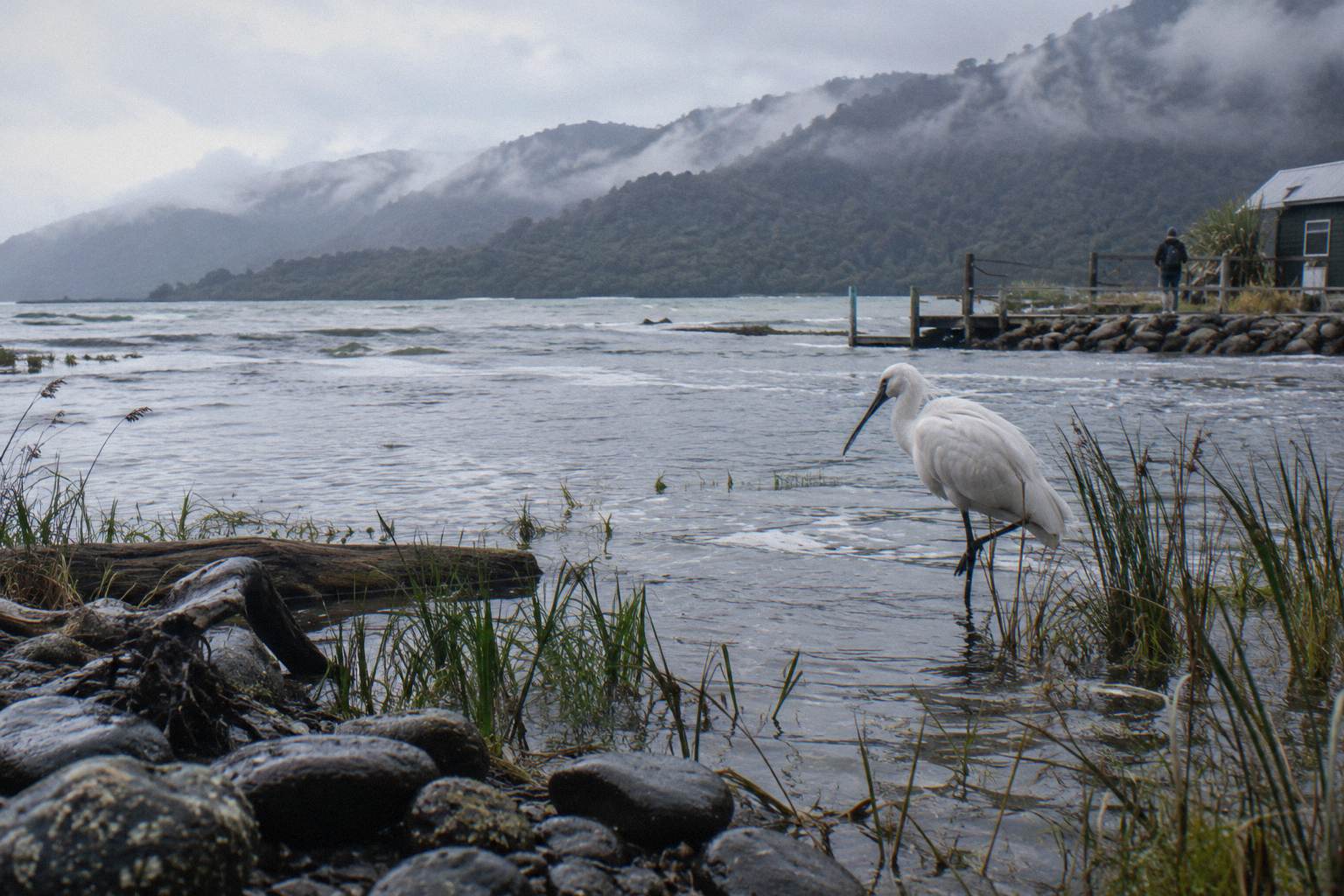
What the lagoon gives you instead is the feeding behaviour, which is arguably the better show: a large white bird working the shallows at close range while you drift. DOC's page on the kotuku is the primary source for the colony and the breeding season, and it is the claim this article leans on for the September to February feeding window. Outside that window the operator still describes feeding birds as common year round, so a shoulder-season trip is not a wasted one for birders, just a different one.
The lagoon carries more than herons. The operator hands every group a bird guide along with the lagoon map, which tells you something about what the trip is for: this is a slow-water, watching-and-drifting paddle more than a distance paddle. Binoculars are on the bring list for a reason. If birds are the main reason you are considering Okarito at all, the decision is close to made, and the guide to kotuku and the white heron from a kayak covers the ethics and the viewing rules in more depth.
Is The Detour To Okarito Village Worth It Without A Tour?
On its own, the village is small: about 40 permanent residents by the operator's count, around 30 by DOC's, with no shop or restaurant, reached by a 10 km sealed side road off SH6. What it adds around a paddle are three short DOC walks, the trig walk at 1 hour 30 minutes, the wetland walk at 20 minutes and the Pakihi walk at 30 minutes, plus the historic Donovan's Store and the wharf.
Plainly: nobody visits Okarito for the village facilities, because by the operator's own description there are none to speak of, no shop, no restaurant. Bring your snacks and water with you, since both are on the paddle bring list anyway. The appeal is the setting, a settlement on a lagoon that DOC describes as a coastal spot with easy short walks, and the quiet that comes with a place this size. If your day is paddle, walk, coffee from a thermos at the wharf, that is a good day, but plan it as one.
The trig walk is the one worth budgeting for. Ninety minutes, easy graded, and it climbs above the lagoon for the view that explains the geography of everything you just paddled through. The wetland and Pakihi walks are short enough to slot in either side of a trip while you wait for a tide-timed start. DOC's Okarito area page lists all three with times.
One practical warning for Okarito: sandflies. The operator mentions them on occasional cloudy, still days and sells a local repellent at the base, which is a fair signal of the local reality, and DOC's guidance for the wider national park is blunt that sandflies are prevalent and repellent belongs in your bag. Cloudy, still days are exactly the days a tide-timed lagoon paddle is still lovely, so pack for it rather than being surprised by it.
Okarito Lagoon Or Lake Mapourika: Which Paddle Suits You?
Paddle the lagoon for tide-timed, bird-rich shallow water and a village detour; paddle Lake Mapourika for a courtesy transfer from Franz Josef township, a 3-hour trip from NZ$159 with a 4.9 rating from 400+ reviews, and a crossing into a hidden creek in the predator-free Okarito Kiwi Sanctuary. Different operators, different water, and both worth doing if the schedule allows.
The two waters sit close together on the map but they answer different questions. Lake Mapourika is a kettle lake, dark with tannin, about ten minutes' drive north of Franz Josef, and the operator there, Franz Josef Wilderness Tours, checks you in at its Main Road office in the township and drives you to the water. The 3-hour trip crosses the lake and slips into a creek inside the sanctuary that surrounds this part of the coast, water you can only reach by boat. Groups are capped at 16.
Okarito is the self-drive day: you arrive at The Strand, the times follow the tide, the groups are small, and the payoff is birds and open lagoon rather than a forested creek. Neither is the better trip, because they are genuinely different products. What you can do is match them to your trip shape.
| If you want... | The better fit | Why |
|---|---|---|
| Birds, especially kotuku feeding | Okarito Lagoon trips | Shallow feeding ground; sightings of feeding birds described as common year round |
| To be collected from Franz Josef | Lake Mapourika 3-Hour Kayak Tour | Courtesy transfer from the township office to the lake |
| A first-ever paddle with set departure logic | Lake Mapourika 3-Hour Kayak Tour | Stable double kayaks, no experience needed, groups capped at 16 |
| No age limits at all | Okarito Lagoon trips | Operator states no minimum or maximum age on guided trips |
| The longest time on the water | Okarito Lagoon Kayak Adventurer | Up to 3 hours paddling out of 4 total |
| The most-reviewed paddle | Lake Mapourika 3-Hour Kayak Tour | 4.9 from 400+ reviews, the trip with the most reviews |
If the lake version is the one that fits your schedule, the 3-hour Lake Mapourika kayak tour page has the full detail. The comparison question comes up often enough that we keep a whole Lake Mapourika versus Okarito Lagoon guide for it, including the driving logic for combining both in one trip.
What To Know Before You Book Any Okarito Trip
Book with three things in mind: departures confirm at two adults, start times follow the tide and appear on the booking page, and free cancellation runs up to 24 hours before, on all five trips. Since 9 October 2026 a lifejacket must be worn underway on any recreational craft 6 m and under, kayaks included, so the buoyancy aid is both supplied and legally required wear.
The lifejacket rule is current Maritime NZ law, not operator house style, and it matches what both operators already did: buoyancy aids are supplied on every guided trip here. The regulation page is the primary source if you want the wording. Beyond that, the booking mechanics on the lagoon trips are straightforward, price on the booking page, cancellation free up to 24 hours out, and a booking page that will not confirm a departure until the second adult is on it.
Weather cancellations are the operator's call, not yours to anticipate. If conditions on the lagoon are unsafe, the trip is cancelled with a full refund or an alternative offered, and the same 24-hour free-cancellation window protects your plans if yours change first. The West Coast forecast is worth a glance the evening before, but the operator watches the actual conditions on the water on the day, and that judgement is part of what you are booking.
For a wider framing of where this paddle sits among the coast's options, our guide to kayaking the West Coast of New Zealand lines up the region's water, and Franz Josef Kayak Tours keeps the full range of lake and lagoon trips in one place for comparing.
Common Questions About Okarito Kayak Trips
Is Okarito Worth Visiting For A Kayak Tour?
For most travellers with two nights in Franz Josef or a coast drive already planned, yes. The lagoon trips are small-group, tide-timed and bird-rich, from NZ$165 per person, and the village adds three short DOC walks. If you are on a single packed night, the Lake Mapourika trips with their courtesy transfer from the township are the easier fit.
How Do I Get To Okarito For A Kayak Trip?
Drive yourself: the village is 10 km off SH6 on a sealed road, about 25 minutes north of Franz Josef, and you arrive at the Okarito Kayaks base at 1 The Strand 10 to 15 minutes before your start time. No transfer is listed for the lagoon trips, unlike the Lake Mapourika tours.
Can You See White Herons Nesting From A Kayak?
No. The nesting colony at Waitangiroto near Whataroa is viewable only from a hide on a separate licensed tour. Kayakers on Okarito Lagoon see kotuku feeding, which the operator describes as common throughout the lagoon year round, and DOC notes the birds feed there in the September to February breeding season.
Why Do Okarito Kayak Times Change From Day To Day?
The lagoon is shallow and tidal, and the operator schedules guided trips and rentals around the best tidal conditions for each day. There is no fixed daily departure time; the start time for your date is shown on the booking page.
Is There Anywhere To Eat In Okarito?
No. The operator states the village has no shop or restaurant, so bring your own water, snacks and anything else you need for the day. The base has parking, toilets and hot drinks.
Can I Book An Okarito Kayak Trip On My Own?
You can book, but a guided departure only confirms once at least two adults are booked, so a solo traveller joins an existing departure rather than creating one. Under-18s pay half price on guided trips and there is no minimum or maximum age.