Kotuku White Heron: Seeing Them On A Kayak Tour
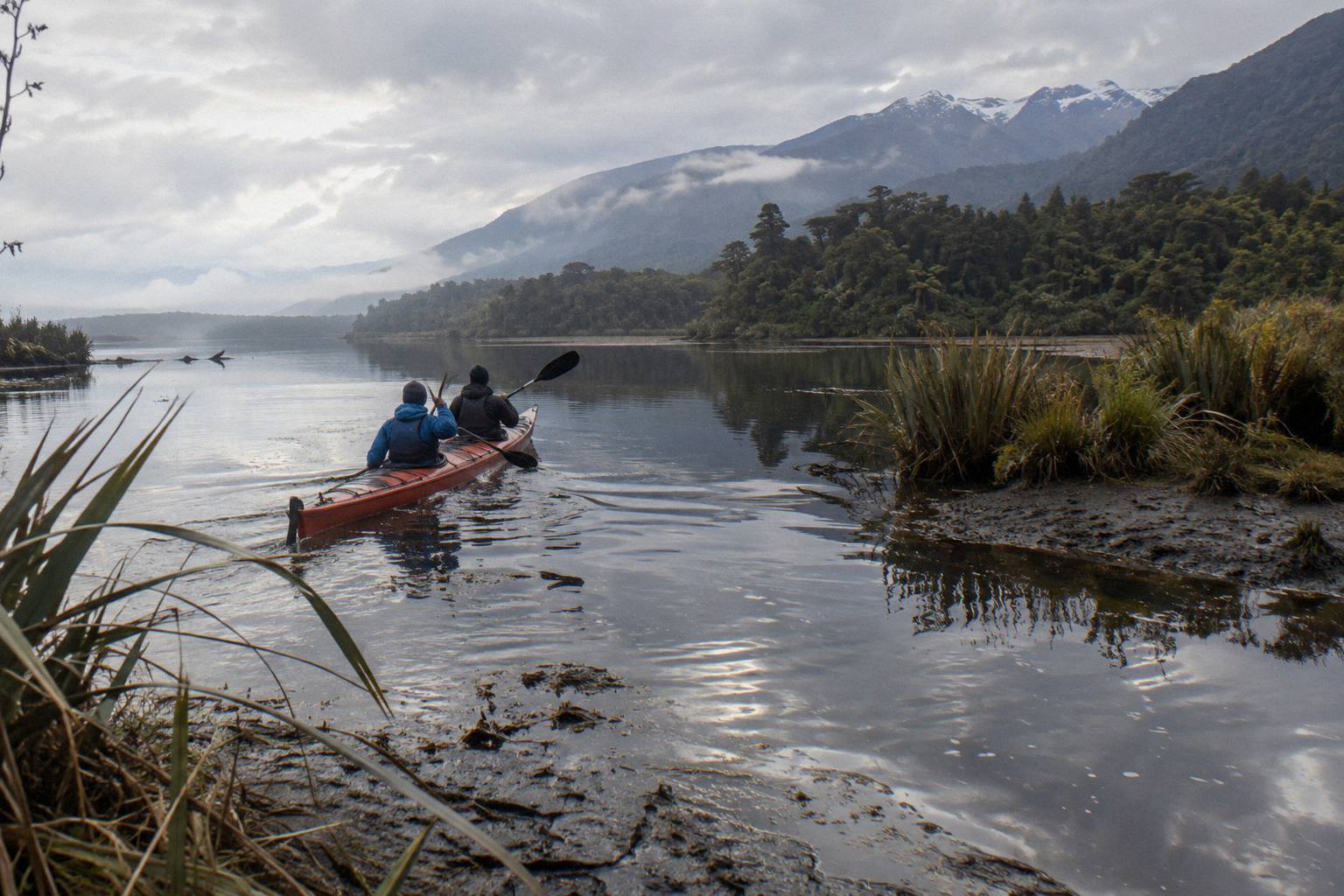
The kotuku, New Zealand's white heron, breeds at one guarded colony inland from Okarito and feeds on the lagoon in front of it. A kayak trip on that lagoon is one of the few ways to watch it hunt, but no trip can promise a bird.
Short answer
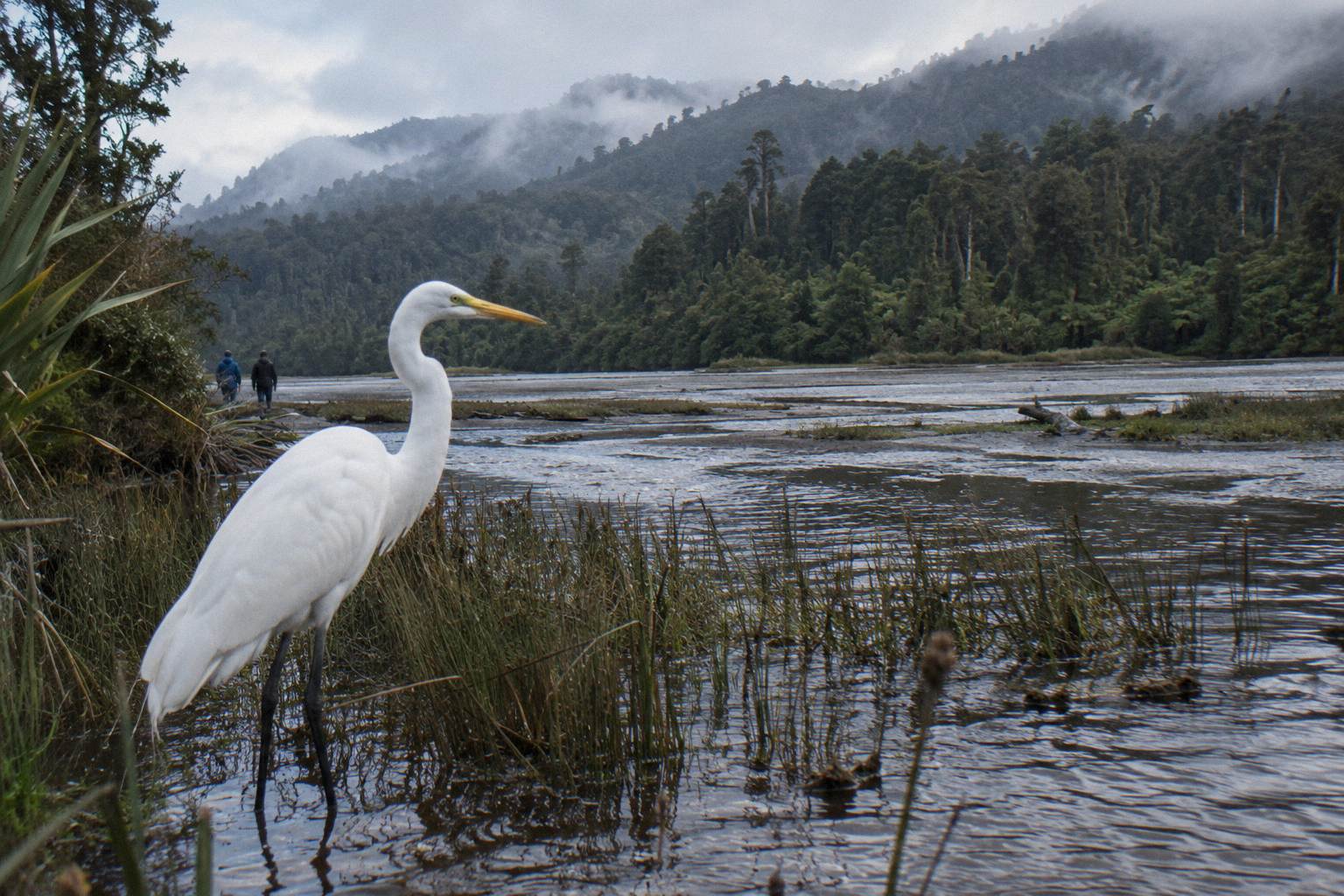
Kotuku nest at Waitangiroto near Whataroa, and DOC says the birds feed in coastal lagoons, particularly Okarito Lagoon, between September and February. Kayakers on the lagoon commonly see kotuku feeding year round, but the nesting colony itself is only reachable on a separate licensed tour from Whataroa.
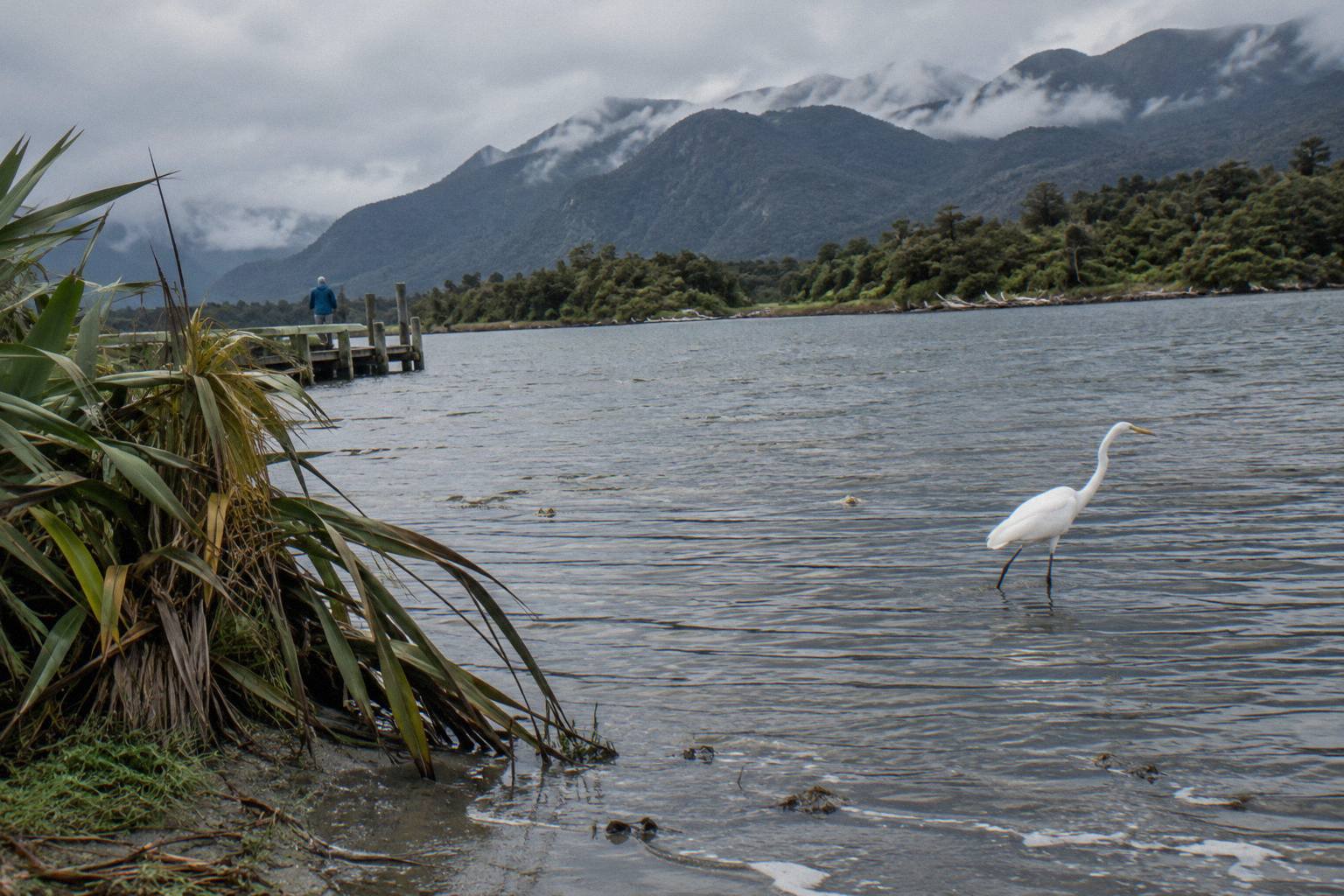
Few birds in New Zealand carry the weight the kotuku does. To Maori it was a bird of chiefly rank, rare enough that seeing one alive was considered a mark of good fortune, and the saying "he kotuku rerenga tahi", a kotuku of a single flight, still describes a once-in-a-lifetime visitor. Before protection arrived, the country was down to a handful of breeding pairs at one site on the South Island's West Coast, and that site, the Waitangiroto Nature Reserve near Whataroa, remains the only place in New Zealand where kotuku breed.
That single colony is the reason birders end up on this stretch of coast. It sits inland, hidden behind a buffer of forest and a licensed access arrangement, and the birds that raise their chicks there do their hunting out on the shallow coastal water of Okarito Lagoon, a short distance away. Franz Josef Kayak Tours covers the paddle trips on both of the region's main waters, Lake Mapourika and Okarito Lagoon, and the lagoon is where the kotuku question gets interesting: a kayak puts you on the feeding ground, not at the nest, and that distinction shapes every answer here.
Can You Actually See Kotuku From A Kayak?
Yes, on the lagoon's feeding flats, never at the nest. DOC records the sole New Zealand breeding colony at Waitangiroto near Whataroa, and notes that in the breeding season, September to February, the birds feed in coastal lagoons, particularly Okarito Lagoon. Okarito Kayaks puts it plainly: kayaks cannot reach the nesting site, but the birds are commonly seen feeding throughout the lagoon year round.
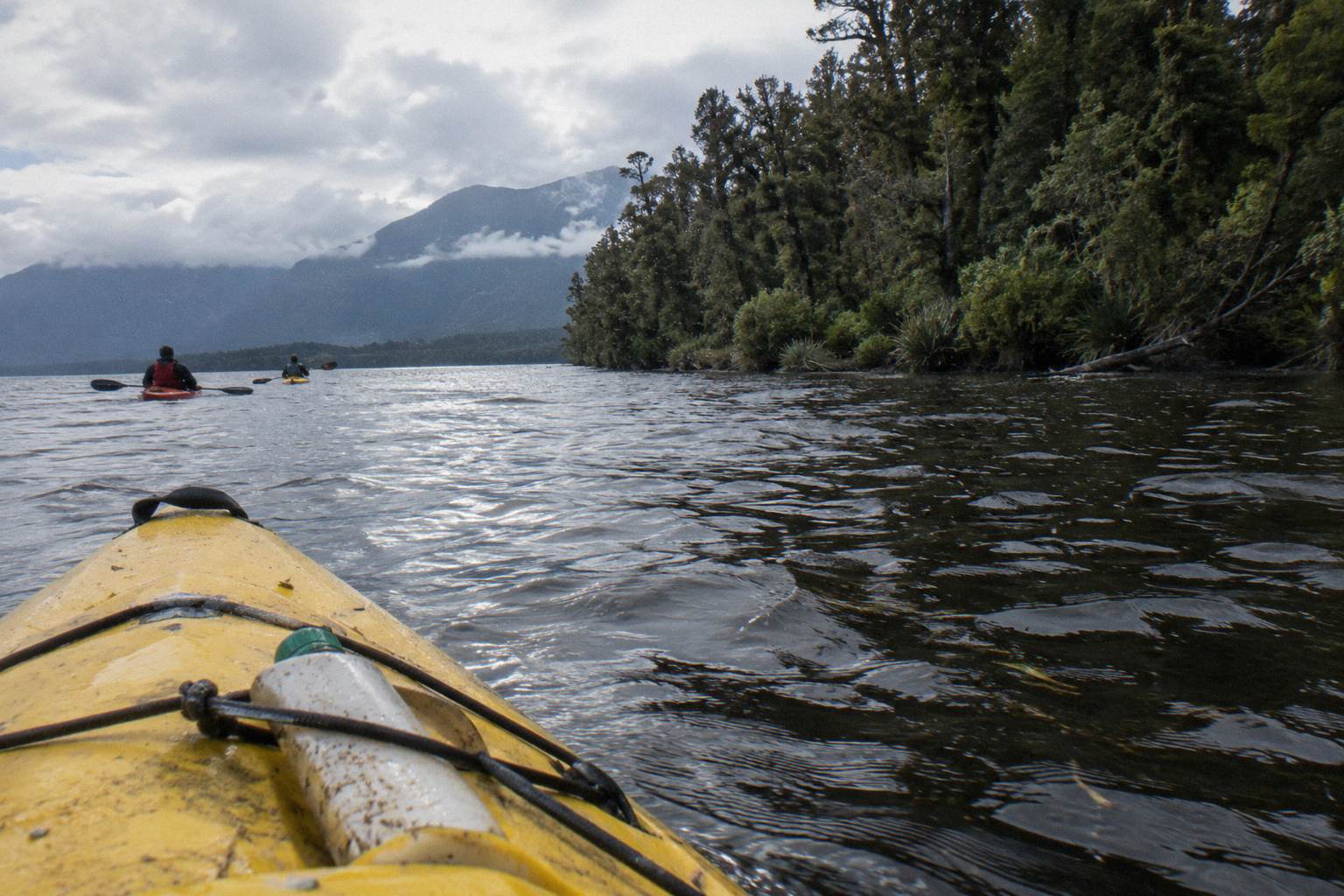
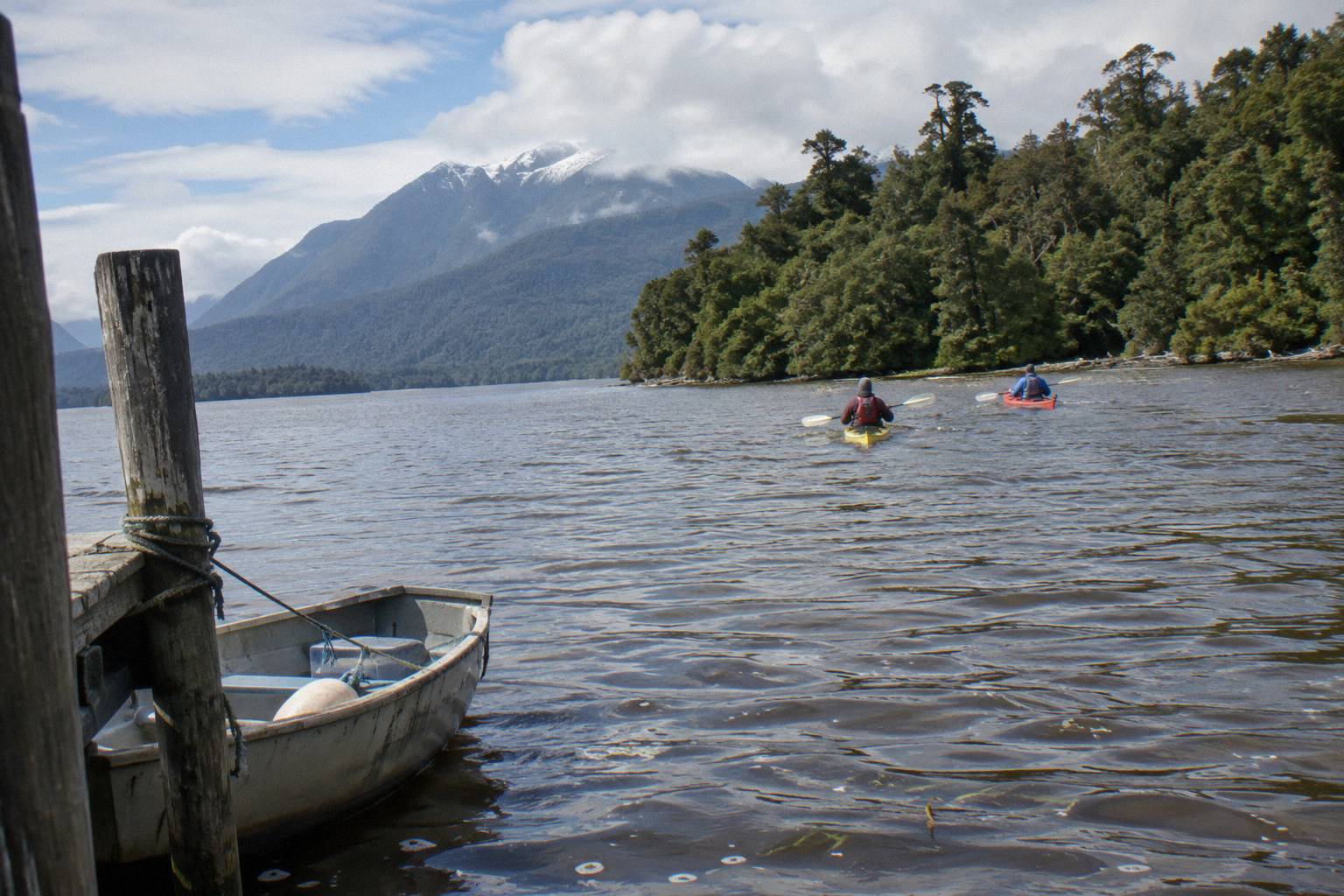
That operator wording deserves to be quoted rather than paraphrased, because it draws the line this whole page runs along. The nesting colony is off limits to paddlers; the feeding lagoon is open water that guided and hired kayaks use every day. A kotuku hunting in the shallows is a slow, patient bird: it stands motionless in the tea-coloured water, sometimes for minutes, then strikes. Because the lagoon is shallow and tidal, the fish and inanga the birds chase are concentrated in channels and along the edges, which is the same water a kayak naturally travels.
What no operator can do is promise a bird. The national population is small, 150 to 200 birds by the colony tour operator's figures, and even on the lagoon a sighting depends on where the birds chose to feed that morning. If a guaranteed kotuku is the purpose of your trip, the only product shaped around that purpose is the licensed colony tour from Whataroa, covered below. If a fair chance of watching a wild kotuku feed, alongside royal spoonbills, godwits and the lagoon's other regulars, is what you are after, the kayak trips do that.
For a fuller picture of the water itself, our guide to kayaking on Okarito Lagoon covers the tides, the village and the two guided options in detail.
Where Kotuku Nest, And Why Kayaks Cannot Go There
The colony sits in the Waitangiroto Nature Reserve near Whataroa, and DOC says access is by guided tour only, viewing the birds from an observation hide. White Heron Sanctuary Tours, established 1987, runs the licensed visit from its base at 64 Main Road, Whataroa.
The arrangement exists because the species cannot absorb disturbance. With a national population of 150 to 200 birds and up to 50 nesting pairs in a good season, all concentrated at one site, the colony is the single point of failure for the species in New Zealand. DOC's white heron page records the breeding season as September to February, and the tour operator's own figures put nesting typically from mid September until early March, with visitors viewing from a hide rather than walking among the nests. That framing matters: the colony tour is a regulated wildlife-viewing product, not an adventure one.
The Kayak Trips That Put You On Kotuku Water
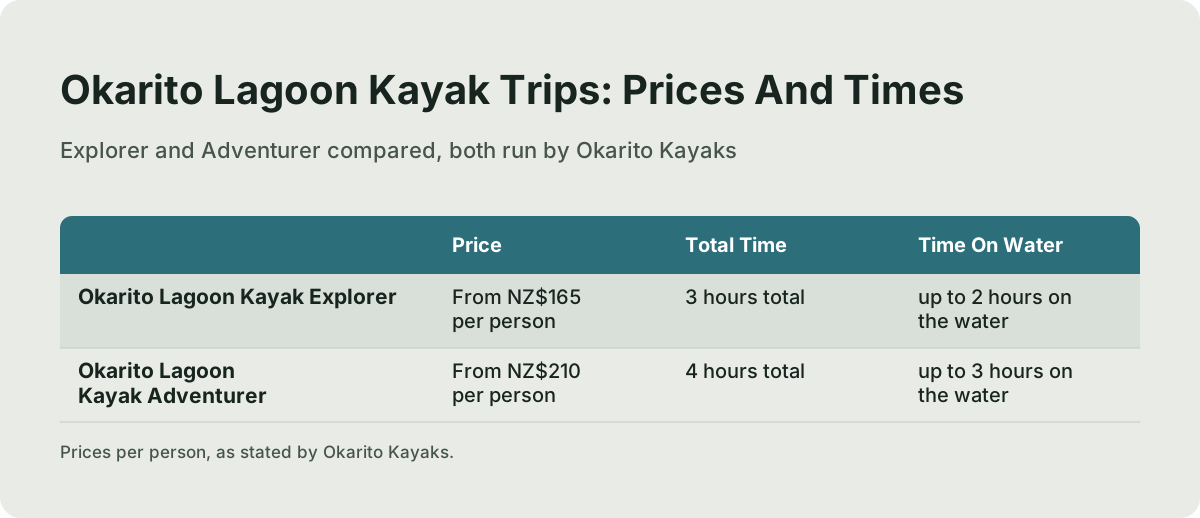
Two guided trips paddle Okarito Lagoon: the Okarito Lagoon Kayak Explorer, from NZ$165 per person for 3 hours with up to 2 hours on the water, and the Okarito Lagoon Kayak Adventurer, from NZ$210 per person for 4 hours with up to 3 hours on the water. Both are run by Okarito Kayaks from its base at 1 The Strand in Okarito, with self-arrival and no transfer.
The two trips share the same water and the same operator; the difference is time and reach. The Explorer is the natural first choice for a birder: 2 hours on a shallow lagoon is enough to cover the main channels, and shorter exposure suits photographers who want good light rather than distance. The Adventurer spends up to 3 hours on the water and reaches further into the lagoon's upper arms, which suits paddlers with some fitness and flexibility and gives the guide more scope to work around where the birds are. No review score is shown for either trip yet; the Adventurer is a new listing with no reviews.
Both departures are scheduled around the best tidal conditions for the day, which is the operator's stated practice and the only tide fact worth printing: departure times move with the tide, so the time for your date is on the booking page. Departures also need a minimum of two adults booked to confirm, so a solo traveller may be matched with others rather than getting a private departure.
The third trip in that selection is the lake rather than the lagoon, included because many visitors weigh the two waters against each other. Lake Mapourika is a different ecosystem: a deep, tannin-stained kettle lake ringed by rainforest, paddled by Franz Josef Wilderness Tours with a courtesy transfer from its Franz Josef office. Kotuku are a lagoon bird, so the lake is the wrong choice if the heron is the goal, but it is the most-reviewed trip of the five, 4.9 from more than 400, and it reaches the predator-free Okarito Kiwi Sanctuary shoreline, a different and equally West Coast wildlife story.
Planning the hide visit and the paddle together is mostly a question of driving. The colony tour runs from its Whataroa base, while the lagoon trips start at 1 The Strand on a self-arrival basis; among the kayak options, Lake Mapourika is the only one that collects you, from its Franz Josef office.
On price, the step from Explorer to Adventurer is NZ$45 for up to one more hour on the water, worth it if more time around the feeding flats is the goal.
What A Kayak Trip And The Colony Tour Each Offer
A kayak trip on Okarito Lagoon offers wild, unhabituated kotuku feeding in open water, commonly seen year round but never promised, from NZ$165 per person. The colony tour at Whataroa offers a managed view of nesting birds from a hide during the September-to-February season, run by a separate operator under licence. They answer different questions, and a birder with two spare half-days does both.
The two are not rivals, so there is no single winner here, and a comparison on stated facts is the way to choose. The table below holds to what each operator and DOC actually say.
| Kayak trip on Okarito Lagoon | Colony tour at Whataroa | |
|---|---|---|
| What you see | Kotuku feeding in the wild, alongside other lagoon birds | Nesting kotuku from an observation hide |
| When | Year round sightings reported; feeding in the lagoon during the September-to-February breeding season | Nesting typically mid September to early March (operator) |
| Access | Self-arrival at 1 The Strand, Okarito | 64 Main Road, Whataroa; guided walk to hide |
| Duration | Explorer 3 hours total, Adventurer 4 hours total | Separate tour; not sold here |
| Price | From NZ$165 per person (Explorer) | On the operator's own listing |
| Sighting promise | Never; "common to see ... feeding" (operator) | Nesting birds, subject to season |
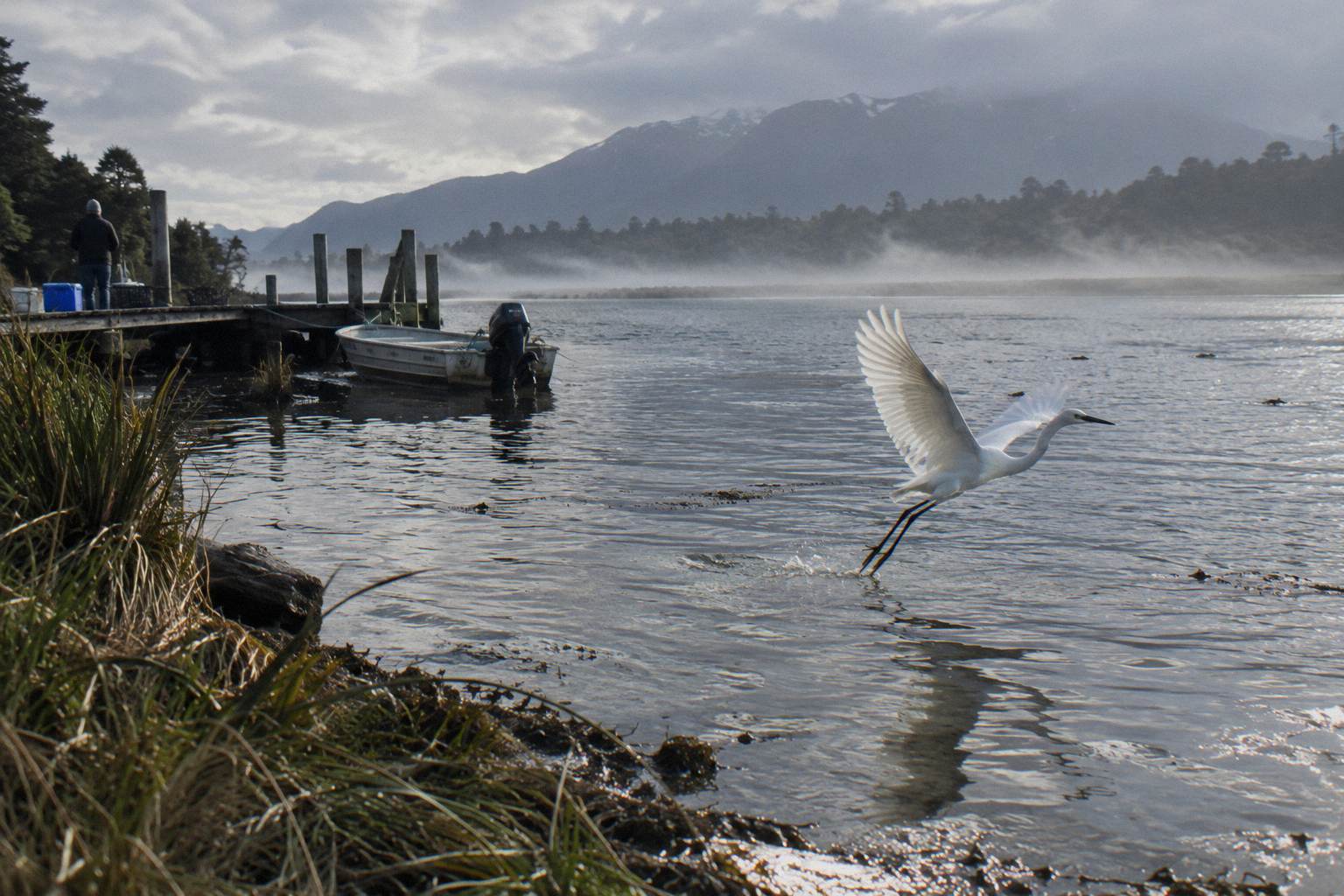
For photographers the split is even clearer. A nest view is a nest view: distant, static, protected by the hide's rules. A feeding kotuku on the lagoon is a behaviour shot, the strike, the lift-off, the bird mirrored in still water, and it comes with no certainty at all. If your lens is long and your patience longer, the lagoon is the better canvas; the best reflections come on windless days and at dawn and dusk, which is a planning note for the mirror-flat water the lagoon is known for. Our piece on mirror reflections and when they are best on the lake covers the light logic, which transfers to the lagoon.
One scheduling note ties the two products together better than any tour operator will tell you. The colony tour needs the breeding season; the lagoon does not. A visit in April or May misses the hide but keeps the kayak, and the operator reports feeding birds through the year.
The Adventurer, discussed above, is the one to pick when the birds are working the lagoon's far channels: the extra hour on the water is the difference between a quick circuit and a guide's ability to relocate around what the wildlife is doing that day.
When To Plan Your Paddle For The Best Odds
The strongest overlap of facts points to the September-to-February breeding season, when DOC says kotuku feed in Okarito Lagoon while nesting at the colony. Outside that window sightings still happen, the operator reports feeding birds year round, but the peak months are behind you, and tide-timed departure times, not clock times, decide the day's schedule.
The season logic is worth restating carefully because it is the page's core planning fact. During breeding, every adult at the colony is making feeding flights to coastal water, and DOC names Okarito Lagoon as a particular feeding ground in that period. The density of hunting birds on the lagoon is at its annual peak. After the chicks fledge, the birds disperse around the coast, and the lagoon's population thins to whatever fraction of the 150-to-200 national population stays local. None of this makes a sighting certain in season or impossible out of it; it just tilts the odds.
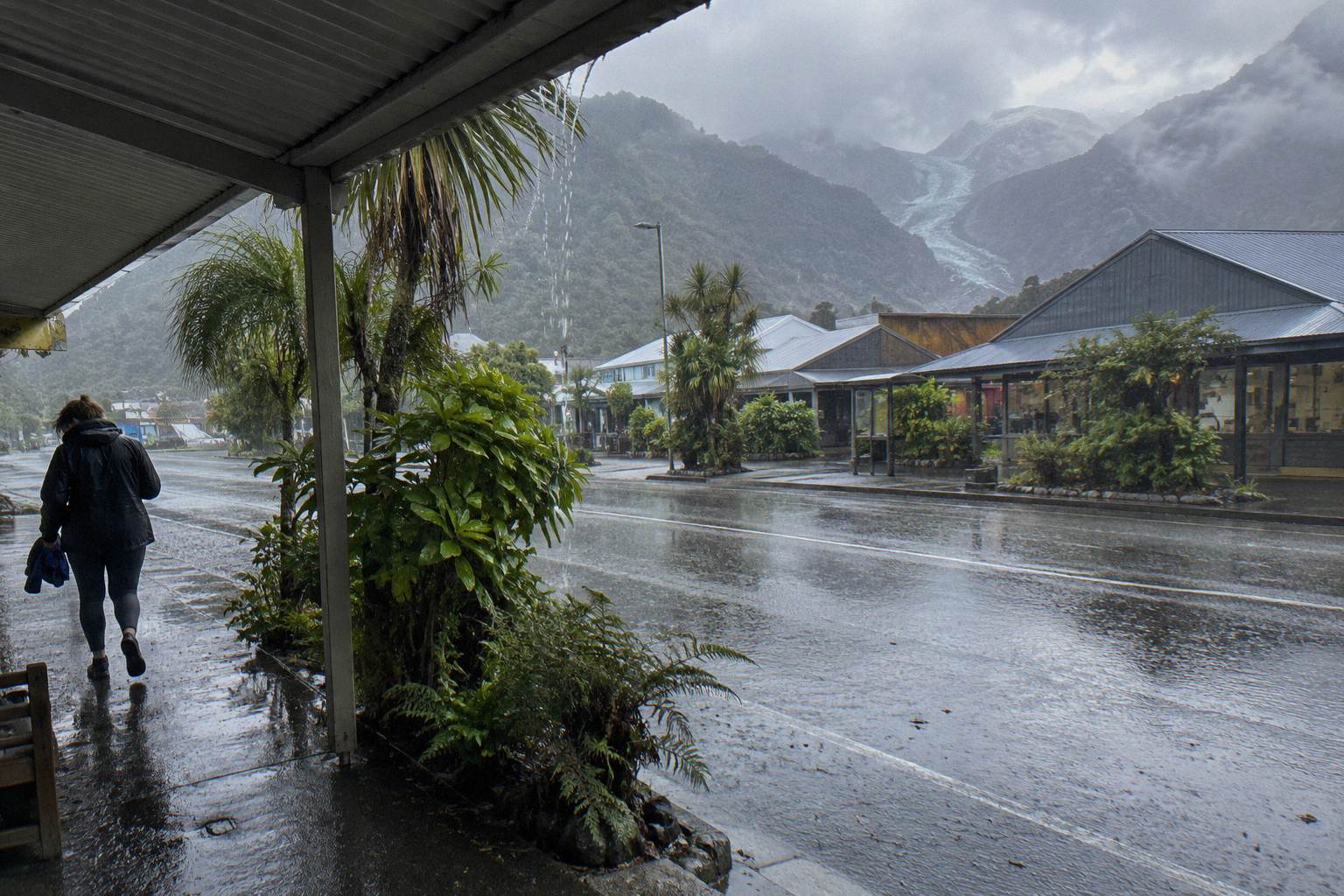
Weather is the second variable, and the West Coast does not hide it. Rain does not stop the trips, and the operator's position is that kayaking can be atmospheric in light rain, with full refunds if conditions are judged unsafe. For a birding photographer the relevant cost of rain is light and flat-grey water, not cancellation. Our guide to Franz Josef weather for kayaking works through the trade-offs month by month, and the site's piece on the best time of year for West Coast kayaking is the broader seasonal read.
The tide is the third, and it is not a planning variable you control. Because the lagoon is shallow and tidal, the operator schedules each day's start around the best tidal conditions, so your kotuku session may begin mid-morning one day and late afternoon the next. Build flexibility into the day rather than a fixed hour.
What To Bring, And What The Lagoon Trips Provide
Okarito Kayaks supplies a buoyancy aid, spray skirt, dry bags, a lagoon map and bird guide, environmentally friendly insect repellent and a rescue boat on standby, and its base has parking, toilets and hot drinks. You bring warm quick-drying layers, a rain jacket, footwear, water, snacks, sunscreen, a camera and binoculars. Arrive 10 to 15 minutes before the stated start.
The bird guide is the item worth flagging: the operator hands you a printed identification sheet for the lagoon's species, which tells you a first-time West Coast visitor what a kotuku looks like next to the white-faced heron, a commoner grey bird that also hunts the lagoon and is the species visitors most often mistake for it. A kotuku is entirely white with a dark bill and, in breeding plumage, fine back plumes; if the heron in your viewfinder is grey, it is the white-faced heron.
Sandflies deserve a plain word, because they are the West Coast's most reliable wildlife. Okarito Kayaks mentions them on occasional cloudy, still days and supplies repellent on its trips. Old insect repellent loses potency, so a fresh can is worth packing. There is no shop and no restaurant in Okarito village, which has roughly 40 permanent residents by the operator's count, around 30 by DOC's, so snacks and water are not optional extras.
A note on clothing: jeans fail on a kayak for reasons our jeans on a kayak tour piece explains in full, and warm quick-drying fabric is the operator's stated recommendation.
| Provided by Okarito Kayaks | You bring | Nice to have |
|---|---|---|
| Buoyancy aid | Warm quick-drying layers | Binoculars |
| Spray skirt | Rain jacket | Long lens, 300 mm or more |
| Dry bags | Footwear that can get splashed | Polarising filter for reflections |
| Lagoon map and bird guide | Water and snacks | Dry towel in the car |
| Insect repellent (environmentally friendly) | Sunscreen, camera | Spare battery |
| Rescue boat on standby | Nothing glass | Neutral-coloured outer layer |
Rules, Limits And Safety Notes That Affect Birders
Okarito's guided trips have no minimum or maximum age, need at least two adults booked to confirm a departure, and the booking pages exclude anyone over 200 cm or over 125 kg. Free cancellation up to 24 hours applies on the booking page. A guided trip's rescue boat on standby and the operator's weather calls cover the safety side a lone birder would otherwise have to arrange alone.
The physical limits are printed on the booking pages and are worth knowing before you plan a family or group trip around the lagoon. The two-adult minimum means a lone traveller books onto an existing departure rather than a solo one.
For the bird's sake rather than yours, the unwritten rules matter more. Do not chase a feeding bird; a kotuku that lifts off loses its fishing time, and a bird disturbed repeatedly during breeding season is paying for your photograph in energy it needs for chicks. Let the guide position the group, keep voices down on the flats, and treat the operator's phrase, common but never promised, as the plain truth.
One crossover trip deserves a mention for birders deciding between waters: the Lake Mapourika Kayak And Okarito Kiwi Sanctuary Walk, from NZ$179 per person for 4 hours with Franz Josef Wilderness Tours, pairs a paddle with a walk on a private rainforest track reachable only by water, inside the sanctuary that protects the rowi kiwi. No kotuku, but the other rare bird of this coast, and a guided 4.9 from more than 120+ reviews.
How To Build The Trip Around The Bird
Book the lagoon kayak first, since departures are tide-timed and two adults are needed to confirm, and hold a spare half-day for the Whataroa colony tour if your dates fall between mid September and early March. Both bases sit north of Franz Josef: Okarito is about 25 minutes away on a sealed road off SH6, and Whataroa a similar distance further north, so the two can share a day's driving if the tide times allow.
Practically, most visitors base in Franz Josef glacier township and drive north. Check the departure time for your date on the live listing before locking the rest of the day, because a 9am tide and a 3pm tide make completely different itineraries, and the colony tour's hide visits run to their own schedule. With no shop in Okarito, buy food in Franz Josef on the way through; the town's full activity menu is laid out in our things to do in Franz Josef around a paddle guide.
DOC's white heron page is the primary source on the colony and season, and its Okarito area page lists the village's short walks, the trig track at 1 hour 30 minutes, the wetland walk at 20 minutes and the Pakihi walk at 30 minutes, which make good tide-gap fillers while you wait for a departure.
| Trip | Water | From price | Duration | Kotuku relevance |
|---|---|---|---|---|
| Okarito Lagoon Kayak Explorer | Okarito Lagoon | NZ$165 per person | 3 hours total | Feeding birds, commonly seen, never promised |
| Okarito Lagoon Kayak Adventurer | Okarito Lagoon | NZ$210 per person | 4 hours total | Same water, further reach into the lagoon |
| Lake Mapourika 3-Hour Kayak Tour | Lake Mapourika | NZ$159 per person | 3 hours | Not a kotuku water; rainforest and kiwi sanctuary shoreline |
| Lake Mapourika Kayak And Okarito Kiwi Sanctuary Walk | Lake Mapourika | NZ$179 per person | 4 hours | No kotuku; rowi kiwi sanctuary walk |
| White Heron Sanctuary Tours colony tour | Waitangiroto, Whataroa | On the operator's listing | Separate product | Nesting birds from a hide, September to March |
All five kayak and cruise products carry free cancellation up to 24 hours on the booking page, which matters when the plan depends on tides and weather rather than a fixed clock. The colony tour's terms sit on its own listing.
Common Questions About Kotuku From A Kayak
Can You See Kotuku White Herons From A Kayak?
Yes, on Okarito Lagoon, where the operator reports it is common to see them feeding year round. No trip promises a sighting, and the nesting colony itself cannot be reached by kayak.
Where Do Kotuku Nest?
At the Waitangiroto Nature Reserve near Whataroa, the only breeding colony in New Zealand, with nesting typically from mid September until early March. Viewing is by a licensed guided tour to an observation hide.
When Is The Best Time Of Year To See Kotuku On Okarito Lagoon?
DOC says the birds feed in the lagoon particularly during the breeding season, September to February. Sightings are reported year round, but the odds concentrate in those months.
Which Kayak Tour Is Best For Kotuku?
The Okarito Lagoon trips: the Explorer at 3 hours from NZ$165 per person, or the Adventurer at 4 hours from NZ$210 per person for further reach into the lagoon. Lake Mapourika trips do not visit kotuku feeding water.
Is The Colony Tour Better Than A Kayak Trip?
They are different products, not rivals. The colony tour shows nesting birds from a hide in season; the kayak shows wild birds feeding, with no guarantee. Birders with time often do both.
Do Kayak Tours Guarantee Seeing A White Heron?
No. The operator's own wording is that sightings are common, not certain, and any operator promising a kotuku should be treated with caution given the national population is only 150 to 200 birds.