Does Weather Cancel Kayak Tours Near Franz Josef?
The straight answer on when weather cancels a kayak tour near Franz Josef: operator policy, refunds, rain statistics, tides at Okarito, and what to do about a wet forecast.
Rain is the background noise of the West Coast. Franz Josef township sits under NIWA-recorded mean annual rainfall of 5,555.2 mm, which is more than five times what London gets in a normal year, and yet kayak tours on Lake Mapourika and Okarito Lagoon run through almost all of it. The gap between "it is pouring in town" and "the tour is off" is wide, and it is worth understanding before you pay for a trip. What follows walks through the actual policies, the climate numbers behind them, and the practical decisions a booker faces.
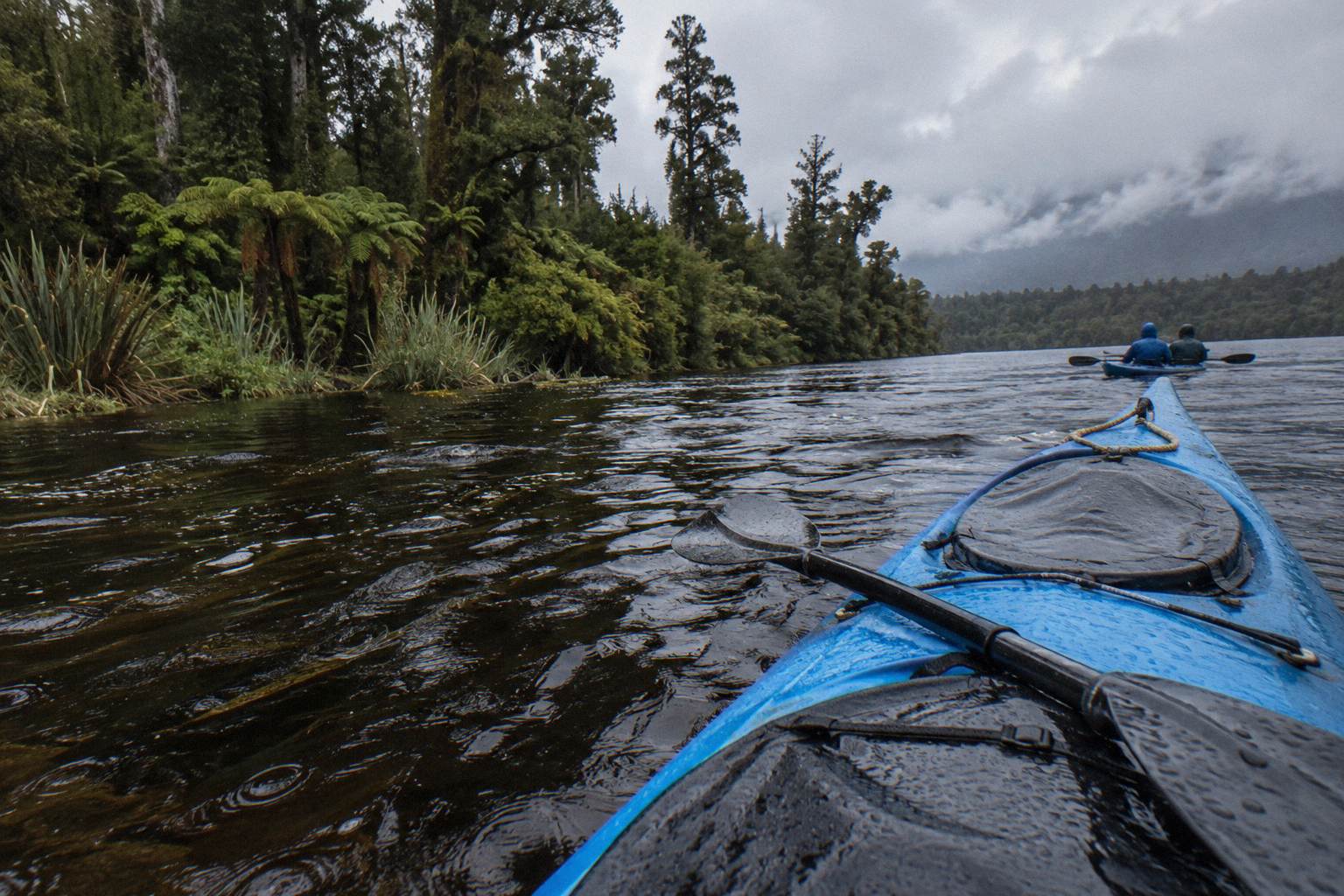
No, rain alone almost never cancels a kayak tour near Franz Josef. Franz Josef Wilderness Tours runs trips in wet weather and even calls light rain atmospheric, cancelling only when conditions are considered unsafe, at which point you receive an alternative date or a full refund; the two Okarito Lagoon trips are timed around tides instead.
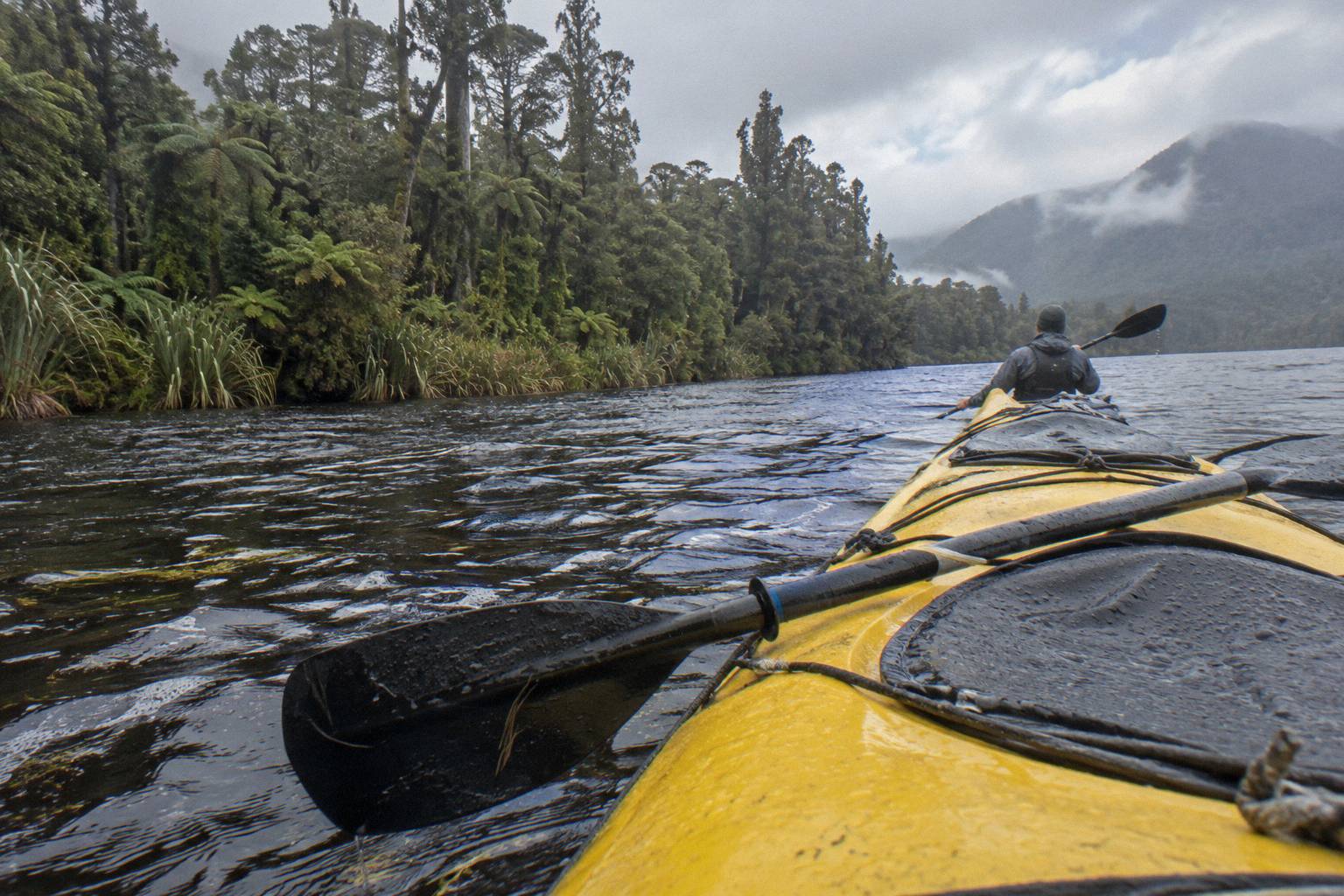
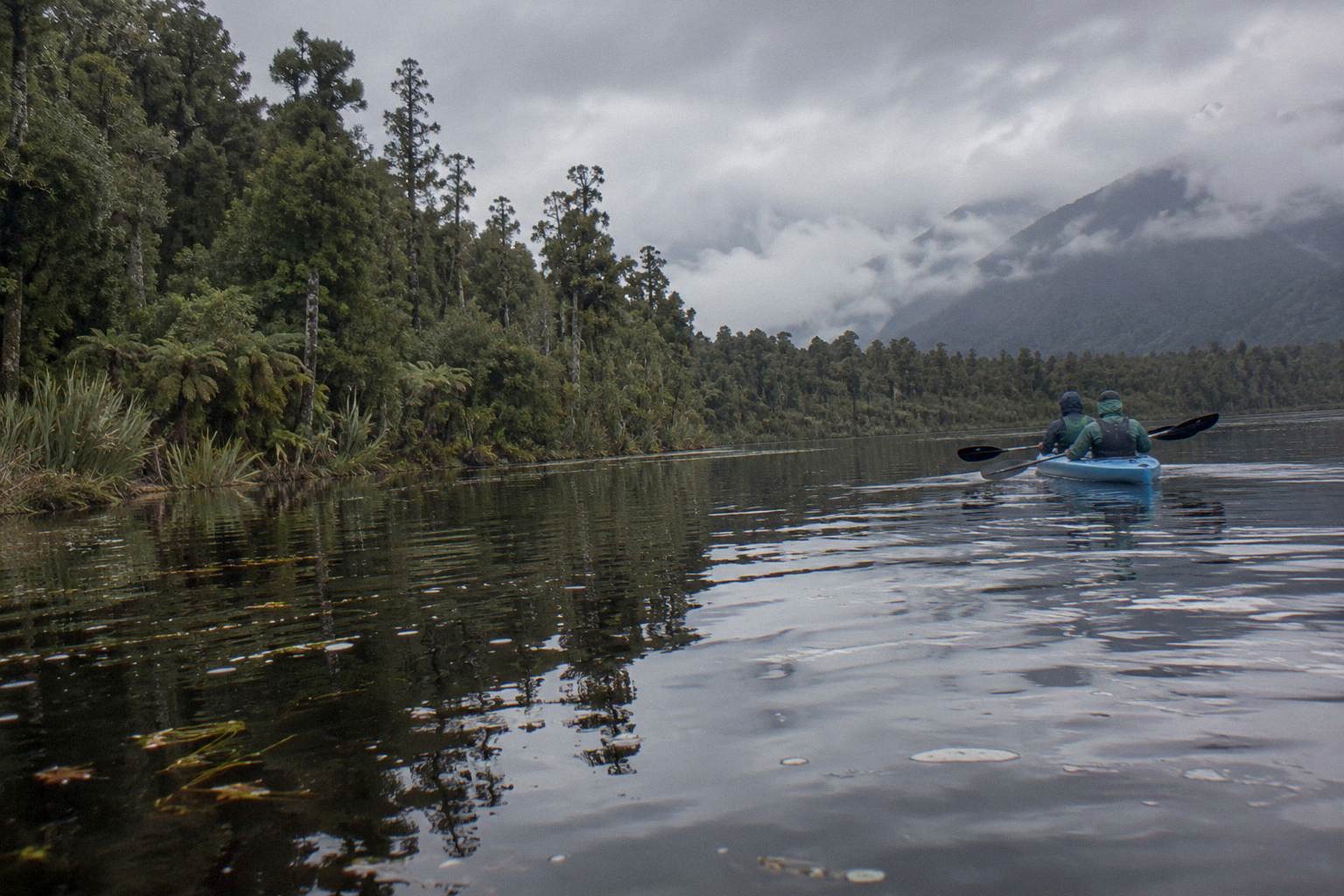
The key sentence from Franz Josef Wilderness Tours, on its own tour pages, is this one: "If conditions are considered unsafe, we will cancel the tour and offer an alternative or a full refund." Everything else in the policy flows from it. Rain falling vertically is not, by itself, an unsafe condition. The operator supplies paddling jackets and wet-weather gear as part of every Lake Mapourika trip, so a shower is treated as a wardrobe question, not a cancellation question. The company even makes the case that drizzle on a tannin-dark lake looks better than blue sky, since cloud softens the reflections.
What does stop a trip is the kind of weather that changes the water: sustained strong wind that builds a chop on an exposed lake, conditions that make a capsize dangerous rather than merely unpleasant, or anything the operator's own safety assessment flags. The lake is deep and exposed, as the company's risk disclosure says, and in winter the cold adds hypothermia to the risk picture. Those judgements are made by the operator on the day, using local observations, not by a fixed wind-speed number published in advance.
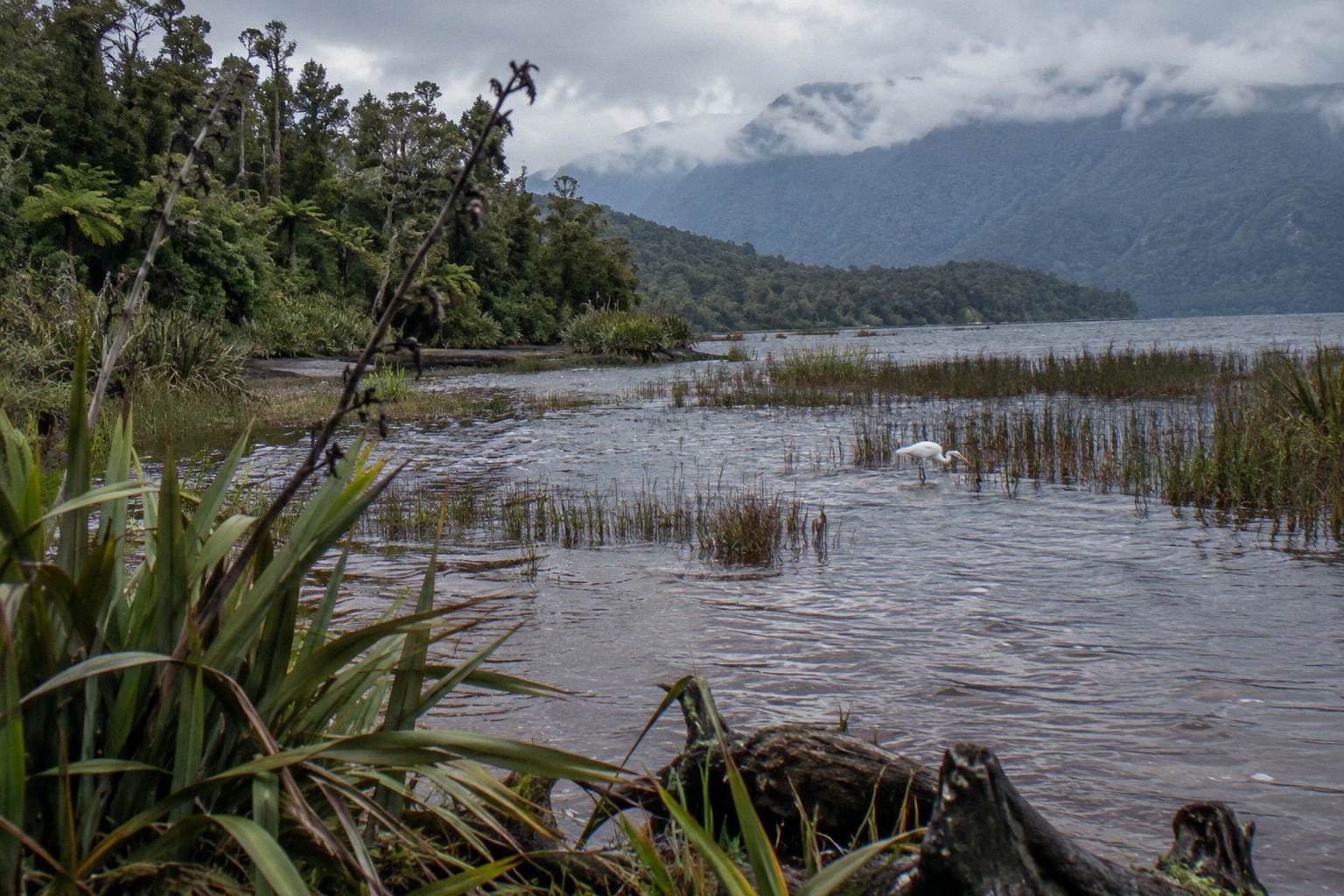
There is a quirk of West Coast geography that surprises visitors. The operator reports that it is "often times" dry at Lake Mapourika while it is raining in the township, roughly ten minutes' drive south. The lake sits north of the settlement, the rainforest canopy holds moisture, and the weather between the two spots genuinely differs on many mornings. So the single worst way to judge whether your tour will run is to look out of your motel window in Franz Josef at 7am. The operator checks the conditions at the lake itself, and recommends the Windy forecast app for a picture of the local picture before you leave.
If you are choosing a trip while watching the sky, the three most weather-tolerant options sit below: the full lake paddle with the most reviews, the longer paddle-and-walk combination, and the covered boat cruise that runs rain or shine.
What Does The Operator's Weather Policy Actually Say?
Franz Josef Wilderness Tours runs its kayak trips in wet weather, supplies jackets and wet-weather gear on every departure, and cancels only for unsafe conditions, in which case guests get an alternative trip or a full refund. Guest-initiated changes and cancellations are free up to 24 hours before departure; inside 24 hours nothing is refundable. Private and group bookings carry a 48-hour window instead.
The full policy, drawn from the operator's own tour pages, is generous in one direction and firm in the other. Cancel or change more than 24 hours ahead and you receive a full refund with no penalty, no explanation needed. Inside 24 hours the booking is not refundable "for any reason", a phrase worth taking seriously if your travel plans involve a flight the same afternoon. Private tours, group bookings and charters need 48 hours of notice. The operator can also cancel on its own side, for minimum numbers or unsafe conditions, and in those cases the refund is full and automatic.
The safety layer sits underneath all of this. The company states its activities fall under Maritime NZ and the Adventure Activities Regulations, and that it is safety audited through both AdventureMark and Maritime NZ. Since 9 October 2026, a nationwide Maritime NZ rule also requires everyone on a recreational craft of six metres or under, kayaks included, to wear a lifejacket while underway, which matches what both local operators already did as standard practice. If you want the detail, Maritime NZ explains the lifejacket rule on its own site.
For a booker, the practical reading is simple: the weather risk is carried almost entirely by the operator, not by you. You decide up to 24 hours out. After that point the decision belongs to the conditions and the guide.
Which Conditions Actually Stop A Kayak Tour?
Wind is the main trip-ender on Lake Mapourika, not rain: strong sustained wind builds a chop on a deep, exposed lake and turns a capsize from a swim into an incident. Cold compounds it, since the risk disclosure names hypothermia as a winter-heightened risk. Guides make the call on the morning, at the water, not from a published wind threshold.
It helps to separate the three things people lump together as "bad weather". Rain is the common one, and on this coast it is routine: every calendar month in the NIWA 1991 to 2020 record averages above 300 mm of rainfall, so there is no month a booker can dodge by scheduling cleverly. Rain without wind is a paddling day. The gear list handles it, feet stay dry in stable double kayaks, and photos still get taken.
Wind is different. Lake Mapourika is the largest kettle lake in South Westland, per the operator's description, about 9 square kilometres of open water formed by retreating ice. Wind that funnels down the valley can stand a chop in the middle of it, and a group of novice paddlers crossing that chop is exactly the scenario a guide cancels to avoid. The company's risk disclosure is candid that the lake is deep and exposed, that capsize and hypothermia are real risks, and that at times guests are one to two hours from medical assistance. That candour is the reasoning behind the cancellations.
| Trip | Runs in rain? | What stops it | Your cancellation window |
|---|---|---|---|
| Lake Mapourika 3-Hour Kayak Tour | Yes, gear supplied | Operator judgement of unsafe conditions, minimum numbers | Free change or refund up to 24 h before |
| Lake Mapourika Kayak And Okarito Kiwi Sanctuary Walk | Yes, gear supplied | Same operator policy, 4 h exposure | Free up to 24 h before |
| Lake Mapourika Scenic Cruise | Yes, runs rain or shine | Operator judgement, covered boat | Free up to 24 h before |
| Okarito Lagoon Kayak Explorer | Check when booking | Start times set by tides, not the calendar | Free up to 24 h before on the booking page |
| Okarito Lagoon Kayak Adventurer | Check when booking | Start times set by tides, 4 h with more paddling | Free up to 24 h before on the booking page |
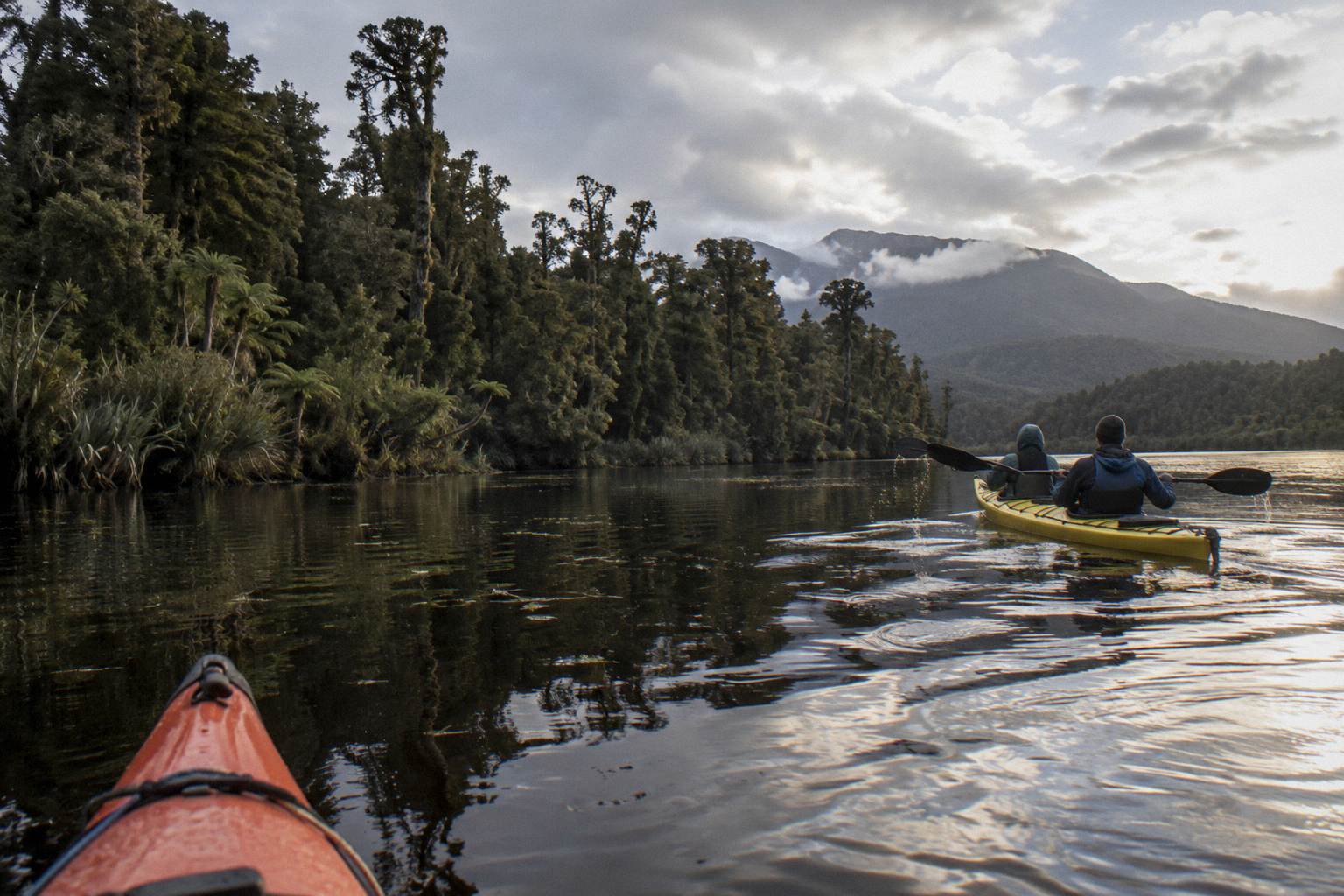
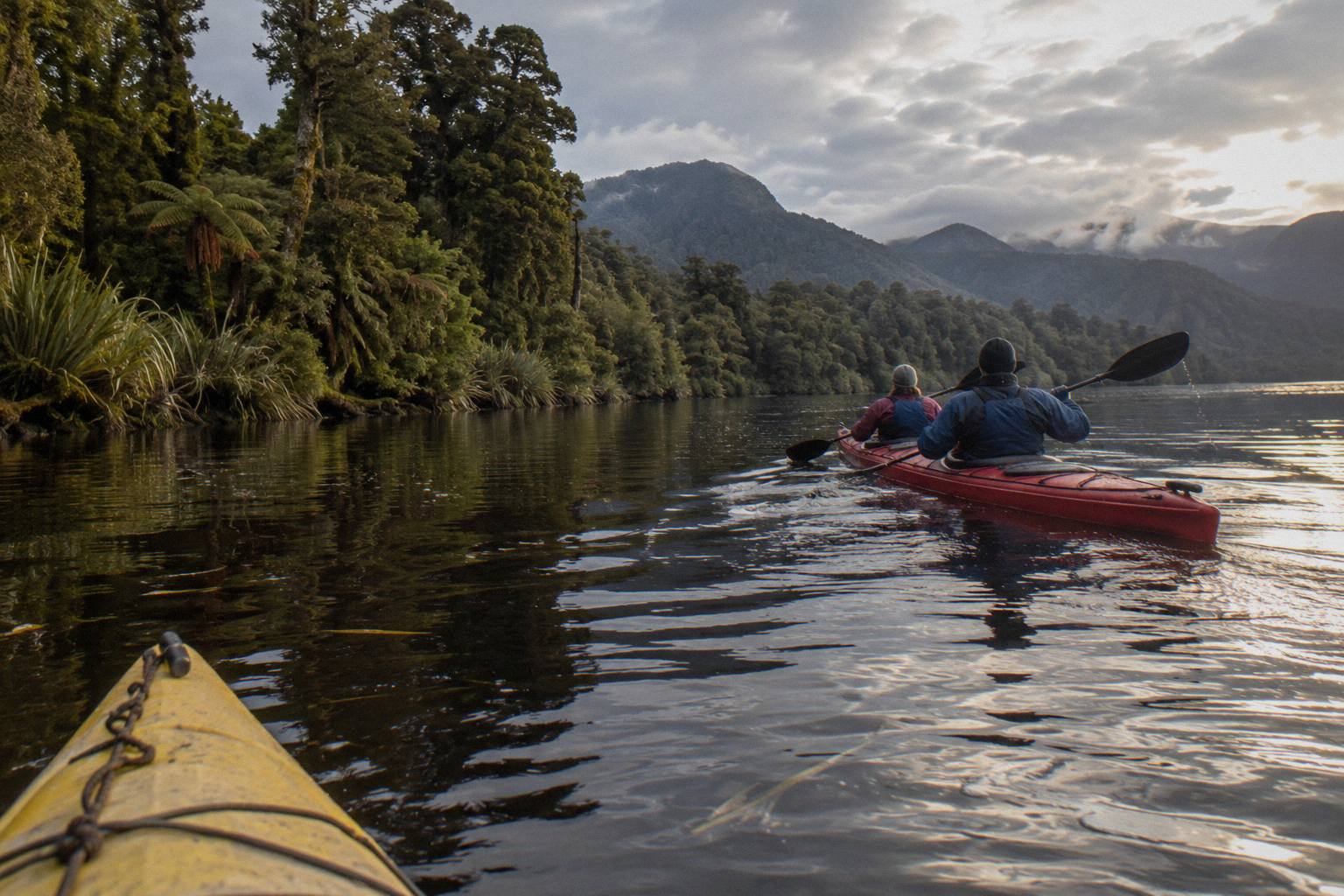
The third element, cloud cover, cancels nothing but does change what you see. On a clear day the operator says many glaciers are visible from the lake, including the neve of the Franz Josef Glacier; when cloud sits low in the valley, the glaciers disappear. The company's counterpoint is that mirror-lake reflections are often at their most dramatic under cloud, which is a fair trade on a tannin-dark water surface. Neither outcome is promised, and neither cancels the trip.
How Much Rain Does Franz Josef Actually Get?
NIWA records for Franz Josef show mean annual rainfall of 5,555.2 mm, with every single month above 300 mm. The wettest months are October at 594.1 mm, December at 593.7 mm and January at 552.0 mm; the driest are July at 317.8 mm and February at 357.6 mm. In other words, there is no dry season to aim for, only wetter and slightly less wet.
Those numbers come from the NIWA CliFlo 1991 to 2020 normals, and they reframe the booking decision completely. A visitor from almost anywhere else reads "five and a half metres of rain" and imagines a monsoon; a local reads it as background. Mean daily maximum temperatures range from 20.0 °C in January to 11.9 °C in July, with mean daily minimums of 10.5 °C and 3.3 °C in the same months, and the annual mean sits at 11.4 °C. Sunshine totals about 1,169 hours a year, with January the brightest at 118 hours and December notably duller at 83.
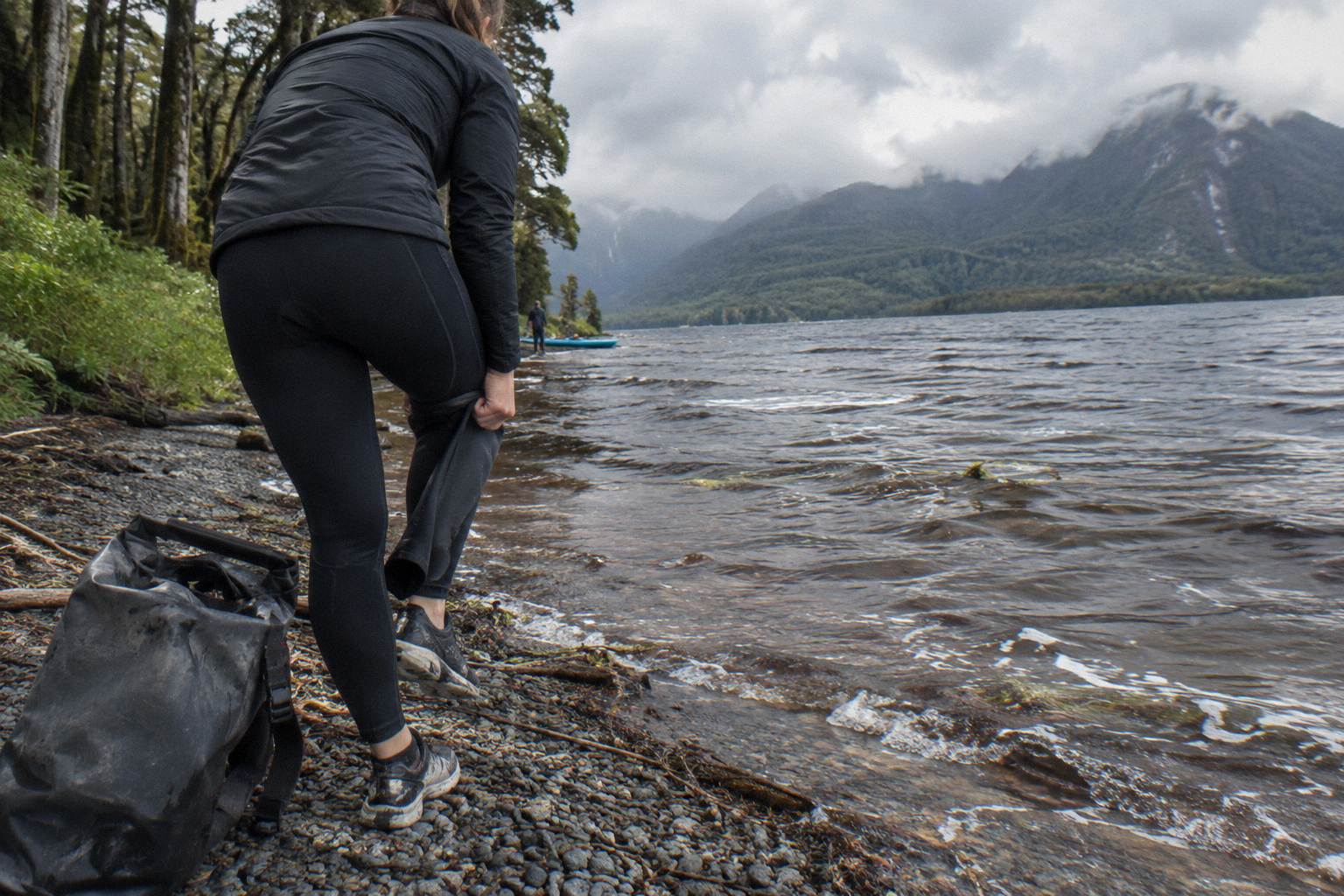
The pattern inside the year matters more than the total. Spring, especially October, is the wettest stretch, and midwinter July is actually the driest month on record, though also one of the coldest for a capsize. Summer brings the crowds, the warmest water and the most daylight, plus the year's second rainfall peak in December and January. None of this argues for or against a particular trip; it argues for booking the trip you want and letting the policy absorb the weather risk, rather than trying to out-guess the sky.
| Measure | Figure (NIWA 1991 to 2020) |
|---|---|
| Mean annual rainfall | 5,555.2 mm |
| Wettest months | October 594.1 mm, December 593.7 mm, January 552.0 mm |
| Driest months | July 317.8 mm, February 357.6 mm |
| Mean daily max, Jan / Jul | 20.0 °C / 11.9 °C |
| Mean daily min, Jan / Jul | 10.5 °C / 3.3 °C |
| Sunshine per year | about 1,169 hours |
One seasonal wrinkle worth knowing: summer sessions on Lake Mapourika, from 1 November to 31 March, include a late 5pm departure on the operator's own Sunset Classic, while winter sessions from 1 April to 31 October run mornings and early afternoons, with times varying. If winter cloud and a 2pm finish coincide, the operator notes that the afternoon paddle often catches sunset anyway. There is more on the local climate in the guide to Franz Josef weather for kayaking, and on what to wear in it in our what to wear on a kayak tour guide.
What Happens To Your Money If A Tour Is Cancelled?
If the operator cancels, for unsafe conditions or minimum numbers, you receive a full refund or an offered alternative trip. If you cancel more than 24 hours before departure, the refund is full with no penalty; inside 24 hours, the booking is not refundable for any reason. Private and group bookings need 48 hours of notice.
This split is the whole contract in three lines. Operator-side cancellations are painless by design: the weather call is the guide's professional judgement, made with safety-audit backing, and the company does not charge you for its own decision. Your-side cancellations are free until the 24-hour mark, which is generous for a town where plans genuinely do shift with road and flight conditions. More of these guides are collected on Franz Josef Kayak Tours.
Free cancellation up to 24 hours applies to all five trips covered here, from the Lake Mapourika 3-Hour Kayak Tour at from NZ$159 per person to the Okarito Lagoon Kayak Adventurer at from NZ$210 per person, all prices in New Zealand dollars. The 3-hour Mapourika trip is the one with the most reviews, rated 4.9 from 400+ reviews, and the Kayak And Okarito Kiwi Sanctuary Walk carries 4.9 from 120+ reviews.
A booker staring at a shaky forecast should read that 24-hour line as a free option. Book the trip, watch the weather, and decide the day before. You keep the seat while conditions resolve, and the downside is capped at zero until the window closes.
Do Okarito Lagoon Tours Get Cancelled For Weather?
The lagoon is shallow and tidal, and tour and rental start times are scheduled around the best tidal conditions for any given day, so your departure time is set by the tide table rather than the calendar.
The lagoon is a different body of water from the lake, about 25 minutes north of Franz Josef, and the operator is a different family business, run by Gemma and Baz since 2014 from a base at 1 The Strand in Okarito. Guided trips carry no minimum or maximum age, under-18s pay half price, and departures need at least two adults booked to confirm. That minimum-numbers rule is the one cancellation cause an Okarito booker can actually plan around.
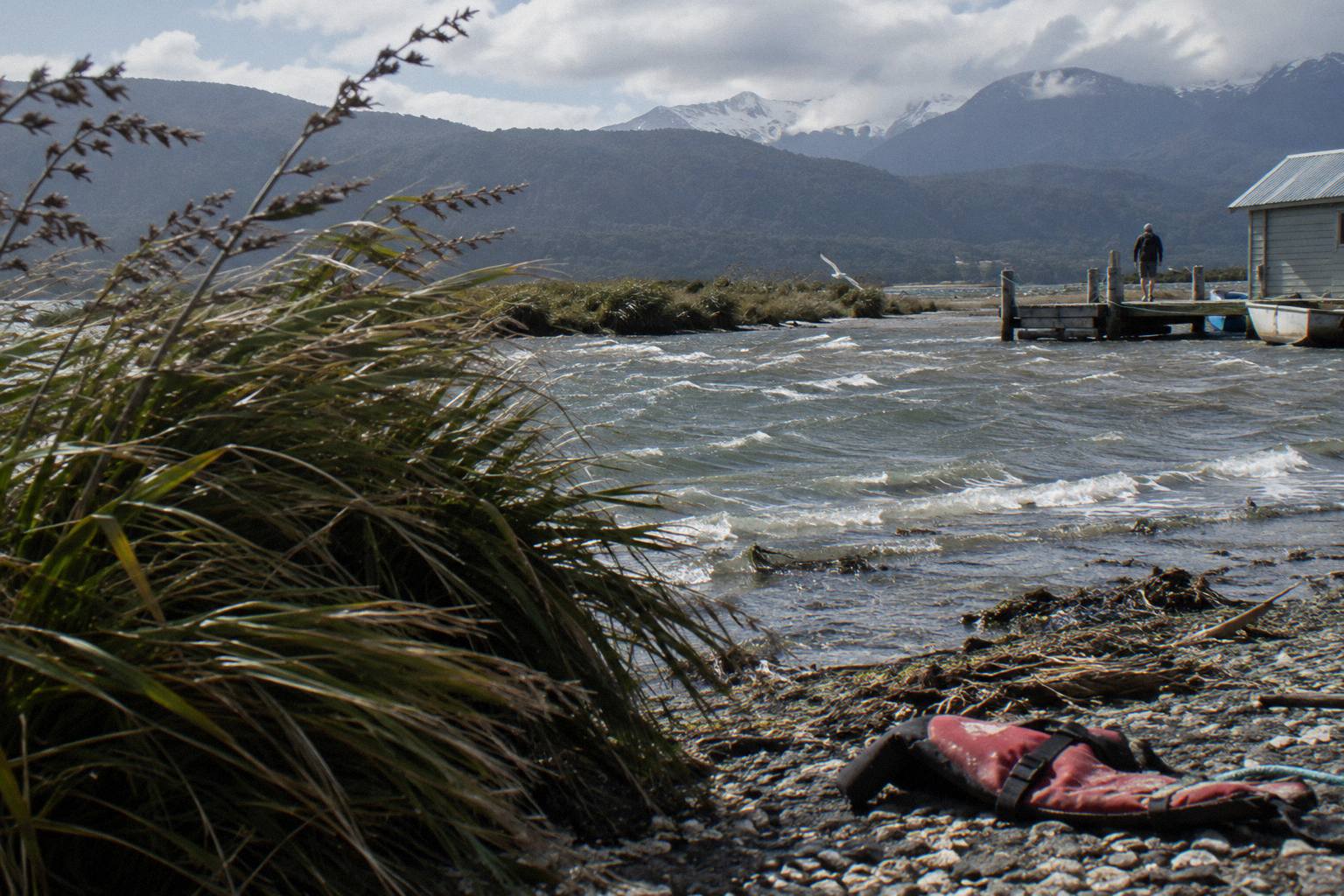
Because the lagoon is shallow, wind behaves differently there than on the deep open lake, but again, no published threshold exists, so treat any confident claim you read elsewhere about Okarito wind limits as invention. The operator does supply buoyancy aids, spray skirts, dry bags and a rescue boat on standby. The Explorer runs 3 hours total with up to 2 on the water, from NZ$165 per person; timings for your date sit on the booking page.
The longer Adventurer, from NZ$210 per person, spends 4 hours total with up to 3 hours paddling and asks for some fitness and flexibility. There is a fuller comparison of the two waters in the guide to Lake Mapourika or Okarito Lagoon, and on tides specifically in how Okarito tides shape a kayak trip.
Should You Book Anyway If The Forecast Looks Wet?
Yes, in almost every case. The policy structure means a wet forecast costs you nothing if you change your mind more than 24 hours out, and if conditions turn unsafe the refund is automatic. Visitors who skip booking because of a grey forecast usually lose the seat to someone who understood that the risk runs the other way.
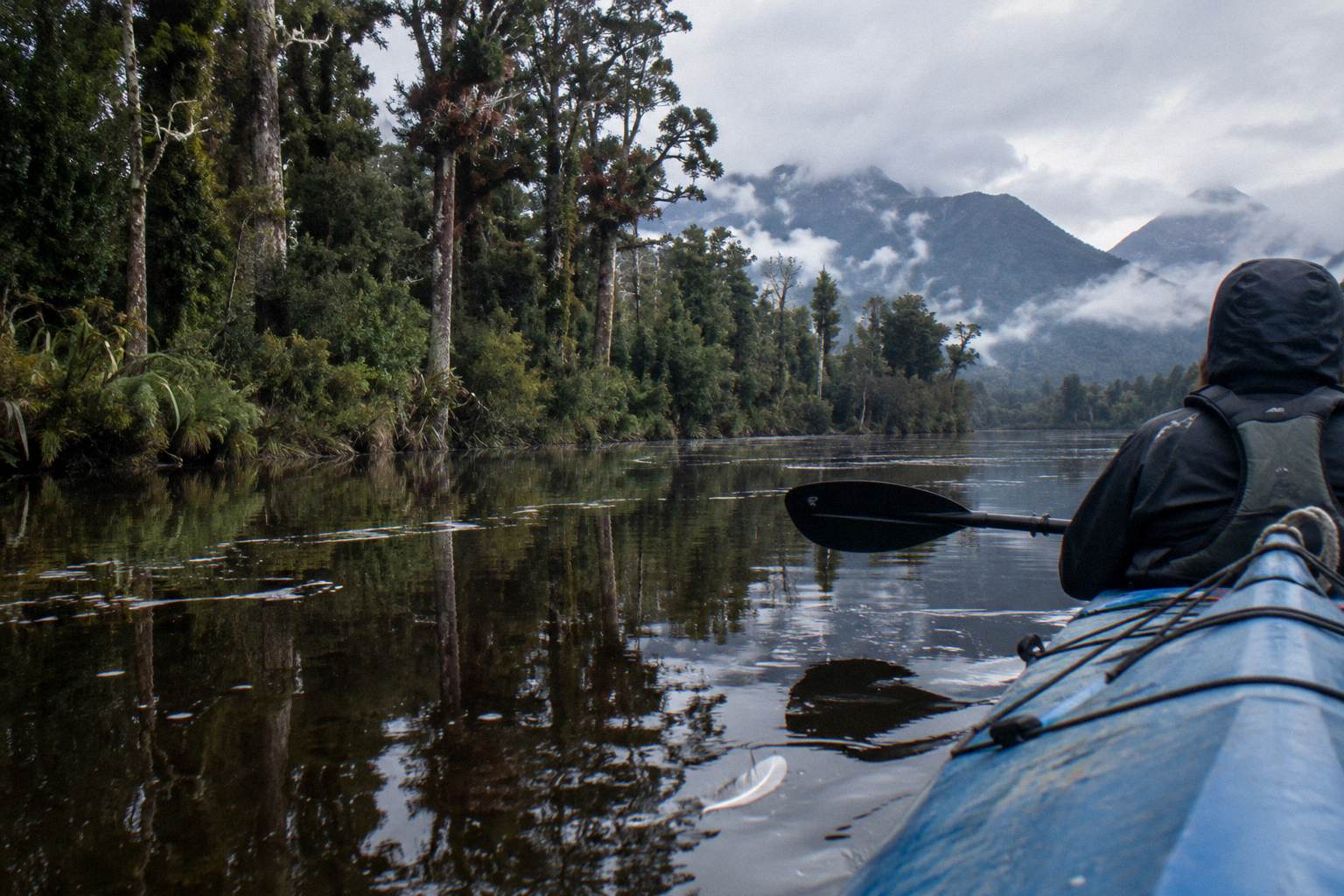
The maths is straightforward. Franz Josef records above 300 mm of rain in every month of the year, so waiting for a guaranteed dry week means not going. Meanwhile the township-and-lake gap works in your favour: the operator's experience is that it is often dry at the lake while rain sits on the township, so a forecast that looks grim from your accommodation window may be plain overstatement by the time you reach the water. The company recommends the Windy app for a read on the local picture, and it watches conditions at the lake itself on the morning of each trip.
There is also the photographic argument, covered more deeply in our piece on mirror reflections from a kayak. Cloud flattens the light, kills the glare and turns the dark tannin water into a mirror for the rainforest. Several of the most striking Lake Mapourika images exist precisely because the day was not sunny. On a clear day you may instead get the glacier views, including the neve of the Franz Josef Glacier, which cloud hides. Neither day is a bad day; they are different days.
What Should You Pack For A Paddling Day On The West Coast?
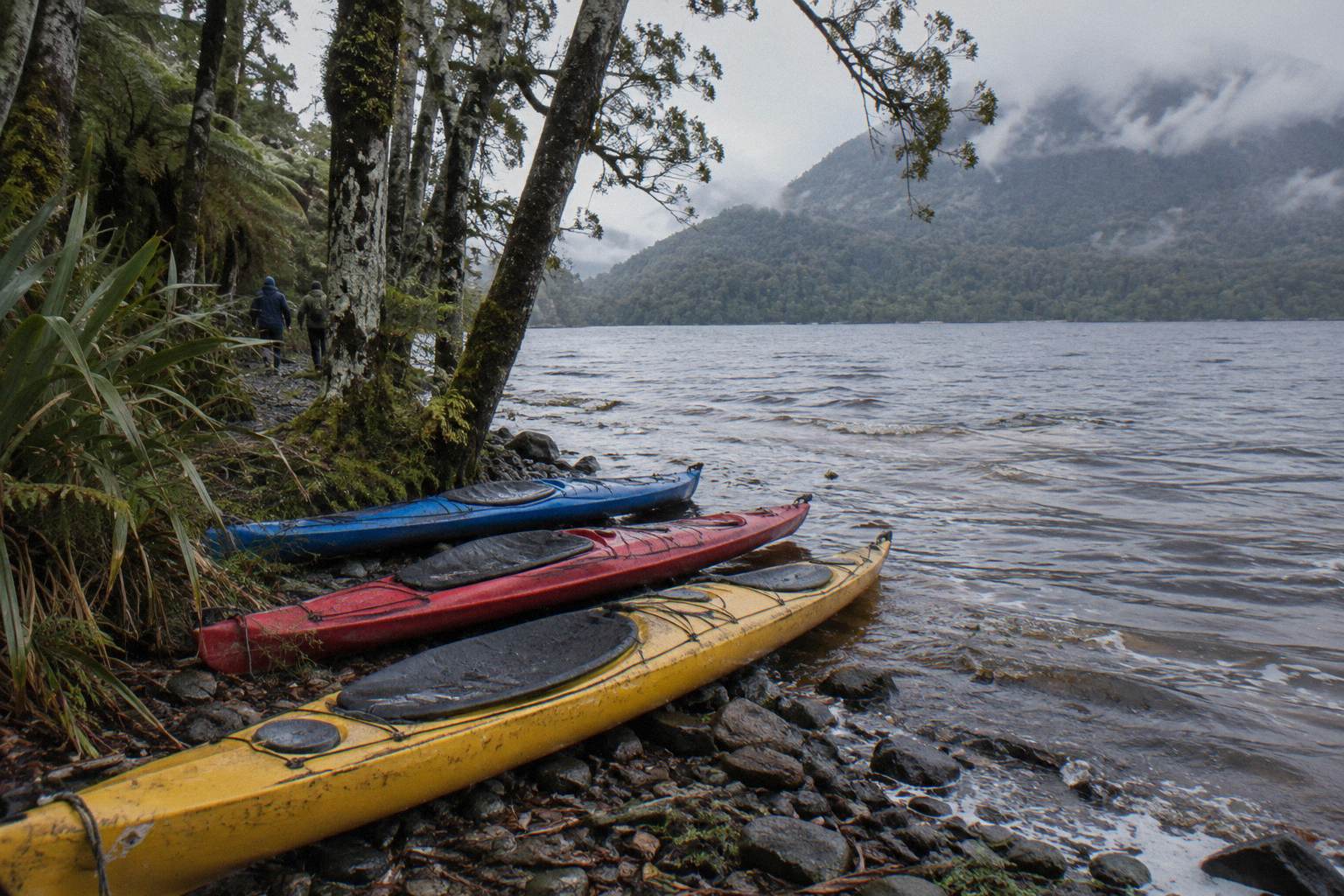
Pack for the possibility of rain and a wind chill on the water: a warm top layer, a rain jacket, footwear that can get splashed, a hat, sunscreen and a camera or phone in a sealed pocket. The lake operator supplies dry bags, paddling jackets, PFDs, wet-weather gear, kayak skirts, pogies, paddles and free emailed photos, so you do not need to bring technical kit.
The clothing advice is short because the gear list is long. Feet stay dry in the double kayaks on Lake Mapourika, so comfortable sneakers or sandals work, and the operator's one firm clothing rule is that bottoms should be anything but jeans, a point we unpack in why jeans fail on a kayak tour. Denim holds water, loses insulation when wet and dries slowly, which matters in a climate where the mean daily minimum dips to 3.3 °C in July.
Sandflies deserve one clear line, attributed correctly: DOC warns that sandflies are prevalent in Westland Tai Poutini National Park and recommends repellent, and Okarito Kayaks supplies an environmentally-friendly repellent on its trips and mentions the insects on occasional cloudy, still days. The Lake Mapourika operator's pages make no sandfly mention at all, so do not expect a briefing on it there. Bring your own repellent regardless.
Who decides what, on the day, sums up neatly:
| Decision | Who makes it | When |
|---|---|---|
| Whether conditions are safe to launch | Operator's guides | Morning of the trip, at the water |
| Whether the trip runs at all (minimum numbers) | Operator | Ahead of departure, full refund if not |
| Your own cancellation | You, the booker | Free up to 24 h before, 48 h for private and group bookings |
| Departure time on Okarito Lagoon | Okarito Kayaks, around tides | Set per date, shown on the booking page |
| What you wear on the water | You, from the packing list | Before check-in |
None of this requires experience. The lake operator's own FAQ answers the question of whether prior experience is needed with a flat no, adding that you do not need to know how to swim because a correctly fitted life jacket is worn throughout, a policy the 2026 Maritime NZ rule now makes law nationwide. Nervous first-timers have a fuller walkthrough in how nervous paddlers are handled on these trips.
All the local tours are gathered in one place, with the weather-tolerant options front and centre.
Common Questions About Kayak Tour Weather Cancellations
Does Weather Cancel Kayak Tours Near Franz Josef?
Rarely. Franz Josef Wilderness Tours runs its Lake Mapourika trips in wet weather and supplies jackets and wet-weather gear. Tours are cancelled only when conditions are considered unsafe, and then the operator offers an alternative or a full refund.
Do Kayak Tours Run In The Rain On Lake Mapourika?
Yes. The operator states kayaking can be especially atmospheric in light rain, and supplies paddling jackets, wet-weather gear, skirts and pogies on every departure. Only unsafe conditions, usually strong wind on the exposed lake, stop a trip.
What Happens To My Money If The Operator Cancels?
You get a full refund, or an alternative trip if you prefer and space allows. The operator may cancel for unsafe conditions or minimum numbers, and both cases carry a full refund with no penalty to you.
Can I Cancel My Own Booking If The Forecast Is Bad?
Yes, free of charge, up to 24 hours before departure, with a full refund and no penalty. Inside 24 hours the booking is not refundable for any reason. Private and group bookings need 48 hours of notice.
Does Rain In Franz Josef Township Mean The Tour Is Off?
No. The operator says it is often dry at Lake Mapourika while it is raining in the township about ten minutes south. The company checks conditions at the lake itself on the morning of the trip.
Are Okarito Lagoon Tours Weather-Dependent?
The lagoon is shallow and tidal, and start times are scheduled around the best tidal conditions for any day. Your departure time for a given date appears on the booking page.