Franz Josef Weather And What It Means For Your Kayak Tour
Franz Josef is one of the wettest places in New Zealand, and that fact shapes every kayak booking on Lake Mapourika and Okarito Lagoon. Here is what the records actually say, what the operators do about rain, and when you can still cancel for free.
Short answer
NIWA records put Franz Josef mean annual rainfall at 5,555.2 mm, with every month above 300 mm. Kayak tours run in wet weather with gear supplied, cancel with a full refund if conditions are unsafe, and allow free cancellation up to 24 hours before. It is often dry at the lake while raining in the township.
Franz Josef records a mean of 5,555.2 mm of rain a year, per NIWA's 1991 to 2020 climate normals, and no month of the year averages less than 300 mm. That single fact does more to shape a kayak trip on the West Coast than any other, and yet the tours run all year. The gap between those two statements is the heart of the matter: what the rainfall records actually show, what the operators do when it rains, why the township forecast and the lake forecast are not the same thing, and where the free cancellation window sits if the weather turns.
If you are staring at a rain icon on a phone screen, trying to decide whether to book a paddle at all, this is for you. The short version: rain alone almost never cancels a Franz Josef kayak tour, gear is supplied, and the 24-hour cancellation window on the booking pages gives you a real escape hatch. The longer version, with the numbers and the policies, follows.
How Wet Is Franz Josef, Really?
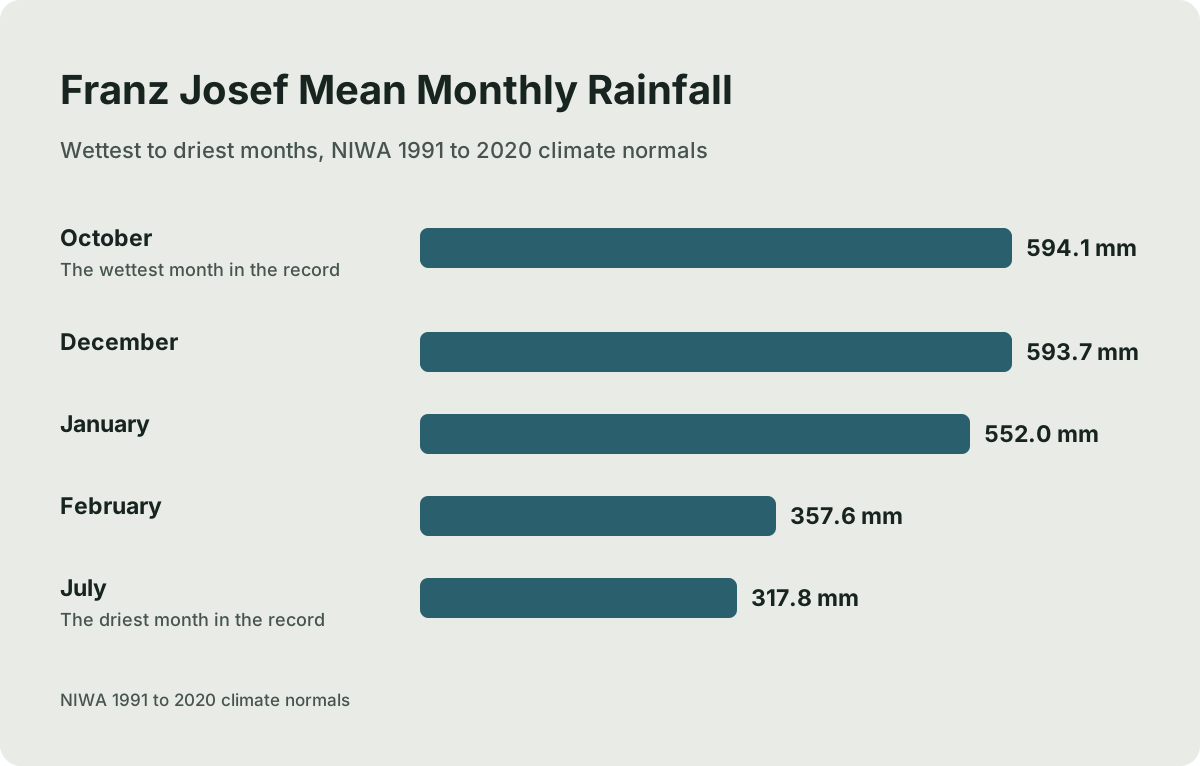
NIWA's 1991 to 2020 records put Franz Josef's mean annual rainfall at 5,555.2 mm, with October the wettest month at 594.1 mm and July the driest at 317.8 mm. Every single month of the year averages above 300 mm of rain. There is no month on record that behaves like a dry season.
That figure comes from NIWA's CliFlo climate normals, and it is worth pausing on what it means in practice. A town that averages more than five and a half metres of rain a year is not a town where you wait for a dry week. It is a town where the local tourism industry, including both kayak operators, has built its whole operation around running in changeable weather. Rain here is a planning variable, not a dealbreaker.
The spread between the wettest and driest months is real but modest. October averages 594.1 mm, December 593.7 mm and January 552.0 mm at the top end; July sits at 317.8 mm and February at 357.6 mm at the bottom. Even the quietest month gets more rain than many European cities see in an entire year. Travellers who arrive in July expecting clear skies because it is the "driest" month are reading the statistics the wrong way round: July is simply the least wet, not dry.
| Month | Mean rainfall (mm) |
|---|---|
| October | 594.1 |
| December | 593.7 |
| January | 552.0 |
| February | 357.6 |
| July | 317.8 |
| Annual mean | 5,555.2 |
Check the NIWA records for the other months if you need them. The pattern worth taking away is that the December-January peak coincides exactly with the busiest visitor season, which is one reason the operators' summer timetables run more departures. If you want to dig further into what the weather means for choosing a season overall, the timing guide covers the trade-offs in more depth.
Does Rain Cancel Your Kayak Tour?
No, rain alone does not cancel a Lake Mapourika kayak tour. Franz Josef Wilderness Tours runs in wet weather, supplies paddling jackets and wet-weather gear, and says kayaking "can be especially atmospheric in light rain". Tours are cancelled only when conditions are considered unsafe, and then the operator offers an alternative or a full refund.
The operator's own wording on this is unusually direct, and it is worth reading before you let a grey forecast talk you out of booking. The full policy has three layers. First, wet weather tours run, and the gear list includes a dry bag, paddling jacket, PFD, wet-weather gear, kayak skirt, pogies and a paddle, with free photos emailed afterwards. Second, the operator makes the safety call itself rather than leaving it to individual guides on the water. Third, if the call goes against the tour, you get a full refund or an alternative trip, not a credit note.
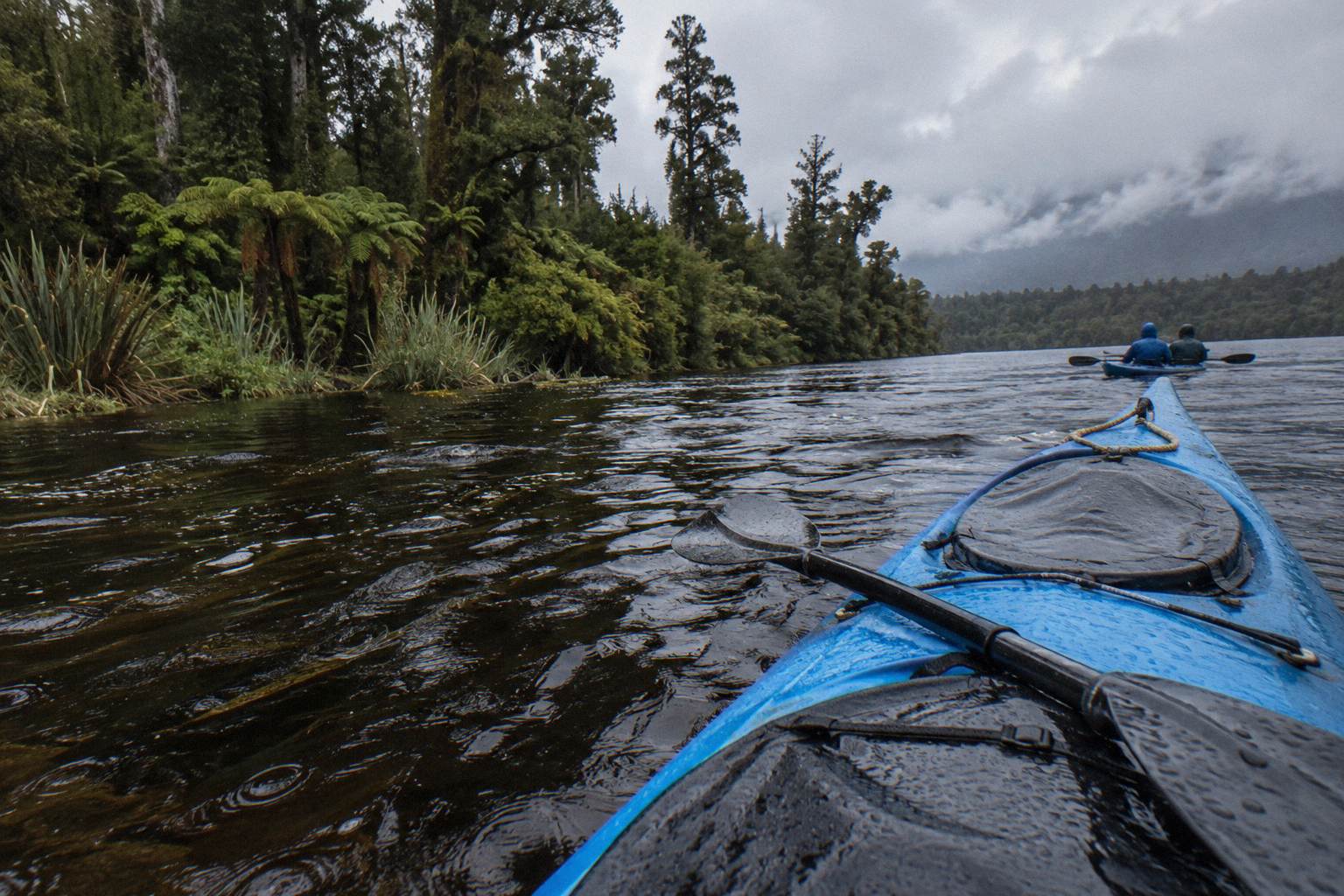
What the policy does not do is guarantee what you will see. On a clear day the operator says many glaciers are visible from the lake, including the neve of the Franz Josef Glacier; when cloud sits lower in the valley, the glaciers disappear. The lake is not at the glacier, and no trip promises a glacier view. Cloud has an upside too: the operator notes that mirror reflections on the lake are often really dramatic when it is cloudy, which is why some photographers quietly prefer those days.
If rain is in the forecast but wind is not, the trips on Lake Mapourika remain firmly on the table. The Lake Mapourika 3-Hour Kayak Tour, from NZ$159 per person, rated 4.9 from 400+ reviews, is the most-reviewed trip we cover and the one the weather policy above applies to directly. For anyone who would rather not paddle at all on a wet day, the Lake Mapourika Scenic Cruise runs rain or shine per its booking page, from NZ$125 per person, on a covered boat. The spectrum from full paddle to covered boat means a wet forecast is rarely a reason to skip the lake entirely.
Why It Can Rain In Town And Stay Dry At The Lake
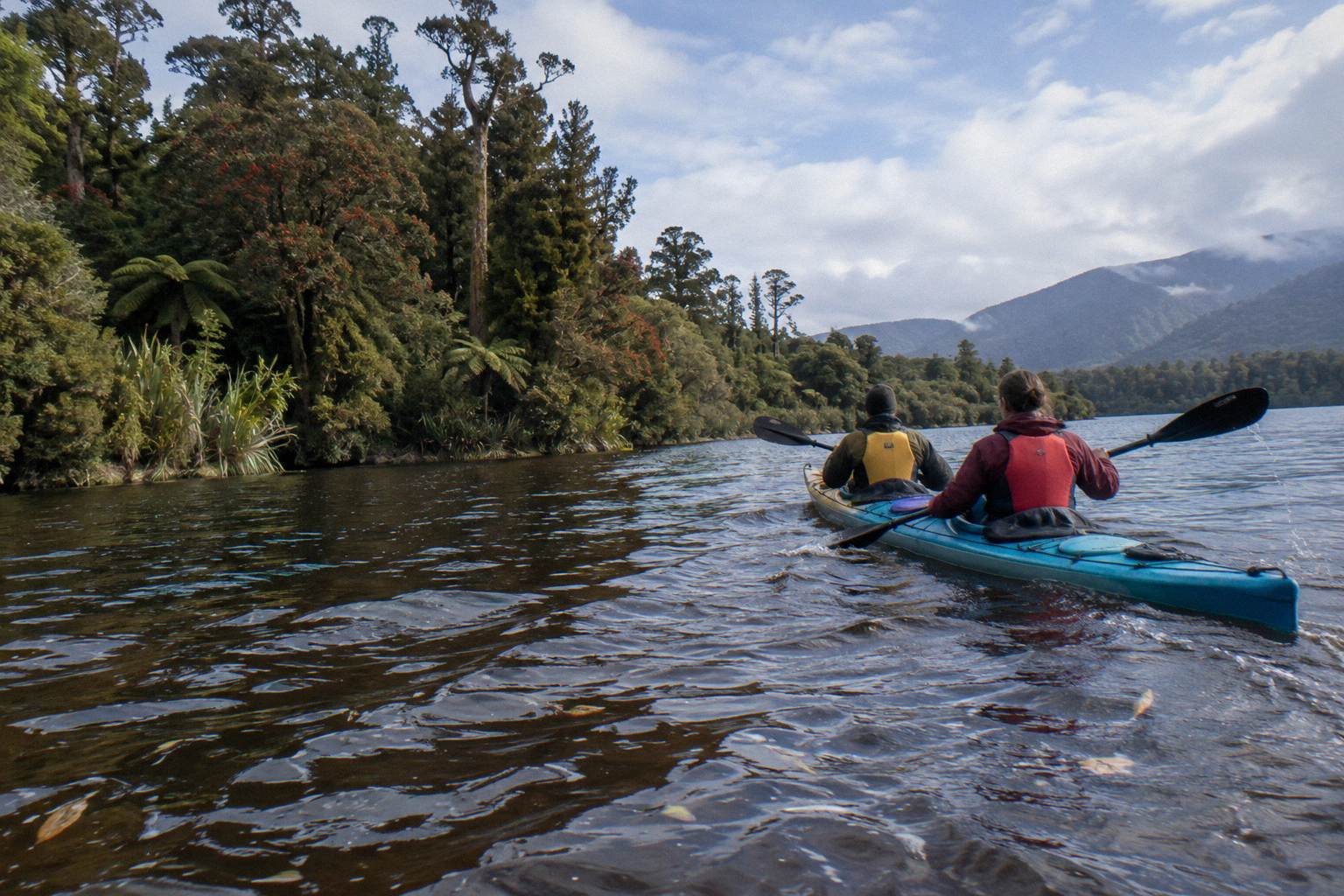
Franz Josef Wilderness Tours checks local conditions itself and says that "often times it's dry at Lake Mapourika while it's raining in the township". The lake sits about 10 minutes north on State Highway 6, outside the rain-shadowed valley that generates the township's weather, so the town forecast is an unreliable guide to conditions on the water.
This is the single most useful weather fact on the whole page, and it comes from the operator that runs trips on the lake every day. The mechanics are straightforward. Franz Josef township sits at the head of a glacier valley that funnels moist air upward, wringing rain out of it. Lake Mapourika lies north of the township on the coast-facing lowland, close enough that the drive is ten minutes, far enough that the two places regularly have different weather. The operator recommends the Windy app for forecasts, precisely because general township forecasts miss the difference.
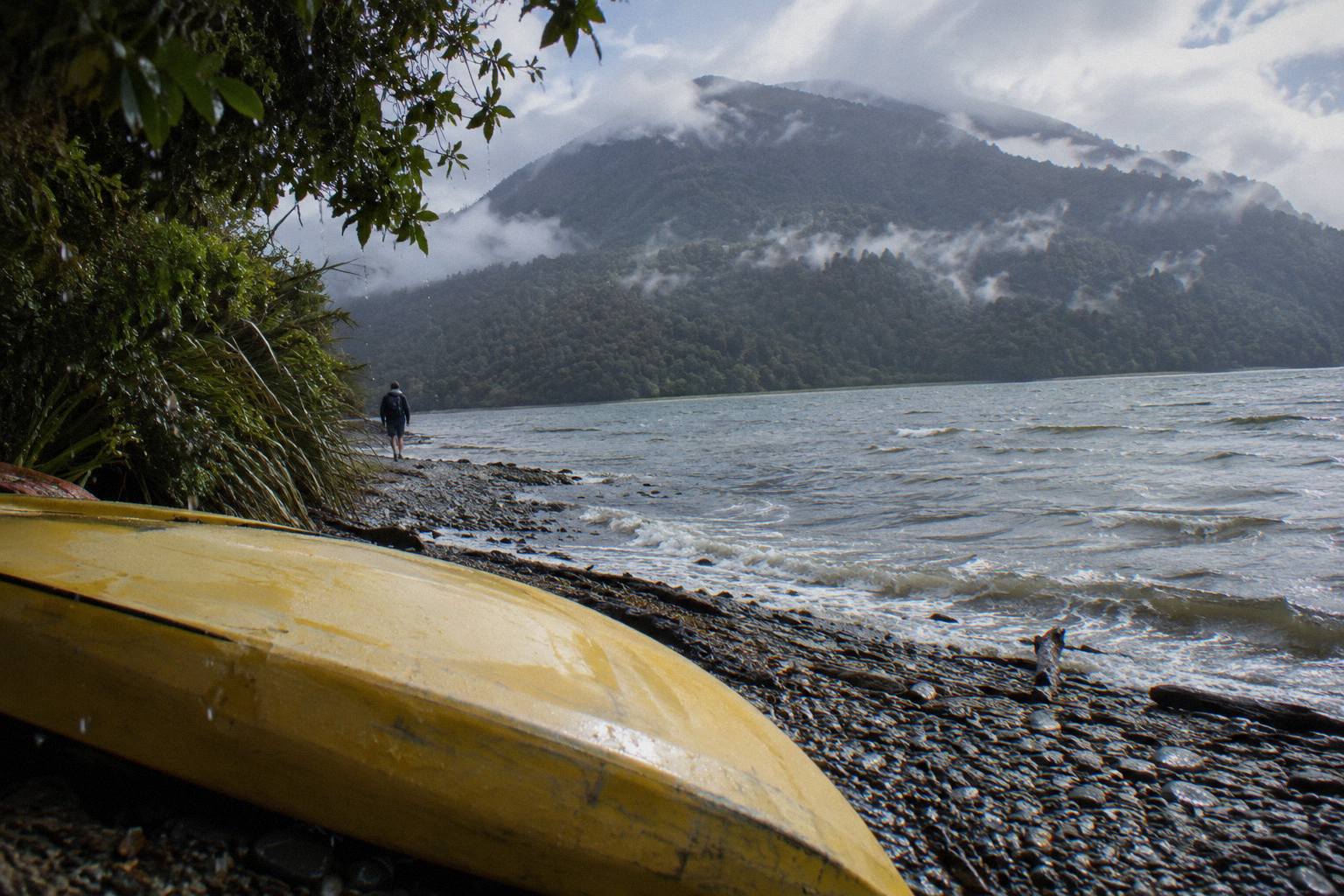
For a booking decision, this changes the question. Instead of "will it rain in Franz Josef?", the better questions are "what is the wind doing on the coast?" and "what does the operator's own check say?". Wind, not rain, is what typically makes a lake like this unsafe: the operator's risk disclosure describes the lake as deep and exposed. Rain on your phone's town forecast, on its own, tells you almost nothing about whether your paddle goes ahead.
The same logic applies to what you pack. Feet stay dry in the double kayaks, the operator says, so comfy sneakers or sandals are fine, and the advice on bottoms is "anything but jeans". The gear you are given covers the rain. For the full packing question, the what to wear on a kayak tour guide goes through it layer by layer, and the reasoning behind the jeans ban is its own story.
Book with the forecast in mind, not against it. The 3-hour tour allows free cancellation up to 24 hours before departure on the booking page, so a doubtful forecast does not have to mean a wait-and-see that ends in no booking at all.
The 24-Hour Cancellation Window, Explained
Franz Josef Wilderness Tours gives a full refund with no penalty if you change or cancel at least 24 hours before your tour; inside 24 hours the booking is not refundable for any reason. Private, group and charter bookings carry a 48-hour window. If the operator cancels for unsafe conditions or minimum numbers, you get a full refund.
This window is the practical answer to Franz Josef's weather problem, and it deserves more attention than it usually gets. Because free cancellation runs to 24 hours before departure, you can book a paddle days ahead, then make a final go or no-go call once the forecast firms up, without financial risk. The boundary is hard: the operator's policy is explicit that inside 24 hours the booking is not refundable "for any reason", so the window only works if you actually use it.
On the booking pages for all five trips, including the two Okarito Lagoon trips run by Okarito Kayaks, free cancellation up to 24 hours applies. Note the one structural difference: the operator-direct policy adds the 48-hour rule for private and group bookings, and anyone booking a private trip should read the specific terms on the operator's own page rather than assuming the standard window.
| Situation | What happens |
|---|---|
| You cancel 24 hours or more before | Full refund, no penalty |
| You cancel inside 24 hours | Not refundable, for any reason |
| Private or group booking | 48-hour cancellation window |
| Operator cancels for unsafe conditions | Alternative or full refund |
| Operator cancels for minimum numbers | Full refund |
The window pairs well with how forecasts actually behave on the West Coast. A forecast 48 hours out is a rough sketch; a forecast 24 hours out is usually decisive about wind. Booking early and deciding inside the free window is, for most travellers, a better strategy than trying to time a booking to a perfect forecast, because perfect forecasts here are rare at any range. The book a kayak tour in advance post walks through the timing logic in detail.
Temperature, Sunshine And The Summer-Winter Pattern
NIWA records give Franz Josef a mean daily maximum of 20.0 °C in January and 20.5 °C in February against 11.9 °C in July, with mean daily minimums of 10.5 °C in January and 3.3 °C in July. Annual mean temperature is 11.4 °C, and sunshine totals about 1,169 hours a year, with December averaging just 83 hours and January 118 hours.
Those sunshine numbers are the quiet surprise in the record. January is the sunniest month at 118 hours on average, and December, the heart of the tourist season, manages only 83 hours. Even the best month averages under four hours of sun a day. This is not a place where a clear-blue-sky paddle is the default expectation, in any month, and travellers who build their whole West Coast plan around "a sunny day on the lake" are setting up a disappointment the statistics do not support.
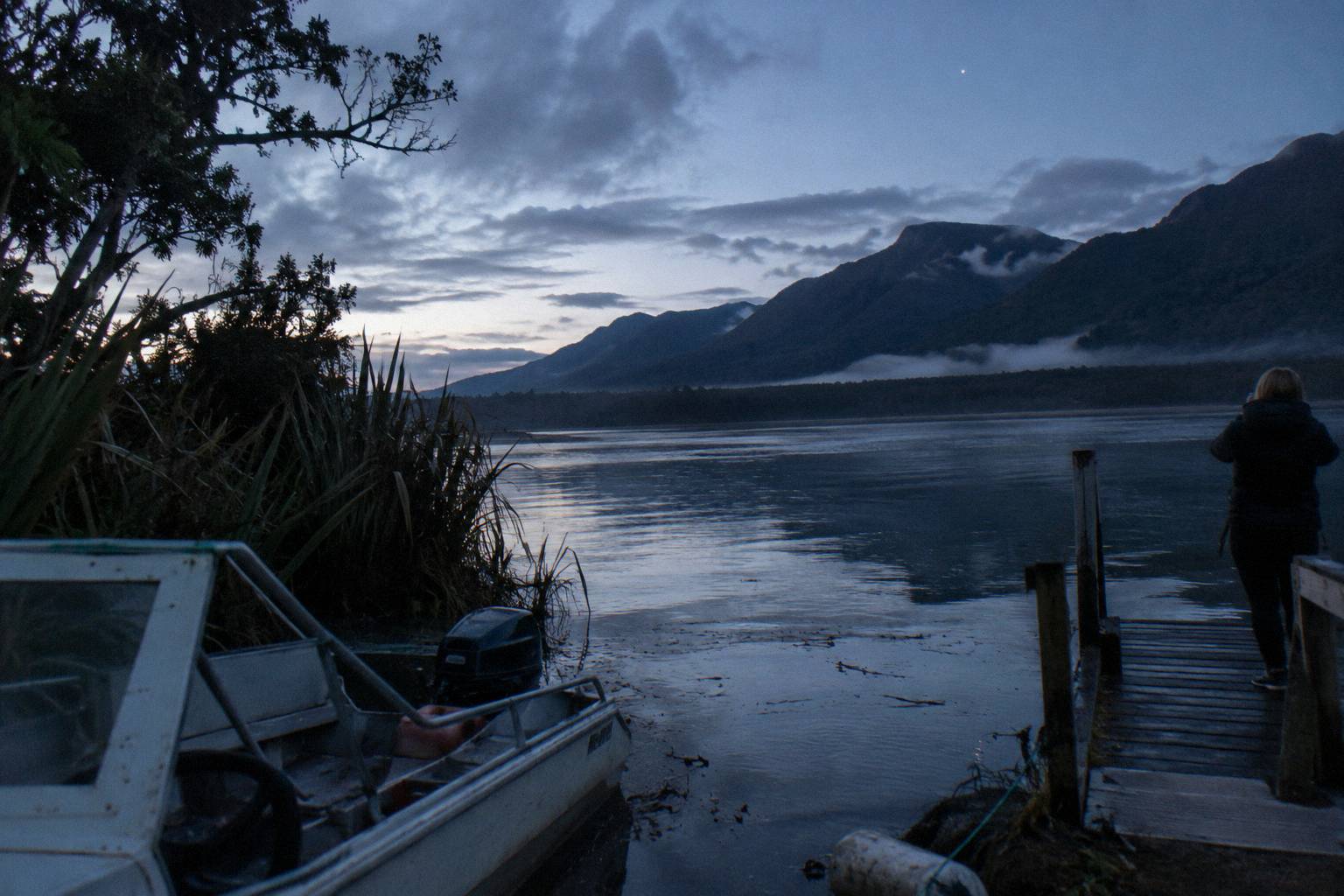
The operator's seasonal timetable follows the daylight rather than the warmth. Summer sessions on the lake run 1 November to 31 March, with the 3-hour tour departing at 9am, 1pm and 5pm; winter sessions, 1 April to 31 October, run 9am (or 10am) and 2pm. The operator notes times may vary, so treat this as the seasonal pattern and confirm your date on the booking page rather than promising yourself a specific hour. The 5pm summer slot is the operator's own Sunset Classic departure, which exists only in the summer window; in winter the 2pm tour, in the operator's words, often coincides with sunset.
What the temperature record means for comfort is simple: even summer paddles here want a warm top layer, and winter paddles want serious one. The winter months sit at mean daily minimums between 3.3 °C in July and similar figures either side, and the operator's risk disclosure singles out hypothermia risk as higher in winter. That is a reason to dress properly, not a reason to stay ashore; the tours run all year and the operator's gear list is built for exactly this climate.
Wind, Cloud And The Reflection Question
DOC's guidance on the region's reflective waterways is that the best mirror reflections come on a sunny, windless day, at dawn and dusk. The operator adds that mirror reflections on the lake are often really dramatic when it is cloudy. Neither source promises reflections; both describe conditions that often produce them.
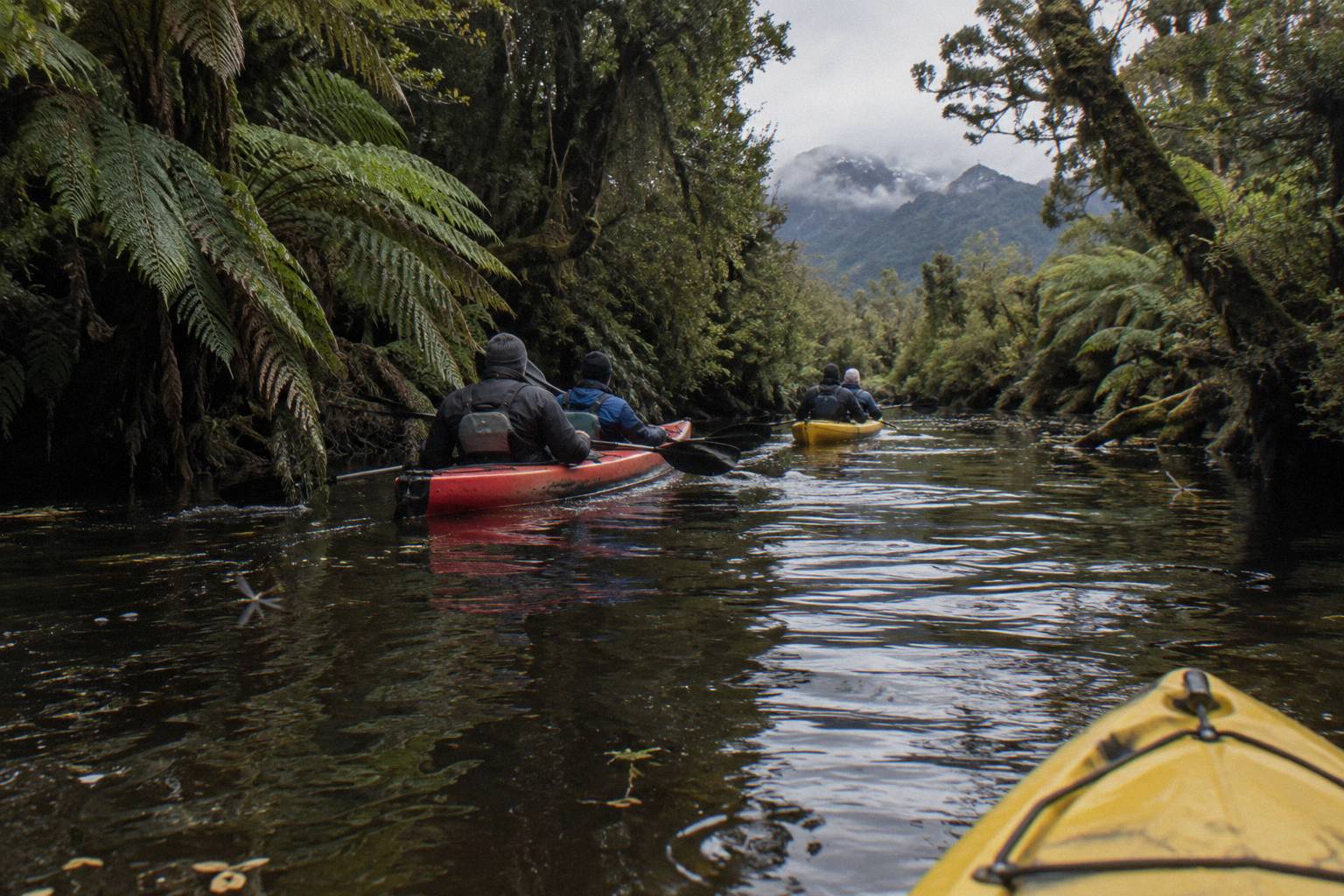
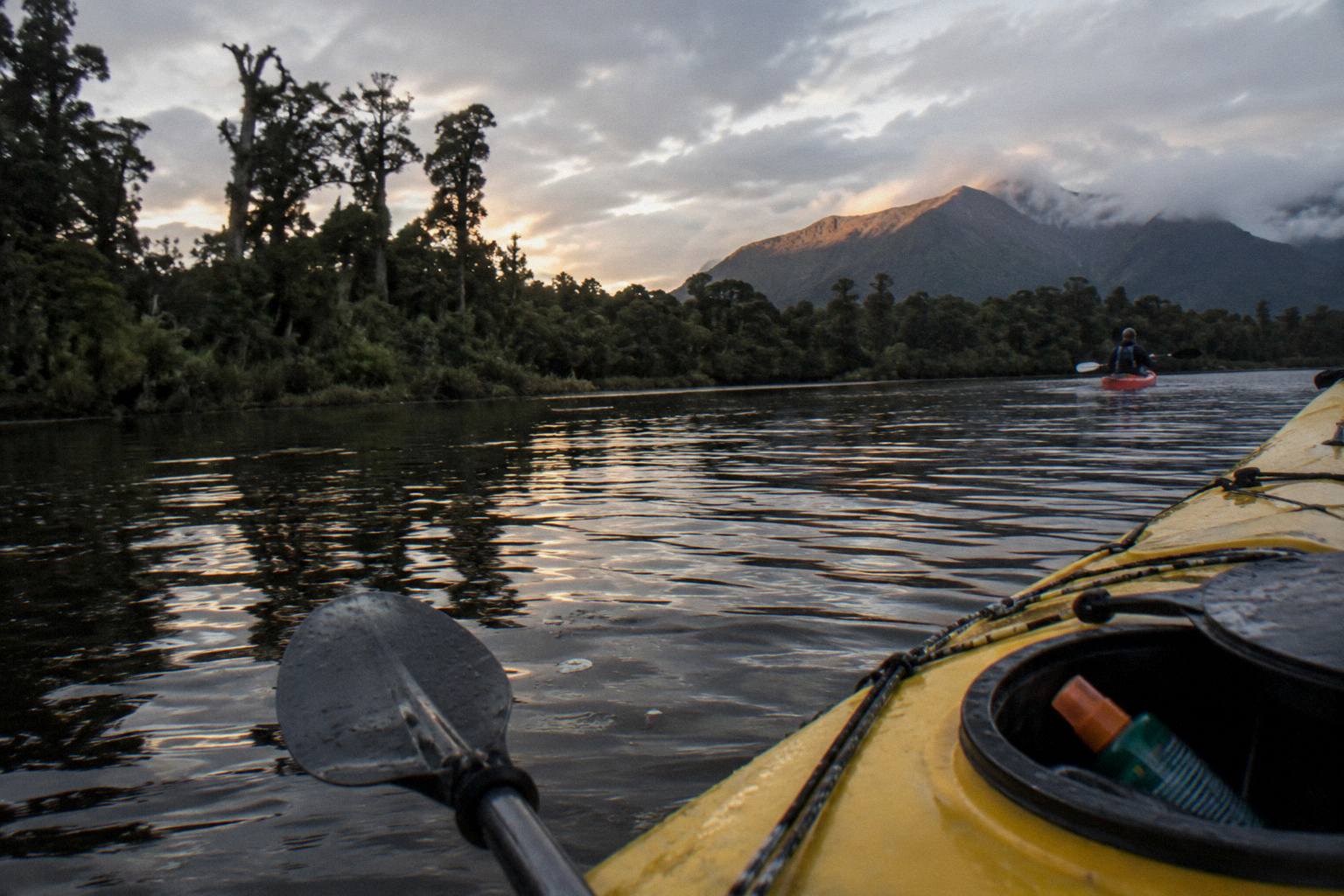
The framing matters because reflections are the signature image of a Lake Mapourika paddle, and they are also the most weather-dependent thing about it. Wind is the enemy: any breeze ripples the surface and the mirror effect is gone. Dawn and dusk are the calmest parts of most days, which is one reason the 5pm summer departure carries the name it does, and the reason serious photographers book the ends of the day rather than the middle.
Cloud cuts both ways. A heavy overcast sky kills the light that makes a reflection photograph sing, but broken cloud often produces the most dramatic images: dark water, silver sky, and reflections with real contrast. The operator's own note that reflections are often really dramatic when it is cloudy comes from watching the lake daily. The photographing mirror reflections from a kayak guide covers the camera side, and the when are mirror reflections best on the lake post covers the timing in full.
For booking purposes, the takeaway is that there is no weather state that ruins every aspect of a paddle. Clear and calm gives reflections and possibly distant glacier views. Cloudy and calm often gives dramatic reflections. Wind is the one condition with no upside, and wind is exactly what the operator's safety check is watching for.
Okarito Lagoon: Tides Before Weather
The two Okarito Kayaks trips, the Lagoon Explorer from NZ$165 per person and the Lagoon Adventurer from NZ$210 per person, are scheduled around the best tidal conditions for each day rather than around a fixed timetable.
Okarito Lagoon is shallow and tidal, and that changes the weather calculus completely. Where Lake Mapourika departures run to a seasonal clock, Okarito departures are tide-timed: start times shift day to day to match the water. The lagoon is also a different stretch of water, 25 minutes north of Franz Josef, and the operator, Okarito Kayaks, is a separate family business from the Lake Mapourika operator.
The Explorer is the 3-hour option, with up to 2 hours on the water, and suits travellers who want the lagoon's birdlife without committing to the longer paddle.
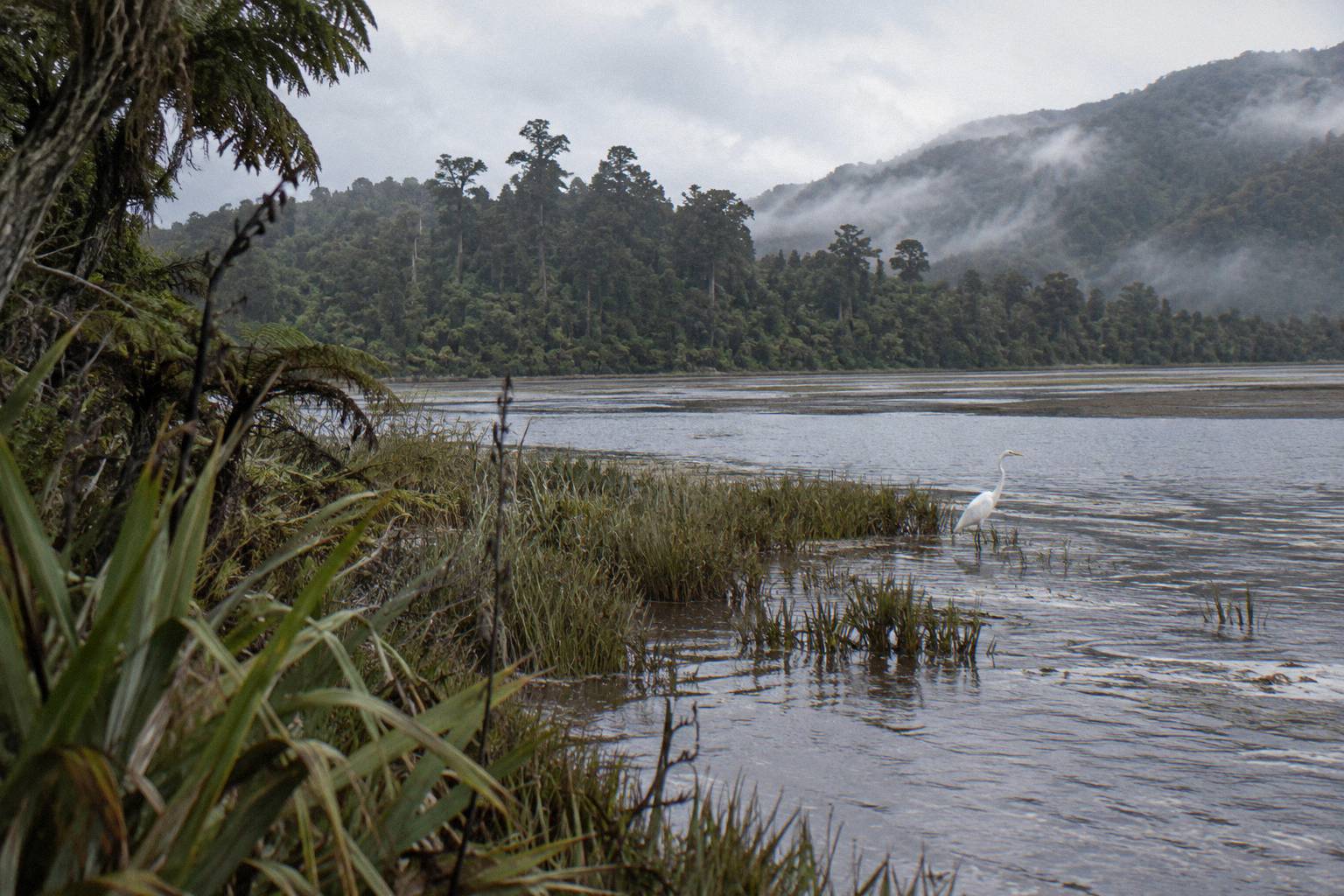
What can be said with confidence is the wildlife angle, which interacts with weather only loosely. The kotuku, the white heron, is New Zealand's rarest heron; DOC notes the only breeding colony in the country is at Waitangiroto near Whataroa, breeding September to February, and that in the breeding season the birds feed in coastal lagoons, particularly Okarito Lagoon. The colony itself is not accessible by kayak; what kayakers see is kotuku feeding across the lagoon, which the operator says is common year round. The kotuku white heron from a kayak guide covers the whole story, including the separate licensed colony tour from Whataroa.
The Adventurer is the 4-hour version, up to 3 hours on the water, and the operator describes it as needing some fitness and flexibility. On a fine forecast it is the lagoon trip that uses the weather best; on an uncertain one, the shorter Explorer leaves you less exposed to a change mid-paddle.
Free cancellation up to 24 hours applies on the booking pages for both lagoon trips, same as the lake trips, so the same book-early-decide-late strategy works on either water.
Cold Water, Safety Rules And Winter Paddling
Maritime NZ requires everyone on a recreational craft 6 m and under, including kayaks, to wear a lifejacket while underway. The operator's risk disclosure lists the lake as deep and exposed, with capsize, hypothermia, drowning and serious injury among the risks, and notes that at times you will be 1-2 hours from medical assistance. Hypothermia risk is higher in winter.
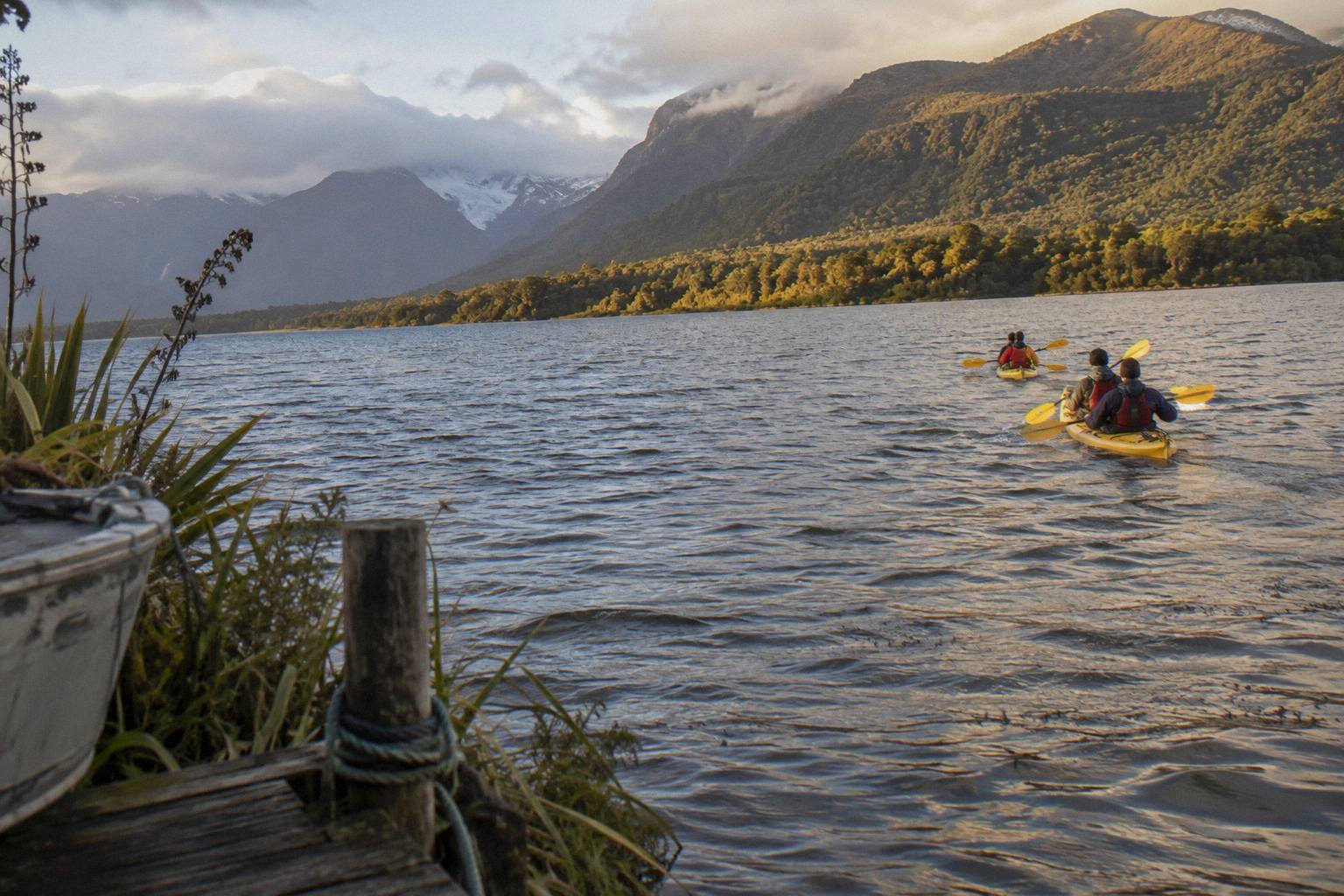
These are the facts behind the phrase "all weather gear supplied". A buoyancy aid must always be worn, and on every guided trip we cover it is provided and fitted. The operator states its activities fall under Maritime NZ or the Adventure Activities Regulations and that it is safety audited through AdventureMark and Maritime NZ, an operator statement repeated here as such. Maritime NZ also advises carrying two waterproof ways to call for help and checking the marine forecast, advice that applies to anyone considering unguided hire rather than a guided tour. The kayak hire without a guide post goes into what self-guided paddling adds to the weather question.
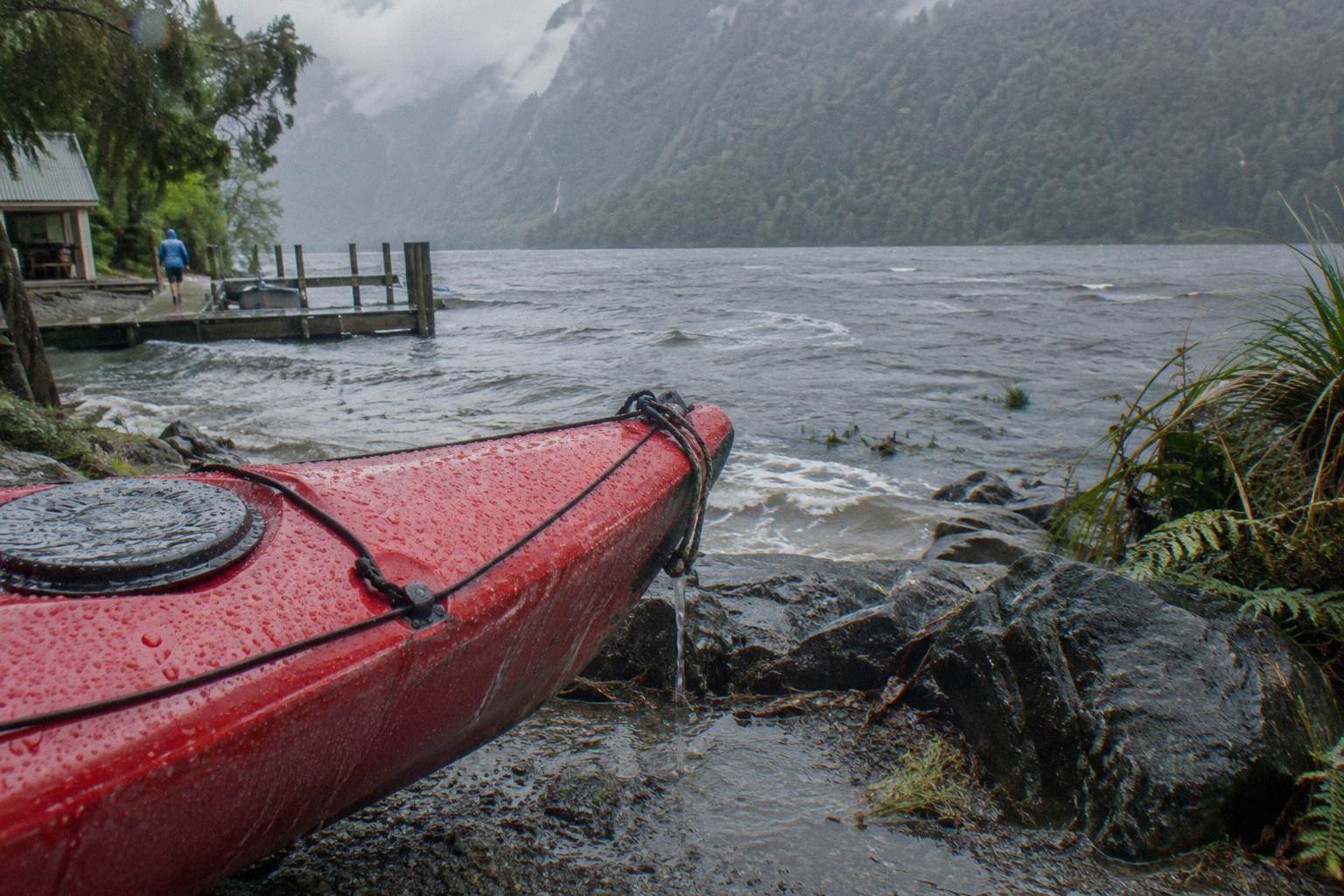
Winter paddling deserves a fair hearing rather than a reflexive no. The driest month on record is July, at 317.8 mm of rain, which is not dry, but the quieter season means smaller groups and calmer water more often. The trade is temperature: July's mean daily maximum is 11.9 °C and the minimum 3.3 °C, and the operator flags hypothermia risk as higher in winter. The tours still run, the gear is still supplied, and the do kayak tours run in winter post covers the practicalities. Two health rules from the risk disclosure apply in every season: no drugs or alcohol before a tour, and declare medical conditions beforehand. Anyone unsure about their suitability should ask the operator and their doctor, not a website.
| Weather or safety factor | What the operator or rule says |
|---|---|
| Lifejackets | Must be worn underway on craft 6 m and under, Maritime NZ |
| Wet-weather tours | Run, with jackets and wet-weather gear supplied |
| Unsafe conditions | Operator cancels, offers alternative or full refund |
| Winter hypothermia risk | Higher in winter, per the risk disclosure |
| Medical help | At times 1-2 hours away |
| Before the tour | No drugs or alcohol; declare medical conditions |
A Booking Strategy For A Wet Climate
Book early, use the free cancellation window as your forecast buffer, and judge the go/no-go on wind rather than rain. Every one of the five trips allows free cancellation up to 24 hours before departure on its booking page, and the operator makes the final safety call on the day regardless of what any forecast said.
The strategy in practice looks like this. Book your preferred paddle as soon as your travel dates are fixed, because summer departures fill and the tide-timed Okarito trips have limited slots. Watch the forecast in the days before, remembering that the township forecast overstates conditions at the lake and that the Windy app gives a better read on coastal wind. At the 24-hour mark, decide: keep the booking, or cancel free. After that point the booking is committed, but you are not abandoned, because the operator still cancels with a full refund if conditions become unsafe.
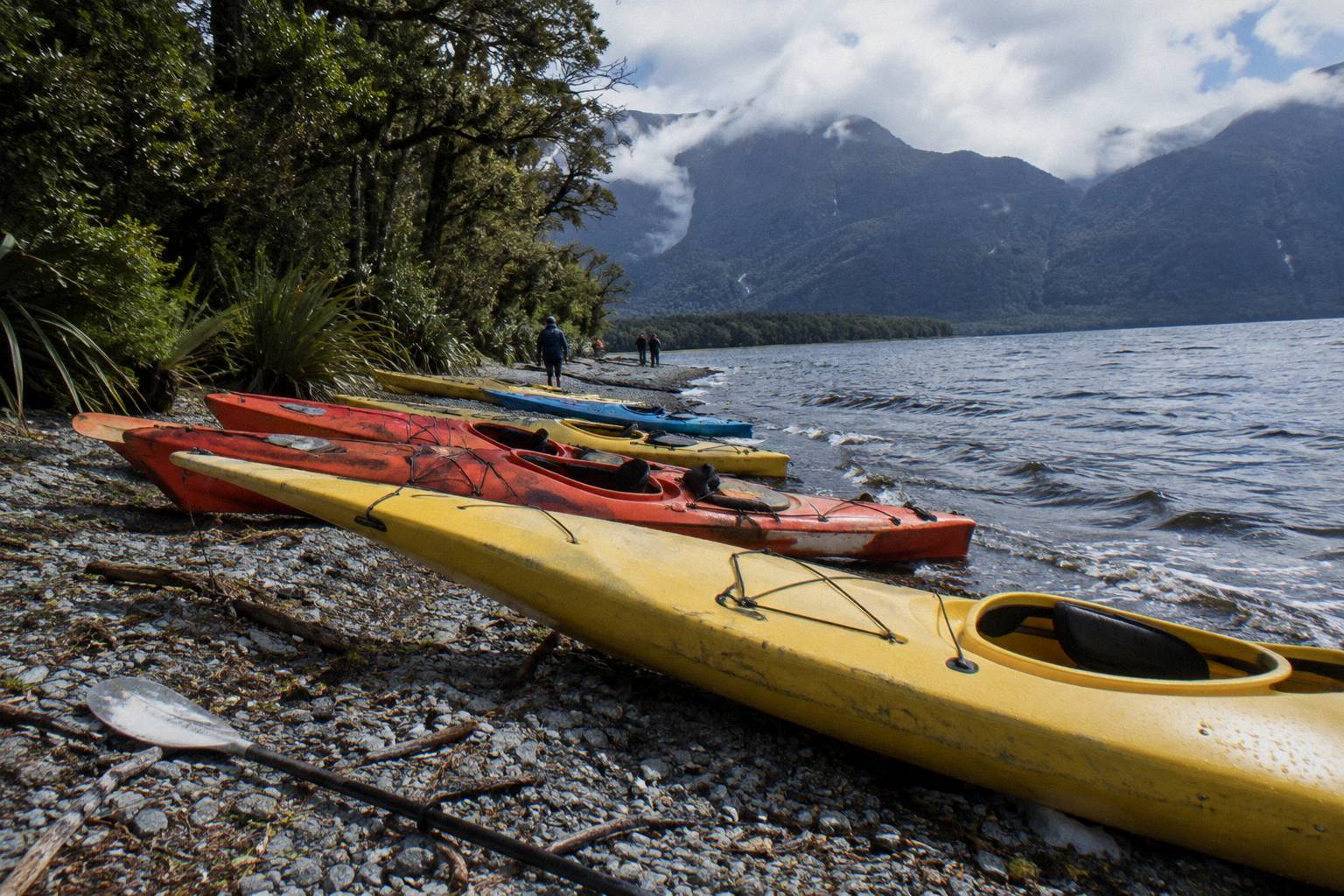
One pairing decision is worth making with the weather in front of you. On a settled forecast, the Lake Mapourika Kayak And Okarito Kiwi Sanctuary Walk, from NZ$179 per person and rated 4.9 from 120+ reviews, spends about 2 hours 15 minutes paddling plus about an hour on a private rainforest track reachable only by water, and it rewards the extra hour of daylight a good day gives you. On a doubtful one, the 3-hour format keeps the same sanctuary creek crossing in a tighter window. Franz Josef Kayak Tours lists both, with live availability on each operator's listing.
Finally, leave room to be surprised. Travellers arrive braced for the 5,555.2 mm statistic and routinely leave describing a glassy dawn paddle among tannin-dark reflections as the highlight of their South Island trip. The weather on this coast is not an obstacle to manage so much as the thing that makes the water, the forest and the light look the way they do. Plan for it, pack for it, and let the operators do the safety arithmetic they do every day.
Common Questions About Franz Josef Weather For Kayaking
Does Rain Cancel A Kayak Tour In Franz Josef?
No. Franz Josef Wilderness Tours runs in wet weather, supplies paddling jackets and wet-weather gear, and says kayaking can be especially atmospheric in light rain. Tours are cancelled only when conditions are considered unsafe, and then you get an alternative or a full refund.
What Is The Wettest Month In Franz Josef?
October, averaging 594.1 mm of rain per the NIWA 1991 to 2020 records, just ahead of December at 593.7 mm. July is the driest month at 317.8 mm, and every month of the year averages above 300 mm.
Can I Cancel My Kayak Tour If The Forecast Is Bad?
Yes, up to 24 hours before departure. All five trips allow free cancellation up to 24 hours on their booking pages. Inside 24 hours the booking is not refundable, and private or group bookings carry a 48-hour window with Franz Josef Wilderness Tours.
Is There A Dry Season In Franz Josef?
No. With a mean of 5,555.2 mm of rain a year and no month averaging below 300 mm, there is no month on record that behaves like a dry season. Some months are simply less wet than others.
Why Is It Dry At Lake Mapourika When It Rains In Franz Josef Township?
The township sits in a glacier valley that generates its own rain, while the lake lies about 10 minutes north on the lowland near the coast. The operator, which checks conditions daily, says it is often dry at the lake while it rains in town, and recommends the Windy app for forecasts.
Will I See The Glacier From A Kayak On Lake Mapourika?
Only on a clear day, and it is never promised. The operator says many glaciers, including the neve of the Franz Josef Glacier, are visible when the sky is clear, but lower cloud hides them. The lake is not at the glacier itself.