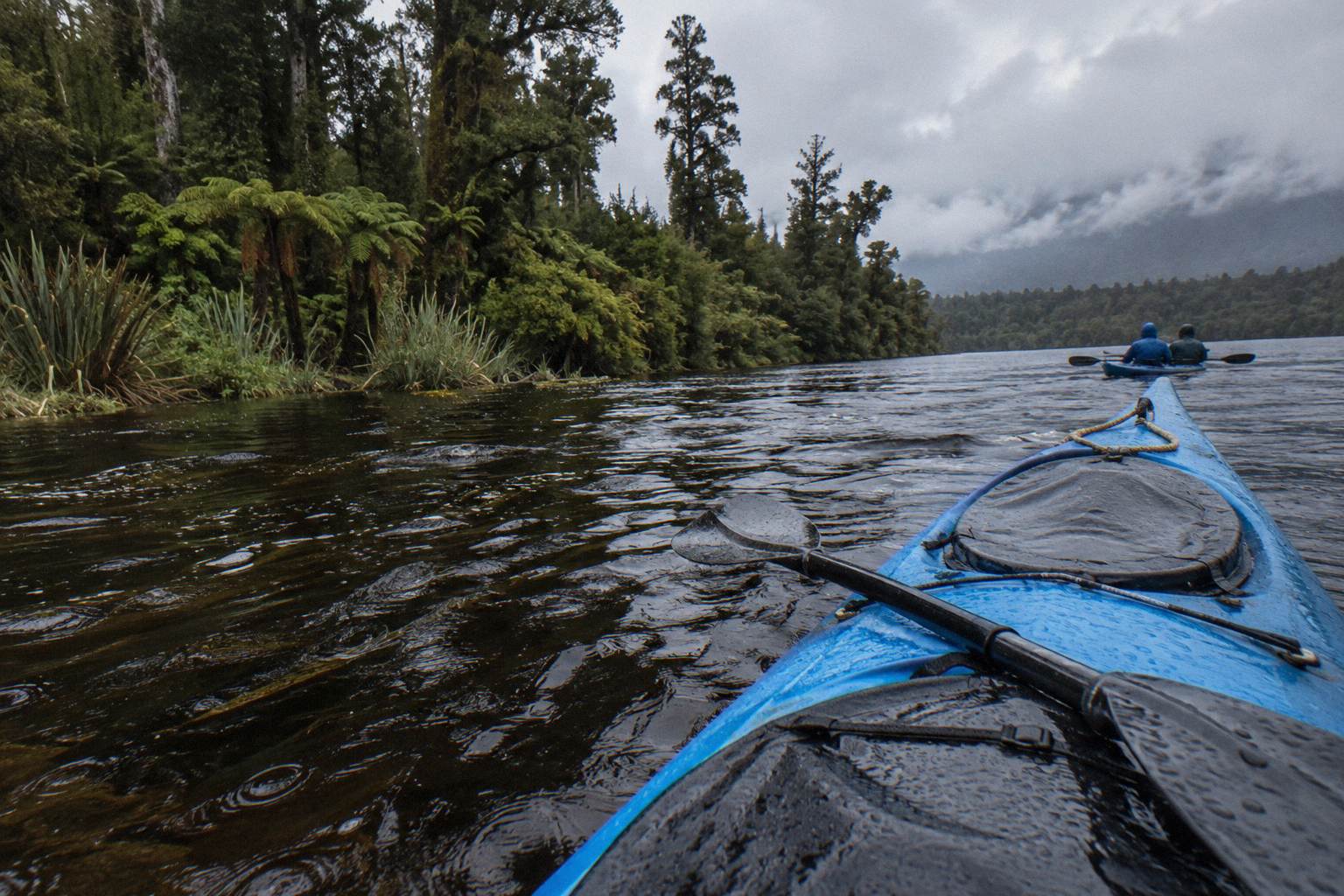
Photographing Mirror Reflections On A Lake Mapourika Kayak Tour
Lake Mapourika's tannin-dark water and sheltered creek make it one of the West Coast's best reflection setups, and a kayak puts you on the water at the right height to shoot it. Here is how to pick the trip and the time of day.
Short answer
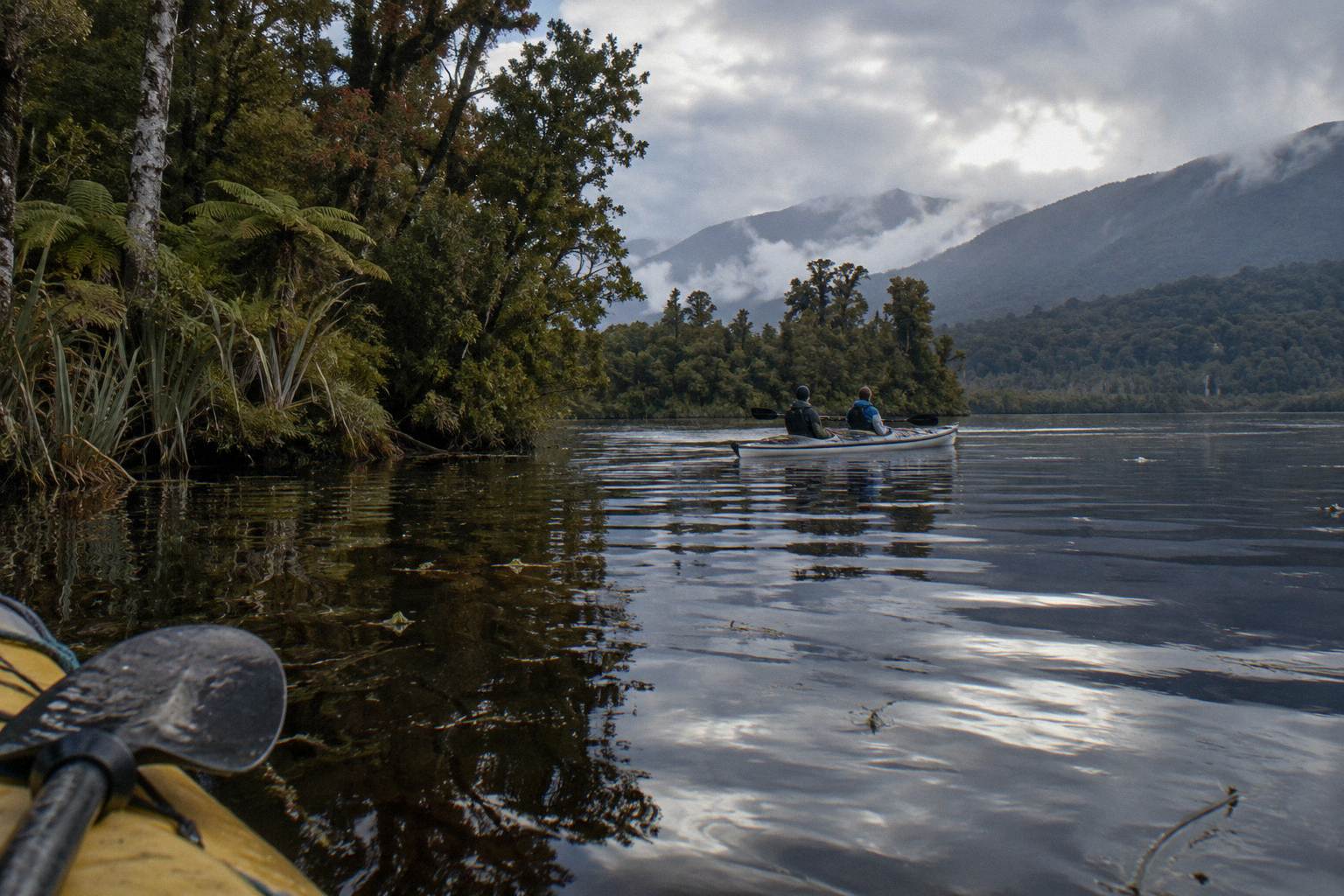
The 3-hour Lake Mapourika Kayak Tour from Franz Josef Wilderness Tours, from NZ$159 per person, is the trip built for reflections: it crosses the lake into a sheltered 'mirror' creek. Summer has a 5pm departure; winter's 2pm trip often coincides with sunset, the operator says. Reflections happen often, never guaranteed.
A mirror reflection is a fragile thing. It needs calm water, the right light, and a camera close to the surface, and a kayak happens to deliver all three better than almost any viewpoint on shore. Lake Mapourika, about ten minutes' drive north of Franz Josef township on SH6, is where West Coast photographers go looking for exactly that combination. The operator, Franz Josef Wilderness Tours, calls it the largest kettle lake in South Westland, roughly 9 square kilometres of tannin-stained water formed by retreating glaciers, and it is the dark tannin that gives the reflections their depth. Those are operator claims, but the photographs that come off the water back them up.
The decisions a photographer actually faces are simple: which of the guided trips reaches the best reflective water, what time of day to paddle, what cloud does to a shot, and how to keep gear safe. Start with one fact: no one can promise a mirror. The Department of Conservation's own reflection advice, written for nearby Lake Matheson, says the best reflections come "on a sunny, windless day" and "at dawn and dusk", and the kayak operator says the same thing in different words. What a tour does promise is position: you will be sitting on the water, in the creek, at an hour the operator has chosen for a reason.
Why Lake Mapourika Delivers Mirror Reflections
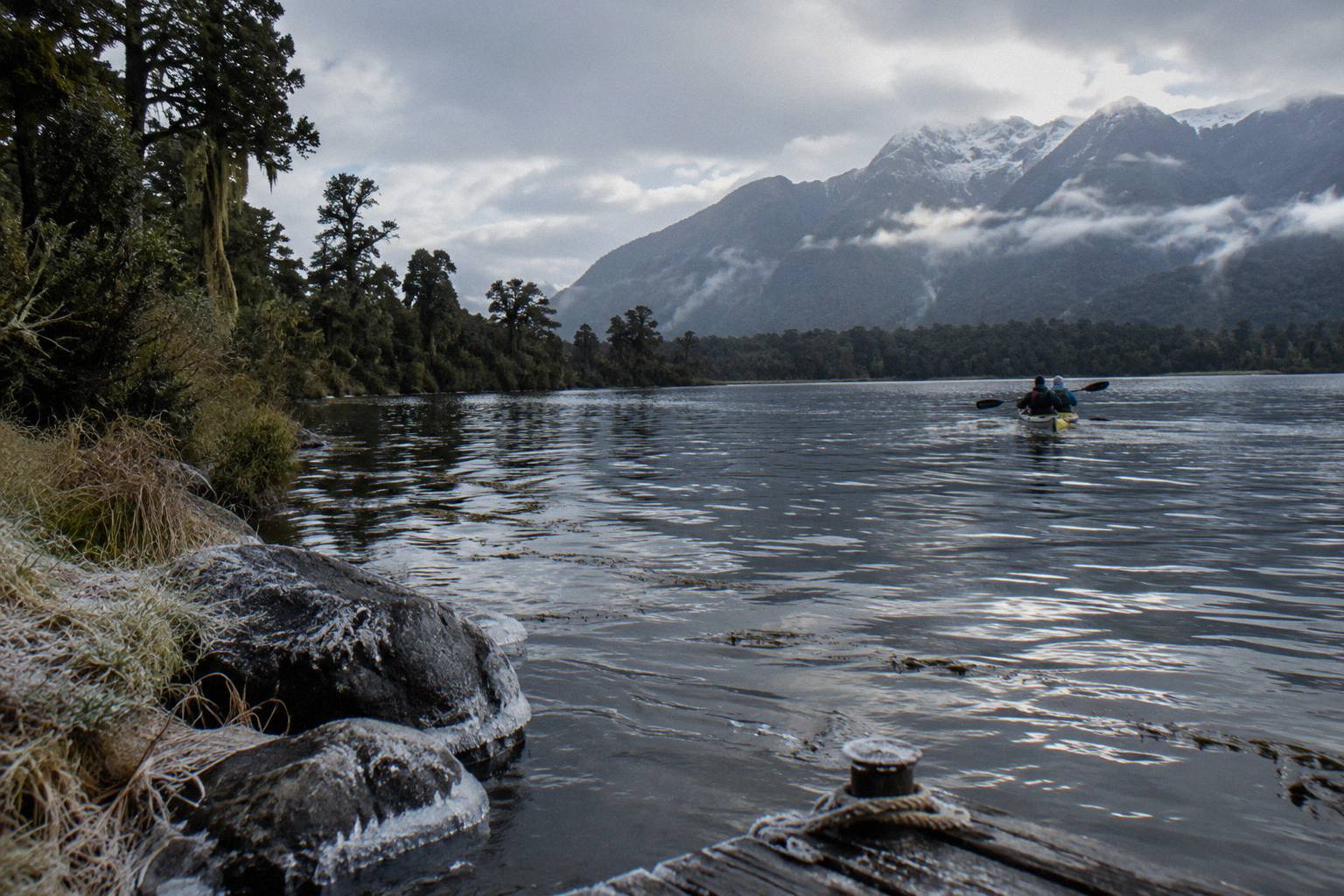
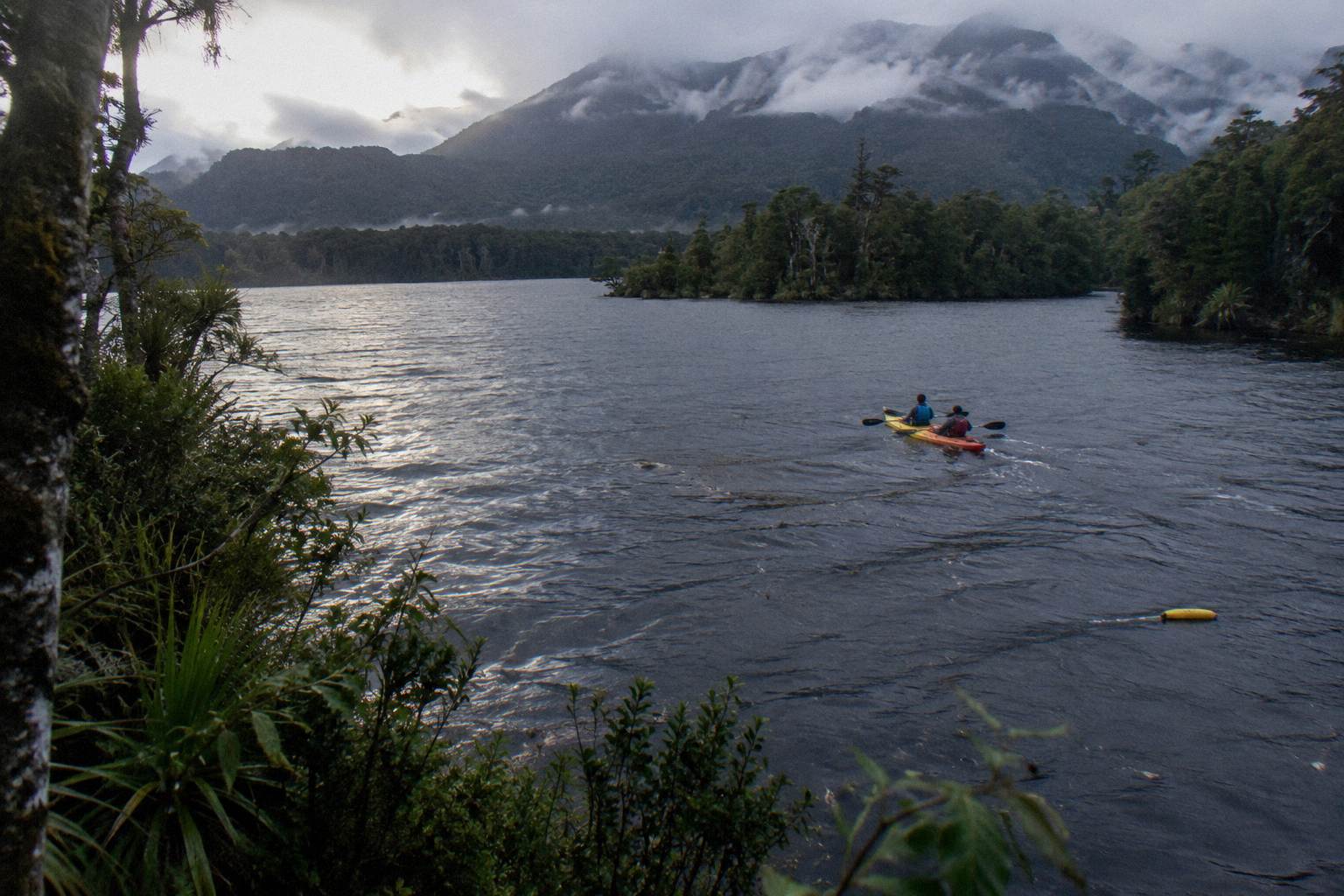
The lake's reflective reputation rests on three things: tannin-dark water that absorbs light instead of scattering it, a sheltered creek inside the Okarito Kiwi Sanctuary that wind rarely reaches, and a guide who times the crossing. Franz Josef Wilderness Tours, the operator on the lake, describes a route that crosses open water and enters a hidden "mirror" creek through predator-free sanctuary forest. The creek is the whole point for a photographer: it is where the surface flattens out.
The colour of the water matters more than most visitors expect. Tannin-stained water is tea-dark, and dark water acts like a black mirror, throwing back the shape of the forest and sky with far more contrast than a bright alpine lake manages. The operator attributes the lake's character to its glacial origins, a kettle lake left behind as ice retreated, and while depth figures for the lake are not officially verified, the visual effect is easy to see from the first paddle strokes.
The second ingredient is shelter. Open lake surfaces catch the wind, and wind kills a reflection in seconds. The 3-hour tour's route is built around this problem: you cross the exposed part of the lake, then turn into a narrow creek where the forest walls block the breeze. Groups are usually 2 to 6 people in stable double kayaks, the operator says, with the booking page showing up to 16, and doubles matter for photographers because a passenger can hold position with the paddle while a second person shoots.
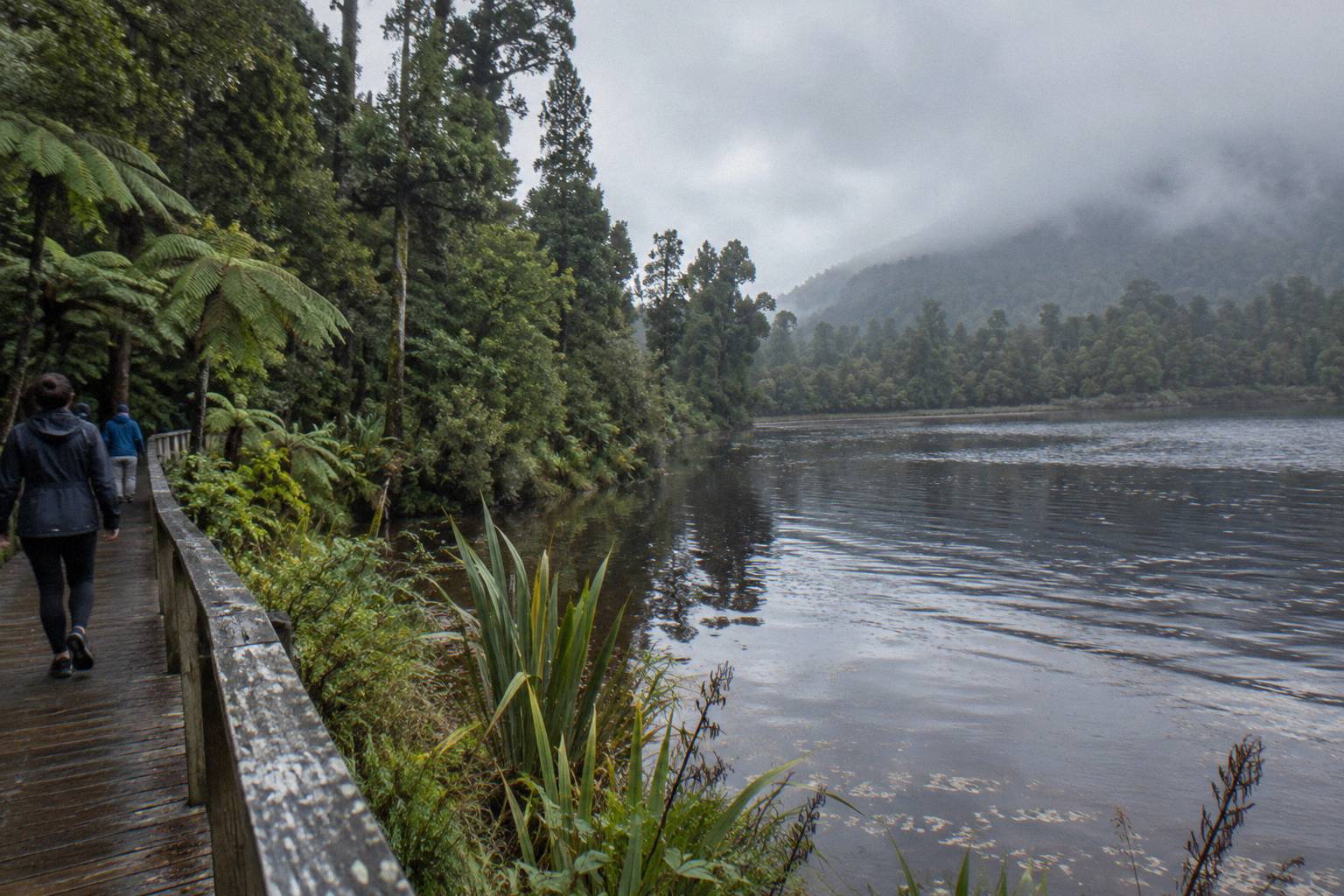
Third, the region's climate does half the work for you. Franz Josef records a mean annual rainfall of 5,555.2 mm in NIWA's 1991 to 2020 series, with every single month above 300 mm. Rain means still, humid air a surprising amount of the time, and still air is what a mirror needs. The operator's own take is worth quoting: "Mirror lake reflections are often really dramatic when it's cloudy", which surprises photographers who assume reflections need blue sky. Cloud softens the light and drops the contrast between sky and water, and a low grey ceiling can double the forest into the lake like glass.
If you are weighing the lake against the lagoon down the coast, the Okarito Lagoon kayaking guide covers that different water and its tide-timed trips, run by a different operator.
Which Trip Gives A Photographer The Best Access?
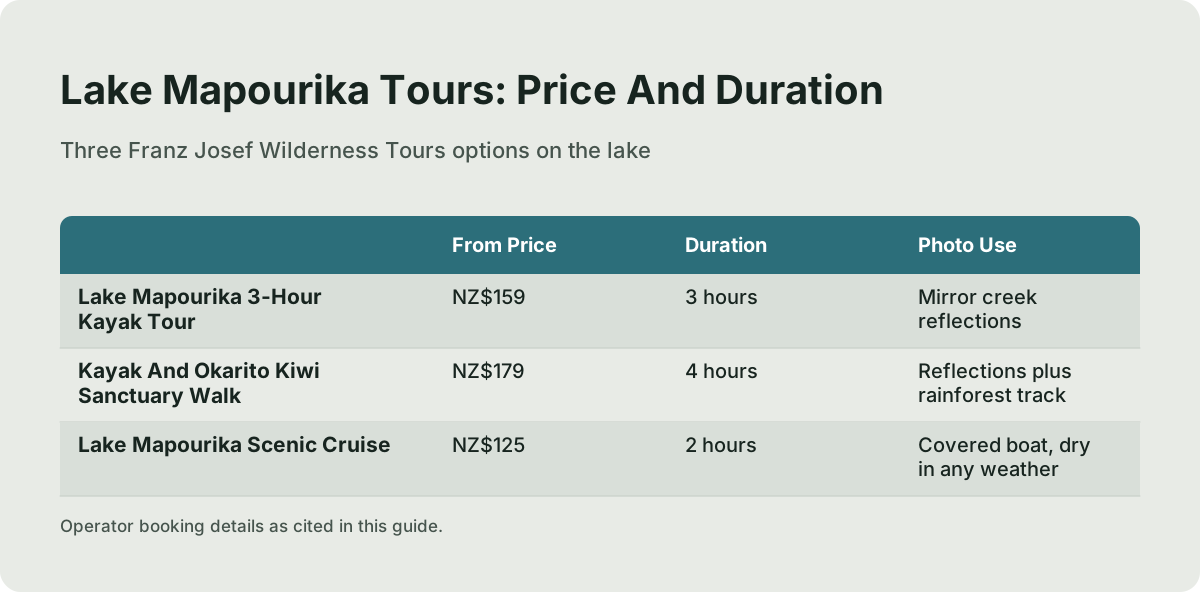
For photography access, the Lake Mapourika 3-Hour Kayak Tour (from NZ$159 per person, rated 4.9 from 400+ reviews) wins: about 2 hours 25 minutes of its 3 hours are spent paddling, including the crossing into the mirror creek. The Kayak And Okarito Kiwi Sanctuary Walk (from NZ$179, rated 4.9 from 120+ reviews) adds about an hour on a private rainforest track, while the NZ$125 Scenic Cruise keeps you aboard a covered boat.
The choice between the two kayak trips comes down to what you want in the frame and how long you can hold a paddle. The 3-hour tour spends essentially the whole outing on or near the water, and water time is photo time: the operator supplies a dry bag, paddling jacket, PFD, wet-weather gear, kayak skirt, pogies and paddle, and emails free photos of the trip afterwards, which is a genuine bonus for anyone worried about missing shots while actually paddling. Previous experience is not needed, and the operator's FAQ is direct on the swimming question: "You do not need to know how to swim, as a correctly fitted life jacket is worn throughout."
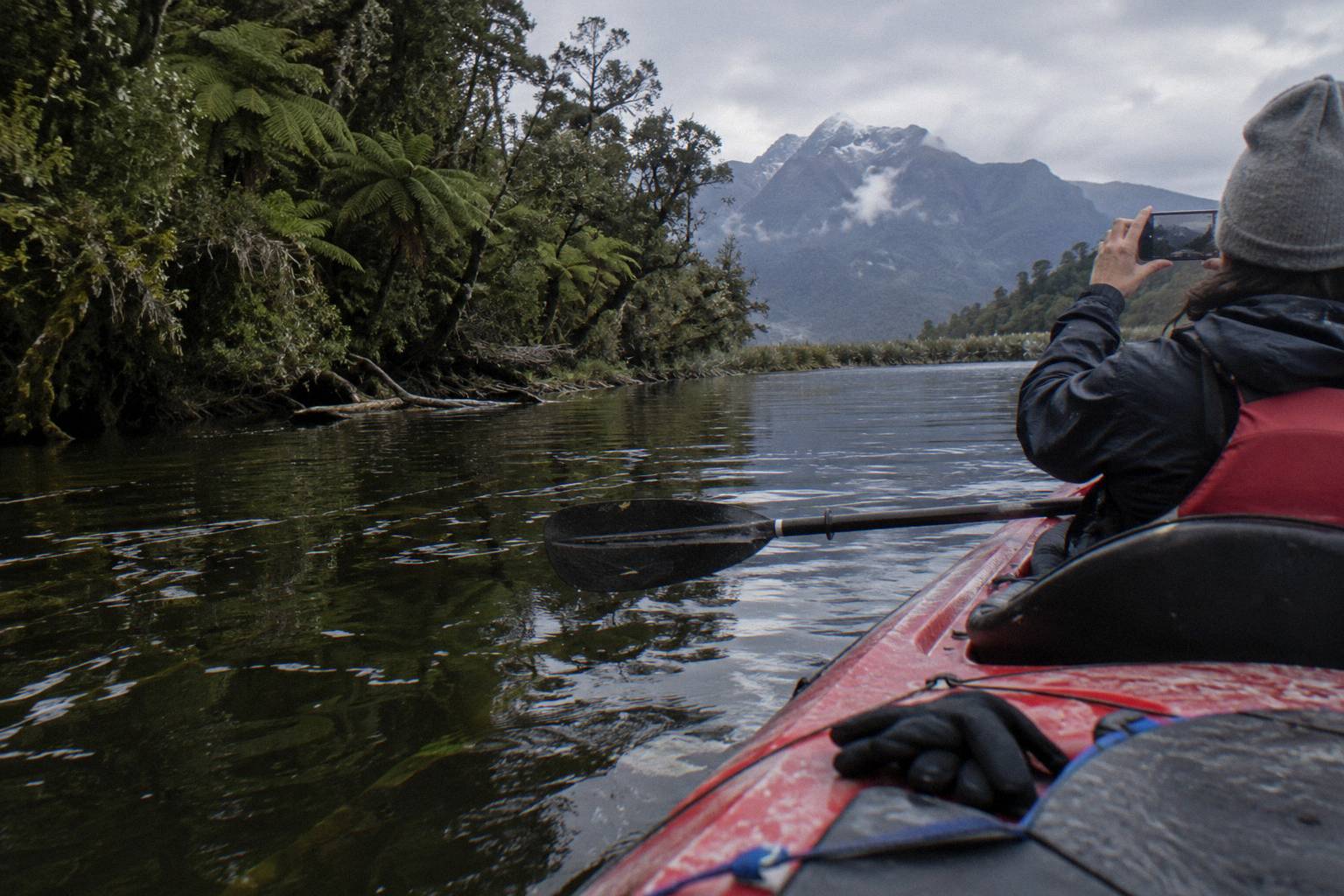
The 4-hour Kayak And Okarito Kiwi Sanctuary Walk trades about ten minutes of water time for a stretch of private rainforest track that can only be reached by water, according to the operator. For a photographer that track is a second subject: moss, tree ferns and filtered light, shot from land with both hands free. It also has a stated minimum age of 4 on the booking page, while the 3-hour tour takes children from 3, so a family with a keen young photographer has a marginally lower entry point on the classic trip. Both trips include courtesy transfer from the Franz Josef Wilderness Tours office at 30 Main Road in the township, with check-in at least 15 minutes early.
It is a 2-hour covered boat trip with a toilet on board, from NZ$125 per person, up to 12 people, running rain or shine per its booking page, with the same courtesy transfer from the township. A covered boat is not a paddle, and a photographer sitting higher off the water gets a different reflection geometry than one sitting in a kayak, but it is a stable, dry shooting platform that works when weather closes in or when a companion will not sit in a kayak at all. Every one of these trips carries free cancellation up to 24 hours on the booking page, which matters when your whole goal is a condition, not an activity.
| Trip | Operator | From price | Duration | Best photo use |
|---|---|---|---|---|
| Lake Mapourika 3-Hour Kayak Tour | Franz Josef Wilderness Tours | NZ$159 | 3 hours | On-water reflections in the mirror creek |
| Kayak And Okarito Kiwi Sanctuary Walk | Franz Josef Wilderness Tours | NZ$179 | 4 hours | Reflections plus rainforest track |
| Lake Mapourika Scenic Cruise | Franz Josef Wilderness Tours | NZ$125 | 2 hours | Dry, covered platform in any weather |
One point worth knowing: the two operators in the region work different waters and are not alternatives on the same lake. Okarito Kayaks runs tide-timed trips on Okarito Lagoon from its base at 1 The Strand in Okarito, self-arrival, with no transfer, and its reflection conditions follow the tide rather than a creek. If you are choosing between the two waters, the Lake Mapourika or Okarito Lagoon comparison sets out the differences.
What Time Of Day Should You Paddle?
The operator's seasonal session pattern is the timetable to plan around: summer, 1 November to 31 March, runs 9am, 1pm and 5pm departures, with the 5pm slot being the operator's own Sunset Classic window; winter, 1 April to 31 October, runs a 9am or 10am morning trip and a 2pm trip that the operator says "often coincides with sunset". Times may vary, so confirm your date on the booking page.
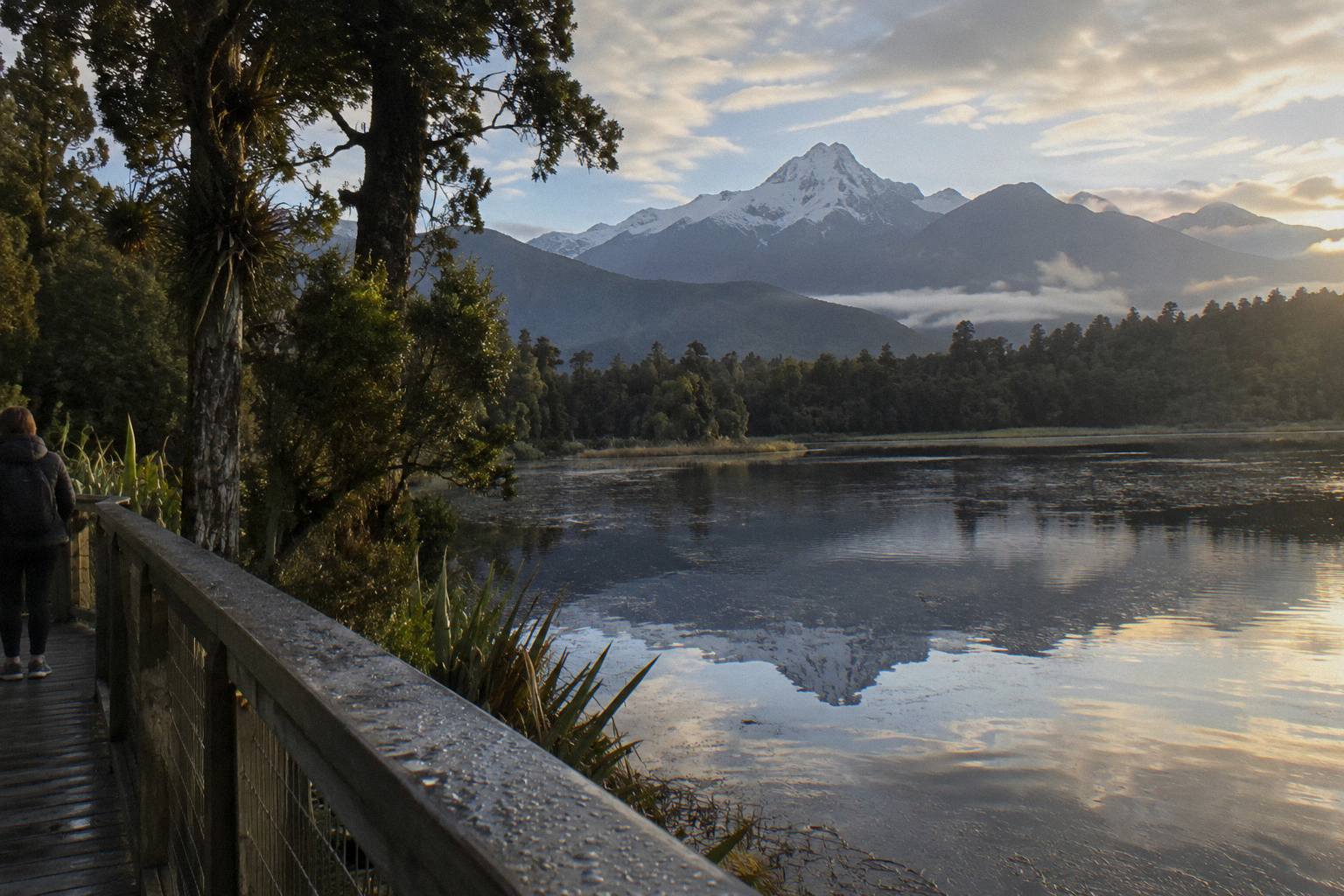
The pattern maps neatly onto the DOC reflection advice. Dawn and dusk are when wind drops and the surface settles, and the summer 5pm departure is effectively a golden-hour paddle, the operator's own product built for exactly the light photographers chase. On a 3-hour trip leaving at 5pm in midsummer, you are on the water through the last of the sun and into the long West Coast dusk, and the return paddle often happens over a settling surface. That is the slot to request if reflections are the entire reason for the trip.
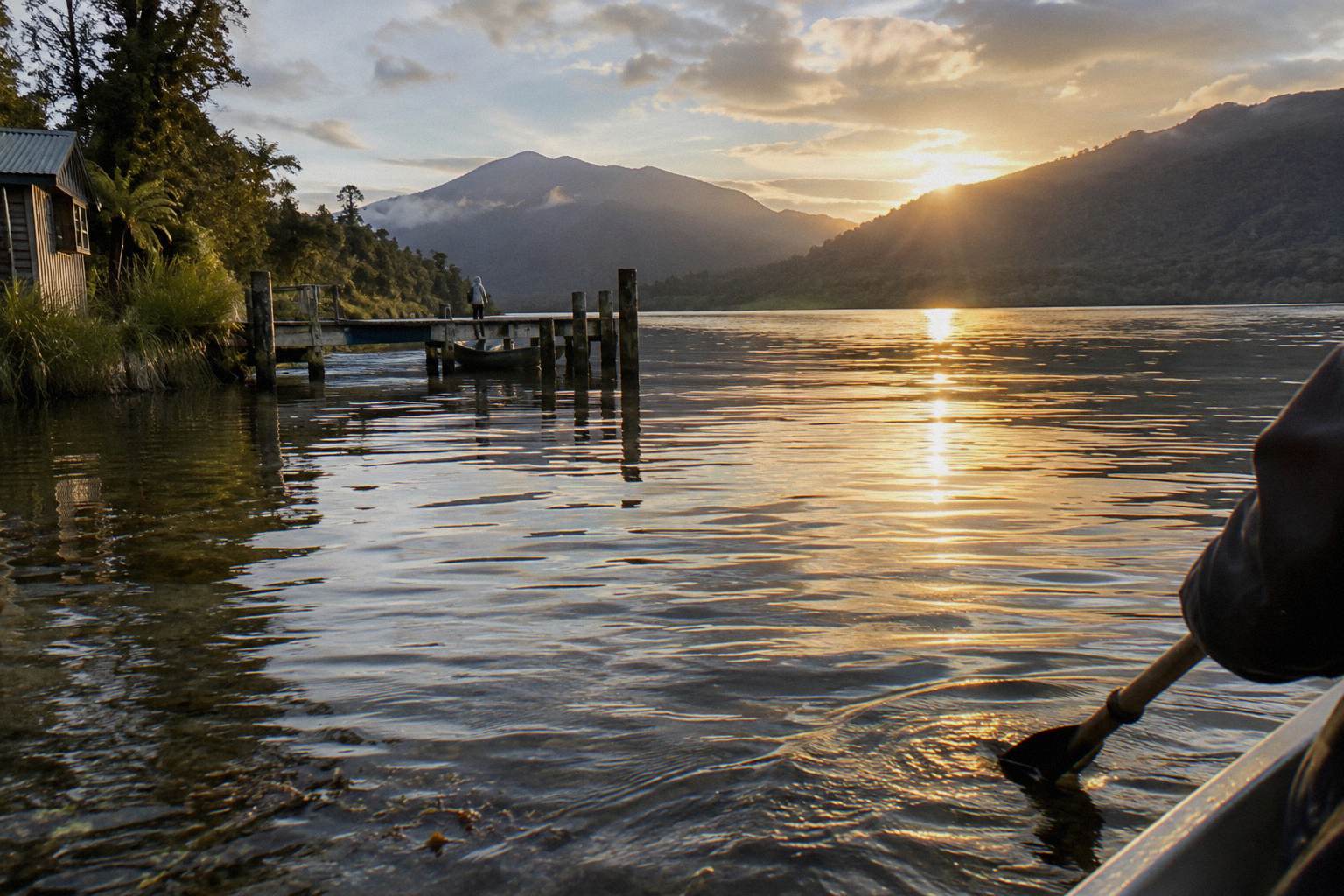
Winter reshapes the day but does not remove the option. The Sunset Classic exists only from 1 November to 31 March, so there is no winter 5pm trip, but the operator's own wording is that the winter 2pm tour "often coincides with sunset", because the sun goes down early enough on the West Coast that a mid-afternoon departure finishes in the blue hour. A winter photographer loses the warm light of the summer classic and gains longer, softer shadows and a lake that sees far fewer people. The trade is real: cold water raises the stakes of a capsize, and the operator's risk disclosure names hypothermia as a higher risk in winter, so a winter photo mission deserves proper layers, which the what to wear on a kayak tour guide covers in detail.
| Season | Dates | Session pattern (operator) | Photo angle |
|---|---|---|---|
| Summer | 1 Nov to 31 Mar | 9am, 1pm, 5pm | 5pm is the sunset window, the operator's Sunset Classic slot |
| Winter | 1 Apr to 31 Oct | 9am or 10am, and 2pm | 2pm often coincides with sunset, the operator says |
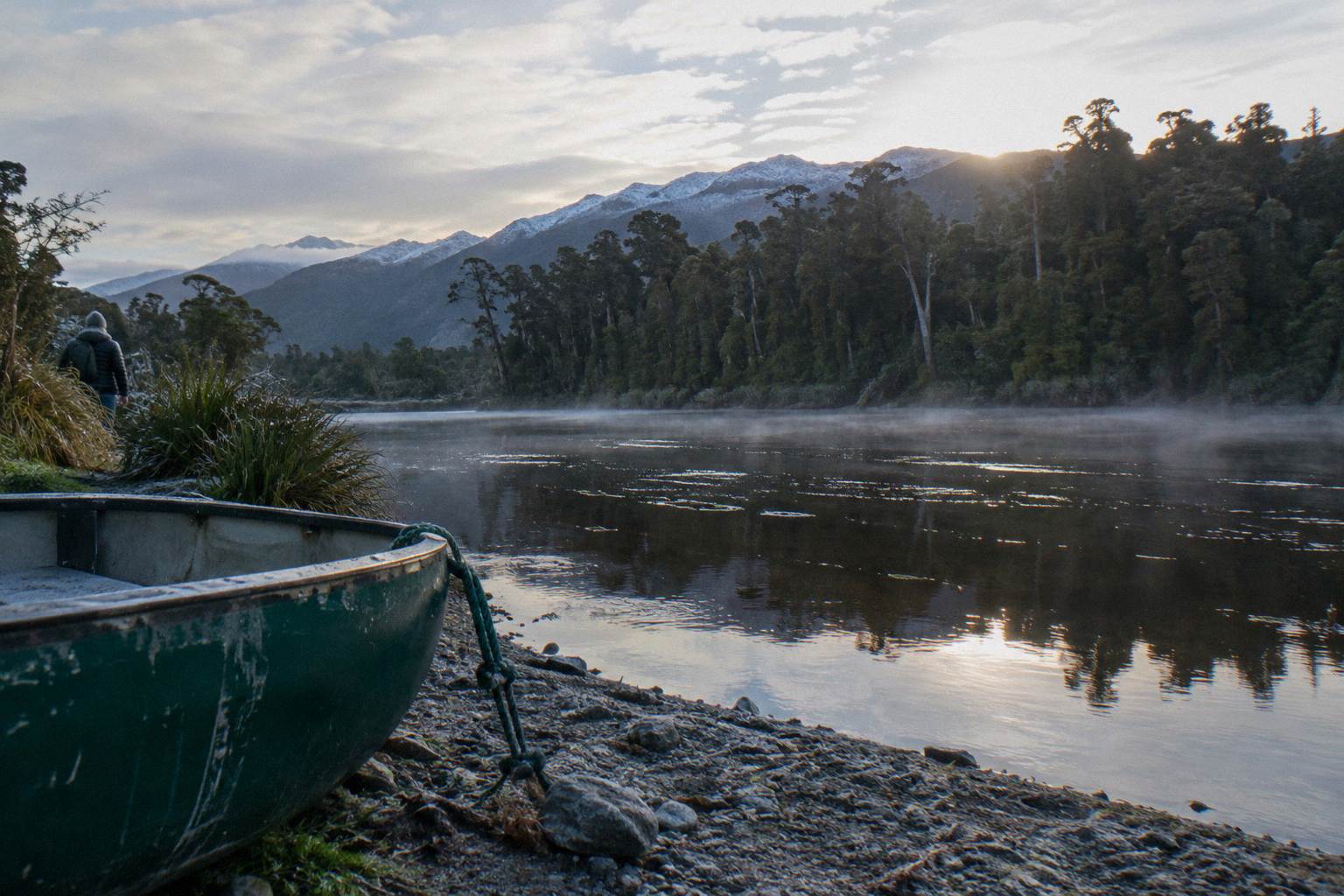
A morning departure is the quiet alternative. Wind on the West Coast tends to build through the day, so a 9am start often gets the flattest water of the three summer slots, at the cost of flatter light. If your priority is glass rather than gold, book the morning; if it is gold, book the 5pm. And if your date lands mid-trip-planning and you want a same-day plan B that runs in any weather, the covered cruise below is the fallback.
After a cta like that, the practical footnote: whatever you book, the operator checks local conditions itself and says it is "often times dry at Lake Mapourika while it's raining in the township", so a wet forecast in Franz Josef village is not a reason to write off the lake. The operator recommends the Windy forecast app for a read on the day.
Do Clouds Ruin Reflection Photos?
Often the opposite. The operator's own line is that "mirror lake reflections are often really dramatic when it's cloudy", because a low cloud ceiling softens light and lets dark tannin water mirror the forest with deep contrast. DOC's advice, that the best reflections come on sunny, windless days and at dawn and dusk, describes the classic postcard; the operator's describes the moody version. Neither is a promise, and wind, not cloud, is the reflection killer.
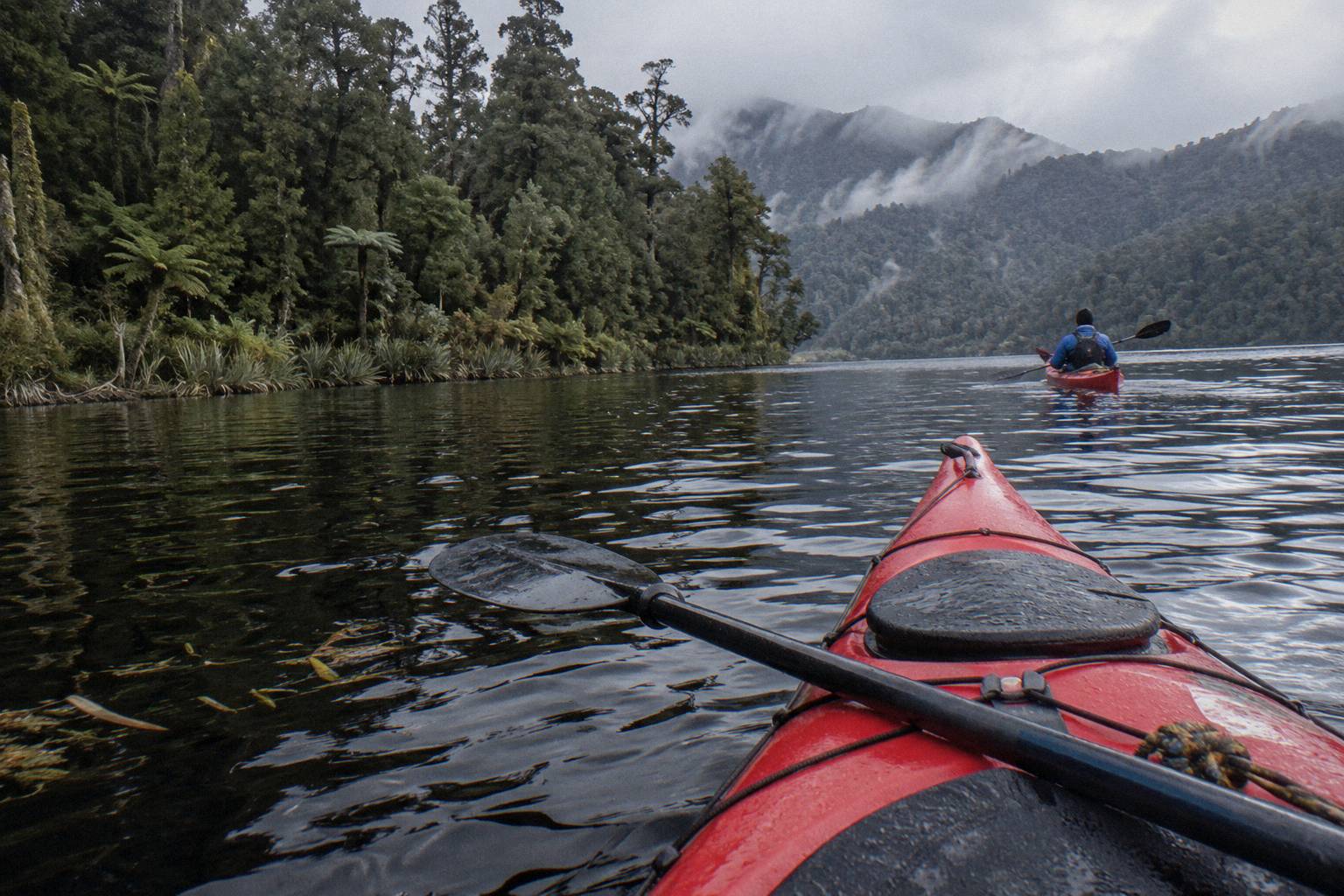
The distinction matters because photographers from brighter climates often cancel themselves out of the best conditions. A hard blue sky produces a bright, contrasty surface that scatters light and breaks up reflections; a uniform grey ceiling turns the lake into a dark mirror and doubles the rainforest into it. Light rain, which the West Coast supplies generously, can even improve the atmosphere, and the operator embraces it: "Kayaking can be especially atmospheric in light rain", with jackets and wet-weather gear supplied on every trip.
What actually destroys the shot is surface disturbance. A breeze of any strength ripples the lake and the creek, and heavy rain does the same from above. That is the real gamble in booking, and it is why the free cancellation up to 24 hours on the booking page is worth having: you can hold a slot early, watch the forecast, and decide inside a generous window. The operator's own cancellation terms, on its tour page, offer a full refund with no penalty if a booking is changed or cancelled at least 24 hours ahead, and inside 24 hours it is not refundable for any reason. If the operator itself cancels for unsafe conditions, you get a full refund or an alternative.
There is a second, quieter benefit to cloudy days on this particular lake: glacier visibility. The operator is blunt that the lake is not at the glacier, and that glacier views depend entirely on cloud height, "On a clear day we can see many different Glaciers... including the Neve of the Franz Josef Glacier... If the clouds are lower in the valley, then we will not see the Glaciers." So the same clear sky that shows distant ice is the sky that gives you harsher reflection light, and a low-cloud day hides the peaks but hands you the mirror. Photographers who want both usually accept that a single trip rarely delivers both.
Keeping Your Camera Safe And Dry
The operator supplies a dry bag on the 3-hour tour, along with a paddling jacket, PFD, wet-weather gear, kayak skirt, pogies and paddle, and the bring list explicitly includes a camera or phone, plus a cap or sunglasses, comfy sneakers or sandals, and a warm top layer, with bottoms "anything but jeans". Free photos of the trip are emailed afterwards, and the walk trip also includes complimentary photos, so you always leave with images.
The gear logic for a photographer on a double kayak is simple: the dry bag keeps the camera alive between shots, and the stable doubles keep the shooting platform predictable. Because your feet stay dry in these kayaks, per the operator, and because the trip wears a spray skirt in rougher conditions, the realistic risk to a camera is drips and rain rather than immersion, but a capsize is always possible on a deep, exposed lake, as the operator's risk disclosure states plainly. Anyone carrying serious glass should treat the dry bag as the primary home of the camera and take it out only inside the sheltered creek, not on the open crossing.
The free emailed photos deserve more weight than photographers usually give them. The guide positions the group and shoots throughout, and those images include angles of your own kayak in the reflection that you physically cannot take while sitting in it. A sensible split is to let the operator's photos carry the wide scenes and to spend your own shooting time on details: the creek's narrow mirrored channel, water dripping from a paddle, the forest doubling at the waterline. If you want to go deeper on the timing question, the blog post on when mirror reflections are best on the lake breaks down the calm-water windows.
One regulatory point that affects everyone carrying a camera on any New Zealand waterway: from 9 October 2026, everyone on a recreational craft 6 metres and under, kayaks included, must wear a lifejacket while underway, under Maritime NZ's updated lifejacket rules. On these tours a correctly fitted PFD is worn throughout anyway, as the operator's FAQ notes, but a photographer wriggling out of a vest for a cleaner shot is no longer a judgment call worth making anywhere in the country.
| Supplied by the operator | Bring yourself |
|---|---|
| Dry bag | Camera or phone |
| Paddling jacket and wet-weather gear | Cap or sunglasses |
| PFD, kayak skirt, pogies, paddle | Comfy sneakers or sandals, feet stay dry |
| Free photos emailed after the trip | Warm top layer, bottoms anything but jeans |
What Else Ends Up In The Frame?
The reflections are the headline, but the tour's route through the predator-free Okarito Kiwi Sanctuary adds rainforest walls, birdlife and, on clear days only, distant glacier neves. The sanctuary covers around 11,000 hectares, established in 2000, and the operator says the rowi kiwi population has grown from around 150 birds in the 1990s to more than 600 today. Kiwi themselves are nocturnal and are not the photo subject here; the forest they live in is.
Shooting inside the creek is a study in greens. The channel is narrow enough that the forest canopy closes overhead in places, and the reflections run down both sides of the kayak like corridors. Because the group moves slowly and the water is often near-still, handheld shooting from a seated position works, and the darkest water sits closest to the forest edge. Tannin-dark water rewards any subject with a hard silhouette against sky, so overhanging branches and the sharply angled trunks at the waterline make stronger compositions than mid-lake horizons.
Wildlife appears on its own schedule. White herons, the kotuku, feed in Okarito Lagoon rather than this lake, and their only New Zealand breeding colony is at Waitangiroto near Whataroa, breeding September to February, with DOC noting the birds feed in coastal lagoons in that season; that colony is reachable only on a separate licensed tour from Whataroa, which the white heron sanctuary tour or kayak trip guide compares properly. On Lake Mapourika the likelier subjects are smaller bush birds and the landscape itself. Birdlife generally is covered in the wildlife on a West Coast kayak paddle post, which sets out what you are and are not likely to see.
For photographers who want a second water with a different character, Okarito Kayaks' tide-timed trips put you on a shallow lagoon where the reflections and the birdlife follow the tide. The Okarito Lagoon Kayak Explorer runs 3 hours total with up to 2 on the water, from NZ$165 per person, self-arrival at the base on The Strand, with dry bags, a lagoon map and bird guide supplied, a rescue boat on standby, and free cancellation up to 24 hours on the booking page.
A party of keen photographers might instead look at the Lagoon Kayak Adventurer, 4 hours total with up to 3 on the water, from NZ$210 per person, which the operator says needs some fitness and flexibility, a fair warning that a longer lagoon run means managing gear in a more open environment. Okarito guided departures need a minimum of two adults booked to confirm, and the booking pages exclude people over 200 cm or over 125 kg, so check those before committing a group. No rating or review count is printable for either Okarito trip.
Weather, Cancellations And Your Backup Plan
Franz Josef Wilderness Tours runs kayaking in wet weather, supplies the wet gear, and cancels with a full refund or alternative only if conditions are unsafe; you can cancel free up to 24 hours before, not inside that window for any reason. The operator says it is often dry at the lake while raining in the township. The Okarito trips are tide-timed with no stated weather policy, so confirm conditions on their booking pages.
The practical photographer's plan is a chain of fallbacks. Book the 3-hour kayak trip early: it rates 4.9 from 400+ reviews, and its summer sessions fill around the 5pm slot. Watch the forecast in the days before; the operator recommends Windy, and DOC's general Westland advice to carry warm, waterproof clothing and insect repellent applies to anything you do around the lake, with sandflies prevalent in the national park per the DOC park page. If the day turns wet but safe, paddle anyway: light rain is atmospheric, and reflections often survive it. If conditions are unsafe, the operator cancels and refunds in full.
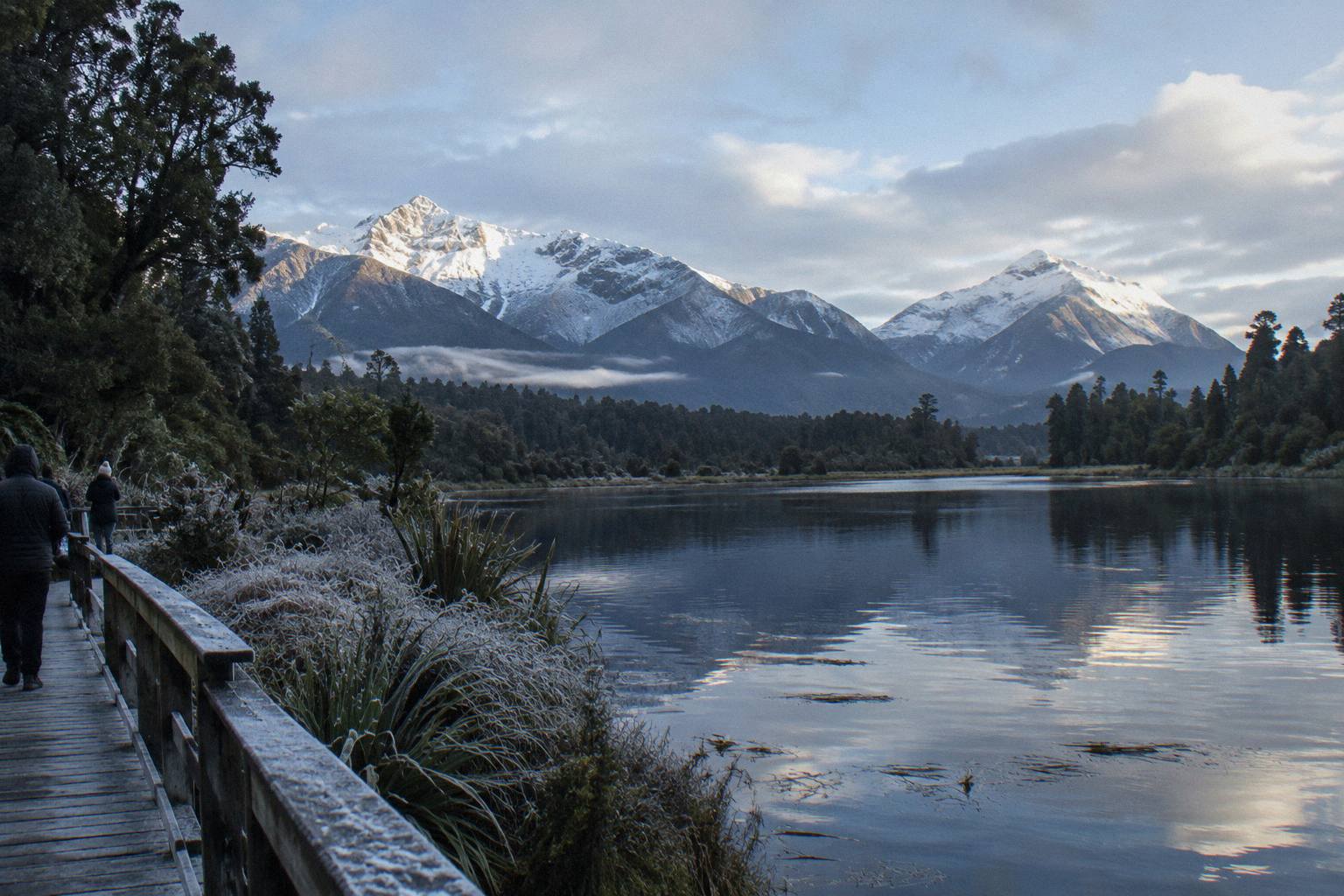
If the weather forces a change of plan entirely, the covered Scenic Cruise runs rain or shine per its booking page, with the same township check-in and courtesy transfer, and makes a dry second attempt at the lake on the same day. Between attempts, the shore options are real photography subjects in their own right: DOC's Lake Matheson walk, 4.4 km and an hour and a half, with the DOC page noting the best reflections on a sunny windless day and at dawn and dusk, or the Peters Pool walk, a 1.1 km wheelchair-accessible return with reflective views of the glacier valley, details on the DOC Lake Matheson walk page. The DOC Otto/MacDonalds Campsite on SH6 at the lake's northern end also gives shore access to the same water, per the DOC campsite page, which notes you can boat, fish for trout or swim there.
For trip planning that bundles the paddle into a wider itinerary, the how many days in Franz Josef guide sequences the options, and Franz Josef Kayak Tours keeps the whole picture in one place.
Pulling The Plan Together
A reflection-focused trip comes down to four choices: the 3-hour kayak tour for the creek, the summer 5pm or winter 2pm slot for the light, a 24-hour cancellation cushion for the forecast, and a covered cruise or shore walk as the backup. Every trip we cover carries free cancellation up to 24 hours on the booking page, and the operator's seasonal session pattern, never a guaranteed time, is the timetable that drives all of it.
Photographers who follow that chain tend to come back with something, even on the days the postcard conditions do not arrive. The lake's darkness, the creek's shelter and the region's still, humid air mean a genuinely reflection-free day is rarer than visitors fear, and the operator's emailed photos cover the moments your own hands were busy. What a tour actually gives you is position and timing, not the mirror itself, and the booking page is where times for your specific date live.
Common Questions About Photographing Mirror Reflections From A Kayak
Are Mirror Reflections Guaranteed On A Lake Mapourika Kayak Tour?
No. Reflections happen often but are never guaranteed. The operator says they are "often really dramatic when it's cloudy", and DOC advises that the best reflections come on sunny, windless days and at dawn and dusk. Wind, not cloud, is what usually spoils the surface.
Which Kayak Tour Is Best For Reflection Photos?
The Lake Mapourika 3-Hour Kayak Tour, from NZ$159 per person and rated 4.9 from 400+ reviews, is built around the mirror creek crossing, with about 2 hours 25 minutes of kayaking. The Kayak And Okarito Kiwi Sanctuary Walk, from NZ$179 per person, adds a private rainforest track for land-based shots.
What Time Of Day Is Best For Reflections?
The operator's summer pattern, 1 November to 31 March, includes a 5pm departure, effectively a sunset paddle. In winter, 1 April to 31 October, the operator says the 2pm trip "often coincides with sunset". Times may vary, so confirm your date on the booking page.
Can I Bring My Own Camera On The Kayak?
Yes, the operator's bring list explicitly includes a camera or phone, and a dry bag is supplied along with a paddling jacket, PFD, wet-weather gear, kayak skirt, pogies and paddle. Free photos of the trip are emailed afterwards, and the walk trip includes complimentary photos too.
Do Clouds Ruin Reflection Photos On The Lake?
Usually not. The operator states that mirror reflections are often really dramatic when it is cloudy, because soft light over dark tannin water produces deep, moody mirrors. Hard sun gives brighter but more scattered reflections; wind is the real problem.
Will I See Glaciers In My Photos?
Only on a clear day, and the lake is not at the glacier. The operator notes that on clear days several glaciers, including the Franz Josef neve, are visible, but lower cloud hides them entirely. No glacier or mountain view can be promised.