Sandflies And Kayak Tours On The West Coast
Sandflies are a genuine fact of life on the New Zealand West Coast, and DOC says so plainly on its own park pages. The good news for paddlers is that the guided trips here are built around dealing with them, from supplied repellent to clothing lists that cover most exposed skin.
Short answer
Sandflies are present around West Coast water, and DOC warns they are prevalent in Westland Tai Poutini National Park. The Okarito Lagoon Kayak Explorer runs from NZ$165 per person with environmentally friendly repellent provided, and the Lake Mapourika 3-Hour Kayak Tour from NZ$159 per person lists insect repellent among its inclusions.
Sandflies are the one part of a West Coast paddle that guidebooks mention in passing and locals mention first. The Department of Conservation is blunt about it on its Westland Tai Poutini National Park page: carry warm and waterproof clothing and insect repellent, "as sandflies are prevalent". At the Lake Matheson walk a short drive south, DOC goes further and warns that "sandflies can be fierce here". Neither warning is a reason to skip the water. It is a reason to pack like someone who has read them.
This article covers what sandflies mean for the guided kayak trips around Franz Josef and Okarito: where the official advice comes from, what each operator already hands you, what to wear, and how a nervous traveller can weigh the whole question without panic. Where a fact comes from a single operator, it is attributed. Where it comes from DOC or Maritime NZ, it is official. Where a detail like sandfly season is not documented, check with the operator before you go rather than assuming.
Are Sandflies Really A Problem For Kayaking Here?
Yes, sandflies are a real presence around West Coast water and DOC treats repellent as standard kit rather than optional, but the guided kayak trips are structured so that bites are a nuisance you manage, not a reason to stay ashore. Nothing about a guided tour makes the insects disappear, and nothing about them ruins the paddle for most people who arrive prepared.
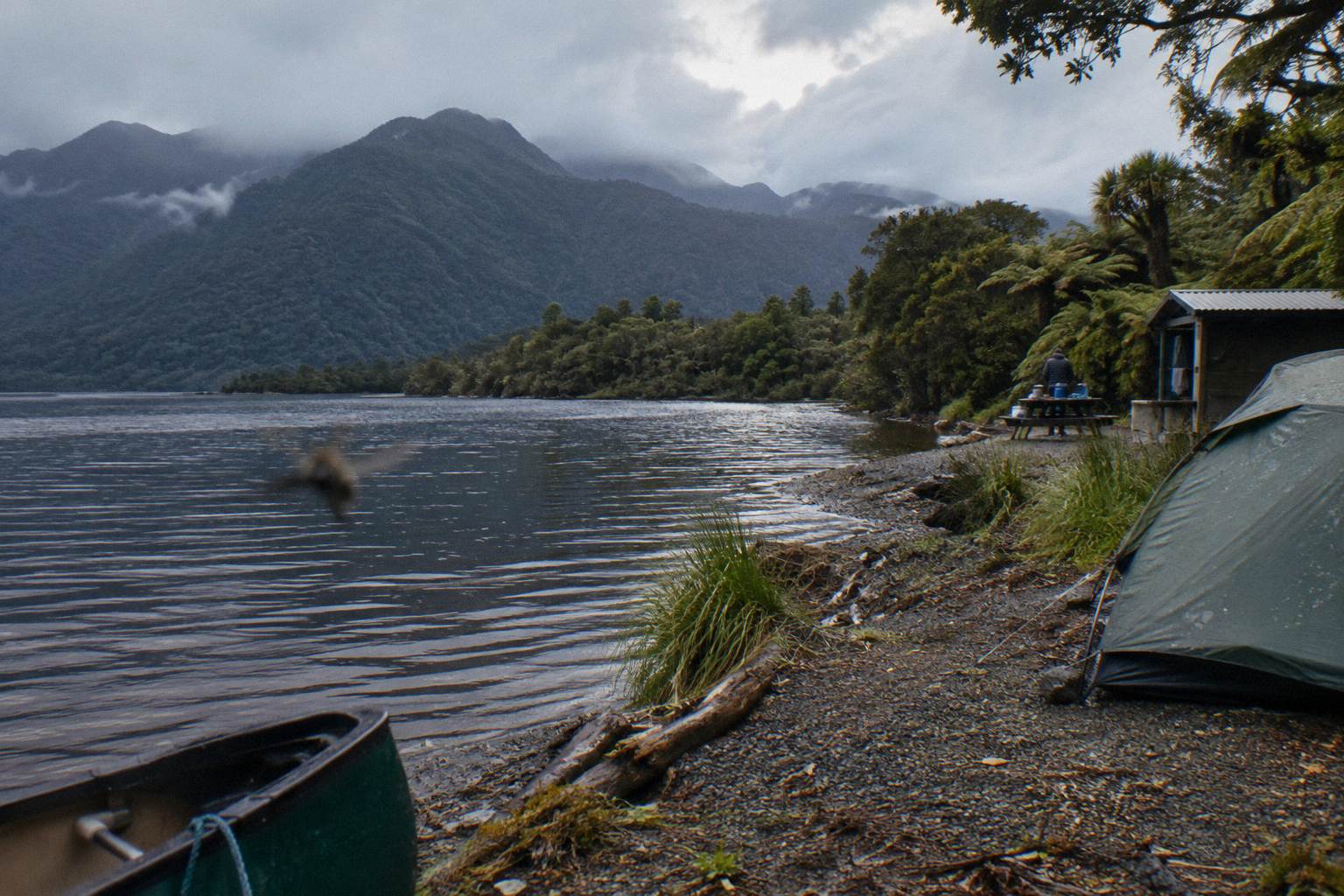
The West Coast's sandfly, the namu, is a small native biting insect that favours exactly the habitat kayaking happens in: still water, lake edges, lagoon shores and damp bush. DOC's park guidance treats repellent as part of the standard packing list alongside warm clothing, which tells you the expectation is not "maybe", it is "bring it". The bite itself is a small itch that most people find annoying rather than painful, and it is the cloud of insects around motionless ankles that people remember, not the individual bites. Sandflies do not buzz, do not swarm at speed, and do not chase a moving boat; they find you when you are standing still near their habitat and leave you alone when you are not.
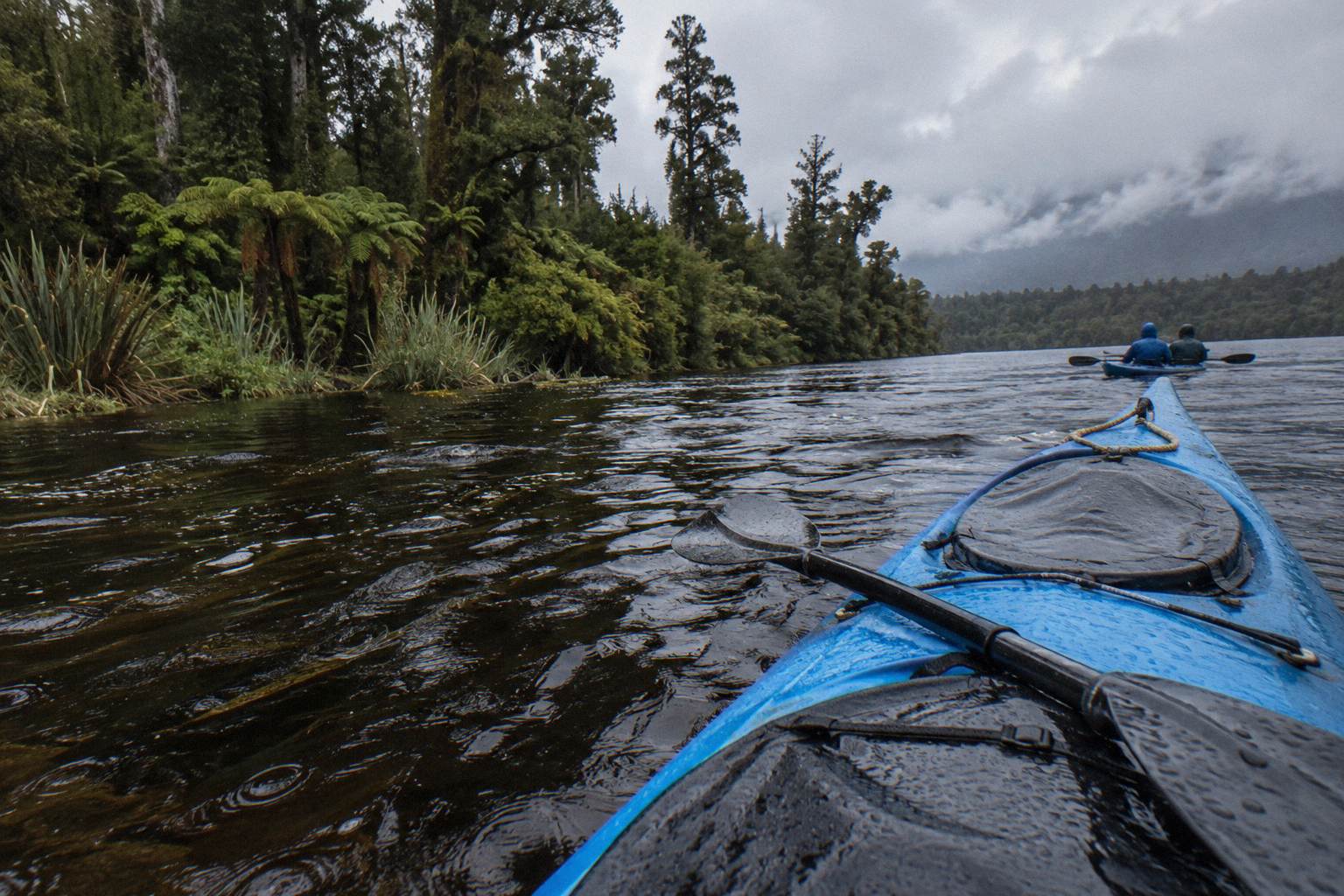
Two reframes help. First, sandflies are weak fliers, and a kayak under way is a poor target: the insects matter most at the launch, during the safety briefing, and at any stop where you stand still on the shore. Second, the two guided operations in this area have both built their kit lists around the reality. Okarito Kayaks mentions sandflies on "occasional cloudy, still days" and provides environmentally friendly insect repellent as part of its standard gear. On the Lake Mapourika side, the 3-hour tour's booking page lists sunscreen and insect repellent among its inclusions. The insects are a known, budgeted-for cost of doing business on this coast, not a surprise either operator is pretending does not exist.
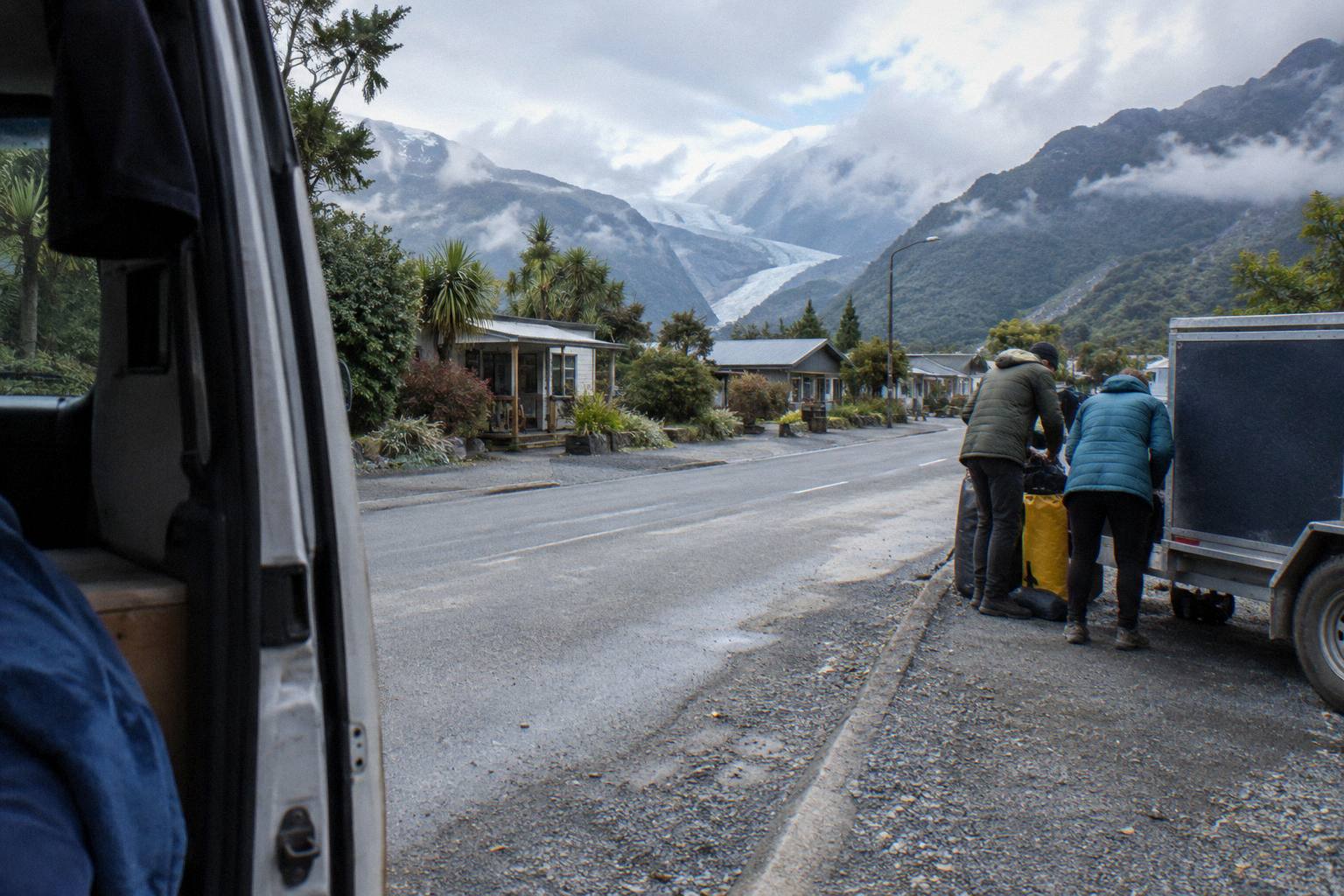
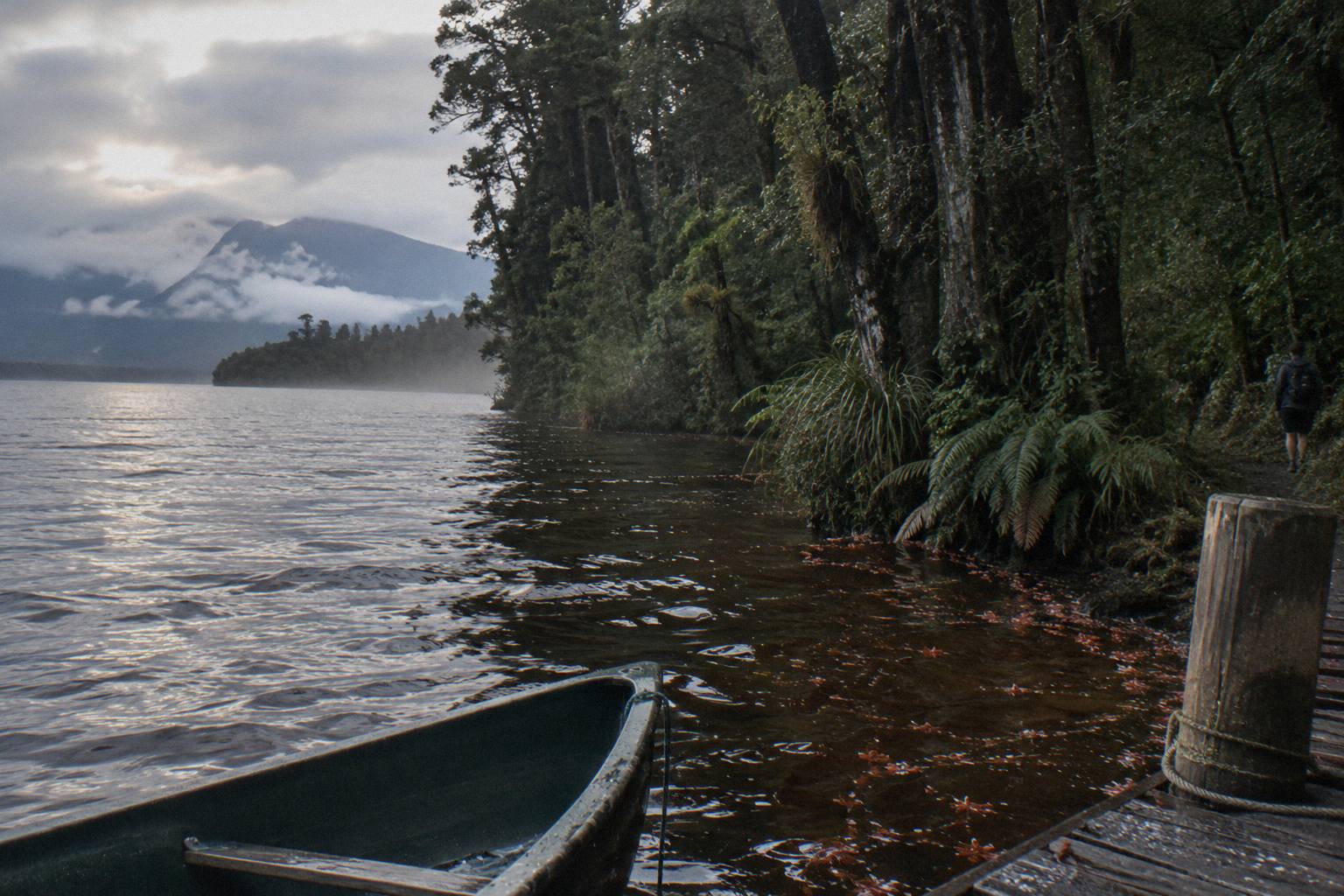
That said, this article will not tell you which month is worst or what time of day they bite hardest, because no source on file makes that claim. The only seasonal-adjacent wording that exists comes from Okarito Kayaks: "occasional cloudy, still days". Treat that as the limit of the forecast, and plan around conditions rather than calendars. It is also worth being precise about the water. Lake Mapourika is a lake, roughly a ten-minute drive north of the Franz Josef township on SH6 in the operator's wording, with DOC's Otto/MacDonalds campsite on the highway at its northern end noting you can boat, fish for trout or swim there. Okarito Lagoon is a shallow, tidal lagoon beside a village of about 30 to 40 residents, roughly 25 minutes north of Franz Josef, with no shop or restaurant. Different waters, different operators, same insect.
What Do The Kayak Tours Already Give You Against Bites?
Both guided operations include bite protection in their supplied kit: Okarito Kayaks hands out environmentally friendly insect repellent, a lagoon map and bird guide, buoyancy aids, spray skirts and dry bags, while the Lake Mapourika booking page lists insect repellent and sunscreen among the 3-hour tour's inclusions. On a guided trip, you are not sourcing your own defence from scratch.
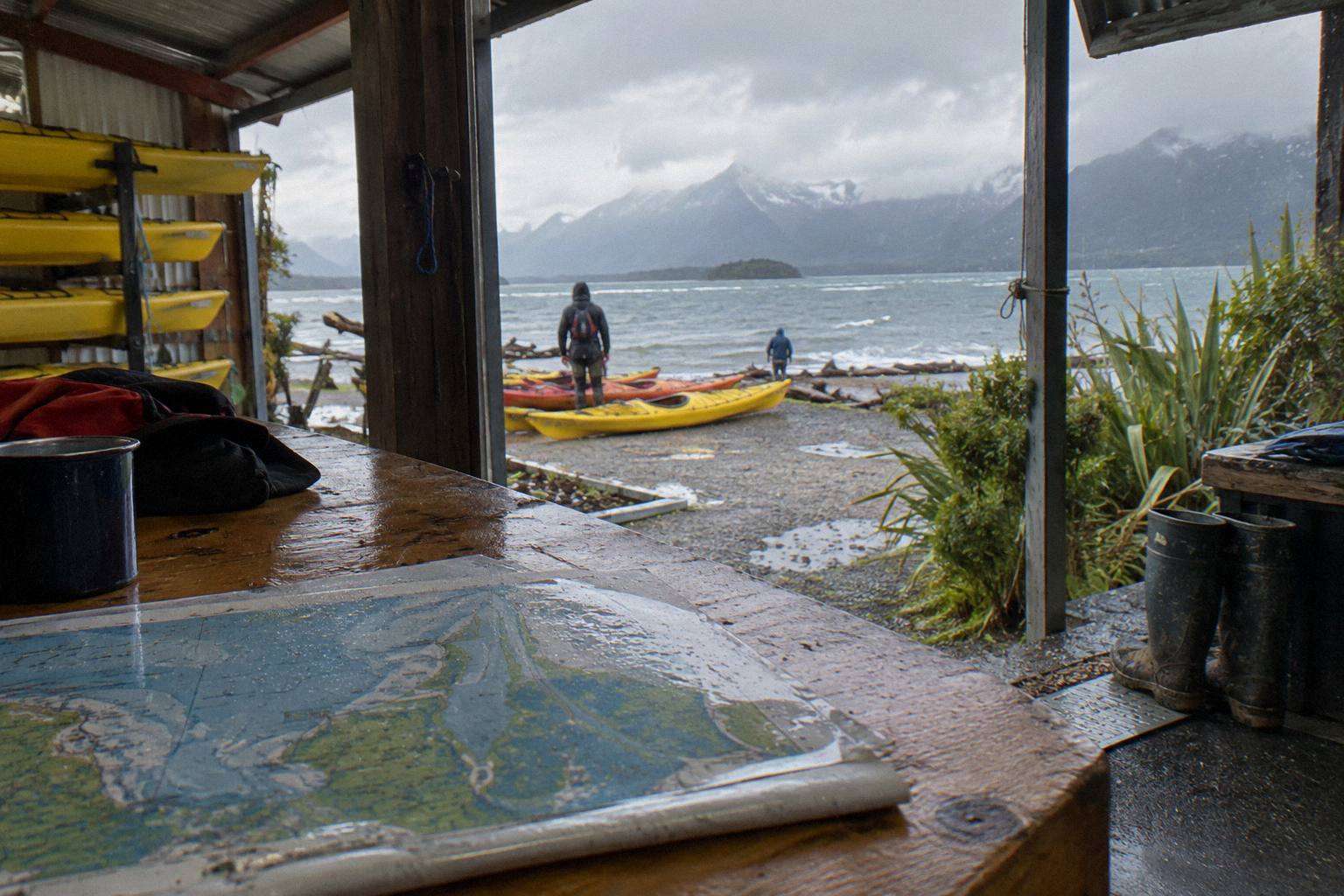
The clearest way to see what is covered is side by side. This table reflects what each side's own materials state, and nothing beyond them. No Wilderness Tours page itself mentions sandflies, so the Lake Mapourika row rests on the booking page; check there before you go.
| Trip and water | Operator | Bite-related kit stated | Other gear provided |
|---|---|---|---|
| Okarito Lagoon Kayak Explorer, Okarito Lagoon | Okarito Kayaks | Environmentally friendly insect repellent | Lagoon map and bird guide, buoyancy aid, spray skirt, dry bags, rescue boat on standby |
| Okarito Lagoon Kayak Adventurer, Okarito Lagoon | Okarito Kayaks | Environmentally friendly insect repellent | Same guided kit as above; trip needs some fitness and flexibility |
| Lake Mapourika 3-Hour Kayak Tour, Lake Mapourika | Franz Josef Wilderness Tours | Insect repellent and sunscreen listed on the booking page | Dry bag, paddling jacket, PFD, wet-weather gear, kayak skirt, pogies, paddle |
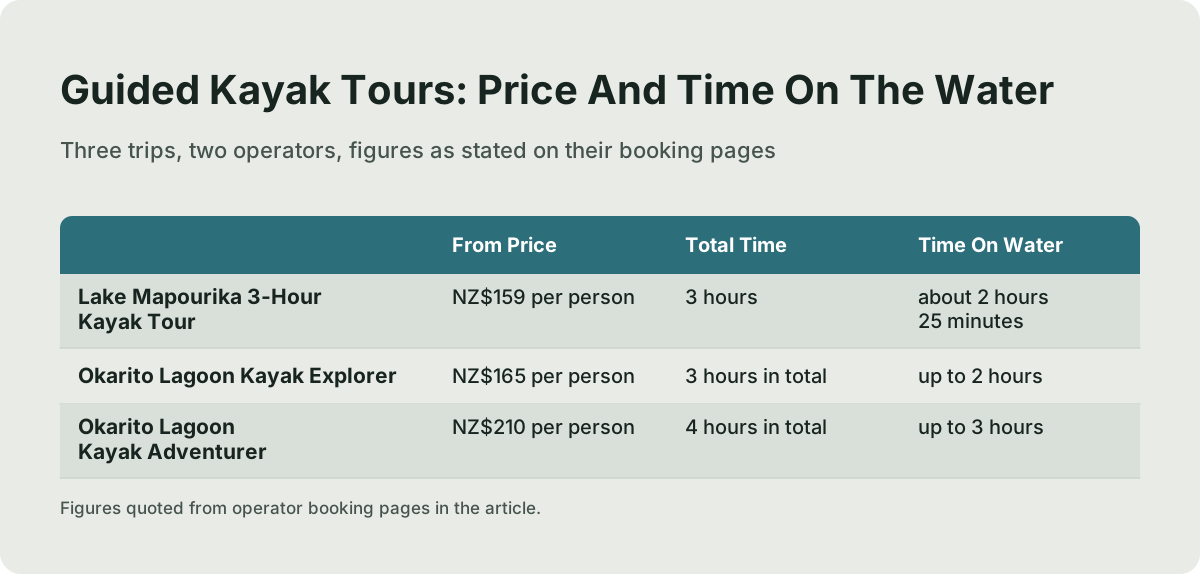
Read that as a nervous traveller: between the two operations, repellent, covering layers and dry storage are already part of what you are paying for. The Explorer is 3 hours in total with up to 2 hours on the water, self-arrival at the Okarito Kayaks base at 1 The Strand, from NZ$165 per person, and free cancellation up to 24 hours on the booking page. Guided departures need a minimum of two adults booked to confirm, so a solo booking is never a promise of a solo departure. There is no minimum or maximum age on the lagoon's guided trips in the operator's rules, under-18s pay half price, and the family behind the business has been renting kayaks and guiding on the lagoon for over thirty years, holding the NZ Tourism Environment Award for 2026.
If you want more water time rather than less, the Adventurer is the same operation's longer option: 4 hours in total with up to 3 hours on the water, from NZ$210 per person, same repellent in the kit, same free cancellation up to 24 hours. The booking pages for both Okarito guided trips exclude people over 200 cm or over 125 kg, worth knowing before you commit. The Adventurer needs some fitness and flexibility, in the operator's wording, so it is the pick when the paddle matters more than the comfort.
Does Repellent Actually Work On Sandflies?
Yes, standard insect repellent works on New Zealand sandflies in the ordinary way it works on other biting insects, and both DOC and Okarito Kayaks treat it as the primary defence: DOC tells West Coast visitors to bring it, and Okarito Kayaks supplies an environmentally friendly version on its guided trips. The debate is mostly about which type, not whether.
DOC's advice across its West Coast pages is simply "bring insect repellent", with no brand attached, and Okarito Kayaks supplies its own environmentally friendly version on the lagoon. What this tells you is that the operator's choice leans toward the gentler end of the repellent spectrum, applied from a shared bottle at the briefing, and that a DEET-based product you bring yourself is a perfectly reasonable upgrade if you know you react strongly to bites. Neither source on file makes claims about concentration percentages or hours of protection, so this article will not either.
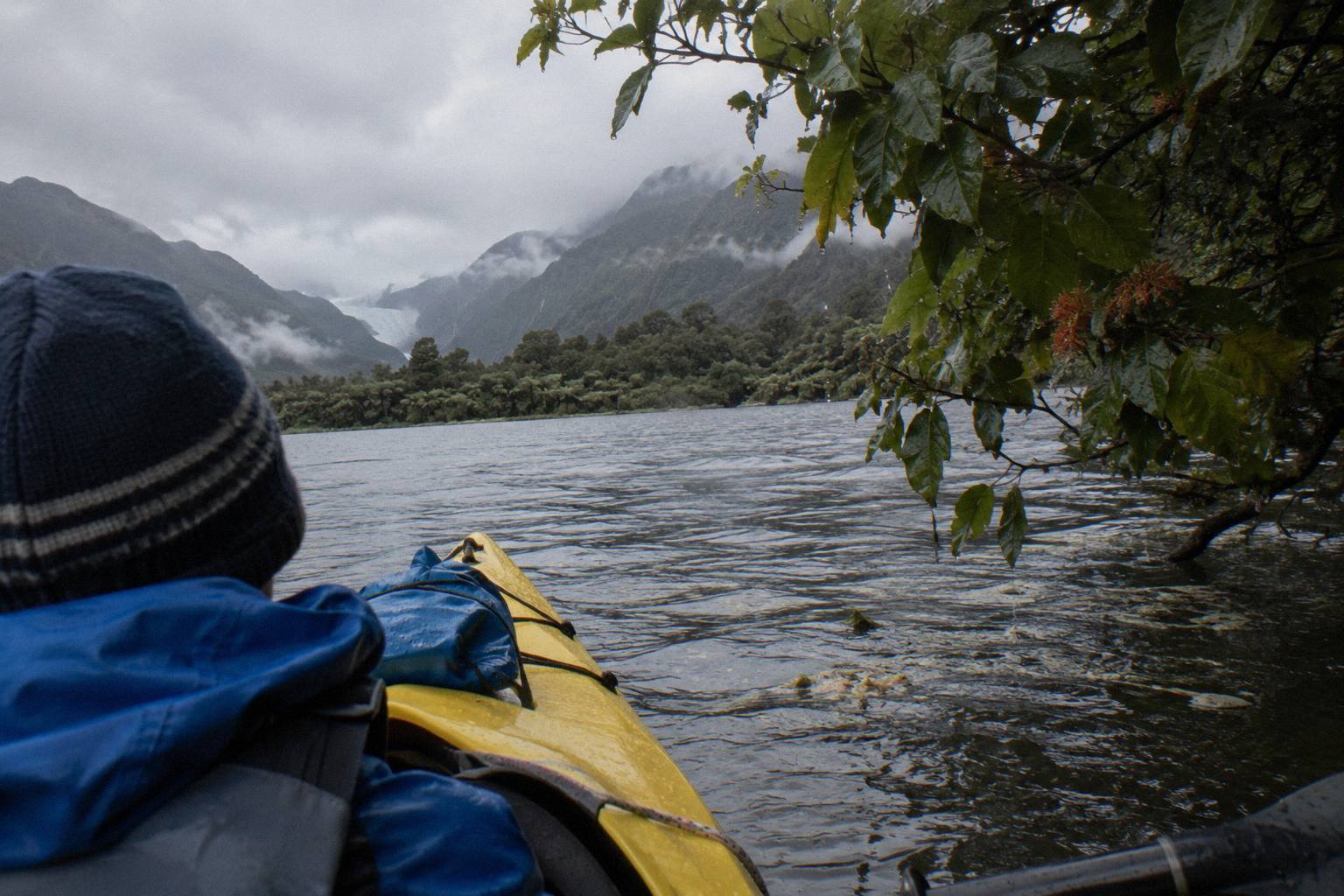
There is also a companion piece of good sense from the West Coast playbook: repellent covers skin, clothing covers more of it. Sandflies bite exposed skin, especially ankles, wrists and the back of the neck, and the clothing lists both operations publish are effectively bite armour by accident. A long-sleeved quick-drying top plus a rain jacket plus socks and shoes leaves the insects a target area roughly the size of your hands and face, and repellent handles those. The two defences stack rather than compete, which is why every packing list below mentions both.
For the itch itself, the standard advice from New Zealand health sources is not to scratch, because scratching prolongs the itch and can break the skin. A cold compress or an antihistamine cream from a pharmacy settles most reactions. If you know you swell badly from insect bites, pack your own treatment even though the tour carries repellent. The site's dedicated piece on sandfly repellent for Lake Mapourika goes deeper on product choices if that is your main worry.
What Should You Wear To Keep The Bites Down?
Cover up with the clothing both operators already tell you to bring: warm quick-drying layers, a rain jacket, proper footwear and long bottoms on the Okarito side, and a warm top layer with bottoms that are "anything but jeans" on the Lake Mapourika side, which together leave very little skin for sandflies to reach. The packing list and the bite defence are largely the same list.
The two operators phrase their bring lists differently because the trips differ, but the overlap is the point.
| Item | Okarito guided trips (operator list) | Lake Mapourika 3-hour tour (operator list) | Sandfly value |
|---|---|---|---|
| Top layer | Warm quick-drying clothing | Warm top layer | Covers arms and torso |
| Outer layer | Rain jacket | Paddling jacket and wet-weather gear supplied | Covers everything above the waist |
| Bottoms | Quick-drying trousers implied in clothing advice | "Anything but jeans" | Covers ankles, a prime bite zone |
| Feet | Footwear | Comfy sneakers or sandals, feet stay dry | Socks and shoes block ankle bites |
| Head and eyes | Sunscreen, camera, binoculars | Cap or sunglasses | A cap shades the neck and ears |
| Extras | Water and snacks | Camera or phone | Unrelated, still worth bringing |
Notice how little of that list is sandfly-specific. The West Coast is wet and cool enough that the comfortable outfit is already the covered-up outfit. A nervous traveller who arrives in quick-drying long sleeves, socks and shoes, with repellent applied at the launch, has removed most of the sandfly's opportunities before the paddle starts. The site's broader what to wear on a kayak tour guide works through the full clothing logic, and the classic mistakes, including the jeans problem, are covered in why jeans fail on a kayak tour.
One extra item earns its place on a sandfly-aware packing list: a small tube of your own repellent in a day pack, even on trips that supply it. The shared bottle lives with the guide and the group, and the moment you most want it is the ten minutes after you land, when gear is being loaded and everyone is standing still on the shore again. Having your own means the defence travels at your own pace.
Will Sandflies Spoil The Paddle Itself?
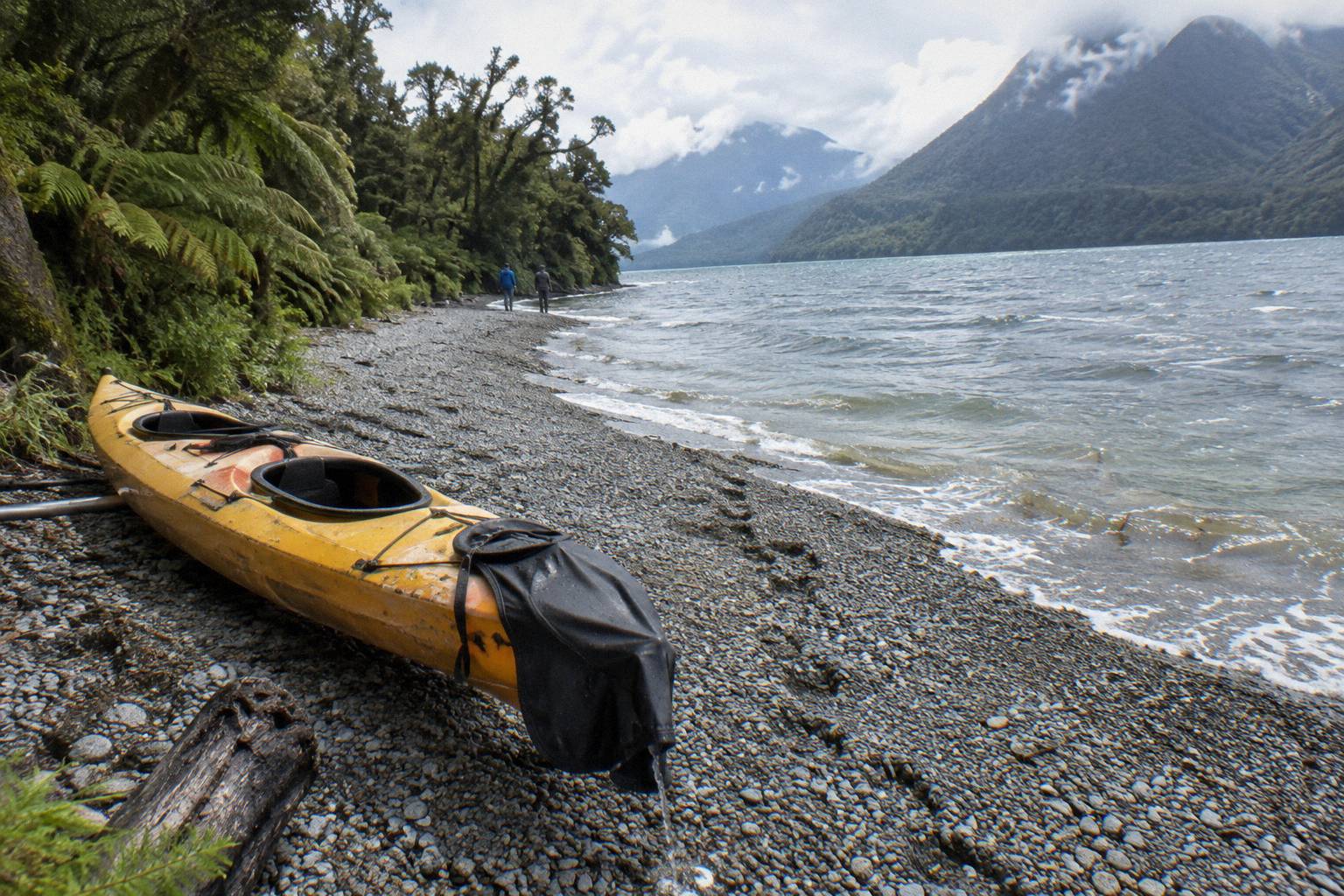
Almost certainly not once you are moving: sandflies bother people mainly at the launch, the briefing and shoreline stops where you stand still, and once a kayak is under way the insects are left behind, so the minutes of annoyance sit at the edges of a 3-hour tour rather than through it. The middle of a lake or lagoon is the kindest place to be.
The structure of both trips helps here. On the Lake Mapourika 3-hour tour, the operator describes about 2 hours 25 minutes of kayaking in stable double kayaks, with the route crossing the lake into a hidden "mirror" creek in the predator-free Okarito Kiwi Sanctuary; groups usually run 2 to 6 people, with the booking page showing up to 16. You are on the water, moving, for the overwhelming majority of the trip. The same logic holds on the lagoon: the Explorer spends up to 2 of its 3 hours on the water, tide-timed so the conditions suit paddling.
The genuinely still moments are the briefing, the launch and any landing. That is when repellent earns its place. Apply it before you leave the vehicle, not after the first bite, and reapply after the spray skirt comes off at the end. The repellent Okarito Kayaks supplies is there for exactly these windows, and the operator's base at The Strand has parking, toilets and hot drinks, so the before-and-after margins of the trip are comfortable ones.
One framing worth keeping: sandflies are a shore insect on this coast, and the same is true of the reflective still water people come for. The calm, cloudy conditions that make a mirror surface of the lake are related to the "occasional cloudy, still days" wording Okarito Kayaks uses about sandflies. You do not cancel the still day; you arrive with the bottle. The site's page on kayaking in the rain near Franz Josef makes the same argument for wet weather, which the operator calls atmospheric in light rain. If the forecast flips on you, what happens when weather cancels a kayak tour explains the operator's refund logic, which mirrors the 24-hour free cancellation on the booking pages.
Which Trip Should A Nervous Traveller Pick?
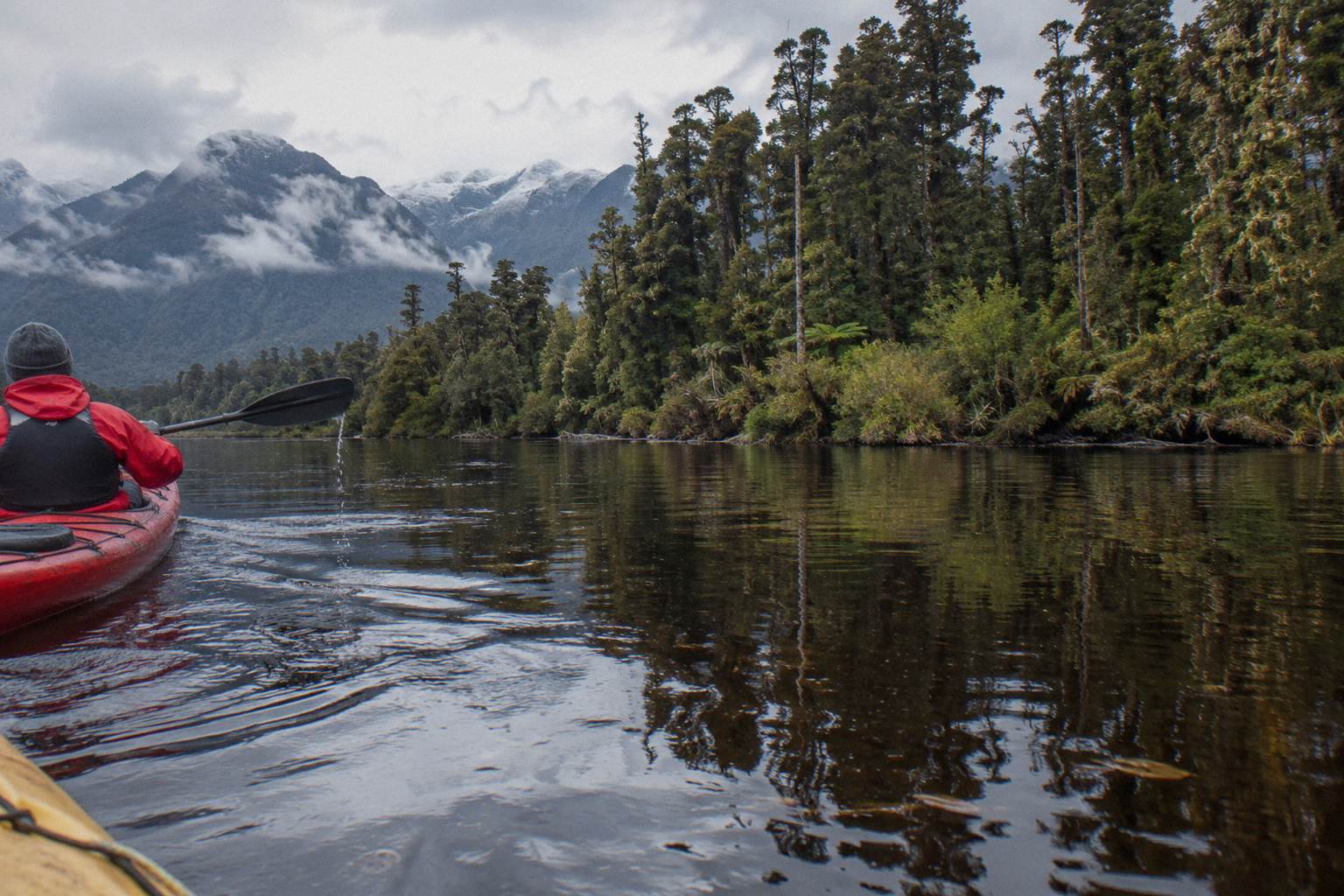
Pick the Lake Mapourika 3-Hour Kayak Tour if you want the shortest exposure to uncertainty with the deepest kit list: 3 hours, from NZ$159 per person, 4.9 from 400+ reviews, township check-in with a courtesy transfer to the lake, and insect repellent listed on the booking page, with no swimming ability needed because a fitted life jacket is worn throughout.
That last point deserves its own sentence, because it is the operator's own FAQ wording and it answers the fear beneath most nervous questions: you do not need to know how to swim, as a correctly fitted life jacket is worn throughout. Add stable double kayaks, a group of usually 2 to 6, and free photos emailed afterwards, and the 3-hour tour is a gentle first paddle by design. Check-in is at the operator's Main Road office in the Franz Josef township, at least 15 minutes early, and the courtesy transfer means you never even hunt for a lakeside park. The deeper walk-through for anxious beginners is in complete beginners on Lake Mapourika, and the safety picture around nervous paddlers is covered in how nervous paddlers stay safe.
| Trip | Water | Total time | From price | Transfer | Bite kit stated |
|---|---|---|---|---|---|
| Lake Mapourika 3-Hour Kayak Tour | Lake Mapourika | 3 hours | NZ$159 per person | Courtesy transfer from Franz Josef office | Repellent and sunscreen on the booking page |
| Lake Mapourika Kayak And Okarito Kiwi Sanctuary Walk | Lake Mapourika | 4 hours | NZ$179 per person | Courtesy transfer from Franz Josef office | Same operator family, check the listing |
| Okarito Lagoon Kayak Explorer | Okarito Lagoon | 3 hours | NZ$165 per person | Self-arrival at 1 The Strand, Okarito | Repellent provided |
| Okarito Lagoon Kayak Adventurer | Okarito Lagoon | 4 hours | NZ$210 per person | Self-arrival at 1 The Strand, Okarito | Repellent provided |
| Lake Mapourika Scenic Cruise | Lake Mapourika | 2 hours | NZ$125 per person | Courtesy transfer from Franz Josef office | A covered boat, not a paddle |
The Kayak And Walk combination, from NZ$179 per person and rated 4.9 from 120+ reviews, adds about an hour on a private rainforest track reachable only by water, minimum age 4, roughly 2 hours 15 minutes of kayaking plus the walk. If the rainforest hour appeals more than the paddle, that is the trip that buys you both. It suits a family weighing up the minimum ages for kayak tours near Franz Josef, and the shore-stop on the walk is one more place where the small personal repellent bottle pays for itself.
What If You Would Rather Not Get Bitten At All?
Take the Lake Mapourika Scenic Cruise: a 2-hour covered boat trip on the same tannin-stained water, from NZ$125 per person, with a courtesy transfer from the Franz Josef office, a toilet on board and infants 0 to 3 travelling free, which removes the launch-shore exposure almost entirely while keeping the lake and its views.
It is not kayaking: the cruise is an adjacent trip, a boat, not a paddle. But for a traveller whose real question is "can I cope with the West Coast water at all", it is the lowest-commitment answer of the trips we cover, and the same dark water and forested shoreline are there either way. On clear days the operator says glaciers including the Franz Josef Glacier neve can be seen from the lake, and on cloudy days the mirror reflections are often dramatic in the operator's own words. Neither view is promised; both are common. The lake itself the operator calls the largest kettle lake in South Westland, tannin-stained and formed by retreating glaciers, though those descriptions are the operator's rather than an official survey's.
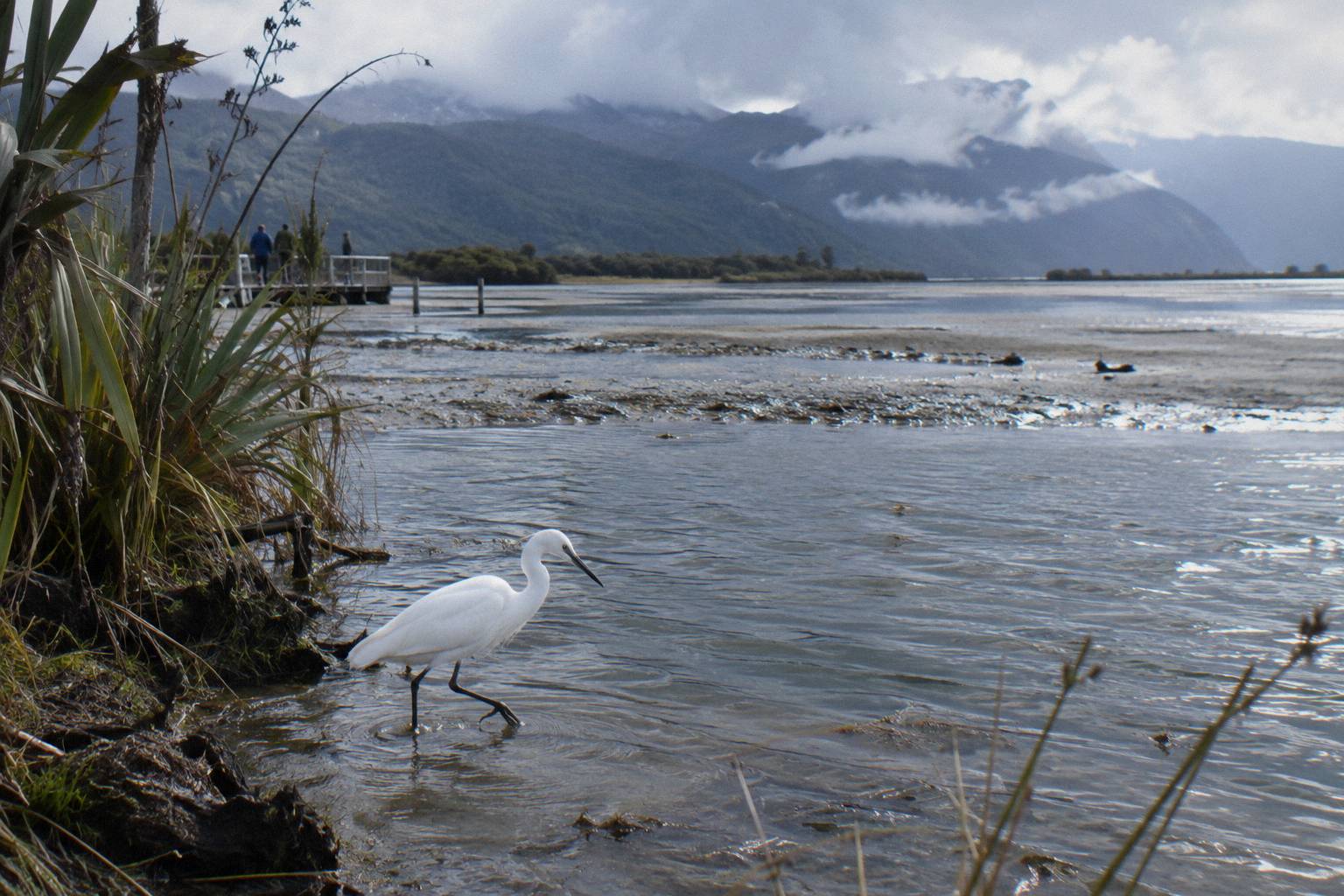
There is also a middle path worth naming: the wildlife side of the decision. The lagoon trips run in a place where kotuku, the white heron, feed year round in the operator's words, and DOC notes the only New Zealand breeding colony sits at Waitangiroto near Whataroa, with the birds feeding in Okarito Lagoon through the September to February breeding season. Kayaks do not visit the nesting colony, which is a separate licensed tour from Whataroa run by White Heron Sanctuary Tours, but the feeding birds on the lagoon are part of why people accept the sandflies. The page on seeing kotuku from a kayak maps that trade, and if you are torn between the two, white heron sanctuary tour or kayak trip compares them directly.
What Does The Wider Environment Demand Of You?
Beyond repellent, the official demands on a West Coast paddler are warmth and a worn lifejacket: DOC says to carry warm and waterproof clothing in a park where sandflies are prevalent, and since 9 October 2026 Maritime NZ requires everyone on a recreational craft 6 m and under, kayaks included, to wear a lifejacket while underway, both of which the guided tours already satisfy for you.
The lifejacket rule is in force now, not pending, and it changes nothing about a guided tour because buoyancy aids were already part of every kit list above. What it does change is the freedom-hire question: anyone renting a kayak without a guide, the option worked through in kayak hire without a guide on Lake Mapourika, wears a lifejacket as a legal requirement rather than a recommendation. Maritime NZ also advises carrying two waterproof ways to call for help and checking the marine forecast before heading out. For guided guests these are the operator's problem, and the operator's own risk disclosure notes its activities sit under Maritime NZ and the Adventure Activities Regulations, safety audited through both AdventureMark and Maritime NZ in its statement.
The climate explains why the clothing list matters as much as the repellent. NIWA's 1991 to 2020 records put Franz Josef's mean annual rainfall at 5,555.2 mm, with every month of the year above 300 mm, the wettest October at 594.1 mm and the driest July at 317.8 mm. That is a wet place by any measure, and it is why a warm layer is on both operators' lists even in summer, and why the operator's risk disclosure names hypothermia, higher in winter, among the real risks of deep, exposed lake water. It also means the insects never get a dry, still-free season off; a calm day can be a wet one, and a warm one can be a still one, so the kit list stays the same all year. If you want the fuller picture before choosing a day, the site's Franz Josef weather guide for kayaking is the deep version, and the best time for West Coast kayaking covers the seasonal logic.
Common Questions About Sandflies And Kayaking
Are Sandflies Really A Problem For Kayaking Here?
They are a real presence around West Coast water and DOC lists repellent as standard kit, but the guided trips are built around them: repellent is provided on the Okarito lagoon trips and listed on the Lake Mapourika 3-hour booking page. Once a kayak is moving, the insects are largely left behind at the shore.
Does Repellent Actually Work On Sandflies?
Yes, ordinary insect repellent works on New Zealand sandflies, and both DOC and Okarito Kayaks treat it as the primary defence. Okarito Kayaks supplies an environmentally friendly version; bringing your own stronger product is a reasonable upgrade if you react badly to bites.
What Should You Wear To Keep The Bites Down?
Long quick-drying layers, a rain jacket, socks and proper footwear: essentially the clothing list both operators already publish. Ankles, wrists and the neck are the bite zones, and the covered West Coast outfit closes most of them before repellent even enters the equation.
Will Sandflies Spoil The Paddle Itself?
Very unlikely. Sandflies bother people at the launch, briefing and shoreline stops where you stand still; the middle of a lake or lagoon is the kindest place to be. Apply repellent at the vehicle and reapply when you land.
Which Trip Should A Nervous Traveller Pick?
The Lake Mapourika 3-Hour Kayak Tour: 3 hours, from NZ$159 per person, 4.9 from 400+ reviews, a courtesy transfer from the Franz Josef office, stable double kayaks, and no swimming ability needed because a fitted life jacket is worn throughout.
What If You Would Rather Not Get Bitten At All?
Take the Lake Mapourika Scenic Cruise, a 2-hour covered boat trip from NZ$125 per person on the same water, with a courtesy transfer and a toilet on board. It is not a paddle, but it removes nearly all the shoreline exposure while keeping the lake views.
The short version of all of this: sandflies are why Franz Josef Kayak Tours exists as a research site rather than a fan page. The insects are real, DOC says so twice, and every guided trip on this coast already carries the answer in its kit. Arrive covered, accept the bottle at the briefing, and spend the middle two hours looking at water nothing else in the country looks like.