Okarito Trig Walk And A Lagoon Kayak Tour In One Day
The trig walk is a 1 hour 30 minute easy DOC track, and Okarito Kayaks runs a 3-hour and a 4-hour guided paddle on the lagoon, so the two fit in one day if the tide-timed start time allows.
Short answer
Yes. The Okarito trig walk takes 1 hour 30 minutes and is graded easy by DOC. Okarito Kayaks runs the Lagoon Explorer (3 hours total, from NZ$165 per person) and the Lagoon Adventurer (4 hours total, from NZ$210 per person). Because kayak start times are scheduled around the tide, the booking page's departure time decides the order.
Okarito is a village of about 40 permanent residents, by the operator's own count, sitting 10 km off State Highway 6 on a sealed road about 25 minutes north of Franz Josef. There is no shop and no restaurant. What brings walkers and paddlers out there instead is a pair of very different experiences packed into one small place: a DOC walking track that climbs to a trig point above the lagoon, and a shallow tidal lagoon that a family-run kayak operator has been guiding people across for over thirty years. Doing both in a single day is realistic, and the durations, the tides and the practicalities line up as shown below.
Can You Do The Okarito Trig Walk And A Lagoon Kayak Tour On The Same Day?
Yes, comfortably, as long as you work around the kayak departure time rather than the walk. The trig walk is 1 hour 30 minutes return and graded easy by DOC, while the guided paddles take 3 hours (Explorer) or 4 hours (Adventurer) in total. The tide sets the schedule, so the booking page's departure time decides the day's structure, and the walk fills whichever side of the paddle is left.
The arithmetic is straightforward. Add a 3-hour paddle to a 90-minute walk and you have roughly five hours of activity, plus arrival buffer. Okarito Kayaks asks guests to arrive 10 to 15 minutes before the start, and its base at 1 The Strand has parking, toilets and hot drinks, so there is somewhere to wait and change. A 4-hour Adventurer trip plus the walk still leaves room in a full day, especially outside the shortest winter afternoons.
The one thing you cannot control is the tide. The lagoon is shallow and tidal, and the operator schedules both tours and rentals "around the best tidal conditions for any day". Some days that means a morning paddle and an afternoon walk; other days the reverse. Check the listed start time first, then build the walk around it, and if the tide puts the paddle late in the day, the trig track works well as a morning leg.
One more planning note: a guided departure only confirms once a minimum of two adults is booked, so a same-day combination for a solo traveller depends on that minimum being met. The booking page shows what is running. If you like margin in a day like this, the Okarito Lagoon kayaking guide covers the water side in more depth.
| Item | Figure | Source |
|---|---|---|
| Trig walk, return | 1 hour 30 minutes, easy | DOC Okarito area page |
| Wetland walk | 20 minutes | DOC Okarito area page |
| Pakihi walk | 30 minutes | DOC Okarito area page |
| Lagoon Kayak Explorer, total | 3 hours (up to 2 on the water) | Okarito Kayaks |
| Lagoon Kayak Adventurer, total | 4 hours (up to 3 on the water) | Okarito Kayaks |
| Arrival before a trip | 10 to 15 minutes | Okarito Kayaks |
How Long Does The Okarito Trig Walk Take?
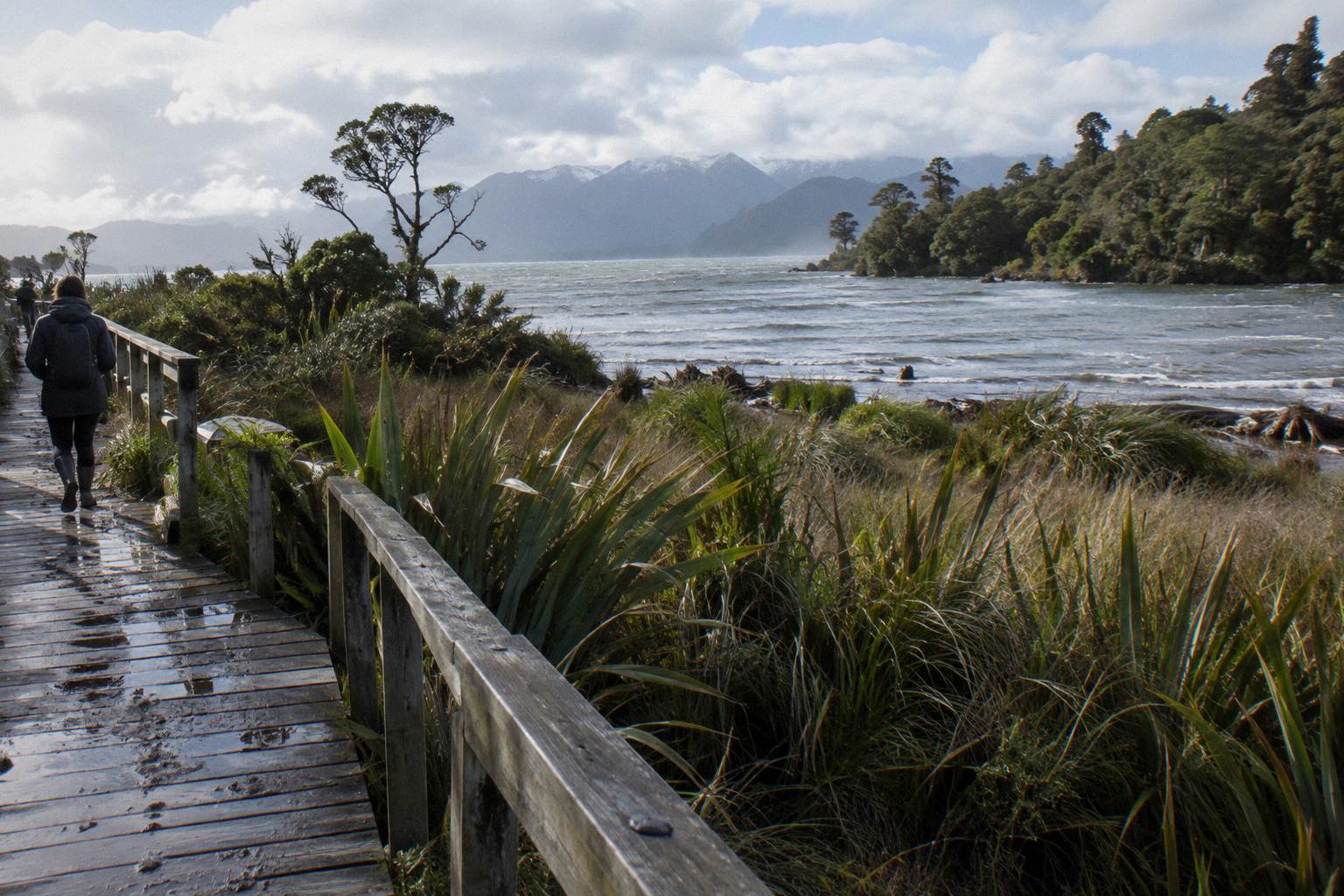
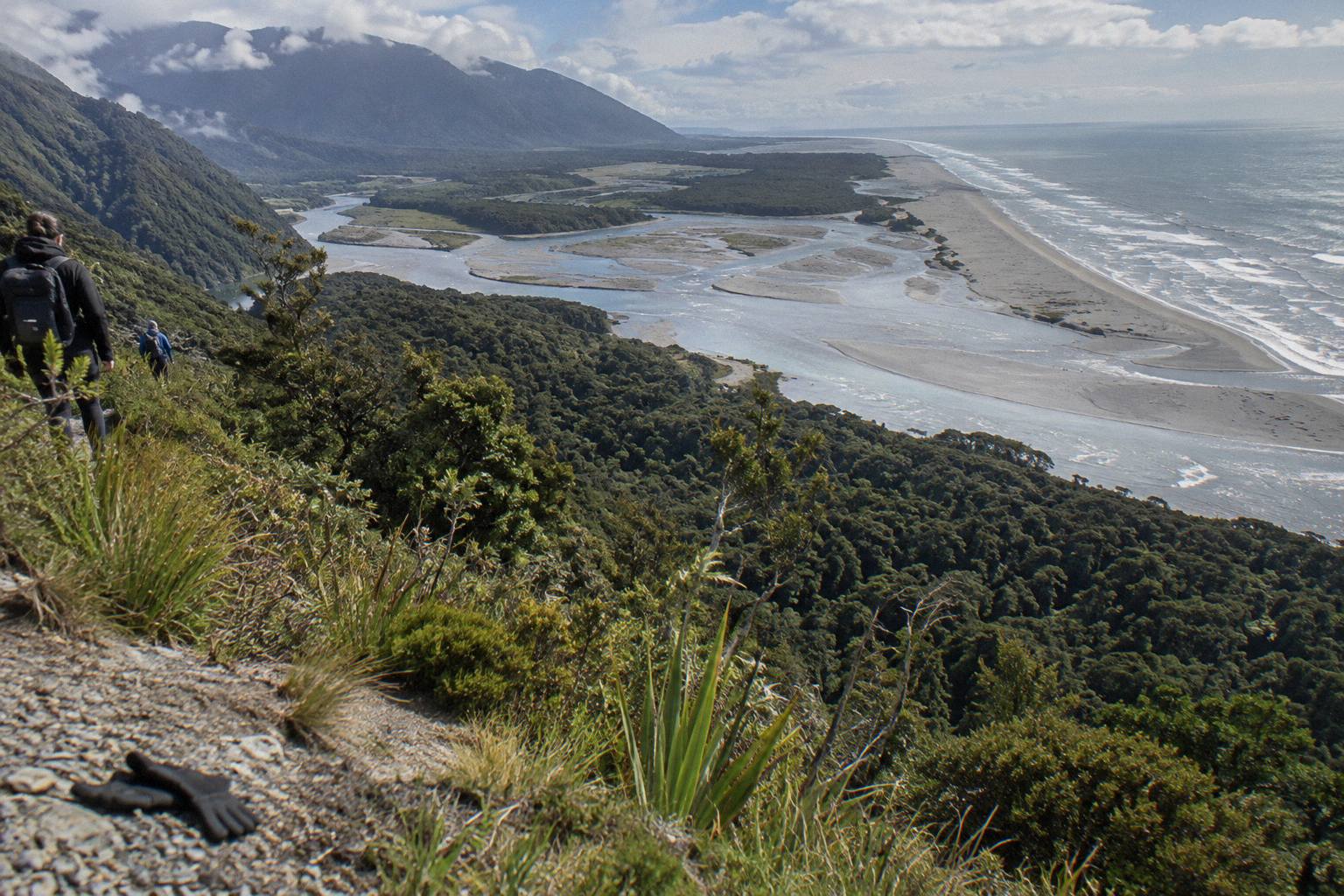
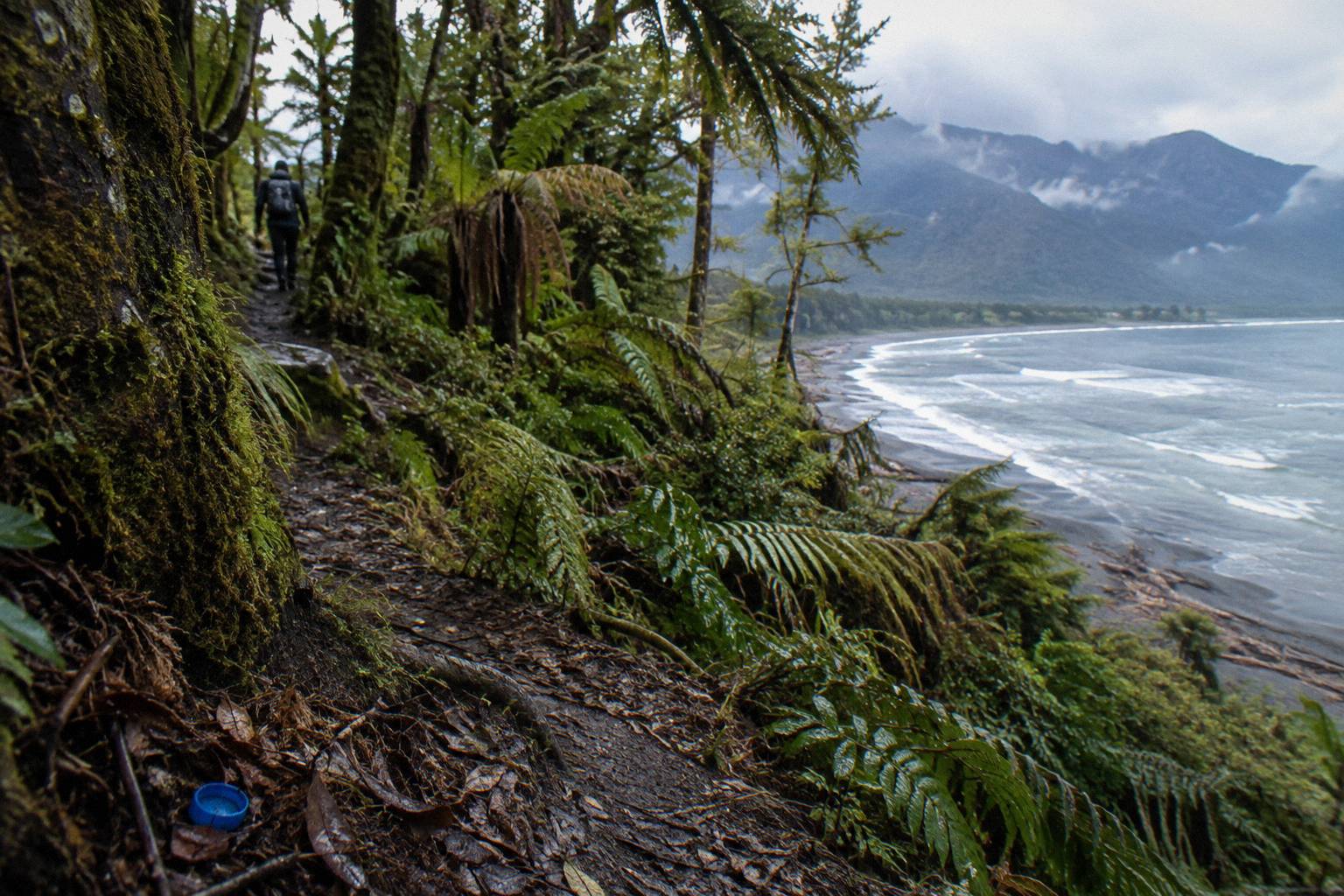
DOC grades the trig walk at Okarito as easy and lists it at 1 hour 30 minutes return. It is the longest of the three short walks in the village: the wetland walk takes 20 minutes and the Pakihi walk 30 minutes, both also on DOC's Okarito area page. Together with the trig track they give a walker options before or after a paddle without needing a second drive anywhere.
The DOC page for the Okarito area also notes Donovan's Store and the wharf, which are worth a few minutes in themselves for anyone who enjoys West Coast history. Donovan's Store is one of the few remaining structures of its kind on the Coast, and the wharf still reaches out over the water at the village edge. The village is small enough that everything is within a short stroll of the kayak base, which is what makes the same-day combination so practical: park once, walk, paddle, done.
For planning purposes, treat the 1 hour 30 minute figure as the walking time alone and add whatever you spend at the top. Stick to the stated duration and grade when planning: the walk's grade is the fact that tells most visitors whether they can add it to a kayak day. Families and casual walkers manage it, and it pairs naturally with either guided paddle.
If the trig walk sounds like too much on top of a 4-hour water day, the 20-minute wetland walk is a genuine alternative that still gets you out between the forest and the lagoon edge. The DOC Okarito area page lists all three tracks and is the source for every duration above.
Which Kayak Trip Fits Around The Trig Walk?
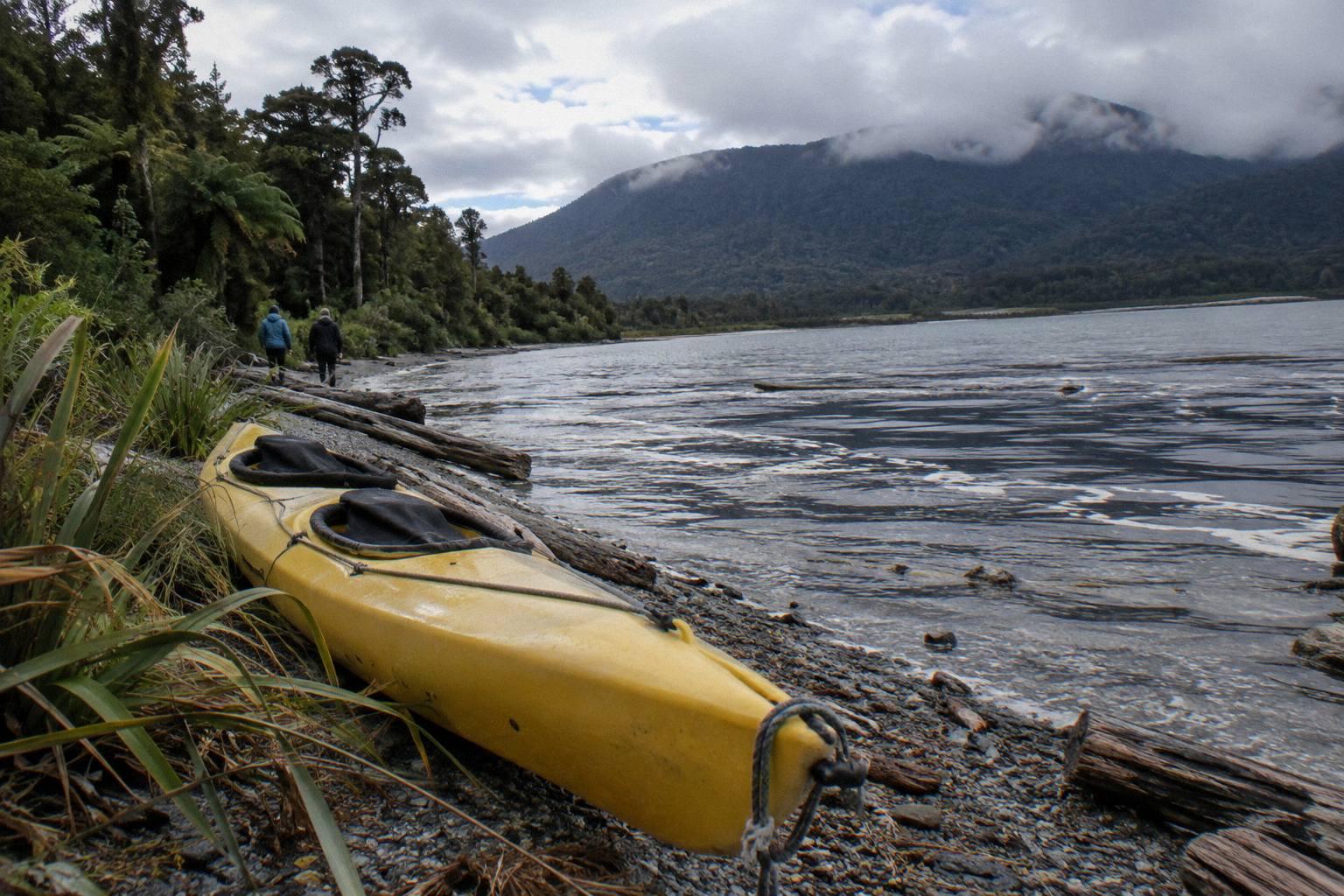
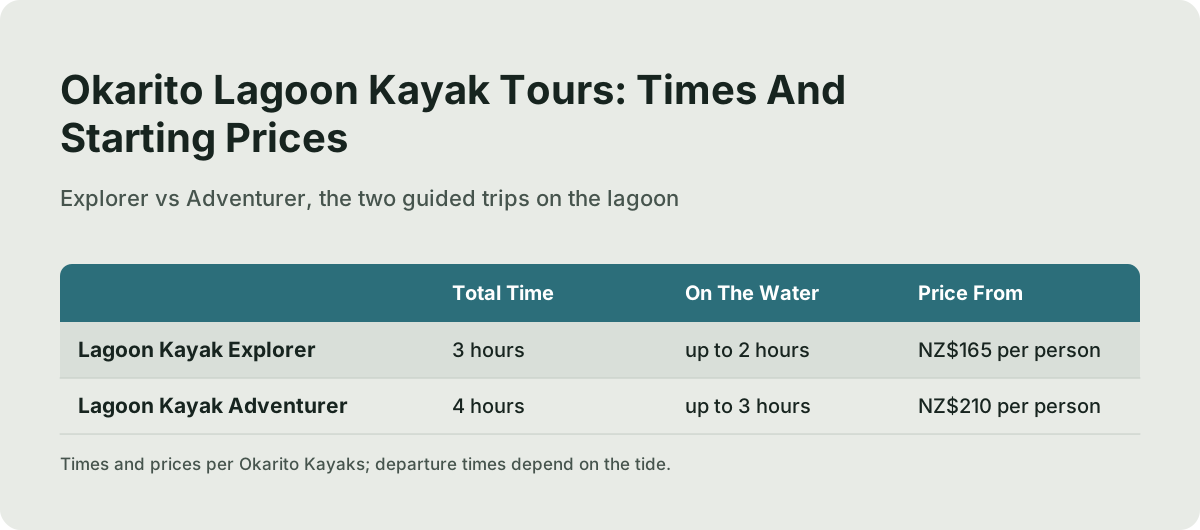
Two guided trips run on the lagoon, both tide-timed and both departing from the Okarito Kayaks base. The Lagoon Kayak Explorer is 3 hours total with up to 2 hours on the water, from NZ$165 per person. The Lagoon Kayak Adventurer is 4 hours total with up to 3 hours on the water, from NZ$210 per person, and the operator says it needs some fitness and flexibility.
All prices in this article are New Zealand dollars, per person, from the booking pages.
Which one fits depends on how much of your day you want on the water. Around the 3-hour Explorer, the trig walk slots in easily on either side, and the shorter total suits anyone who also wants the wetland walk or a slow lunch break (bring your own; there is no shop). The 4-hour Adventurer is the fuller commitment, and you can read more about the Okarito Lagoon Kayak Adventurer on its tour page. With up to 3 hours of paddling in it, the Adventurer plus the trig walk makes for a solid but satisfying day.
There is also a physical consideration the booking pages state plainly: they exclude people over 200 cm (6 ft 6 in) or over 125 kg (275 lb). Neither trip offers a transfer, so everyone arrives at The Strand under their own arrangements, roughly a 25-minute drive from Franz Josef. For the wider picture of whether the detour is worth it, the post is Okarito worth visiting for a kayak trip weighs the drive against the experience.
Both lagoon trips are small-group, run year round, and come with a lagoon map and bird guide, a buoyancy aid, spray skirt, dry bags, environmentally friendly insect repellent and a rescue boat on standby. Free cancellation up to 24 hours applies on the booking page for every trip in this article, which matters when tides and weather are still deciding your week.
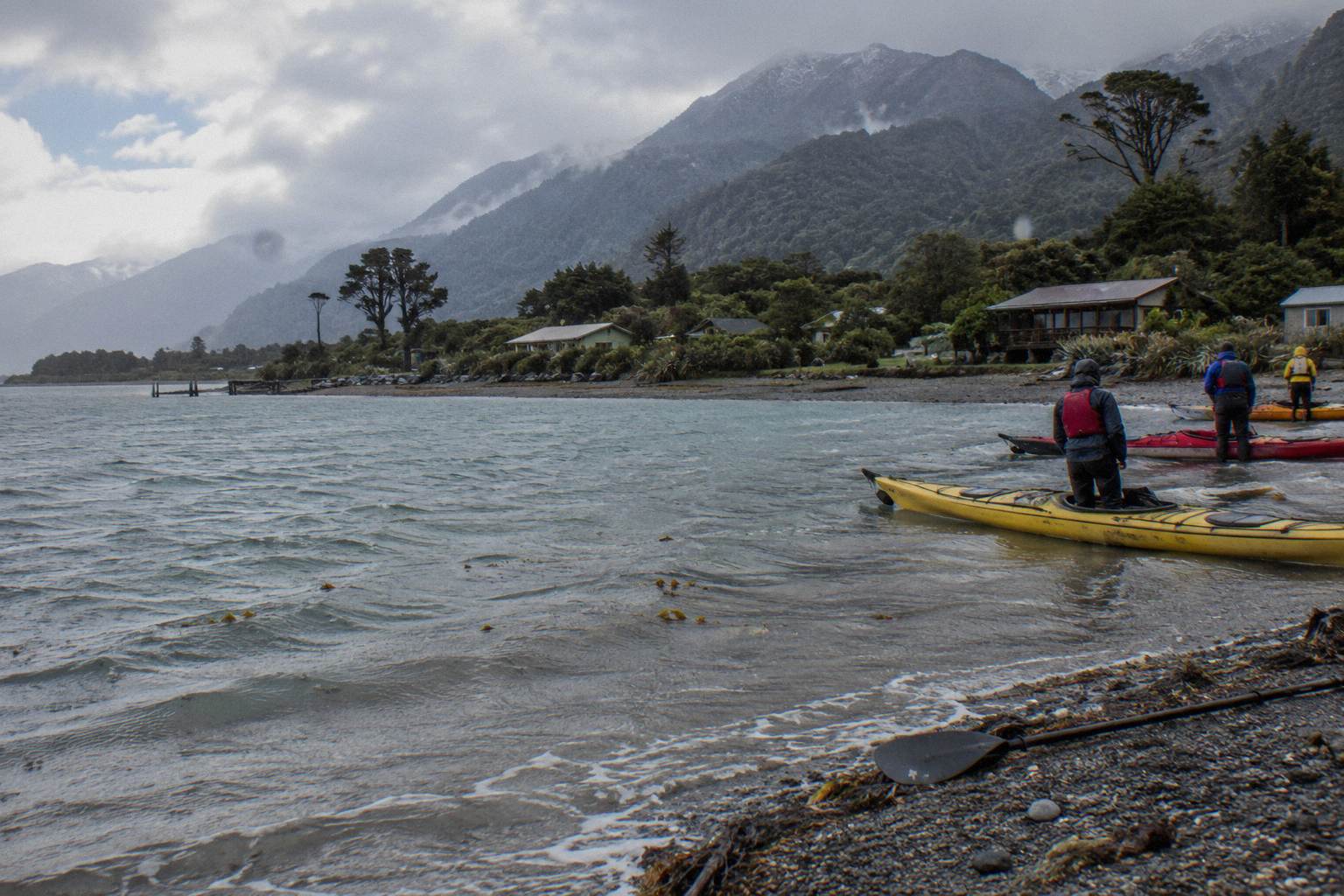
Let the tide-timed departure be the fixed point of your day and fit the trig walk around it, not the other way round. With no transfer, budget the roughly 25-minute drive from Franz Josef at both ends; an Adventurer day, with four hours tied up in the trip, leaves less slack for the wetland walk or a long lunch.
The step from NZ$165 to NZ$210 buys one extra hour of total trip time and up to one extra hour of paddling, so choose on appetite rather than value: the kit list and small-group format are the same on both. Carry everything you plan to eat and drink for the day, and keep spare layers in the supplied dry bags.
What Order Should You Do The Walk And The Paddle?
Let the tide decide. Okarito Kayaks schedules its guided trips around the best tidal conditions for each day, and that departure time is only visible on the booking page for your date. If the paddle starts in the morning, walk the trig in the afternoon; if the tide puts the paddle in the afternoon or evening, walk first and eat your own snacks at the base afterwards, since the village has no shop or restaurant.
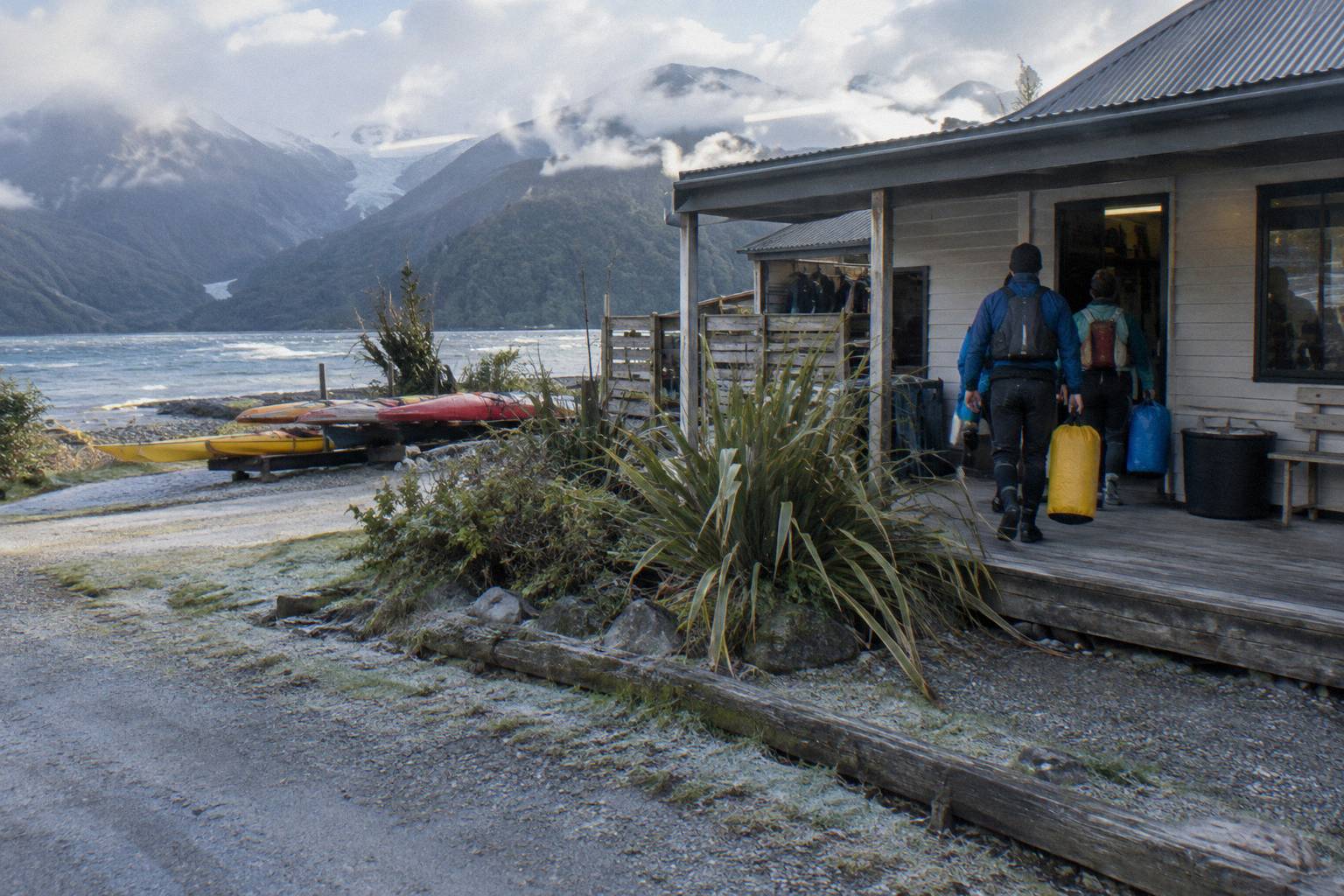
A morning paddle has a natural rhythm to it: arrive 10 to 15 minutes early, get the briefing and the gear, spend three or four hours on the water, then drive or stroll to the trig track while your legs remember how land works. The base has hot drinks, so the transition is comfortable. An afternoon paddle flips the day: the walk first, lunch from your own supplies, then check in at The Strand.
Two practical cautions shape the ordering. First, the two-adult minimum means a departure is only confirmed once that threshold is met, so book the paddle before you lock the rest of the day around it. Second, because the walk's 1 hour 30 minutes is a return figure, you can trim the day by turning around early if the tide pushes your paddle start closer than expected; the track is out-and-back in character, so nothing is lost except the top.
Weather belongs in the same decision. Franz Josef records a mean annual rainfall of 5,555.2 mm in the NIWA 1991 to 2020 normals, and every month averages above 300 mm, so a wet window on your day is normal rather than unlucky. The site's guide to Franz Josef weather for kayaking goes into what that means for a paddle, and the post on how weather cancels a kayak tour explains the refund side if the operator calls a day off.
| If the paddle starts... | Morning plan | Afternoon plan |
|---|---|---|
| Morning (tide-timed) | Arrive 10-15 min early, paddle, then trig walk | Wetland walk (20 min) if legs allow |
| Midday | Trig walk first, early check-in | Hot drinks at the base afterwards |
| Afternoon or evening | Trig walk in the morning | Bring your own food; no shop in Okarito |
What Should You Bring For A Day At Okarito?
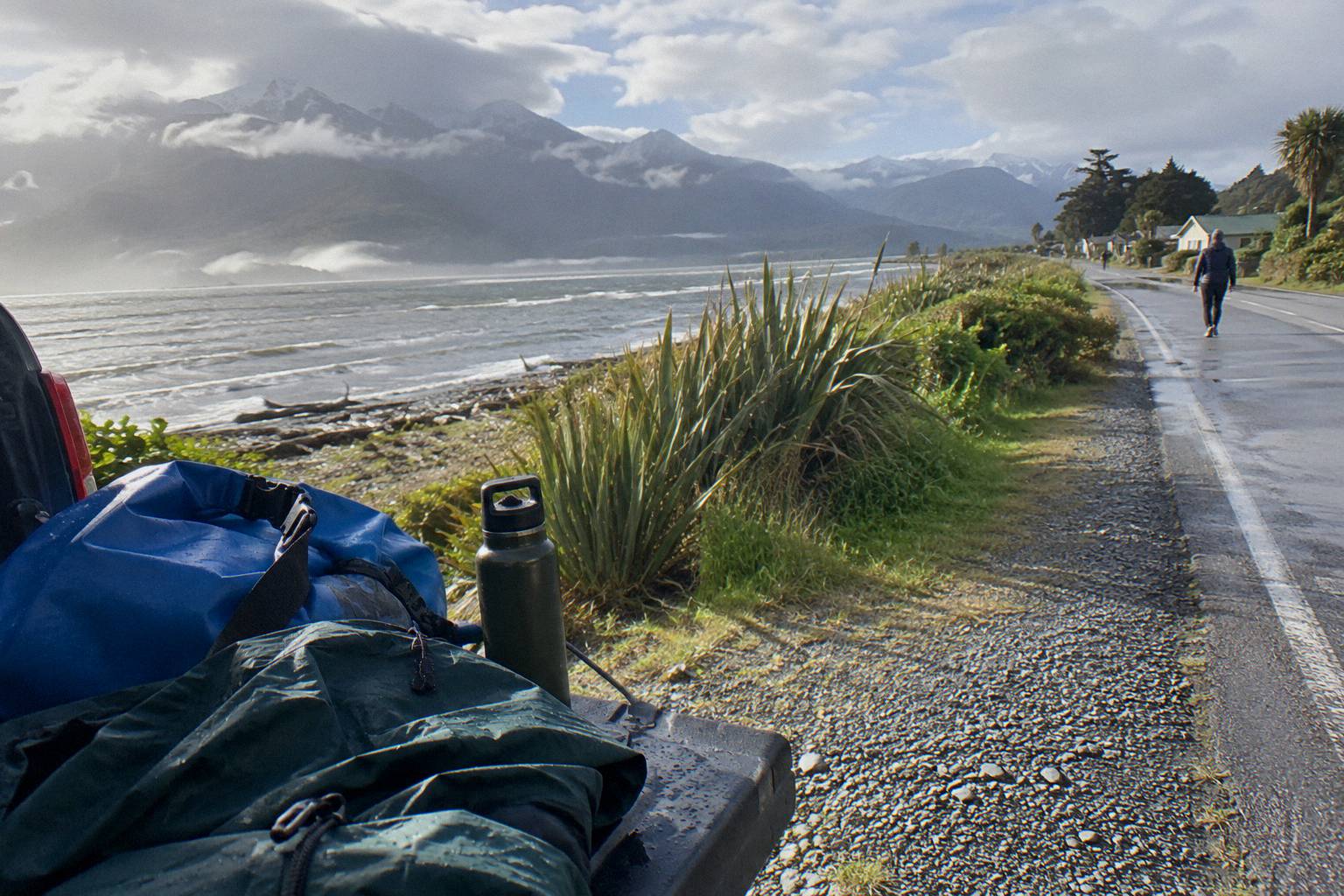
For the paddle, the operator's bring-list is specific: warm quick-drying clothing, a rain jacket, footwear, water, snacks, sunscreen, a camera and binoculars. The guided trips provide the buoyancy aid, spray skirt, dry bags, lagoon map, bird guide and repellent. For the trig walk, add whatever you want for 90 minutes on an easy track, and carry everything in the car since there is nowhere in the village to buy forgotten items.
The binoculars deserve their place on the list. This is a bird-watching destination as much as a paddling one, and a bird guide comes with the trip for a reason. The camera matters too: the lagoon's reflections are often striking on calm, still days, and DOC's general advice on mirror conditions favours those conditions rather than any particular hour.
Clothing logic is West Coast logic. Layers that dry fast, a real rain jacket, and footwear you can walk the track in after (or before) getting into a kayak. The operator sells a locally made insect repellent and mentions sandflies on occasional cloudy, still days, so a small bottle in the daypack is cheap insurance; the sibling post on sandfly repellent for Lake Mapourika covers what actually works on the Coast.
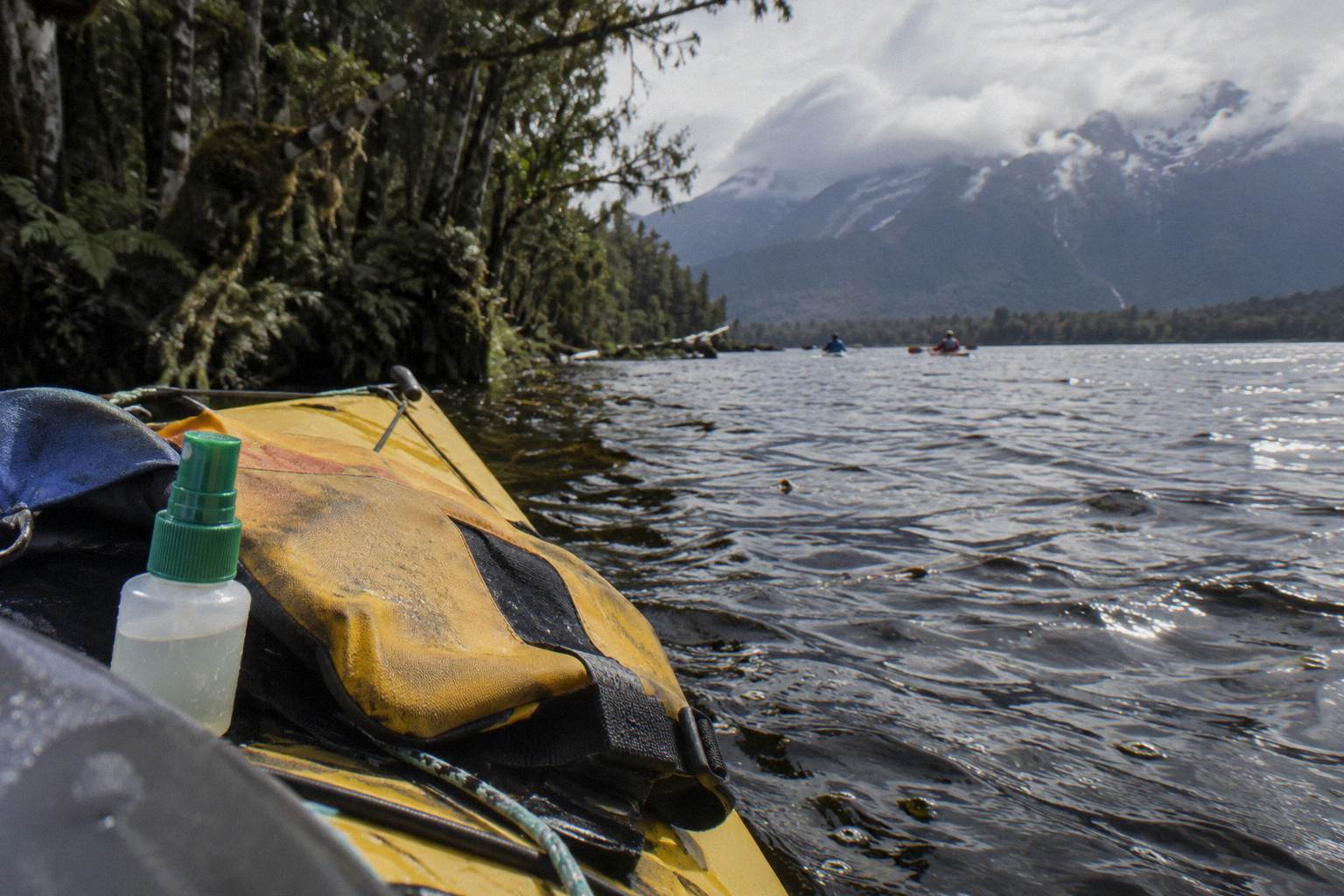
A spare set of dry clothes left in the car earns its keep on a combined day, even in summer. You will finish the paddle with spray skirts and dry bags doing most of the work, but a change of top before the walk makes the second half of the day far more pleasant, and there are toilets at the base to change in. Water deserves emphasis as well: with no shop in the village and hot drinks the only resupply, the bottles you bring are the bottles you have.
| Provided on the guided trips | Bring yourself |
|---|---|
| Buoyancy aid | Warm quick-drying clothing |
| Spray skirt and dry bags | Rain jacket |
| Lagoon map and bird guide | Footwear |
| Environmentally friendly repellent | Water and snacks |
| Rescue boat on standby | Sunscreen, camera, binoculars |
What Wildlife Might You See On The Lagoon?
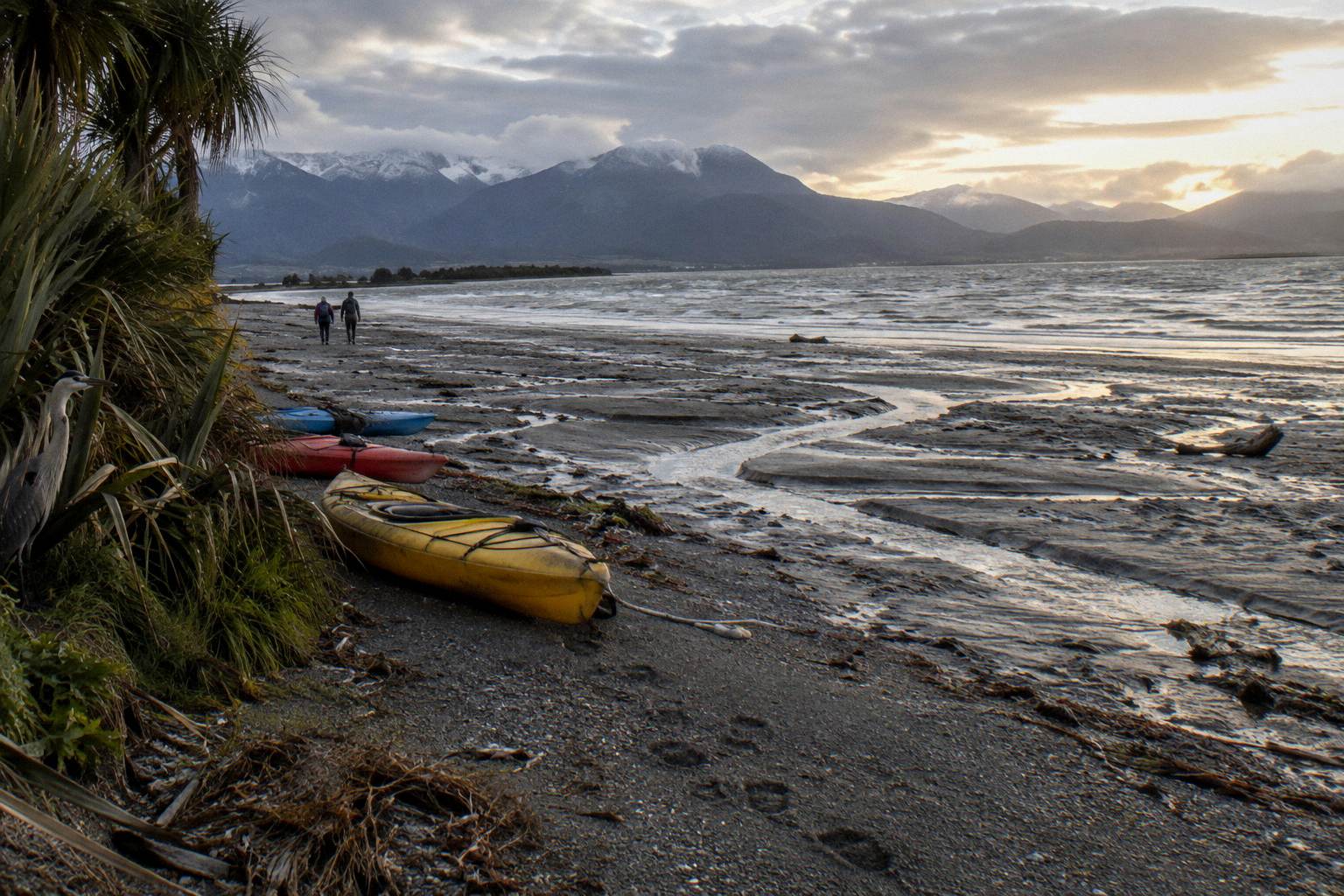
The signature bird is the kotuku, the white heron. DOC records the only New Zealand breeding colony at Waitangiroto near Whataroa, breeding from September to February, and notes that in the breeding season the birds feed in coastal lagoons, particularly Okarito Lagoon. Okarito Kayaks says it is common to see them feeding throughout the lagoon year round, though no sighting can be promised, and kayaks never go to the nesting site itself.
That distinction matters and is worth repeating plainly: the colony is viewed from a hide on a separate licensed tour run by White Heron Sanctuary Tours out of Whataroa, established 1987, and kayakers see kotuku feeding, never nesting. The two experiences complement each other rather than compete, and the site's comparison of the white heron sanctuary tour or kayak trip breaks down which suits which traveller.
The DOC white heron page is the primary source on the colony and the breeding season, and it is the page to check if your visit falls between September and February and seeing a kotuku is high on your list. Outside that window, the operator's year-round feeding observation still gives you a realistic chance, with binoculars helping a great deal across a wide lagoon.
Practical Details For The Combined Day
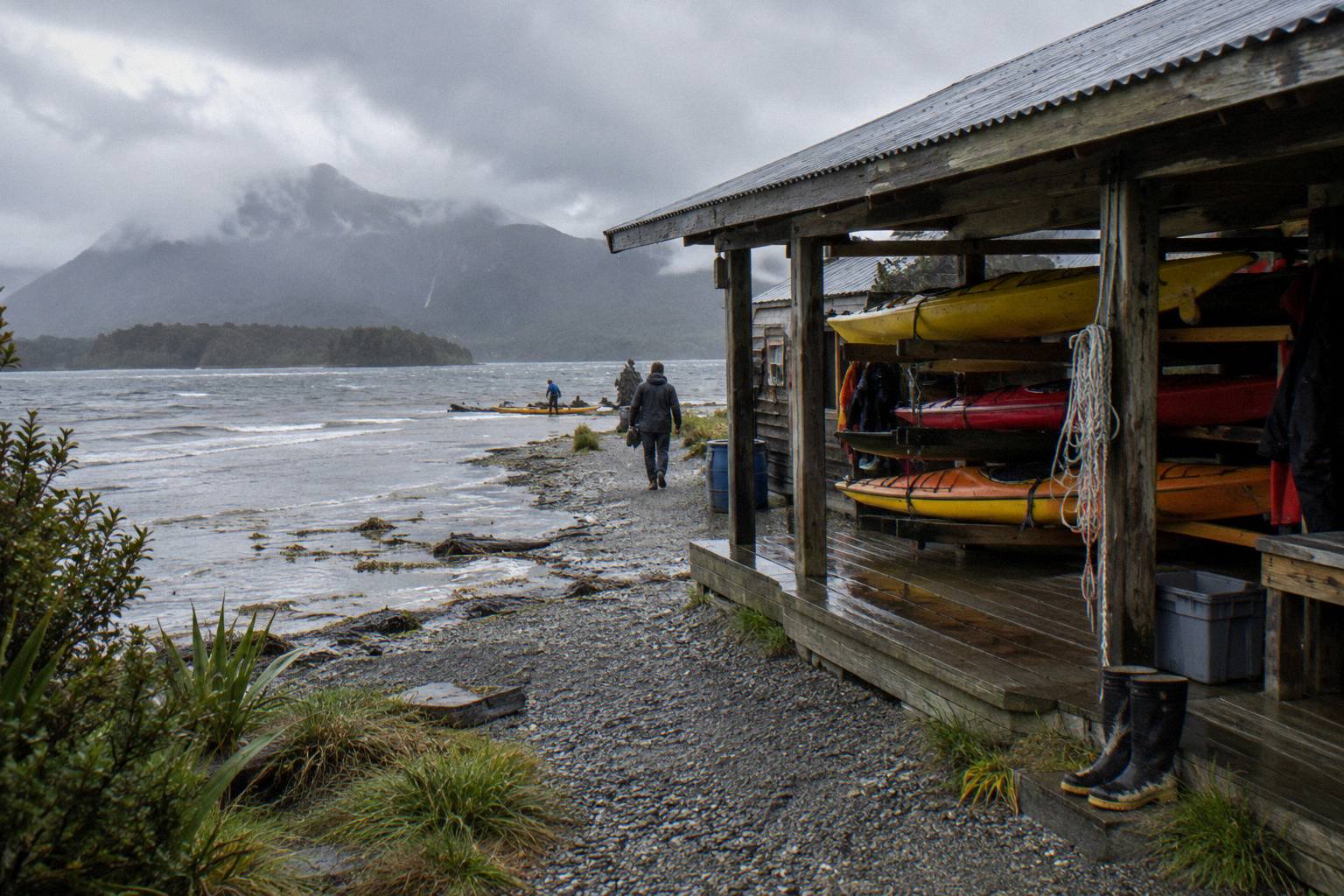
Self-arrival is the rule: the kayak base is at 1 The Strand, Okarito, about 25 minutes north of Franz Josef, with no transfer offered on the lagoon trips. Arrive 10 to 15 minutes before your tide-timed start, park at the base, and use its toilets and hot drinks. Free cancellation up to 24 hours applies on the booking page.
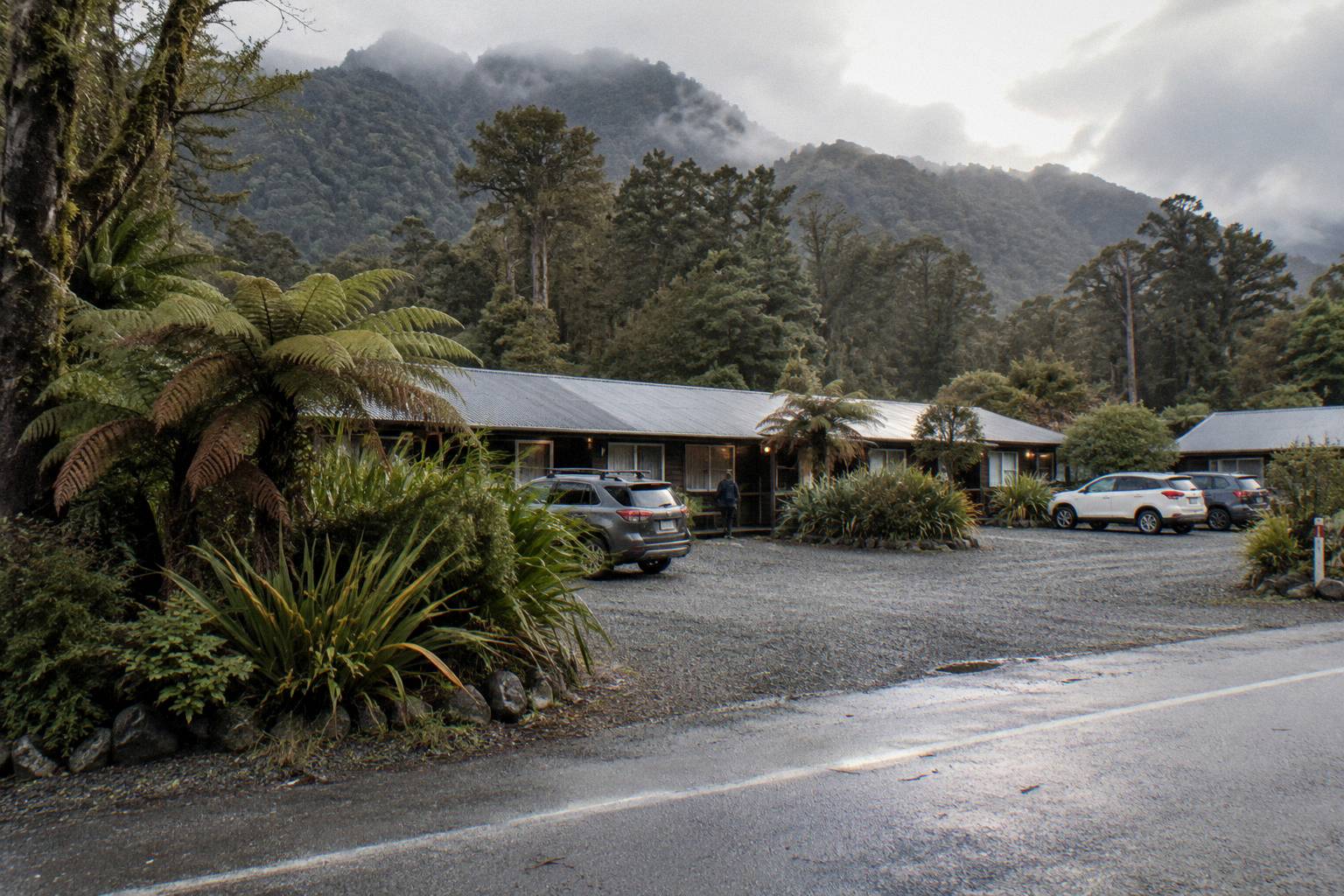
Timing the drive matters more here than on the lake trips out of Franz Josef township, which include a courtesy transfer; the lagoon trips do not. Twenty-five minutes each way is modest, but it is still a fixed cost in the day, and the two-adult minimum means you want your booking confirmed before you commit the morning. If your dates are loose, the post on booking a kayak tour in advance explains when earlier matters, and the tides are covered properly in Okarito Lagoon tides and kayaking.
It is also worth building a small buffer into the drive itself. The road is sealed all the way, which surprises some visitors expecting gravel, but it is narrow in places and passes working farmland, so allow more than the bare 25 minutes if you are catching a fixed tide-timed departure rather than a clock-time one. The operator may cancel for conditions or minimum numbers with a full refund, which is the safety net if the day unravels, but nobody wants to restart a holiday morning because of a missed check-in.
A note for readers weighing Okarito against the lake. These are different waters with different operators, and there is no need to treat them as rivals. If the 25-minute drive or the tide-timed schedule makes Okarito awkward for your day, the Lake Mapourika 3-hour kayak tour runs from Franz Josef township with a courtesy transfer to the lake, from NZ$159 per person, rated 4.9 from 400+ reviews. The map of which water suits whom is laid out in Lake Mapourika or Okarito Lagoon.
For anyone whose group includes non-paddlers, or whose knees have opinions about a 90-minute walk, there is a softer pairing on the lake: the Lake Mapourika Scenic Cruise, from NZ$125 per person for 2 hours on a covered boat with a toilet on board. At Okarito itself, the alternative to the trig track is simply the shorter walks, 20 and 30 minutes, which still deliver the forest-and-water feel without the climb.
Is The Trig Walk And Paddle Combo Worth It?
For a visitor who wants both legs and rainforest in one day, yes, and the numbers support it: 90 easy walking minutes plus 3 or 4 tide-timed hours on the water, all from one parking spot in a village of about 40 people. The combination's only fragility is the tide-timed start and the two-adult minimum, both visible on the booking page before you commit the rest of the day.
This is not a day you can plan to the half hour from home, because the departure time belongs to the tide, not to you. But every fact you need is on the listing: the start time, the free cancellation up to 24 hours, and the gear list. Build the trig walk around whatever the tide gives you, carry your own food, and the day takes care of itself.
Visitors often ask whether the village justifies the drive, and the fair answer is that the drive is short and the village is the point: no shop, no queue, one family guiding a lagoon they have worked for over thirty years, and a DOC track above it all. The current lifejacket rule from Maritime NZ applies nationwide to kayaks, so whatever you book anywhere on the Coast, the buoyancy aid is worn throughout, exactly as the operator already provides for.
There is also a seasonal angle worth a sentence. The lagoon trips run year round, and the trig walk is not weather-dependent in any way DOC describes, so the combo is not a summer-only idea. Winter daylight is shorter, which makes the 4-hour Adventurer plus the walk a tighter squeeze in June or July, while the 3-hour Explorer fits comfortably in any month. The site's guide to the best time for West Coast kayaking covers the seasonal picture if your dates are flexible.
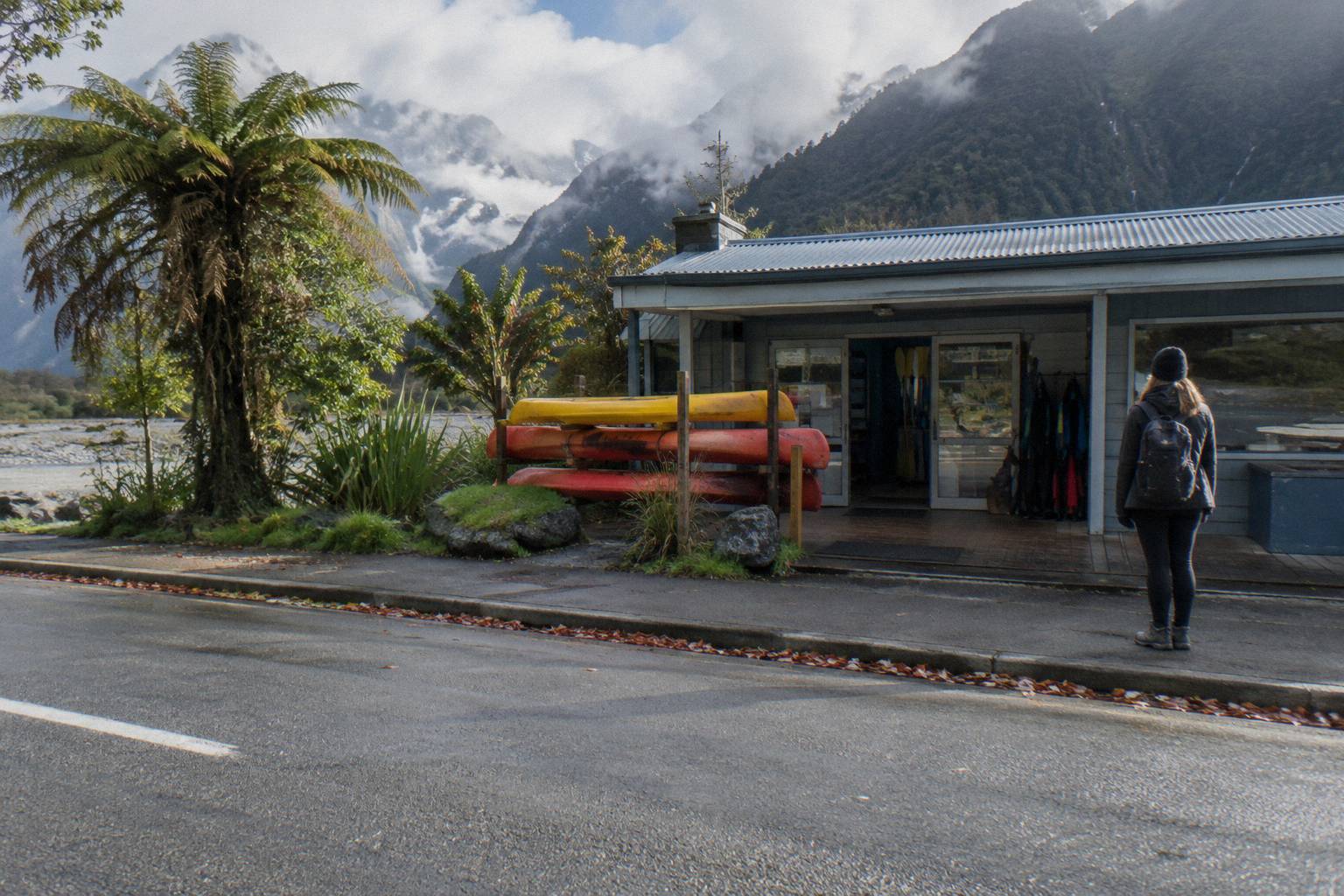
If a longer West Coast stay is on the cards, the guide to how many days in Franz Josef places this combo inside a fuller itinerary, and Franz Josef Kayak Tours rounds up every paddle in the region.
Common Questions About The Okarito Trig Walk And Lagoon Paddle
Can You Do The Okarito Trig Walk And A Lagoon Kayak Tour On The Same Day?
Yes. The trig walk is 1 hour 30 minutes return and easy, while the guided paddles take 3 hours (Explorer) or 4 hours (Adventurer) in total, so both fit in one day when the tide-timed start allows. The booking page shows your date's departure time, and the walk fills the other side of the day.
How Long Is The Okarito Trig Walk?
DOC lists the trig walk at 1 hour 30 minutes, graded easy. The wetland walk takes 20 minutes and the Pakihi walk 30 minutes if you want shorter options around a paddle.
Do You Need A Transfer For The Okarito Kayak Tours?
No, and none is offered. Both guided lagoon trips are self-arrival at the Okarito Kayaks base, 1 The Strand, Okarito, about 25 minutes north of Franz Josef. Arrive 10 to 15 minutes before the start; the base has parking, toilets and hot drinks.
Which Kayak Trip Pairs Better With The Trig Walk?
Both work. The 3-hour Explorer leaves more slack in the day, while the 4-hour Adventurer, with up to 3 hours on the water, suits paddlers who want the fuller trip and are happy to let the walk be the shorter half. The Adventurer needs some fitness and flexibility, per the operator.
Can You See White Herons From A Kayak On Okarito Lagoon?
Kotuku are commonly seen feeding throughout the lagoon year round, the operator says, and DOC notes they feed there especially in the September to February breeding season. Nesting happens at a colony near Whataroa reached by a separate licensed tour, not by kayak, and no sighting is ever guaranteed.
Is There Anywhere To Eat In Okarito?
No. The operator notes the village has no shop or restaurant, so bring your own water and snacks for the day. The kayak base provides hot drinks.